Vocabulary Building Addition & Subtraction Worksheets for Ages 5-7
6 filtered results
-
From - To
Unlock your child's potential with our Vocabulary Building Addition and Subtraction Worksheets for ages 5-7! These engaging and interactive worksheets are designed to help young learners develop essential math skills while enhancing their vocabulary. Each activity focuses on common mathematical terms and concepts, encouraging kids to understand and communicate their ideas clearly. Aligned with educational standards, these worksheets make learning fun and effective, employing colorful visuals and relatable scenarios to captivate your child’s interest. Perfect for home or classroom use, our resources support early learners on their journey to becoming confident math thinkers and effective communicators. Start your child's learning adventure today!
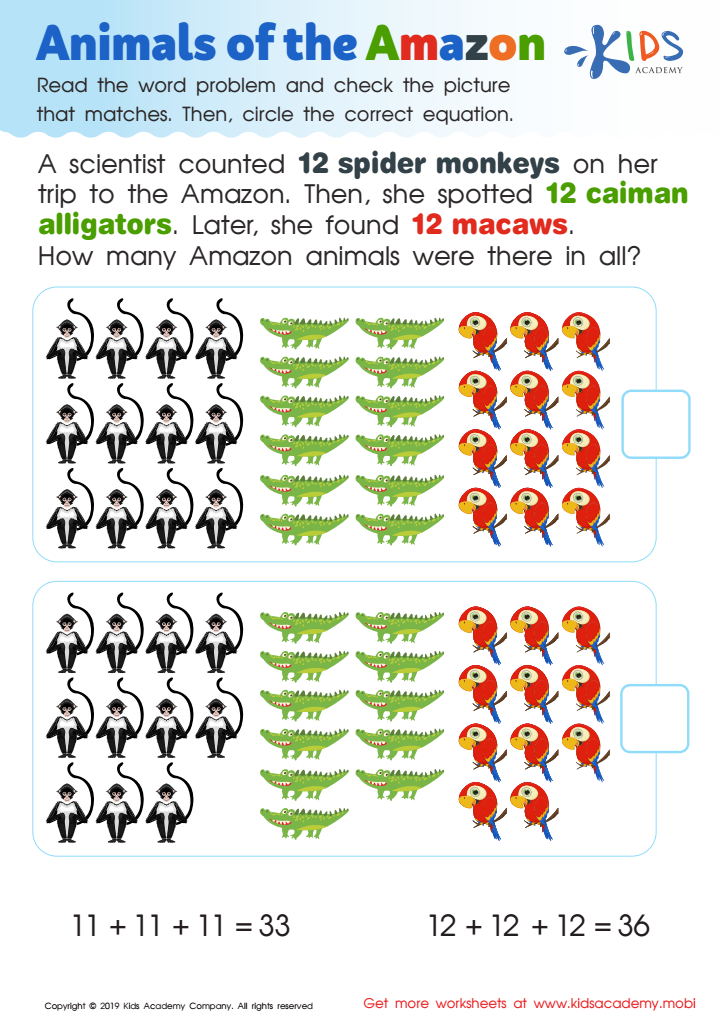
Animals of Amazon Worksheet
 Assign to My Students
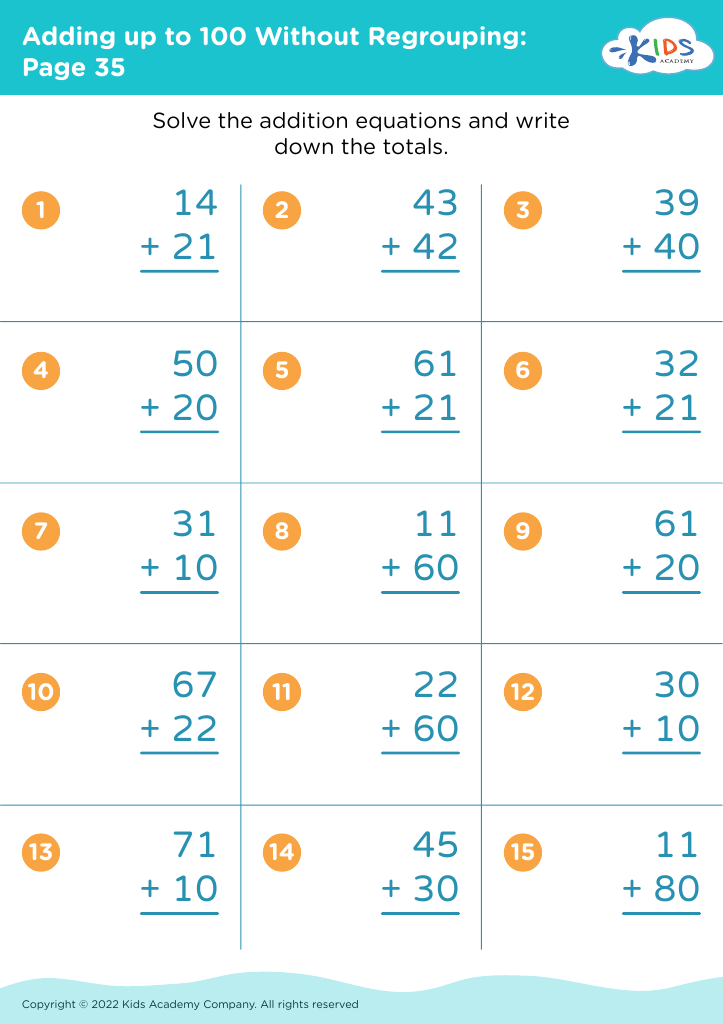
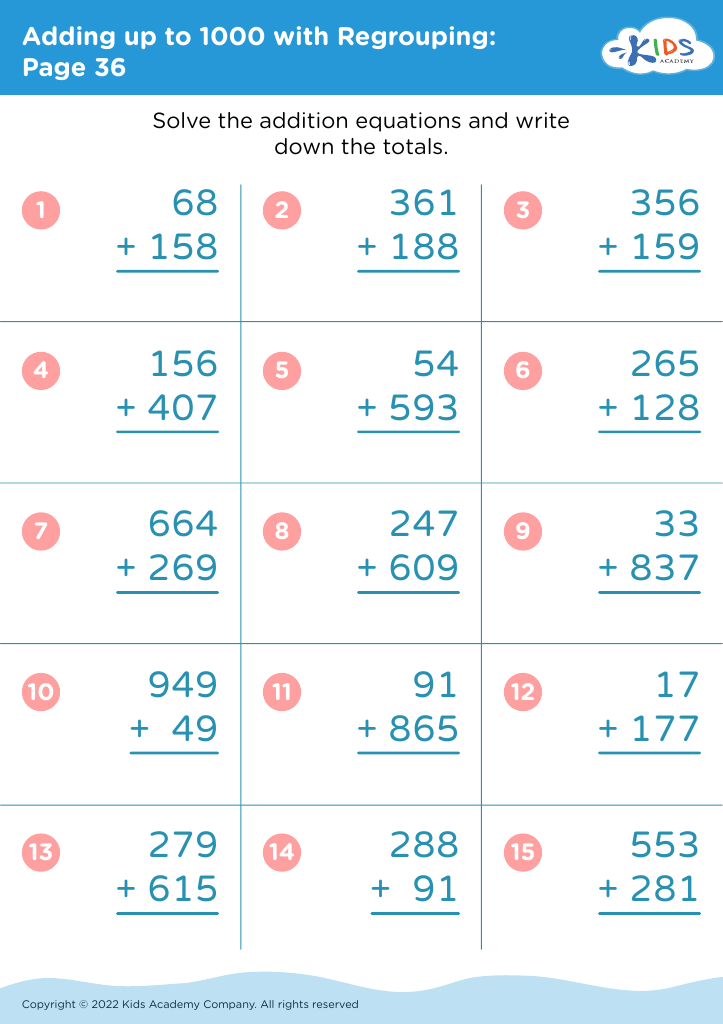








Vocabulary building in the context of addition and subtraction is crucial for children aged 5-7 as it shapes their mathematical understanding and overall academic success. Early elementary years are formative; at this stage, children not only learn numerical operations but also the language associated with math concepts. Familiarity with vocabulary such as "plus," "minus," "sum," "difference," and "equals" allows them to articulate their thoughts, understand instructions, and decode word problems effectively.
Moreover, a strong math vocabulary enhances problem-solving skills. Children who grasp the terms associated with addition and subtraction can easily connect ideas and think critically about numbers. This foundational literacy contributes to confidence in their abilities, engagement in learning, and assimilation of more complex concepts in later grades.
For caregivers and educators, promoting vocabulary alongside numeracy skills fosters a holistic learning environment. When students can discuss their reasoning, they not only build comprehension but are also more likely to pursue further math-related challenges. Ensuring that children are equipped with both mathematical and linguistic tools empowers them for lifelong learning and success in STEM fields, demonstrating that vocabulary building in early math is not just about numbers but about fostering a comprehensive educational foundation.








