Basic Arithmetic Addition Worksheets for Ages 5-7 - Page 2
39 filtered results
-
From - To
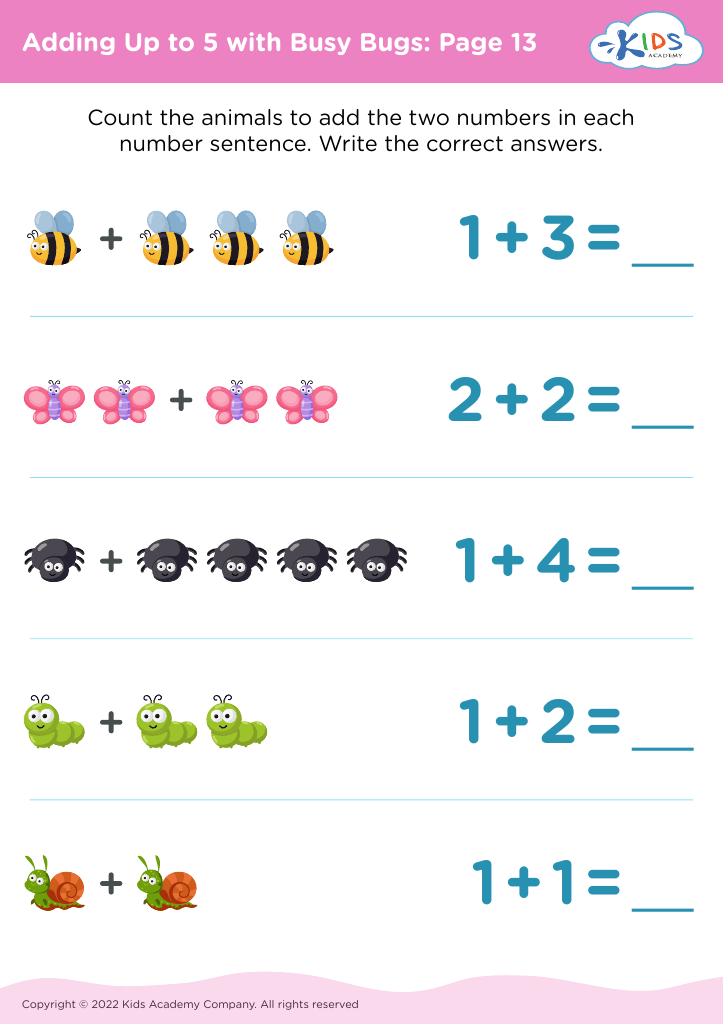
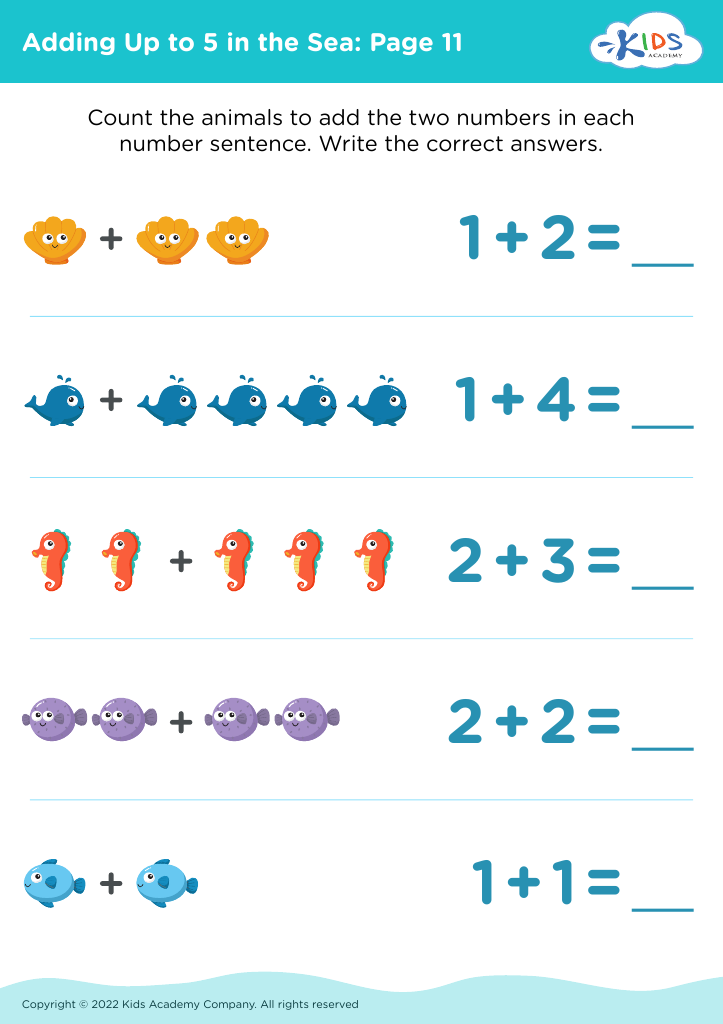
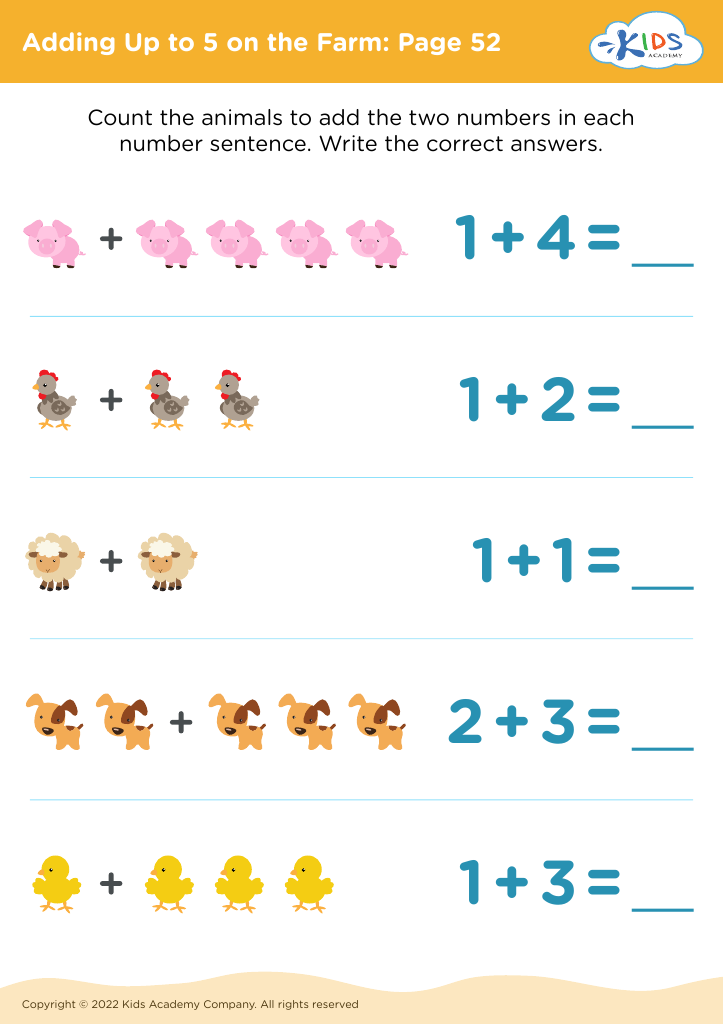
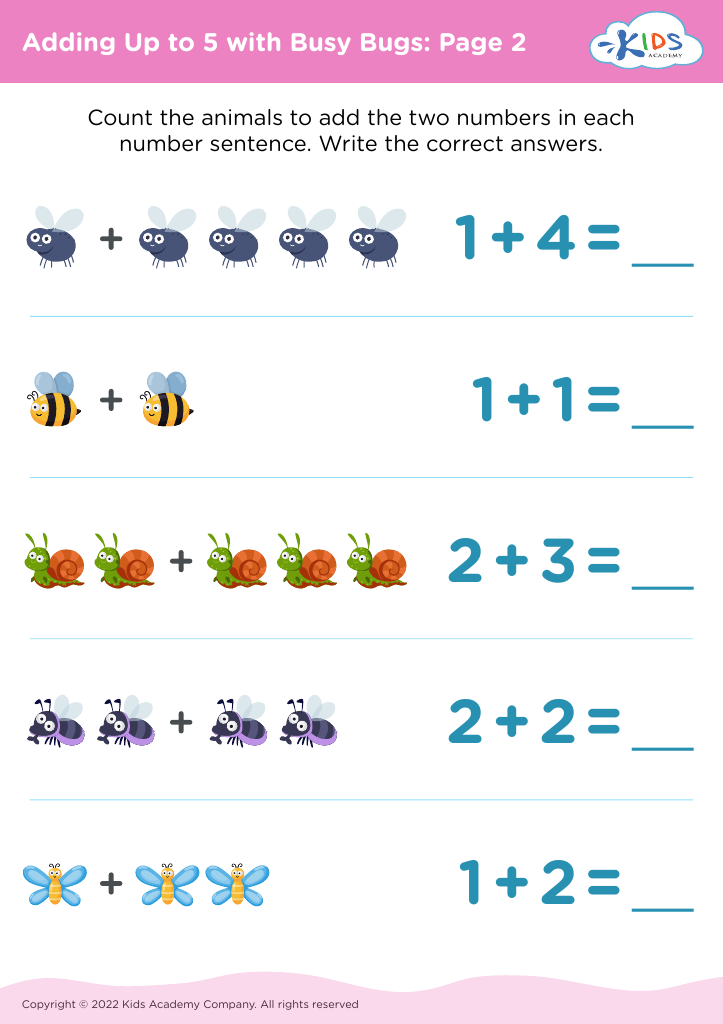
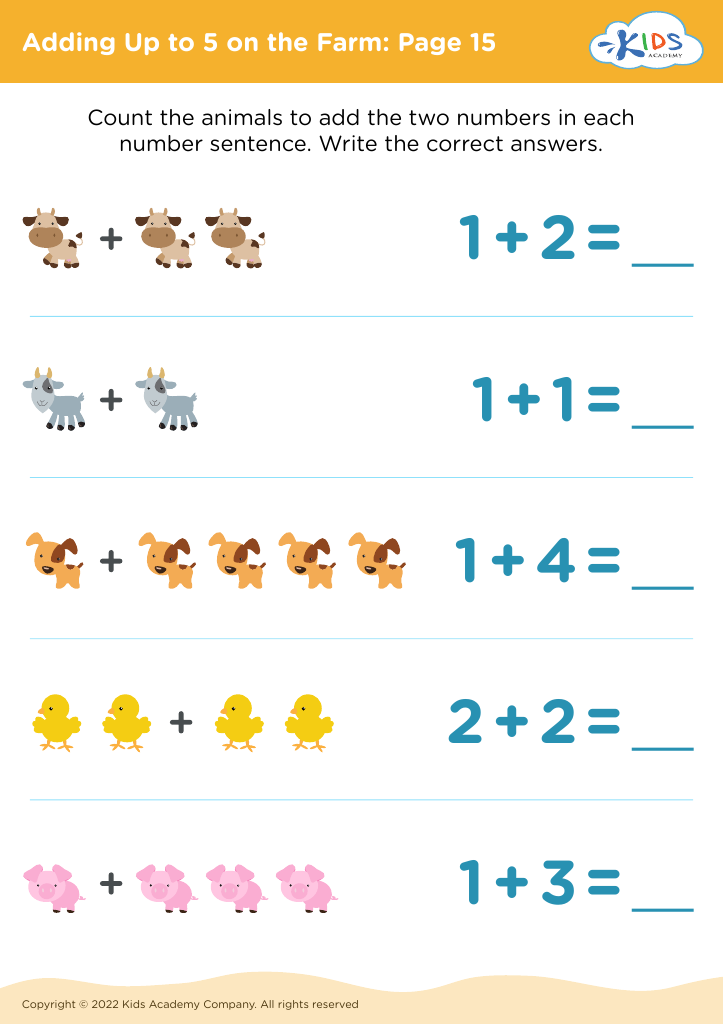
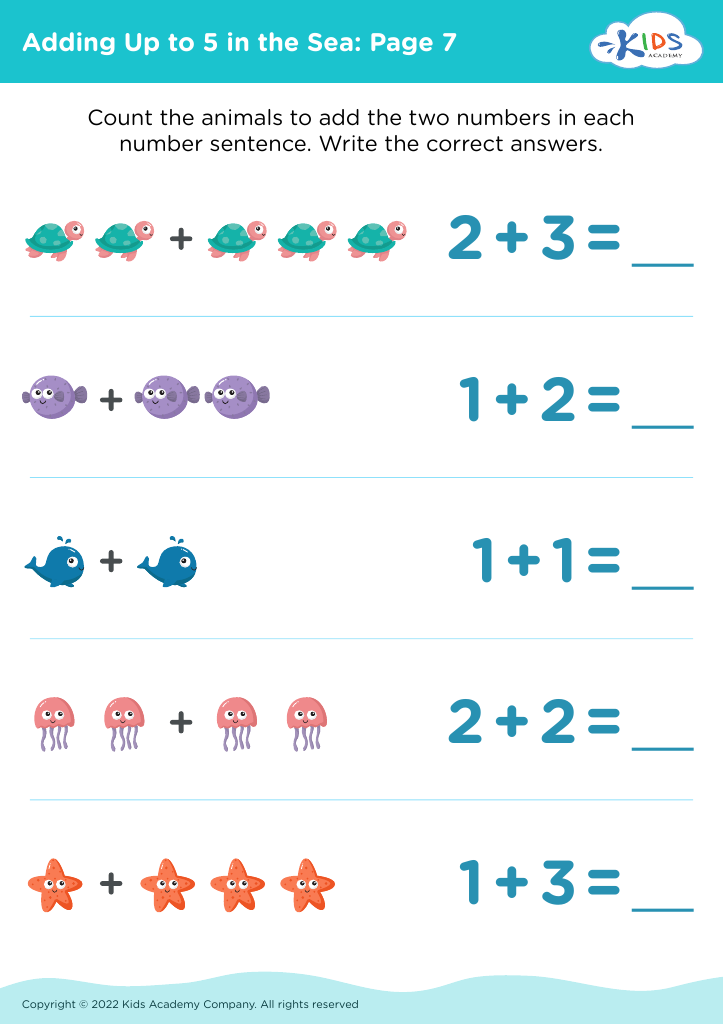
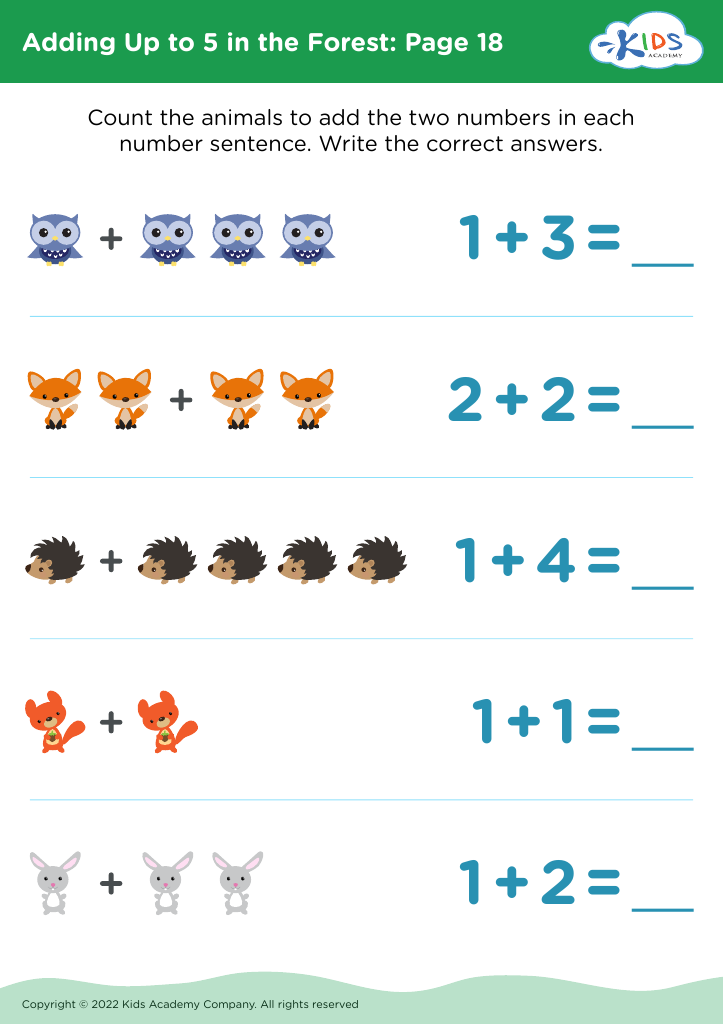
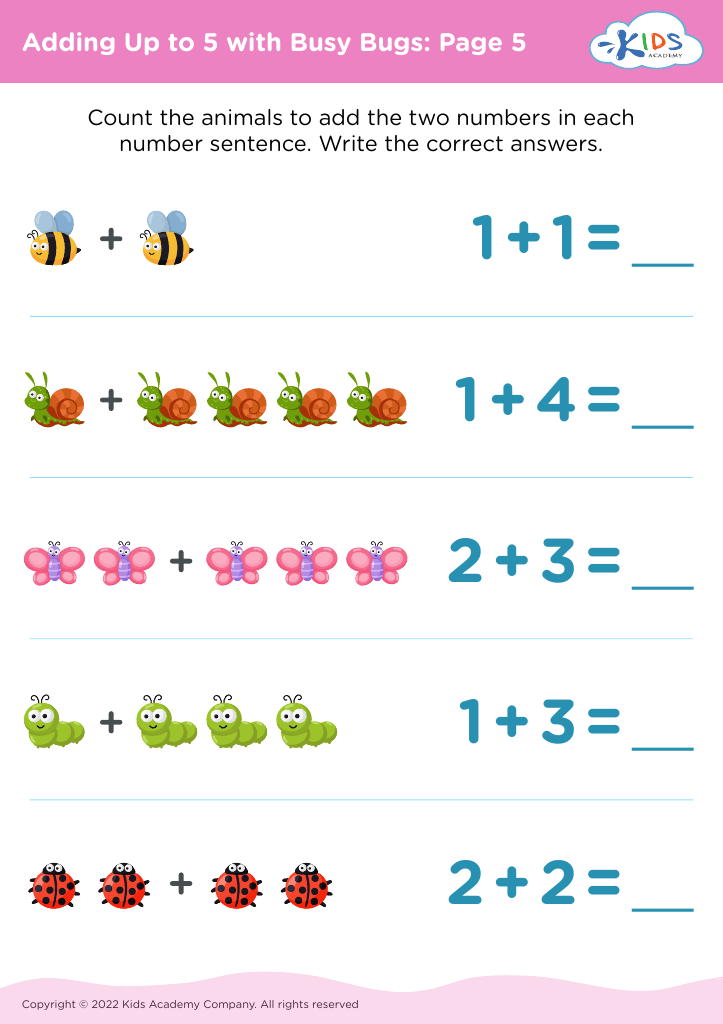
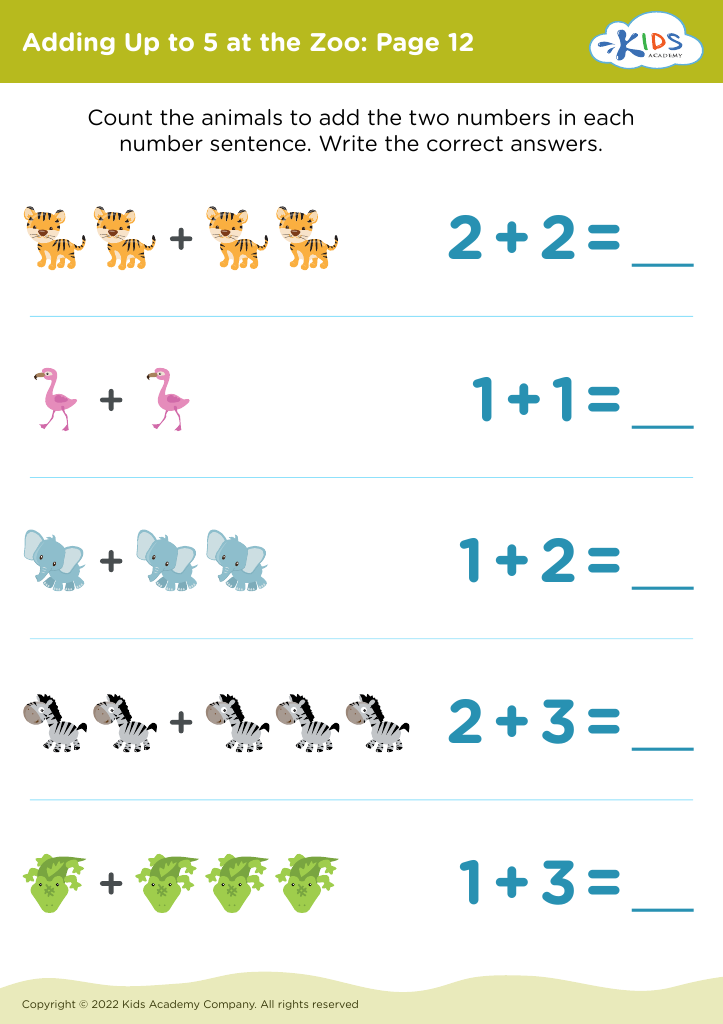
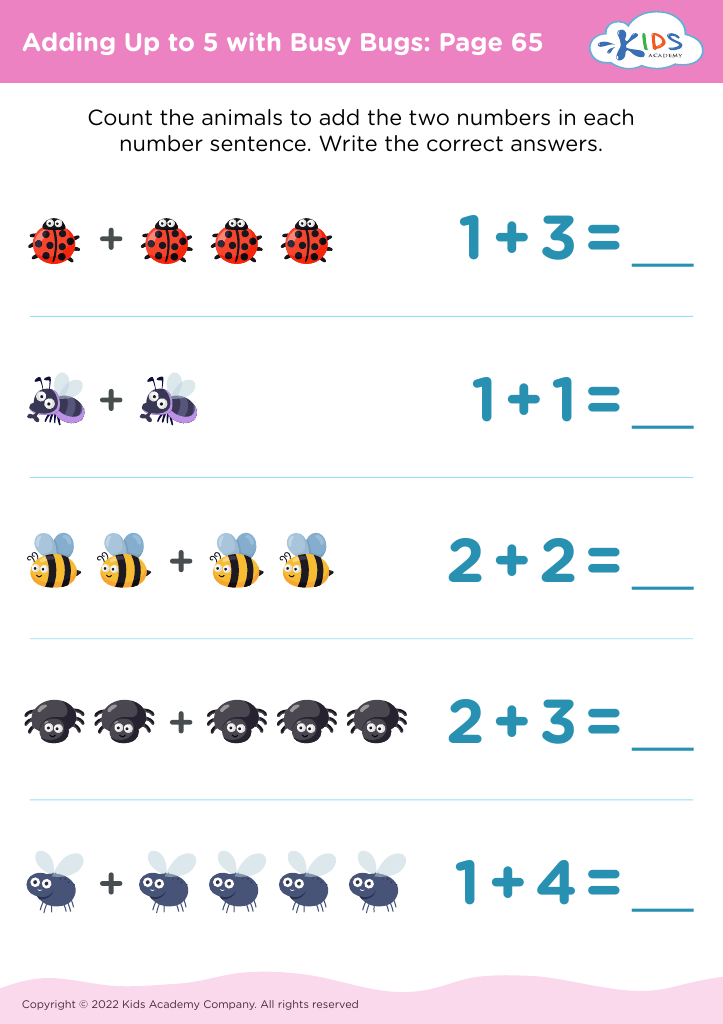
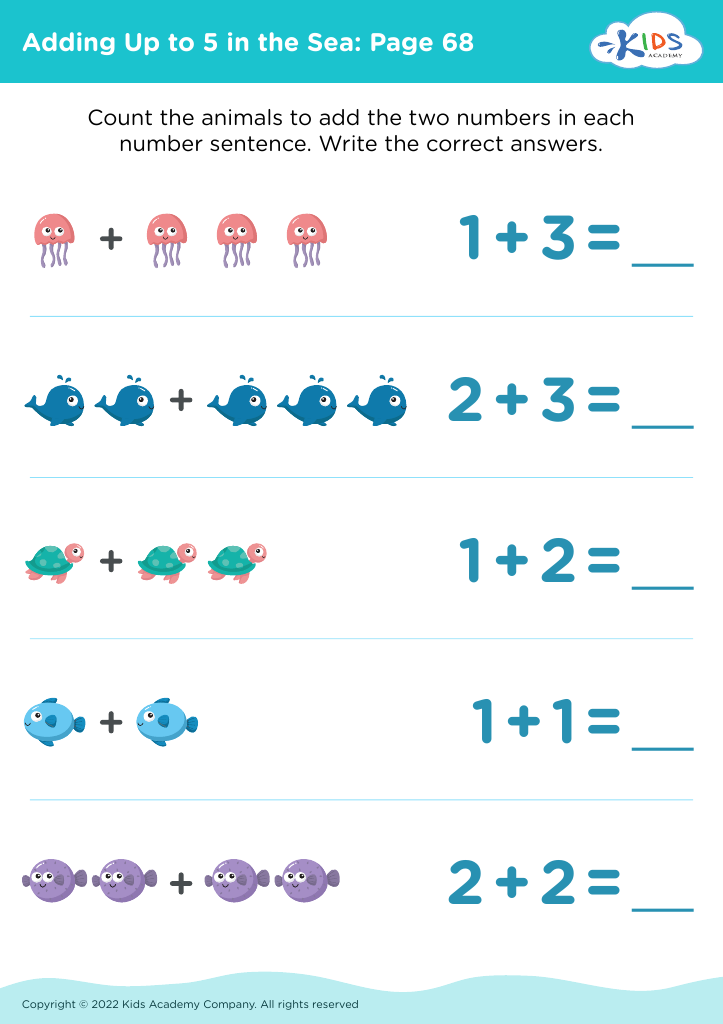
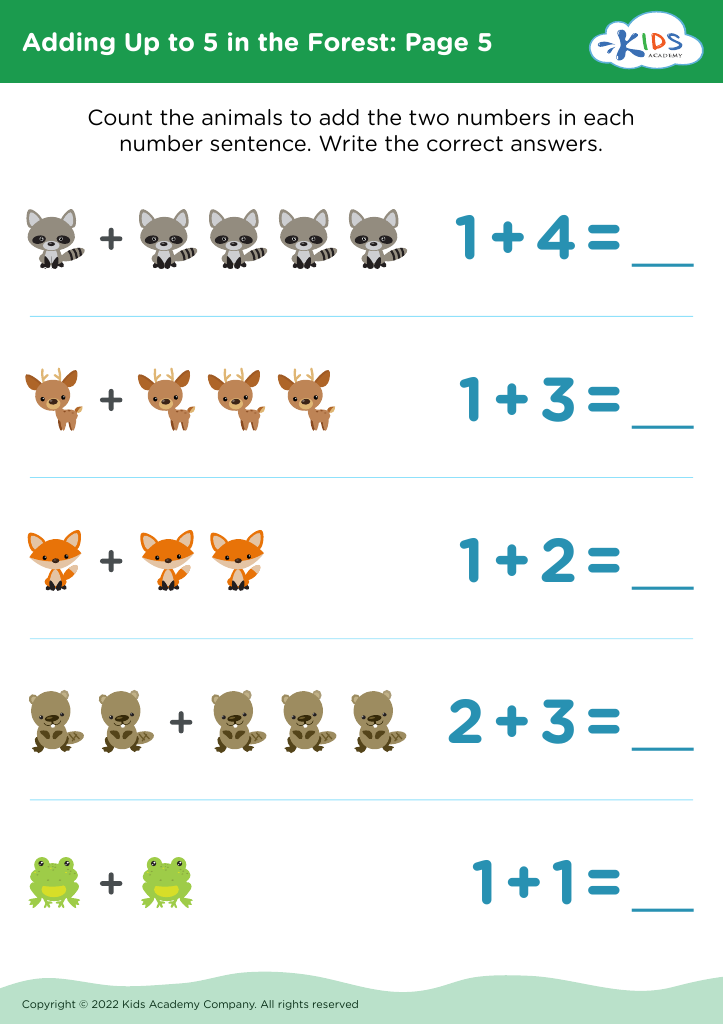
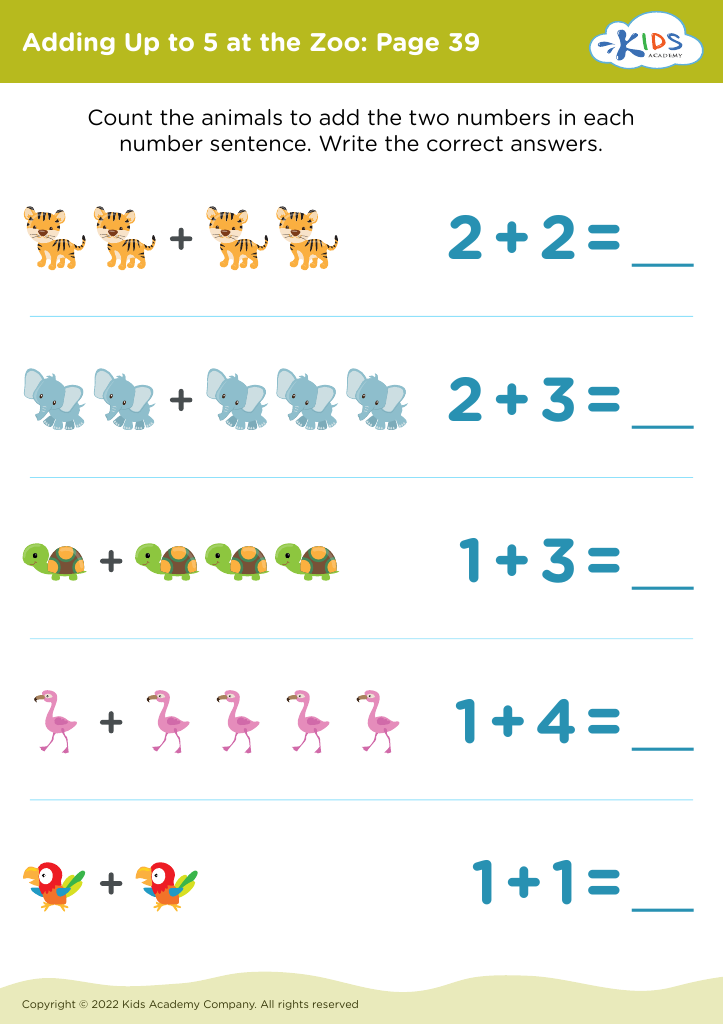
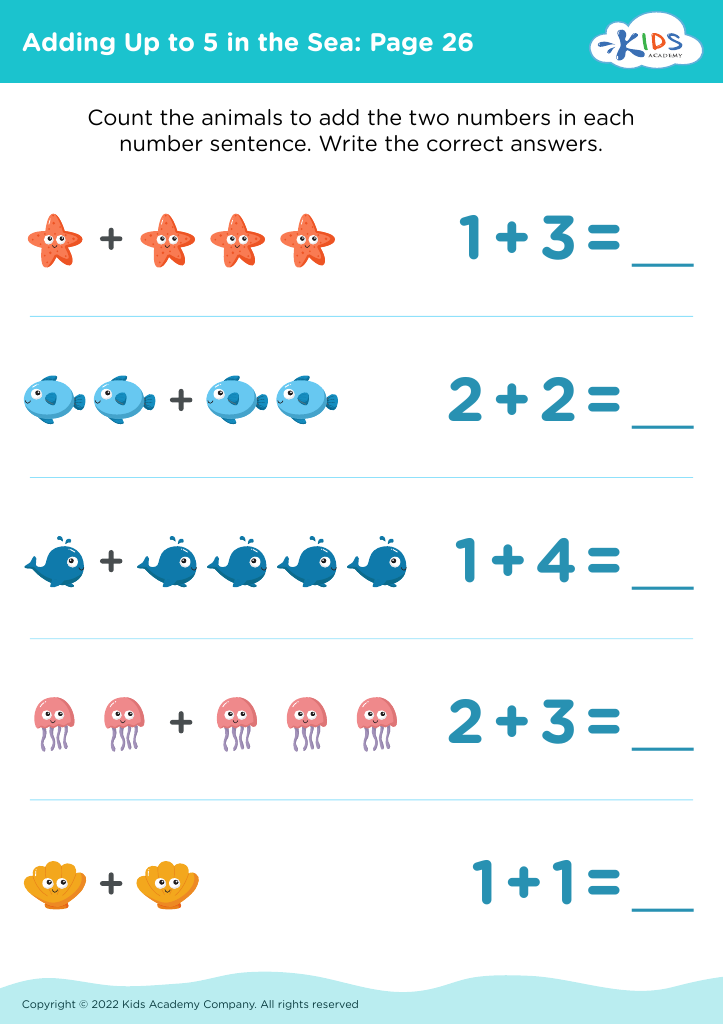
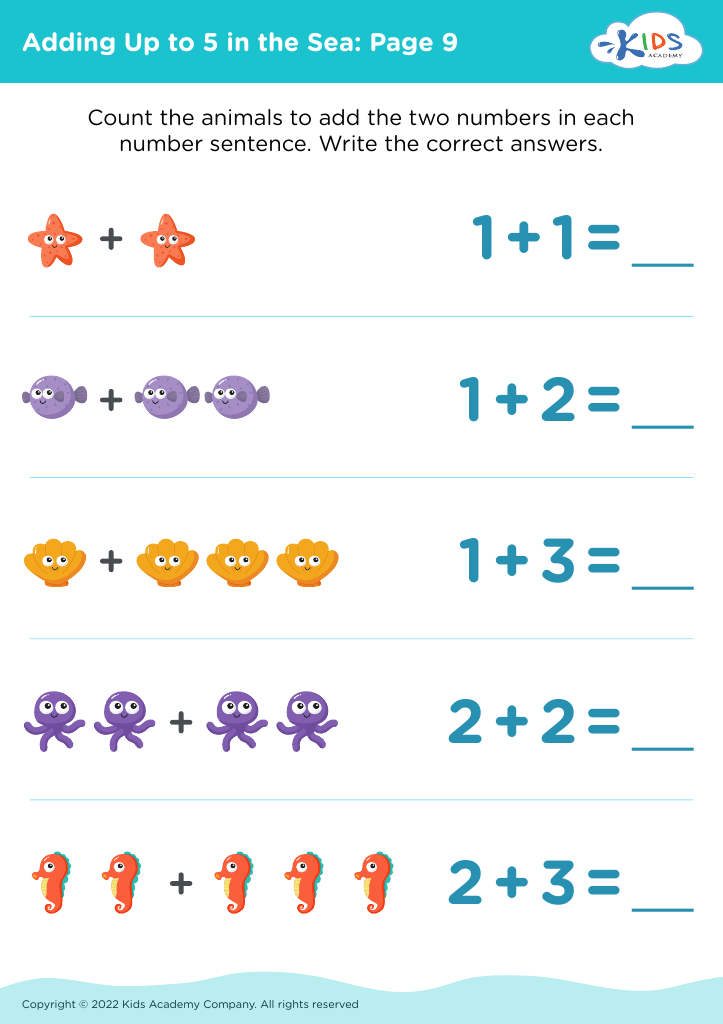




.jpg)



Basic arithmetic addition is a cornerstone of early mathematical education and plays a significant role in the cognitive and educational development of children ages 5-7. Parents and teachers should prioritize this fundamental skill for several compelling reasons:
First and foremost, addition is one of the primary building blocks of math. Mastery of basic addition provides a solid foundation for learning more complex mathematical concepts later on, such as subtraction, multiplication, and division. Understanding addition helps children gain confidence in their mathematical abilities, encouraging a positive attitude towards math as they progress through their education.
Furthermore, basic addition exercises essential cognitive skills, including problem-solving, logical thinking, and memory. These skills are crucial not only for math but also for other academic subjects and daily life. For instance, children use addition when telling time, handling money, or measuring ingredients in cooking.
Socially, children who are adept at basic math skills tend to perform better in collaborative learning activities, leading to improved communication and teamwork skills. Lastly, mastering addition assists in developing patience and perseverance as children learn to approach problems methodically.
Therefore, investing time and effort in teaching and reinforcing basic arithmetic addition during these formative years sets the stage for future academic success and functional competence in everyday life.








