Enhancing calculation speed Addition Worksheets for Ages 5-7
3 filtered results
-
From - To
Welcome to our collection of "Enhancing Calculation Speed Addition Worksheets," designed for children aged 5-7. These engaging and interactive worksheets focus on improving addition speed through enjoyable exercises that reinforce math skills. Each worksheet is crafted to build confidence and familiarity with numbers, ensuring young learners can perform basic addition quickly and accurately. From simple problems to fun challenges, our resources promote effective learning strategies while keeping your child engaged. Ideal for both classroom and home use, these worksheets support early math development and help children become proficient in addition. Discover the joy of learning with our tailored activities!
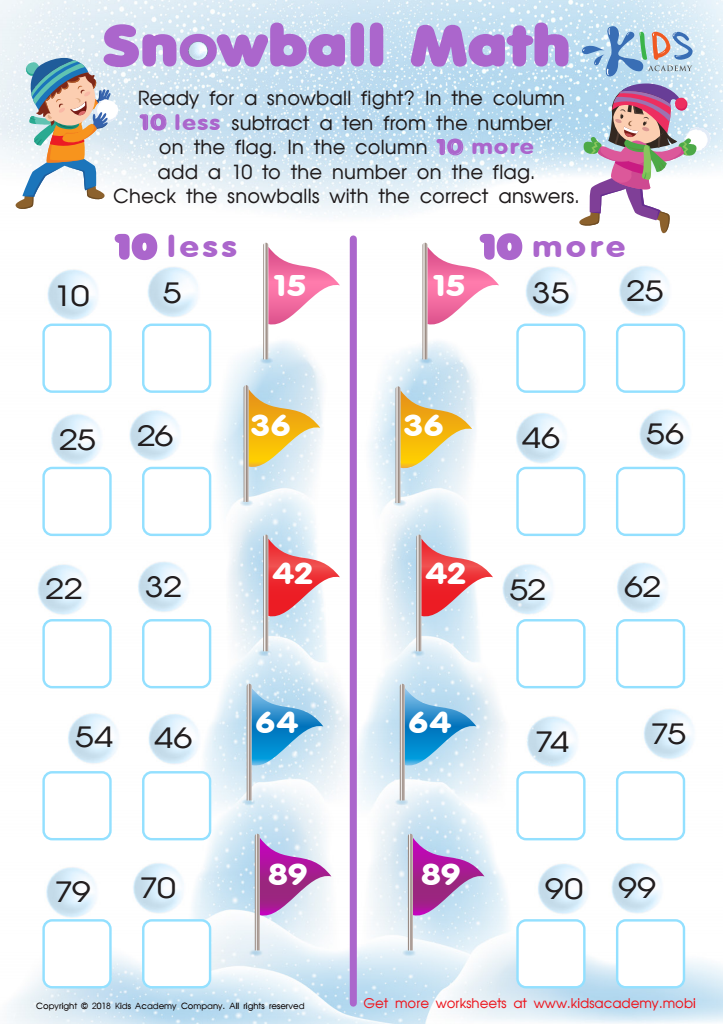
Snowball Math Worksheet
 Assign to My Students
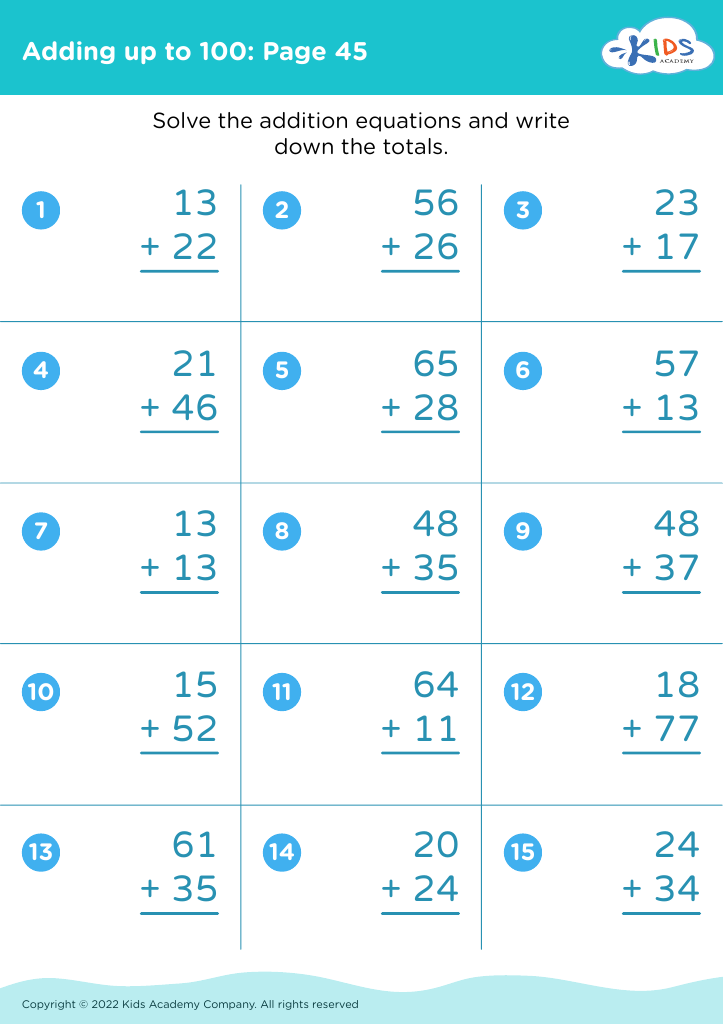
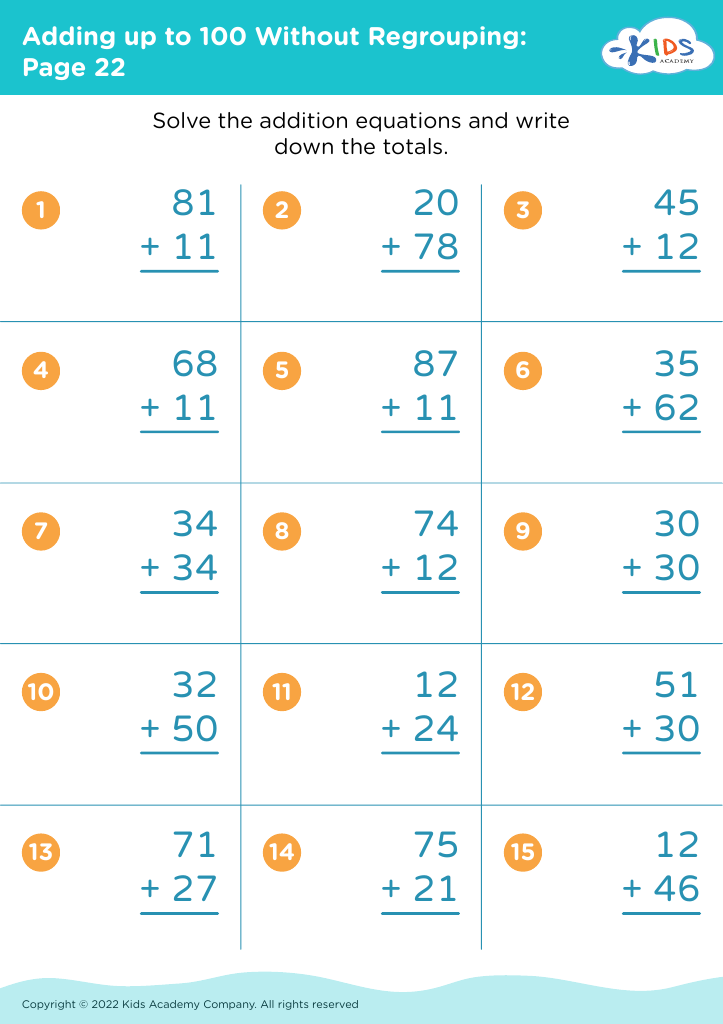








Enhancing calculation speed in addition for children aged 5-7 is crucial for several reasons. First, quick addition skills build a solid foundation for more advanced mathematical concepts that they will encounter later in their academic journey. Speed in basic calculations also boosts a child's confidence, making them more willing to participate in math-related activities and discussions.
Additionally, when children can perform arithmetic operations quickly, they can focus on problem-solving and critical thinking rather than getting bogged down in slow calculations. This ability to work through math problems efficiently opens doors to a deeper understanding of mathematics, promoting a love for the subject.
Furthermore, as children grow older, many standardized tests and classroom assessments measure not just correct answers, but also how quickly students can solve problems. By developing calculation speed early, parents and teachers help children prepare for these evaluations.
Lastly, enhancing calculation speed in young learners supports lifelong skills such as decision-making and everyday problem-solving. Ultimately, nurturing strong foundational math skills in early education sets the stage for a child's future academic success and personal confidence in dealing with numbers. Therefore, parents and teachers play an essential role in this vital aspect of early development.








