Fine Motor Skills (coloring) Addition Worksheets for Ages 5-7
6 filtered results
-
From - To
Enhance your child's fine motor skills and reinforce essential addition concepts with our engaging coloring worksheets, designed for ages 5-7. Our expertly crafted sheets combine the joy of coloring with the challenge of basic math problems, ensuring a fun and effective learning experience. By blending creativity with core educational principles, these worksheets promote proper pencil grip, hand-eye coordination, and precision. Perfect for early learners, they encourage independent work and build a strong mathematical foundation. Explore a variety of themes and bring math to life with vibrant colors, making learning addition a delightful adventure for your young mathematician. Download now at Kids Academy!
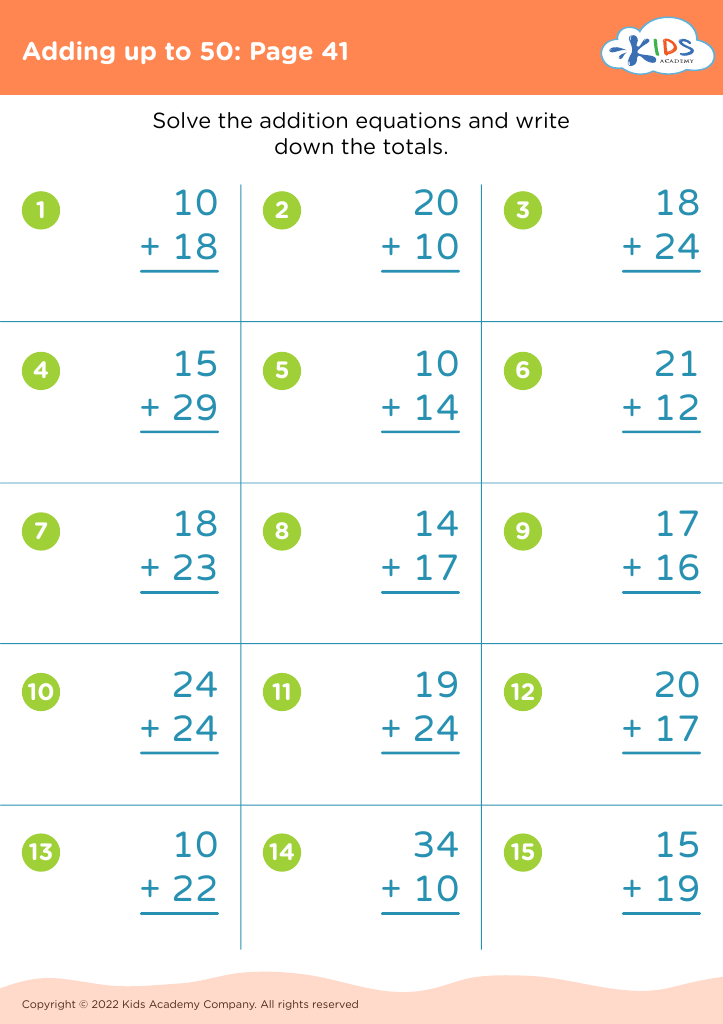
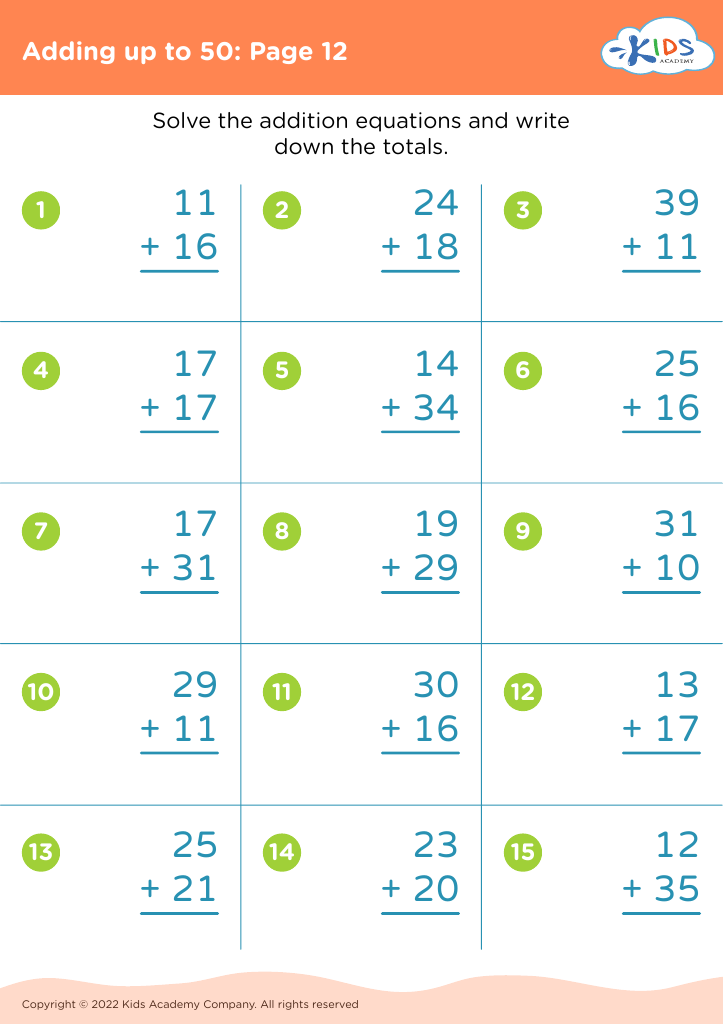
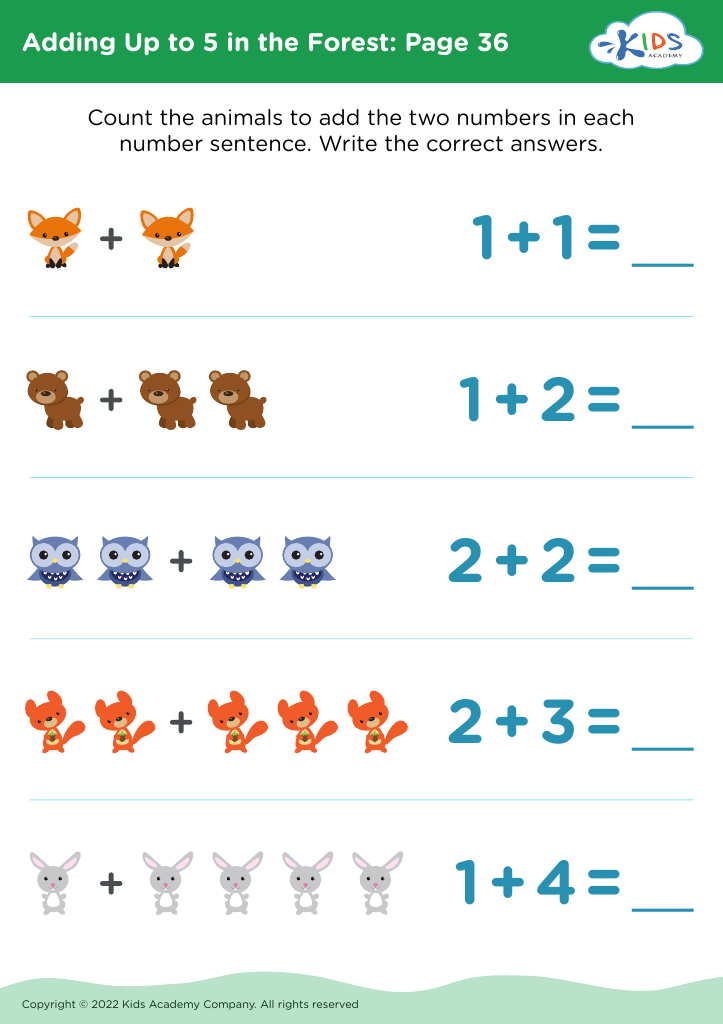
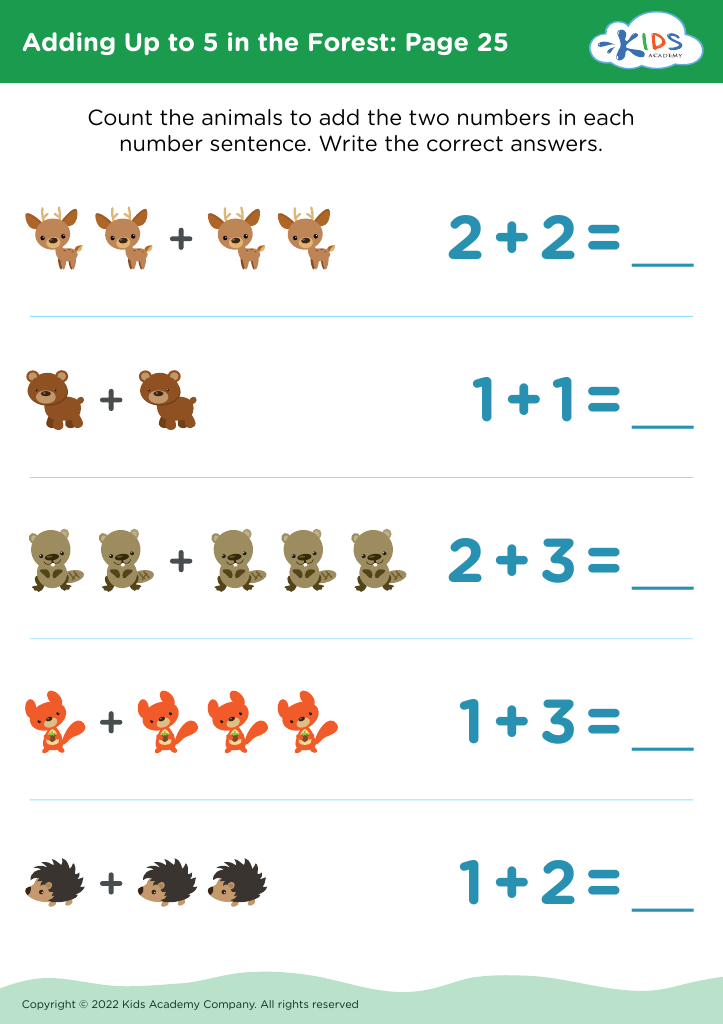
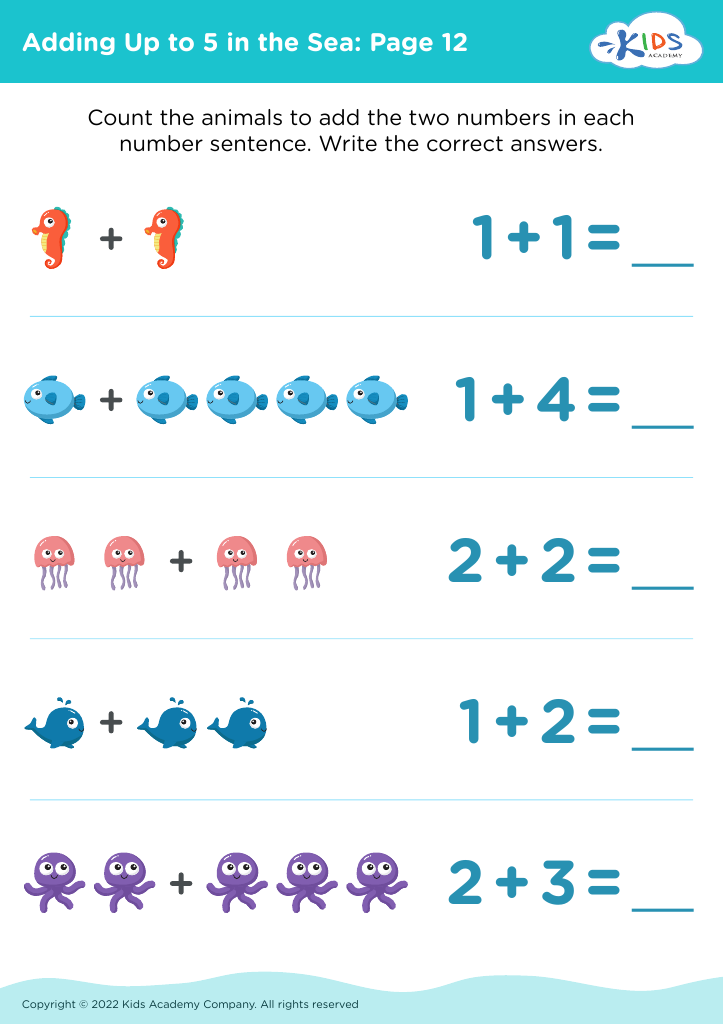
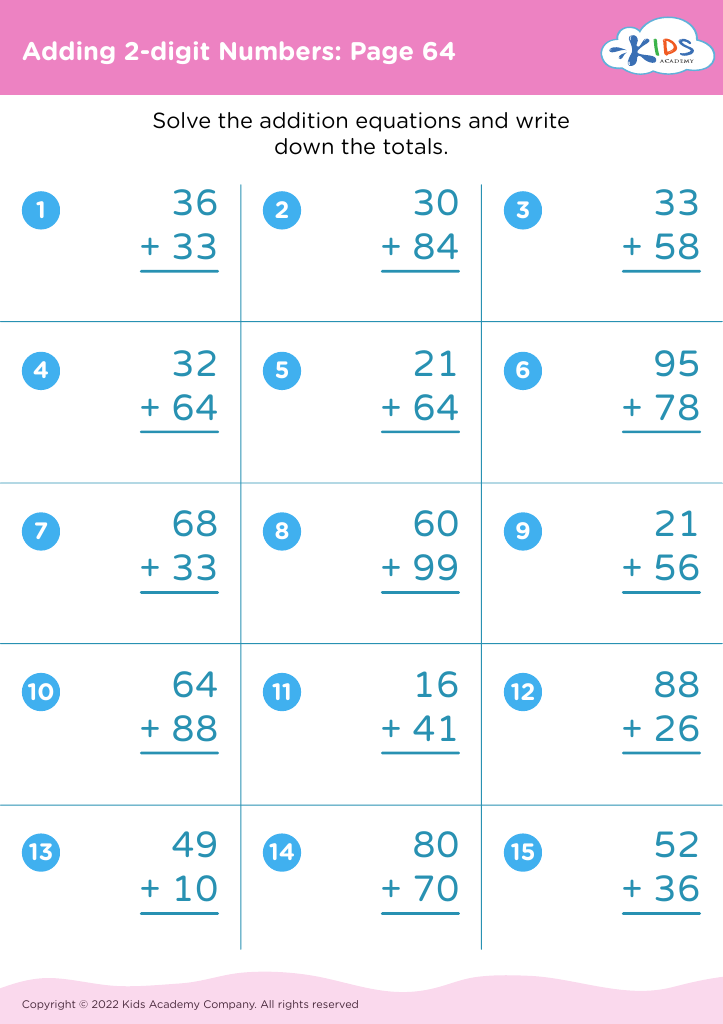








Fine motor skills, such as coloring, are crucial for children aged 5-7 because they underlie academic and everyday successes. These skills involve the coordinated efforts of the small muscles in the fingers, hands, and wrists, which are essential for tasks such as writing, cutting, and buttoning clothes. By focusing on activities like coloring, children develop hand-eye coordination, dexterity, and concentration.
Coloring, in particular, provides a multi-sensory experience that can enhance cognitive development and boost memory retention by engaging a child's focus. Furthermore, it encourages spatial awareness and an understanding of boundaries, as they learn to keep their coloring within the lines. This also lays the foundation for effective writing skills, preparing them for more complex tasks in subsequent grades.
Additionally, fine motor skills activities contribute to emotional development and build perseverance and patience. Through repetitive and enjoyable tasks like coloring, children frequently feel a sense of accomplishment, fostering confidence. This can make children more willing to tackle other challenges both inside and outside the classroom.
Therefore, parents and teachers should emphasize fine motor skills development through activities like coloring. Not only do these tasks support academic readiness, but they also facilitate crucial life skills, positioning children for long-term success and independence.








