Learn new vocabulary Addition Worksheets for Ages 5-7
4 filtered results
-
From - To
Introduce your little ones to the world of math with our "Learn New Vocabulary Addition Worksheets" designed for ages 5-7! These engaging worksheets help young learners expand their math vocabulary while mastering addition skills. Fun activities include matching terms to definitions, solving addition problems, and participating in interactive word games that make learning enjoyable. Perfect for classroom use or at-home learning, these printable resources aim to build a strong foundation in both math and language skills. Help your child develop confidence and enthusiasm for math through our thoughtfully crafted worksheets tailored to their developmental needs! Get started today!
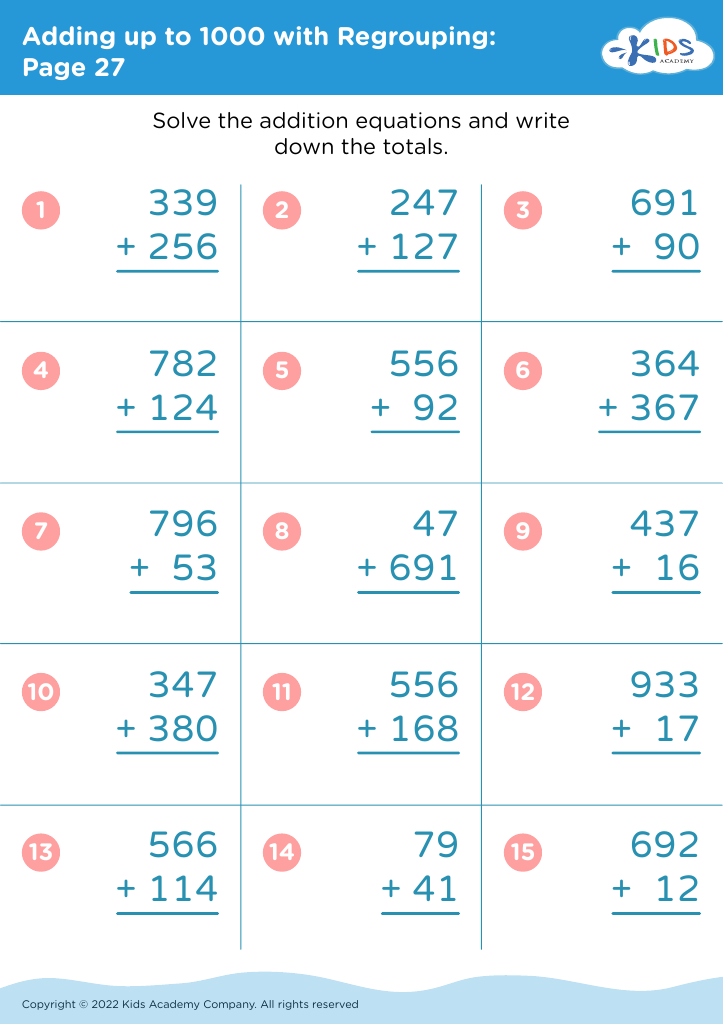
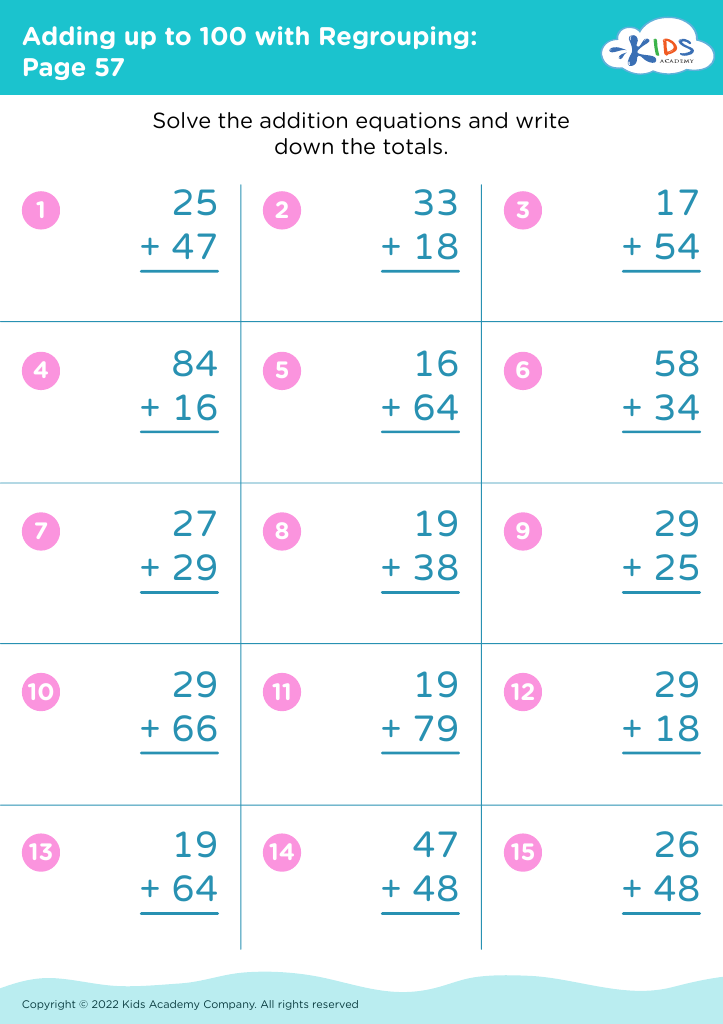
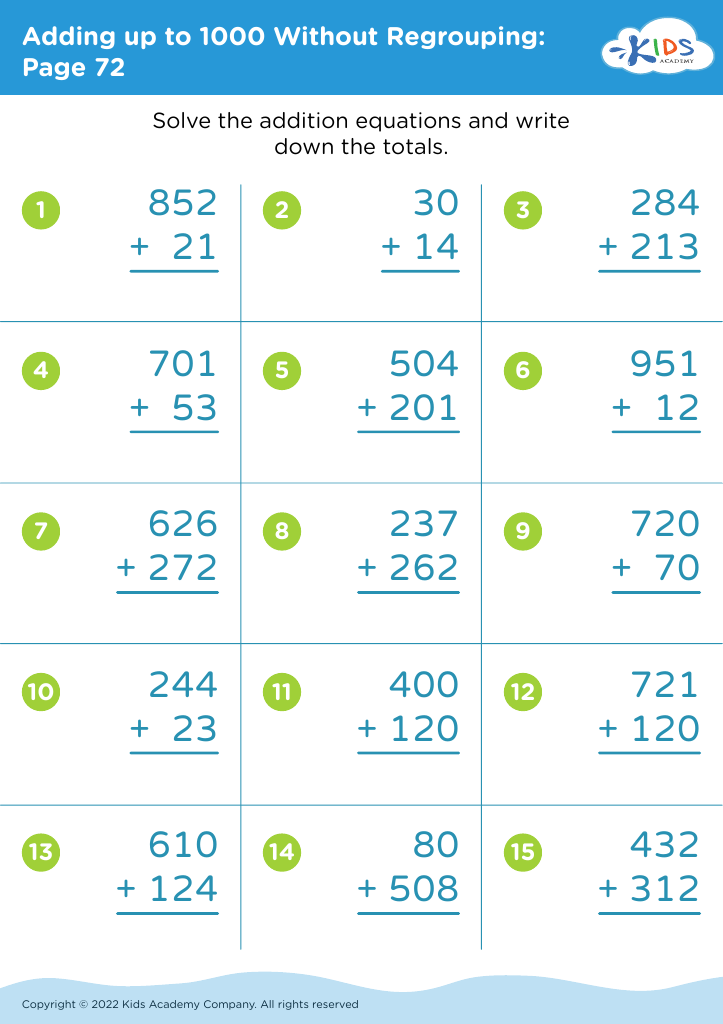
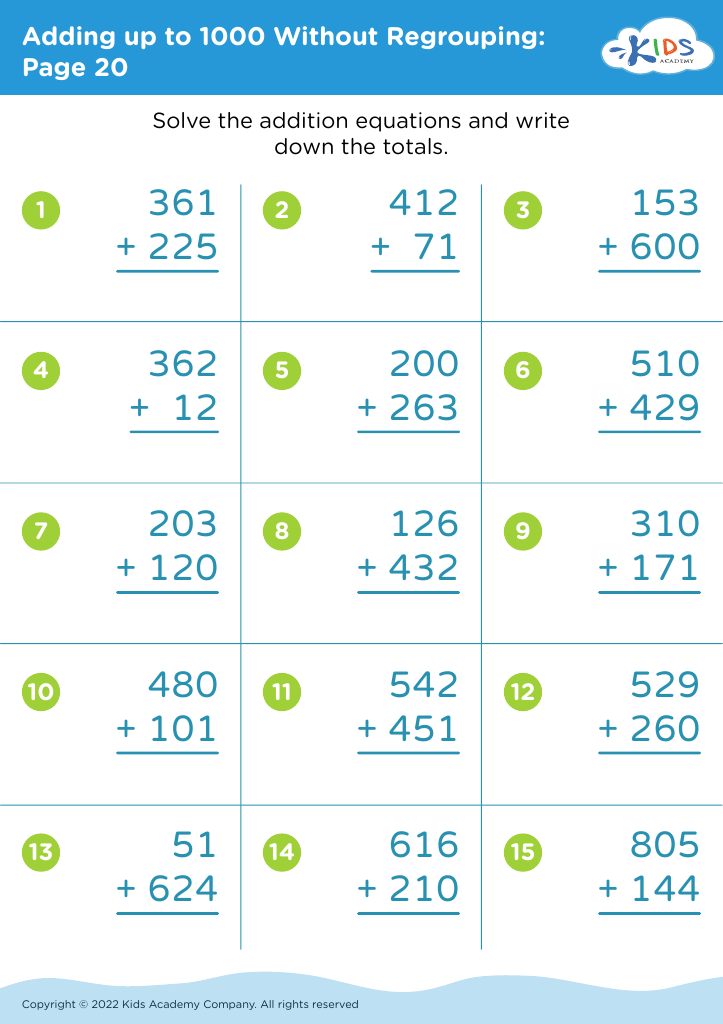








Parents and teachers play a crucial role in a child's early education, particularly in developing foundational skills like vocabulary and mathematical concepts. Learning new vocabulary, especially in the context of addition for ages 5-7, is essential for several reasons.
Firstly, a strong vocabulary enhances a child's communication skills, enabling them to articulate thoughts, ask questions, and express understanding of mathematical concepts. As children learn to describe addition—using terms such as "sum," "more," and "combine"—they become more proficient in discussing and solving math problems both verbally and in writing.
Additionally, vocabulary development supports cognitive skills, including critical thinking and comprehension. When children grasp the language surrounding math, they can better understand instructions, word problems, and the reasoning behind different strategies. This understanding nurtures a positive attitude towards math and boosts confidence in their problem-solving abilities.
Finally, lifelong learning begins with early exposure to vocabulary and basic concepts. By fostering a rich vocabulary related to addition, parents and teachers provide kids with the tools to succeed in later math challenges and support overall academic achievement. Ultimately, investing time in vocabulary development lays the groundwork for enhanced learning in all areas of education.








