Logical thinking Addition Worksheets for Ages 5-7
9 filtered results
-
From - To
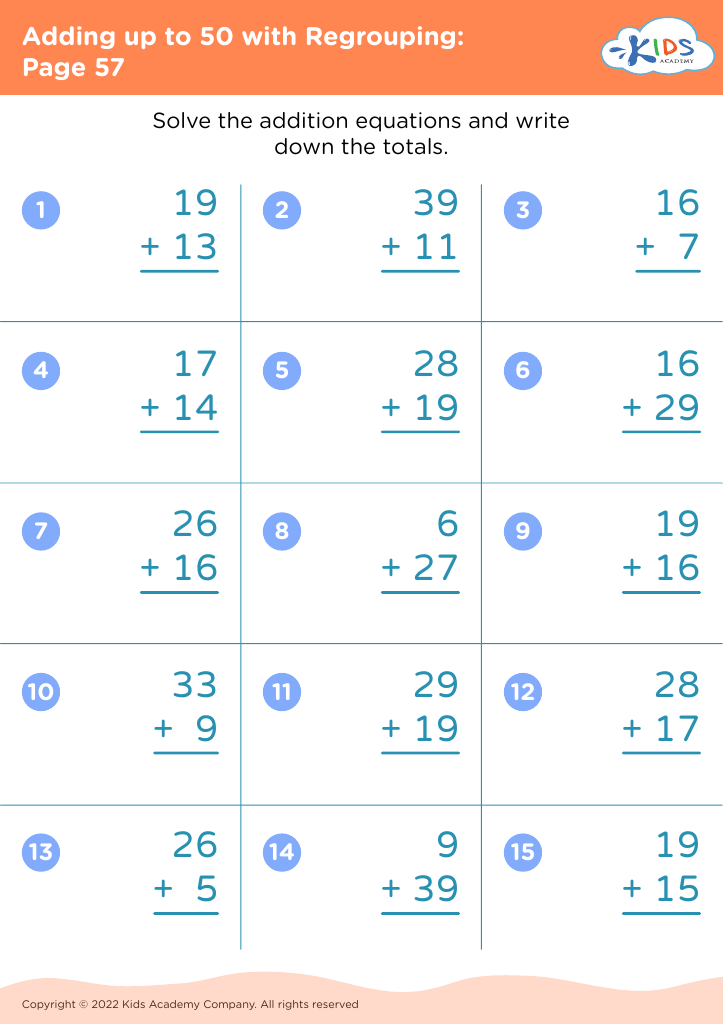
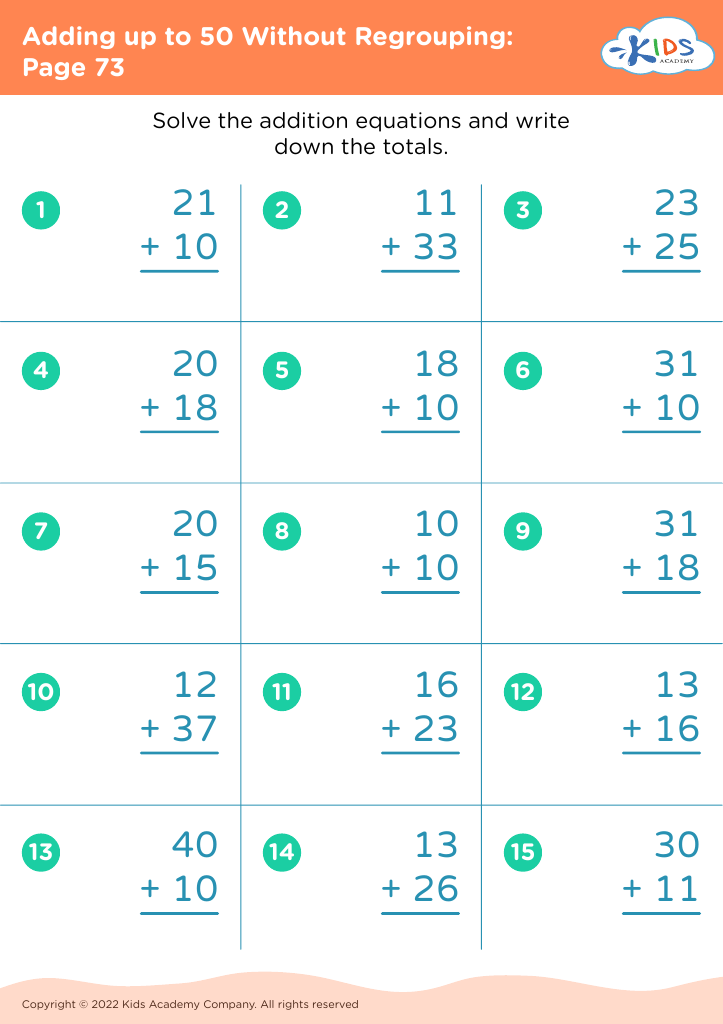
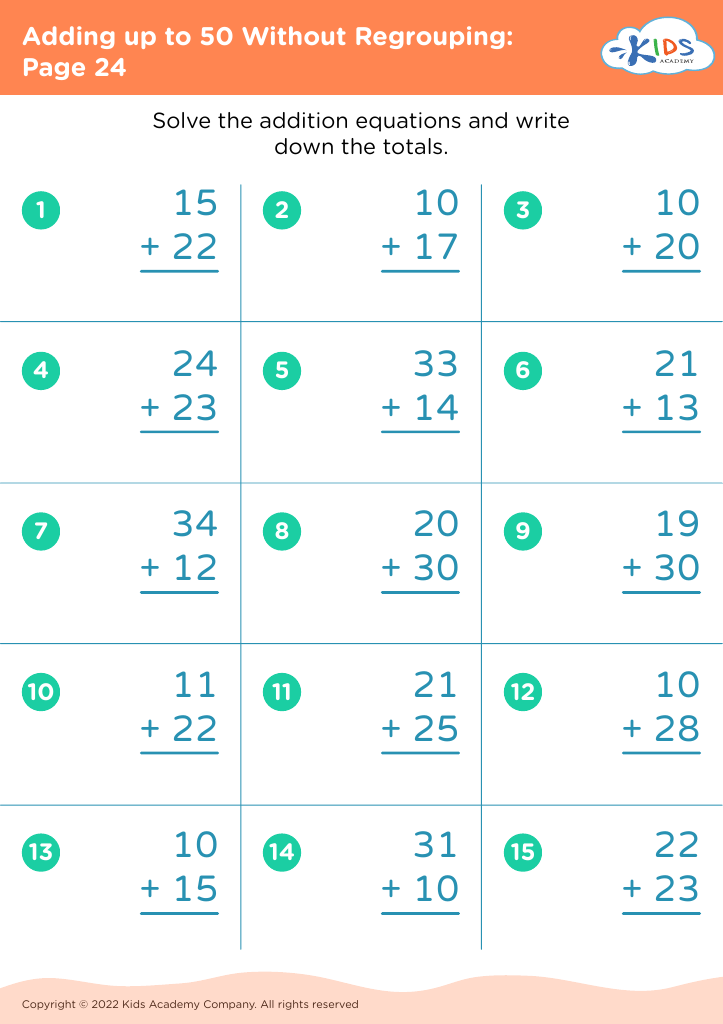
Enhance your child's math skills with our engaging Logical Thinking Addition Worksheets designed specifically for ages 5-7. These printable worksheets promote critical thinking through fun and interactive addition exercises. Each worksheet features colorful graphics and age-appropriate problems that challenge young minds, fostering both problem-solving skills and number sense. Our resources help children develop logical reasoning as they learn to apply addition in various contexts. Ideal for home or classroom use, these worksheets make learning math an enjoyable adventure. Download now and watch your child become a confident mathematician while developing essential logical thinking skills! Perfect for early learners eager to excel in math!
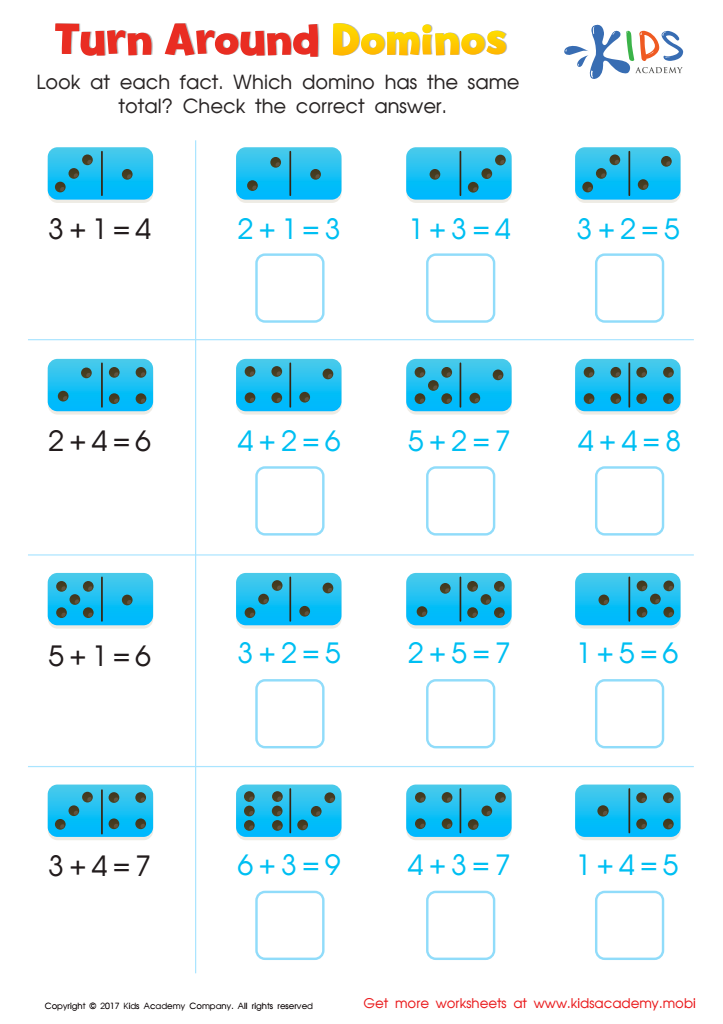
Turn Around Dominos Worksheet
 Assign to My Students
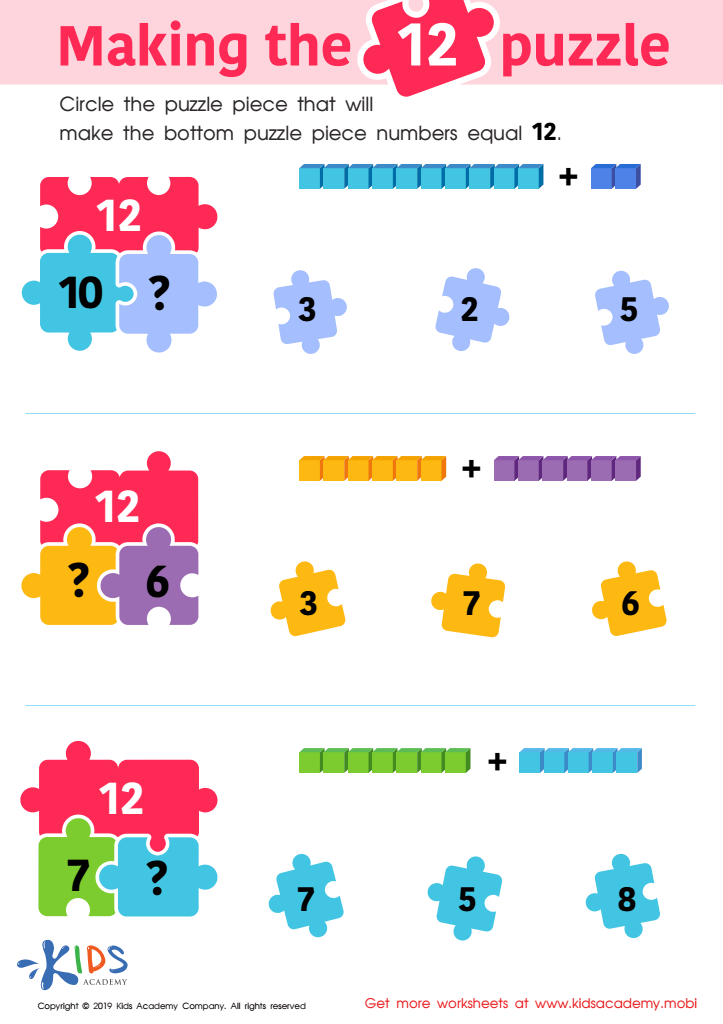
Making the 12 Puzzle Worksheet








Logical thinking addition, particularly for children aged 5 to 7, is a fundamental skill that lays the groundwork for future mathematical understanding and problem-solving abilities. At this age, children begin to develop critical thinking skills that allow them to recognize patterns, make connections, and apply reasoning to solve problems. By focusing on logical thinking addition, parents and teachers can enhance children's number sense, which is essential for their overall academic success.
This concept encourages kids to approach addition not just as rote memorization of facts, but as a thoughtful process. Engaging in activities that promote logical thinking—like grouping, using visual aids, and exploring real-life scenarios—can make learning fun and relatable.
Furthermore, strong logical reasoning skills foster self-confidence and an inquisitive mindset. This allows children to explore more complex mathematical operations and can help them tackle real-world problems. By nurturing logical thinking in young children, parents and teachers cultivate a love for mathematics, contribute to their academic growth, and prepare them for a future where strong analytical skills are increasingly valuable. Developing these skills early on can lead to a more profound understanding of math, benefiting children throughout their educational journey.








