
Understanding directions Addition Worksheets for Ages 5-7
3 filtered results
Difficulty Level
Grade
Age
-
From - To
Subject
Activity
Standards
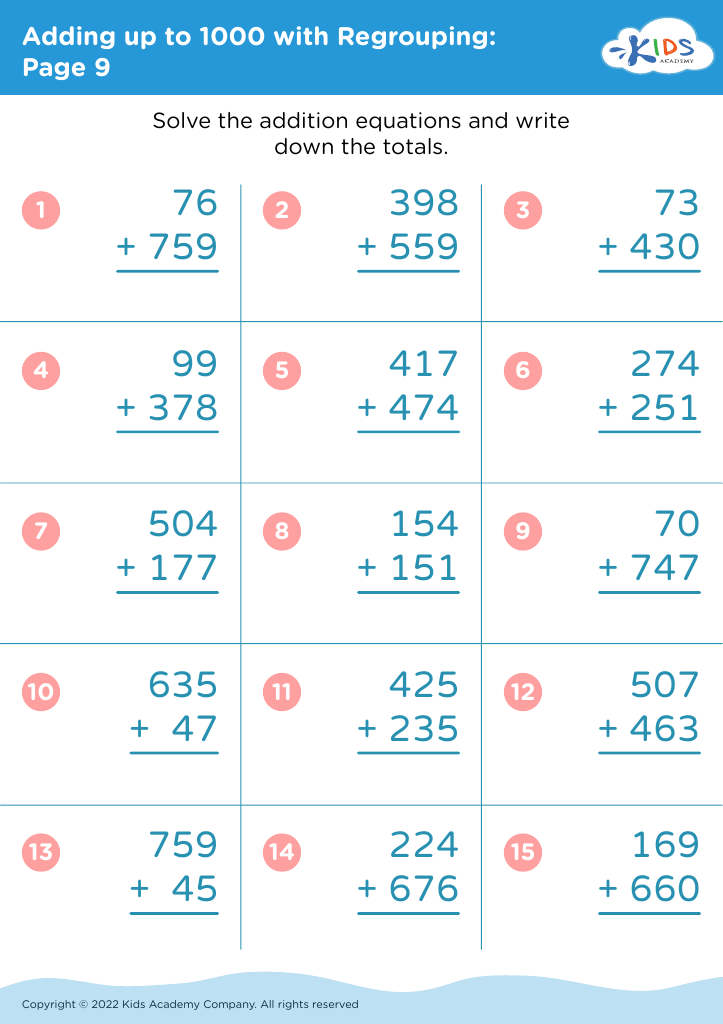
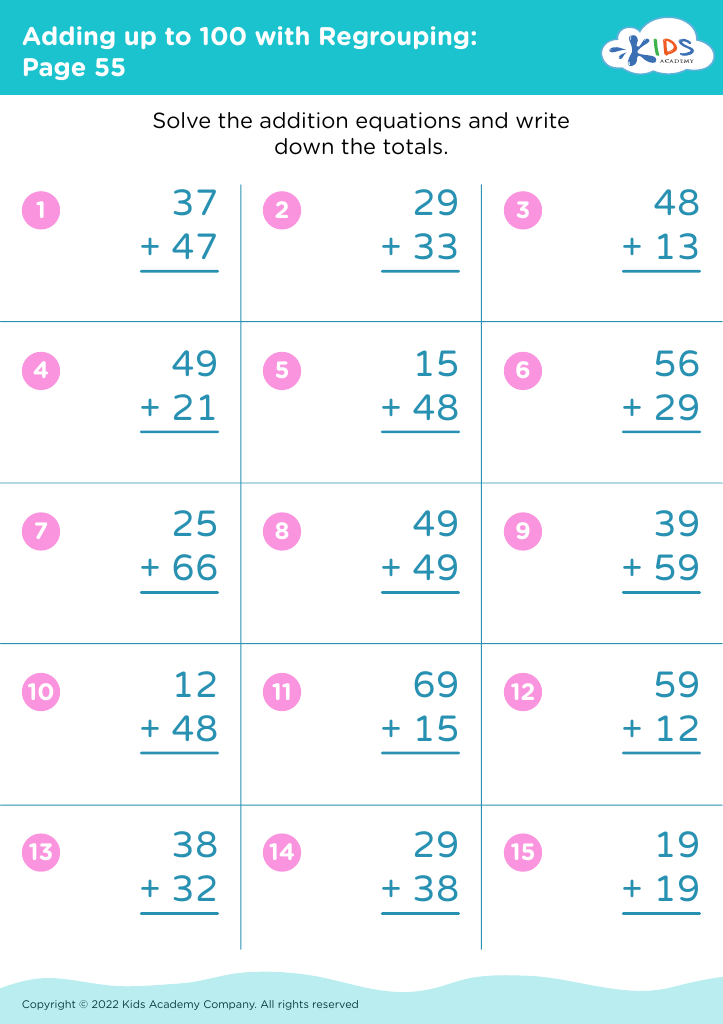
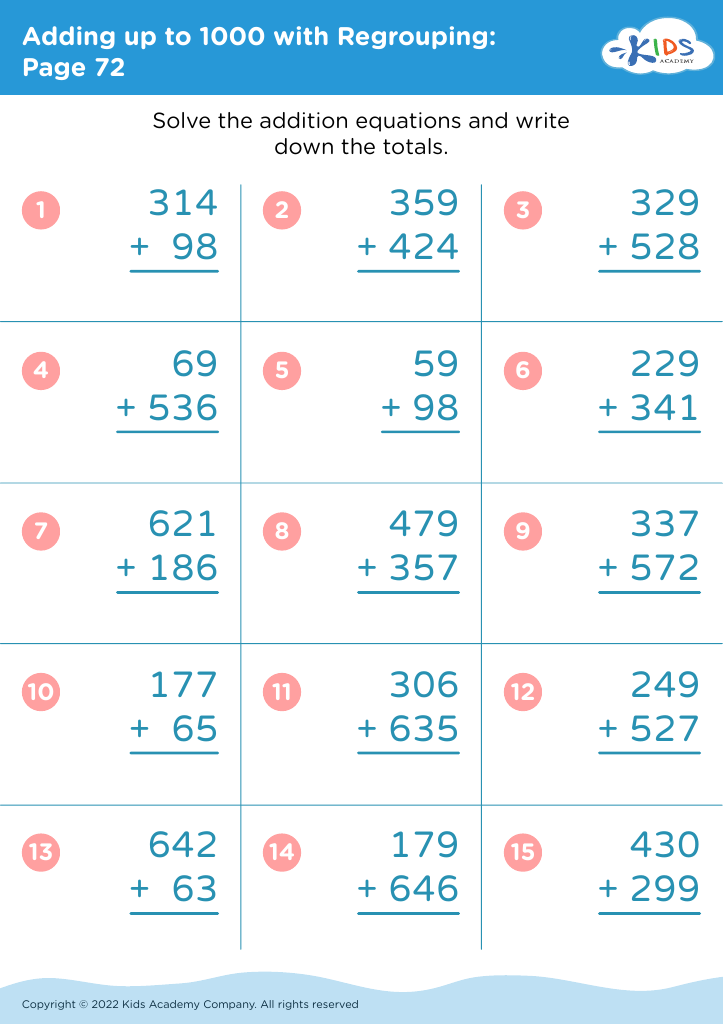
Unlock your child's potential with our "Understanding Directions Addition Worksheets" designed for ages 5-7. These engaging worksheets not only make learning addition fun but also enhance comprehension skills by guiding young learners to follow instructions accurately. Each activity incorporates colorful visuals and simple, clear directions that encourage critical thinking and boost confidence in math. Perfect for classroom or home use, these resources help children navigate the world of numbers while developing essential skills like attention to detail and following multi-step processes. Support your child's mathematical journey today with our captivating and educational worksheets tailored for early learners!
Favorites
With answer key
Interactive
Join Kids Academy for Free
Who is primarily going to use this learning content?








Understanding directions in addition is crucial for children aged 5-7, as it lays the foundation for their mathematical literacy and overall cognitive development. At this stage, children are beginning to grasp fundamental math concepts, and clear directions help them develop problem-solving skills and confidence in their abilities. When parents and teachers prioritize this understanding, children learn how to follow step-by-step instructions to arrive at the correct answers, which can translate to other areas of learning.
Moreover, following directions in addition promotes classroom engagement and encourages independence. It fosters a growth mindset, as children realize that making mistakes is a natural part of learning and that following logical steps can help them improve over time. This skill extends beyond math; it prepares them for reading comprehension, science experiments, and real-life decision-making.
Finally, developing a solid understanding of addition through clear directions helps prevent frustration and creates a positive attitude towards math. When parents and teachers emphasize this aspect, they support children in building a strong mathematical foundation, enabling them to tackle more complex concepts with ease in the future. Hence, investing time in understanding directions in addition is essential for fostering resilient and capable learners.








