Filters

20 filtered results

Clear all filters
Favorites
With answer key
Interactive
20 filtered results

Difficulty Level

Grade


Enhance your child's math skills with our "Understanding Multiplication Addition Worksheets" designed for ages 5-7! These engaging worksheets introduce young learners to the foundational concepts of multiplication while reinforcing addition skills. By providing colorful visuals and hands-on activities, children will discover the connections between adding groups and multiplying. Ideal for at-home learning or classroom use, our worksheets cater to various learning styles, ensuring every child can grasp the basics of multiplication. Foster a love for math and build confidence in your child with these fun, educational resources. Download now and watch your child thrive in their mathematical journey!


Check out this FREE Trial Lesson on Addition for age 5-7!

Exactly the Same, or Not

Favorites
With answer key
Interactive
  • 5-7
  • Understanding multiplication
  • Addition
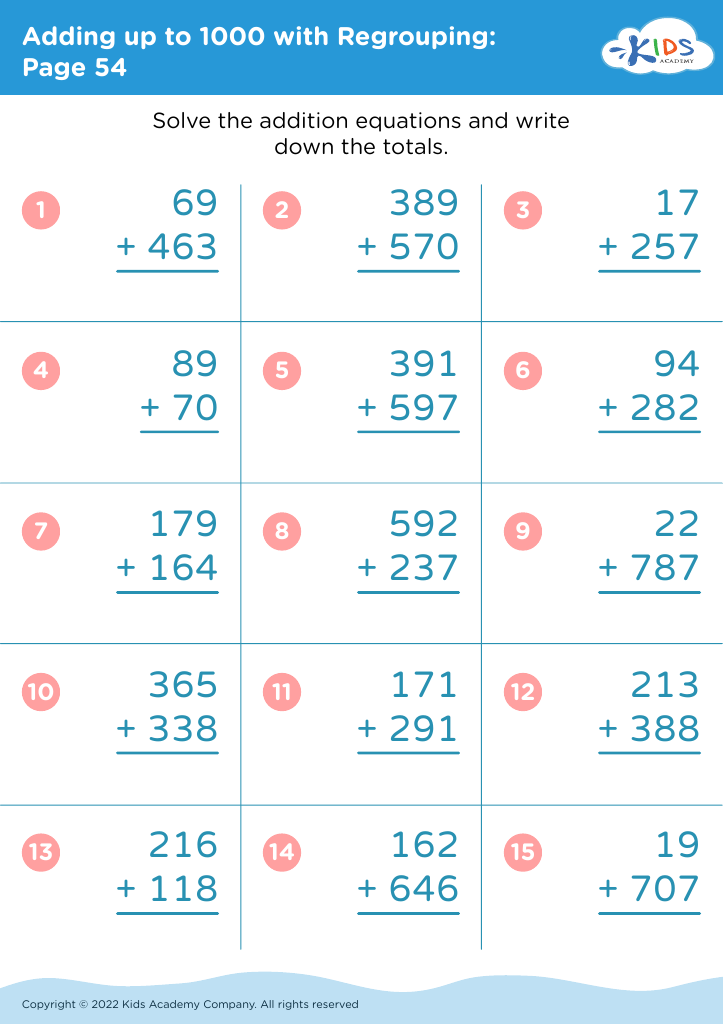
Adding up to 1000 with Regrouping: Page 54
Worksheet
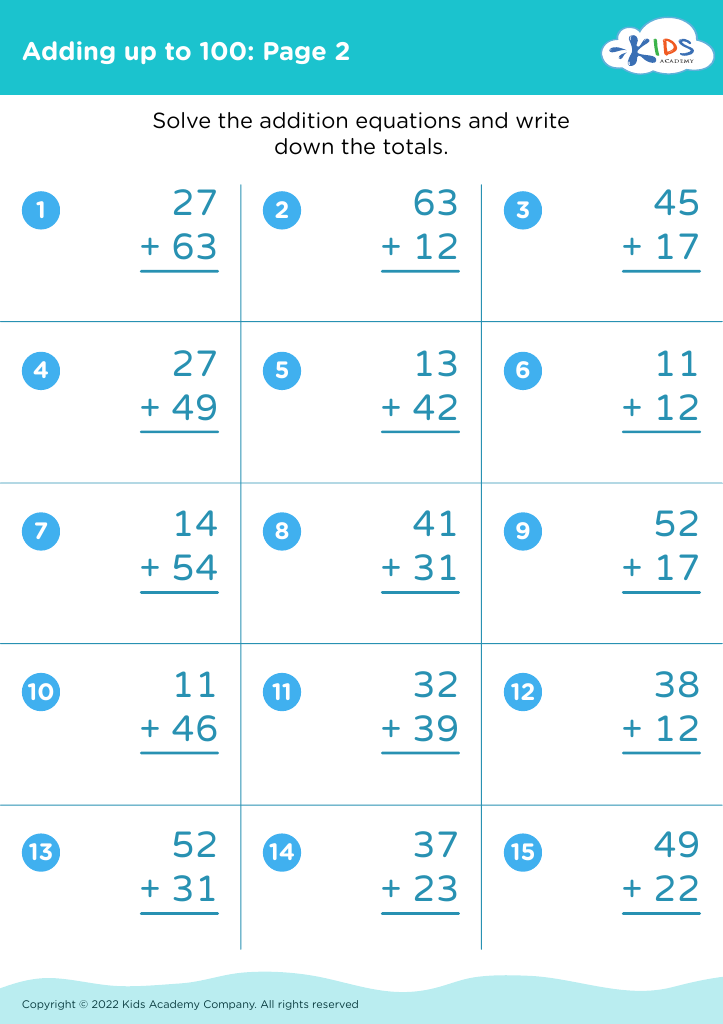
Adding up to 100: Page 2

Adding up to 100: Page 2

Adding up to 100: Page 2
Worksheet
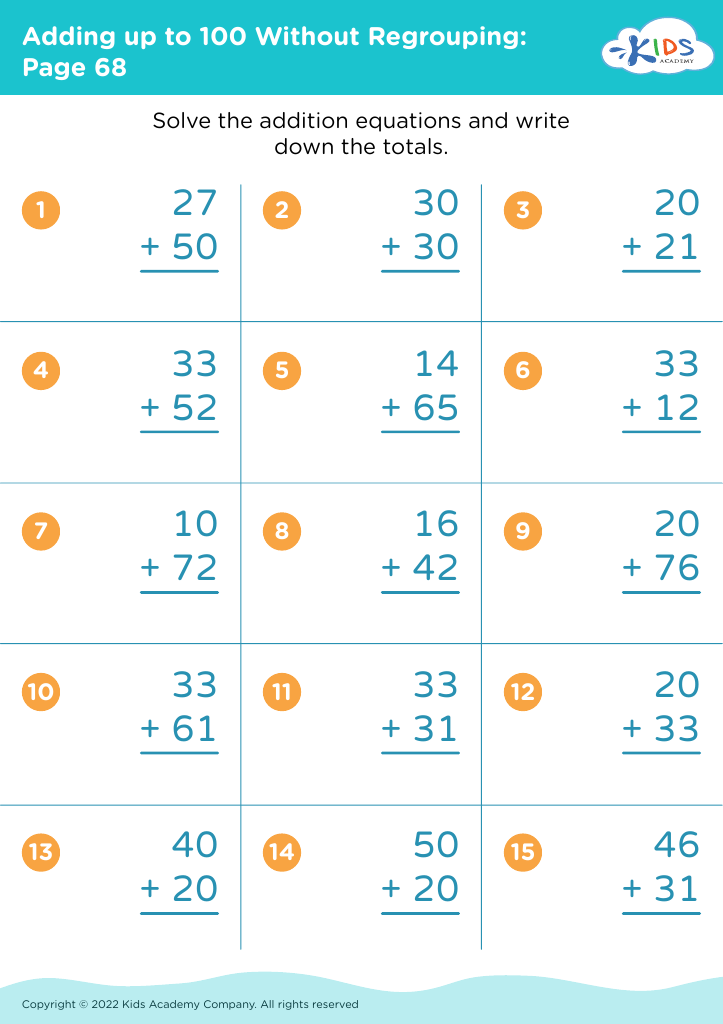
Adding up to 100 Without Regrouping: Page 68
Worksheet
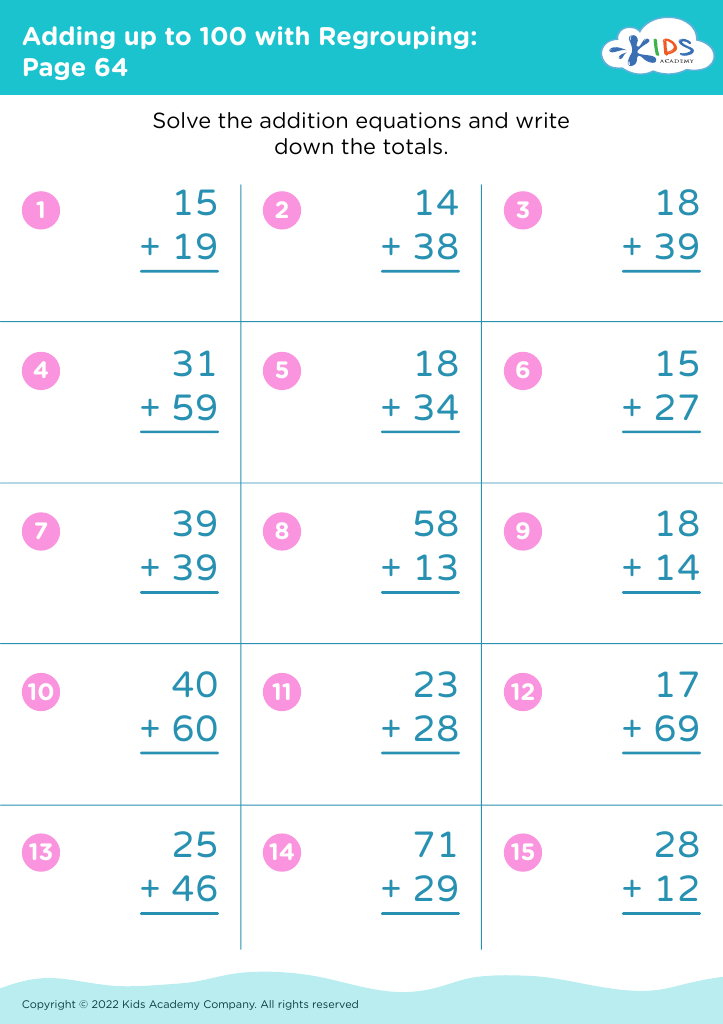
Adding up to 100 with Regrouping: Page 64
Worksheet
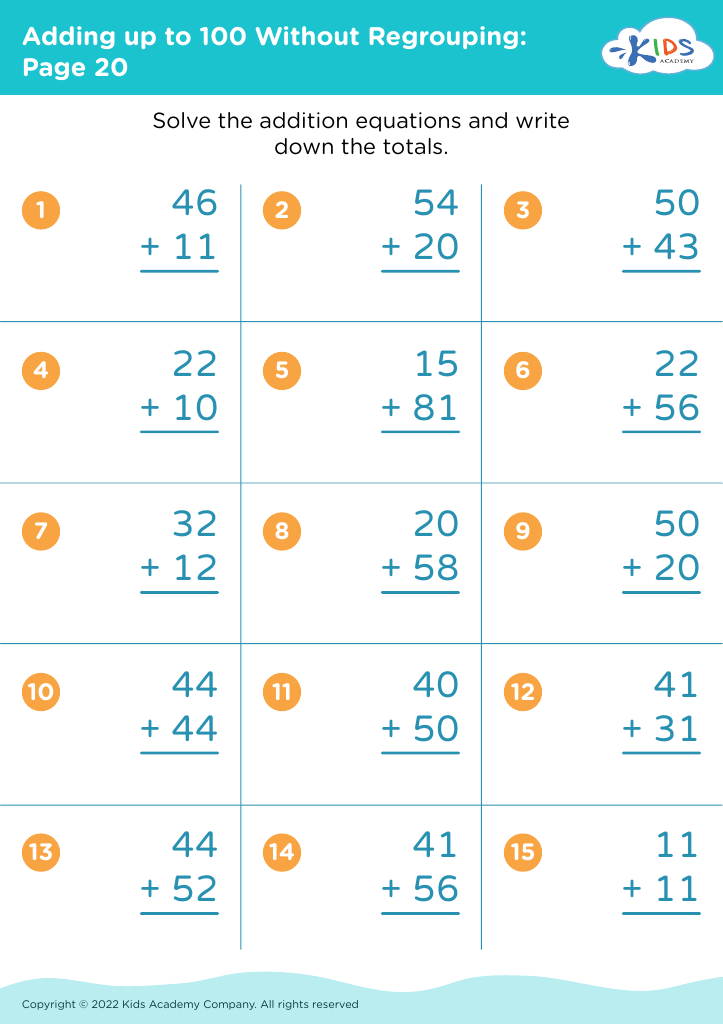
Adding up to 100 Without Regrouping: Page 20
Worksheet
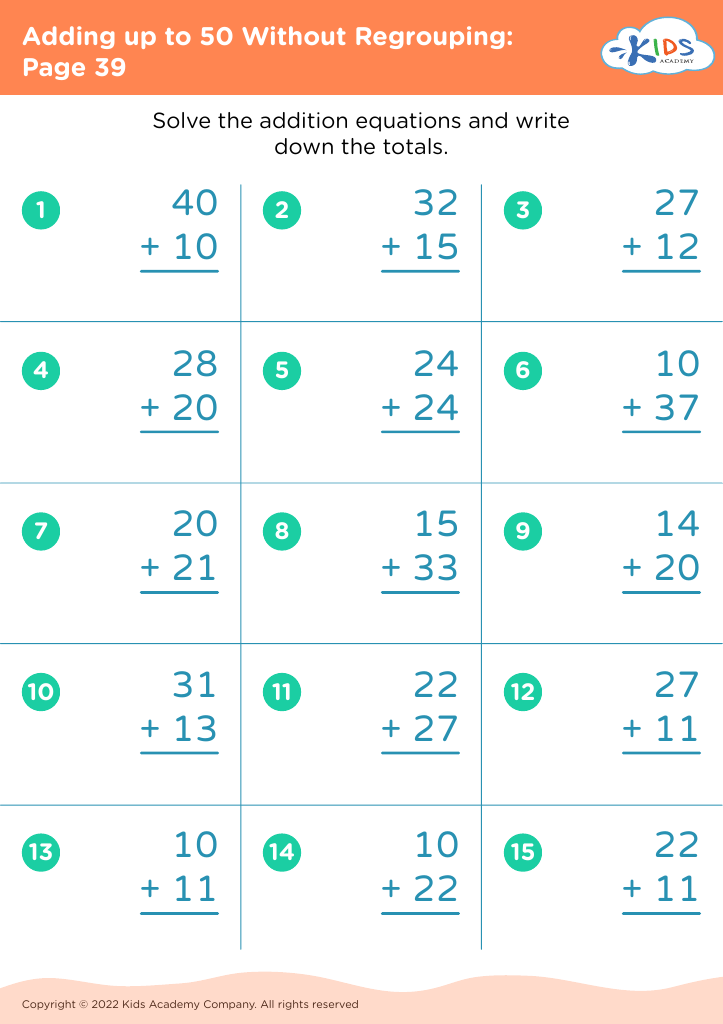
Adding up to 50 Without Regrouping: Page 39
Worksheet
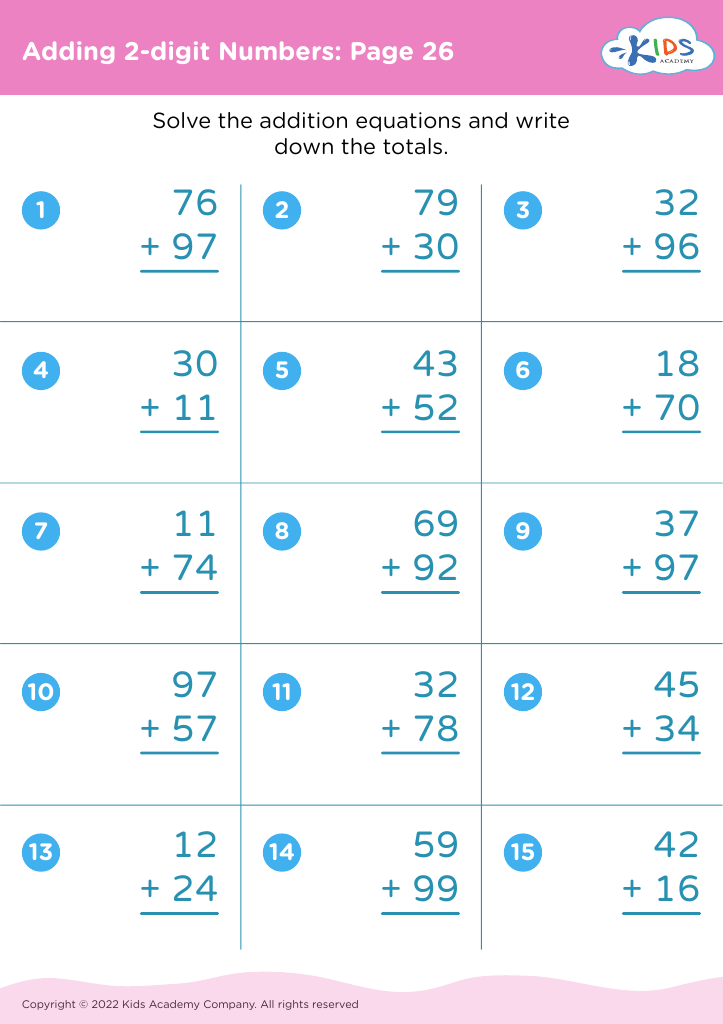
Adding 2-digit Numbers: Page 26

Adding 2-digit Numbers: Page 26

Adding 2-digit Numbers: Page 26
Worksheet
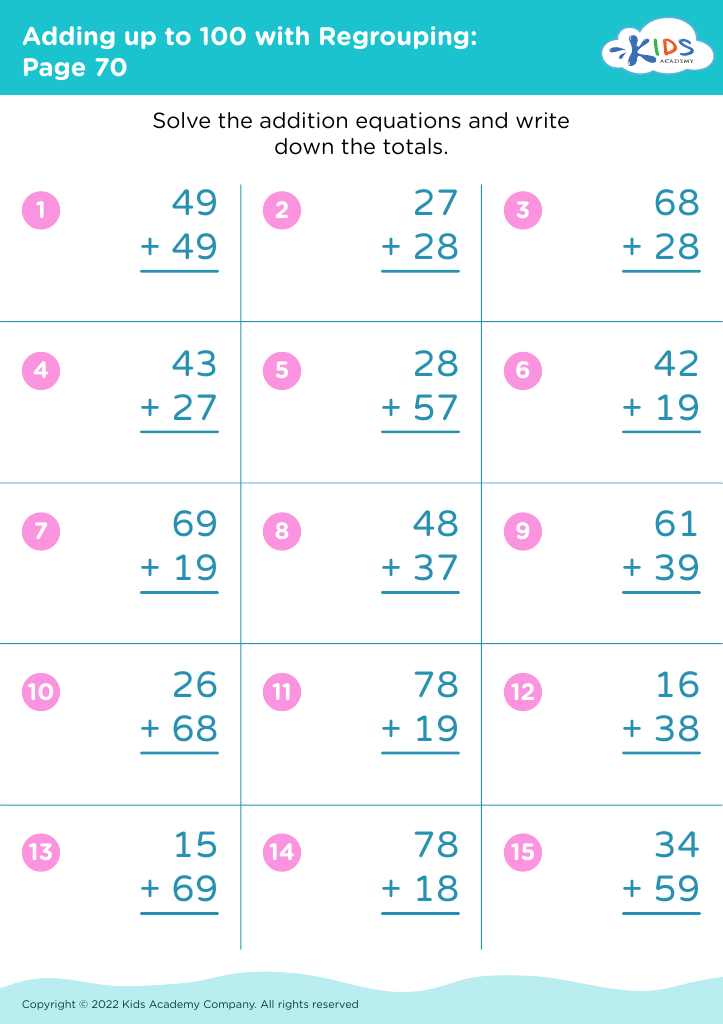
Adding up to 100 with Regrouping: Page 70
Worksheet
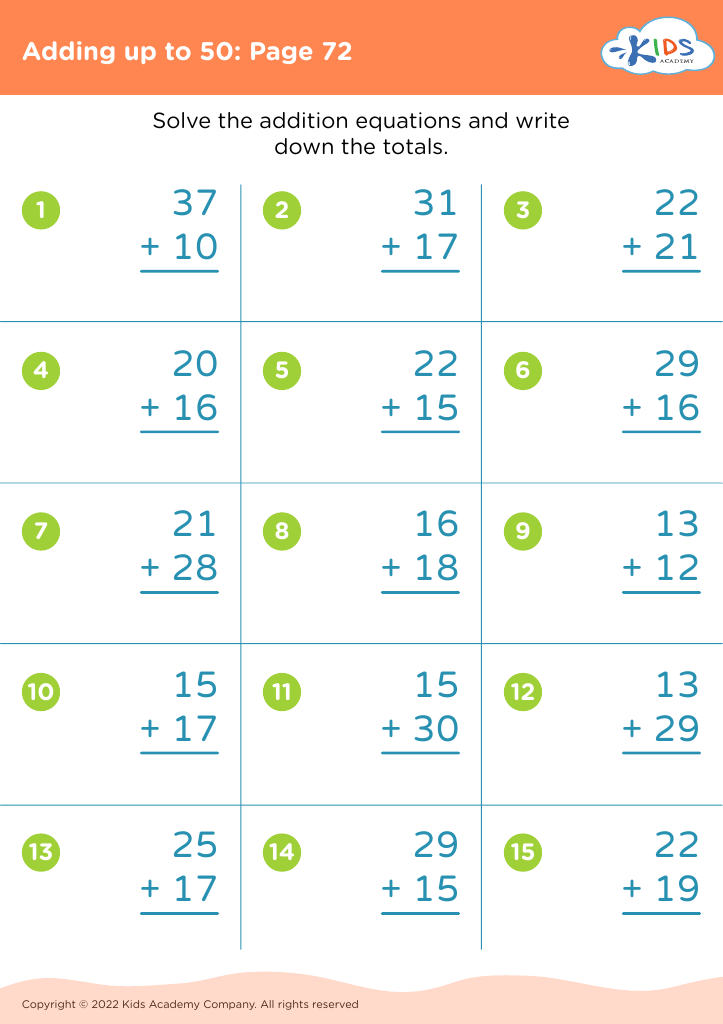
Adding up to 50: Page 72

Adding up to 50: Page 72

Adding up to 50: Page 72
Worksheet
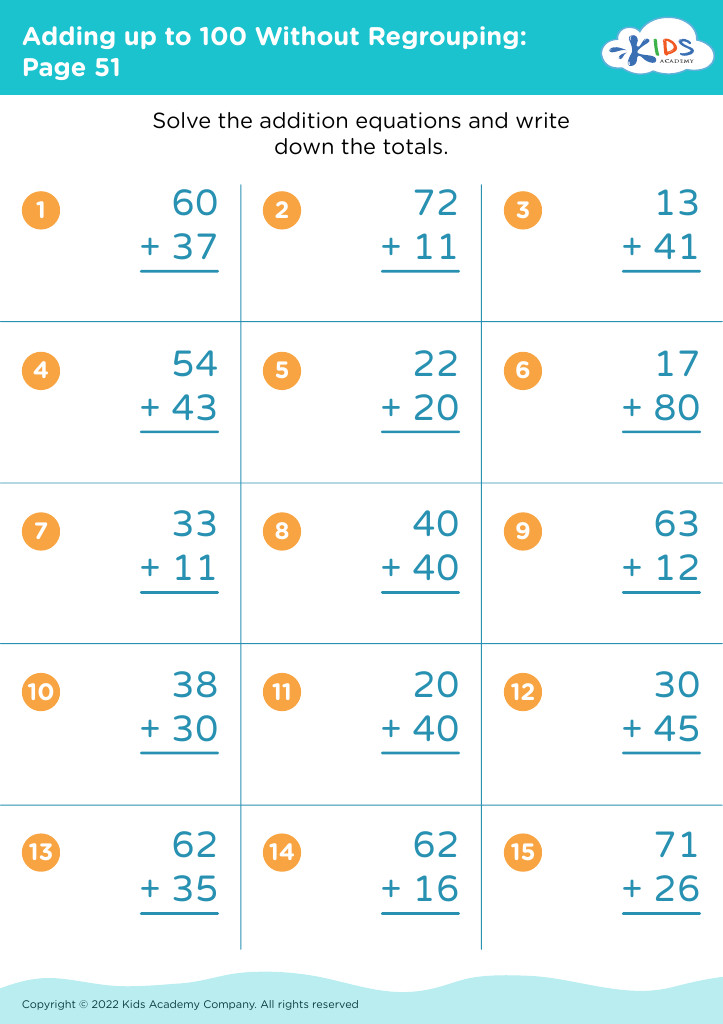
Adding up to 100 Without Regrouping: Page 51
Worksheet
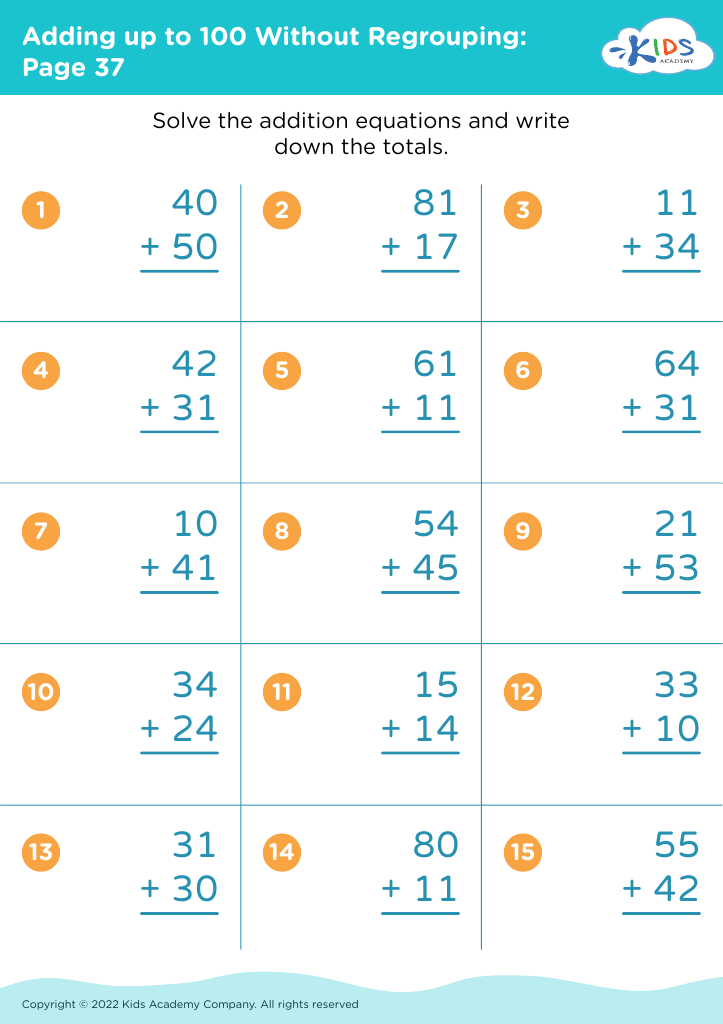
Adding up to 100 Without Regrouping: Page 37
Worksheet
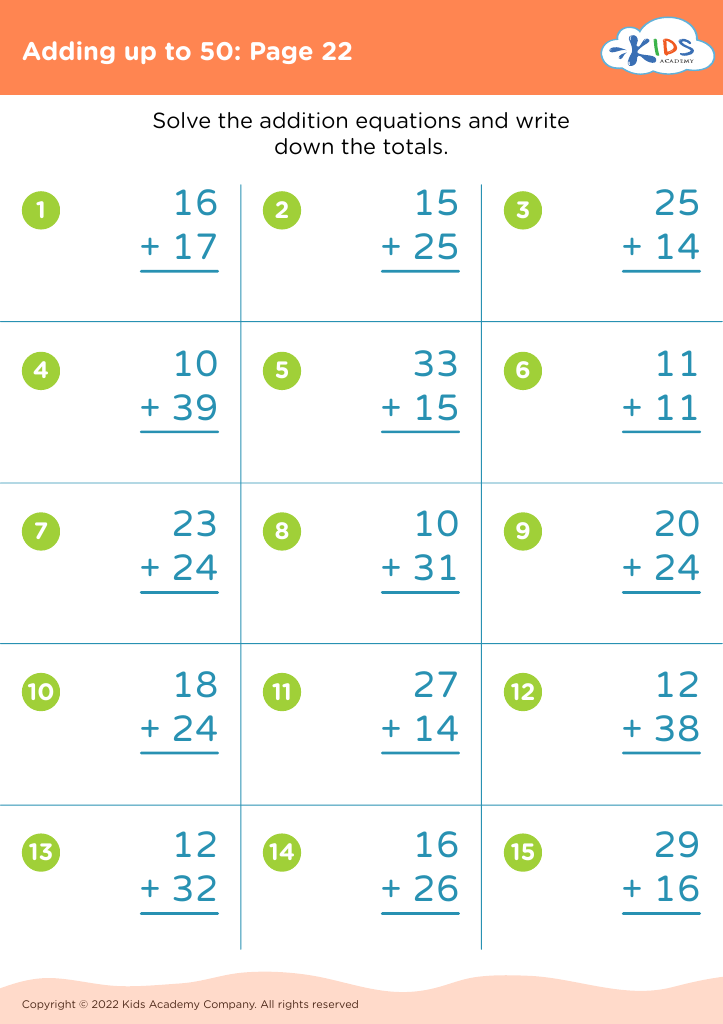
Adding up to 50: Page 22

Adding up to 50: Page 22

Adding up to 50: Page 22
Worksheet
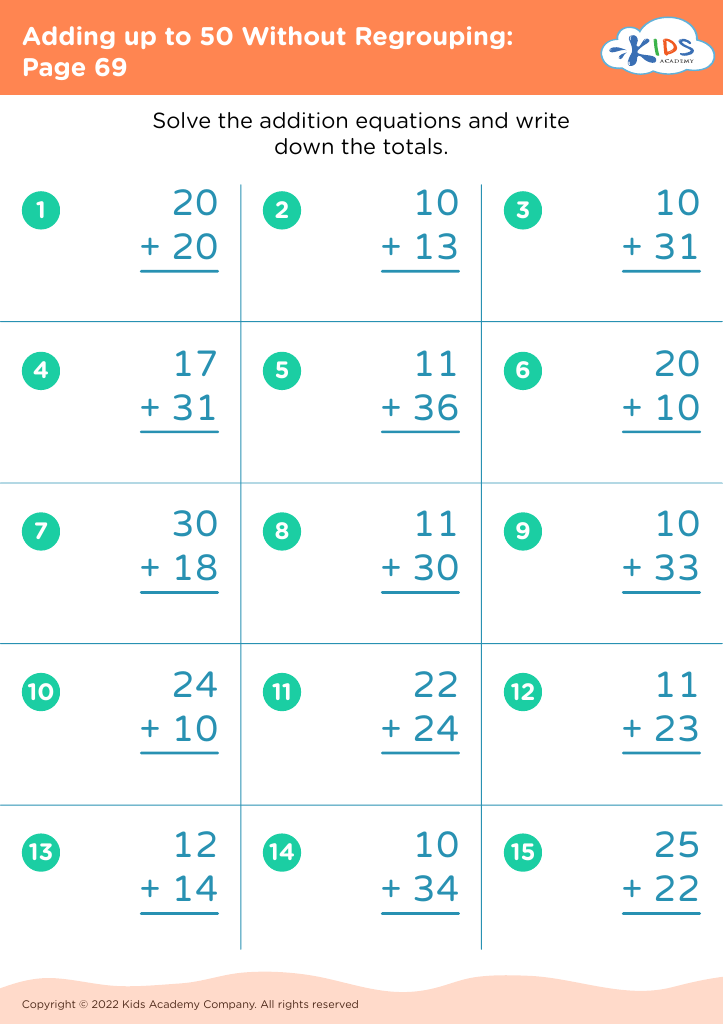
Adding up to 50 Without Regrouping: Page 69
Worksheet
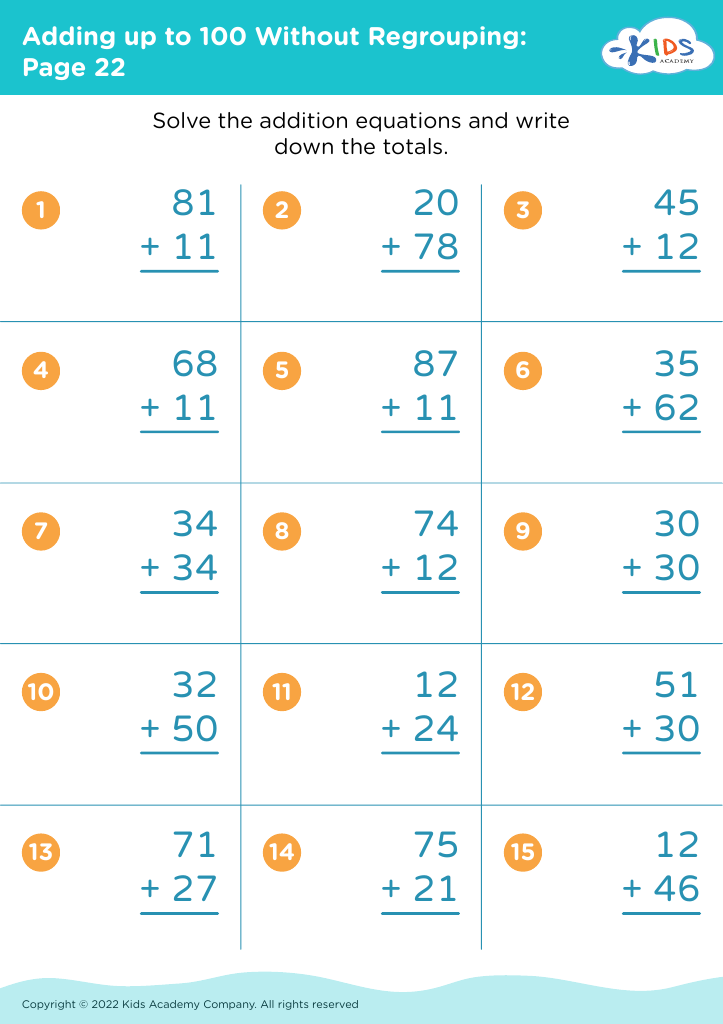
Adding up to 100 Without Regrouping: Page 22
Worksheet
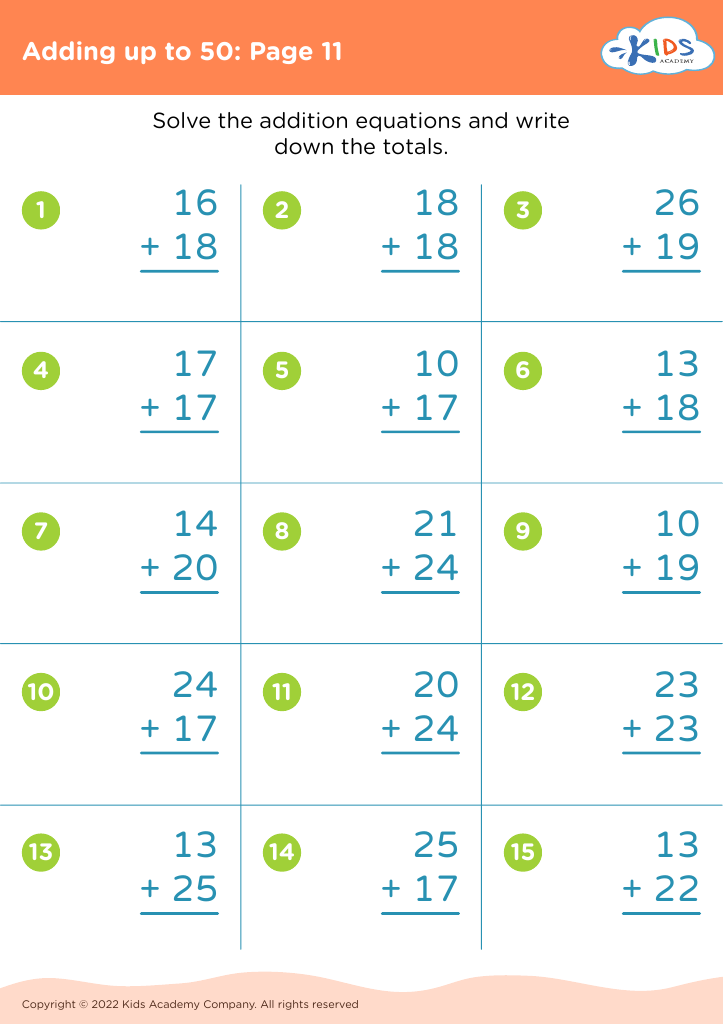
Adding up to 50: Page 11

Adding up to 50: Page 11

Adding up to 50: Page 11
Worksheet
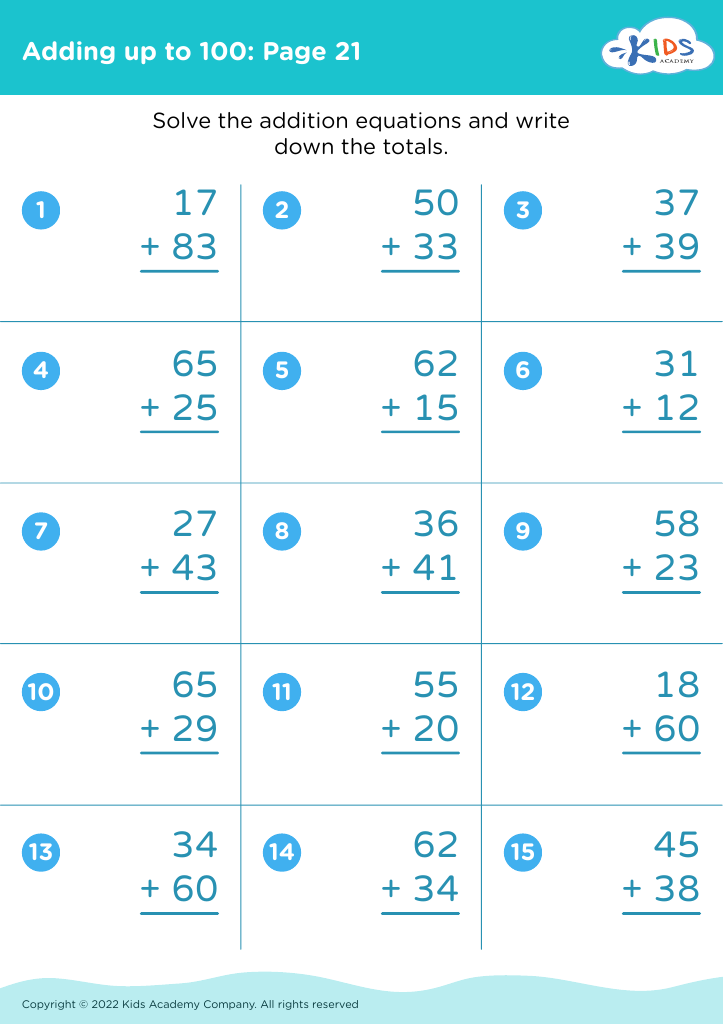
Adding up to 100: Page 21

Adding up to 100: Page 21

Adding up to 100: Page 21
Worksheet
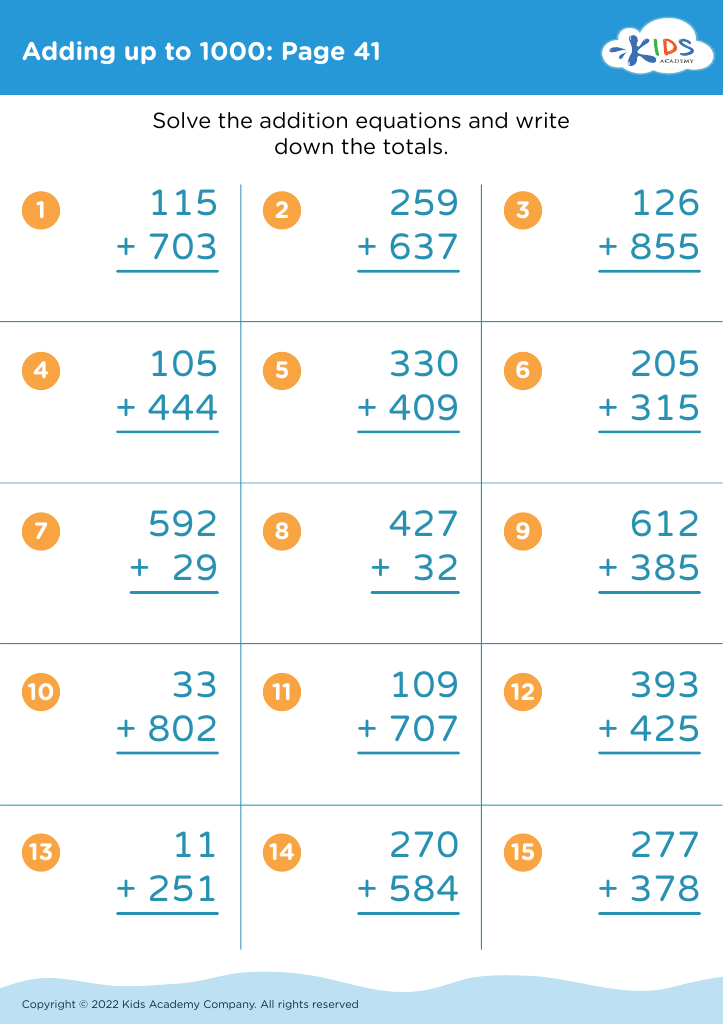
Adding up to 1000: Page 41

Adding up to 1000: Page 41

Adding up to 1000: Page 41
Worksheet
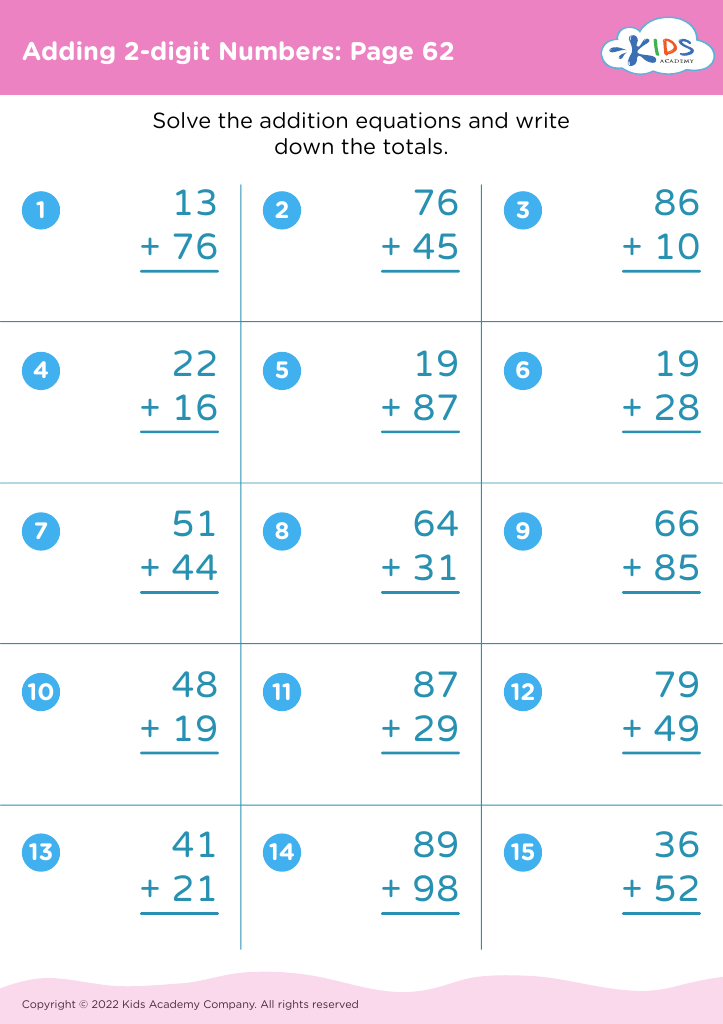
Adding 2-digit Numbers: Page 62

Adding 2-digit Numbers: Page 62

Adding 2-digit Numbers: Page 62
Worksheet
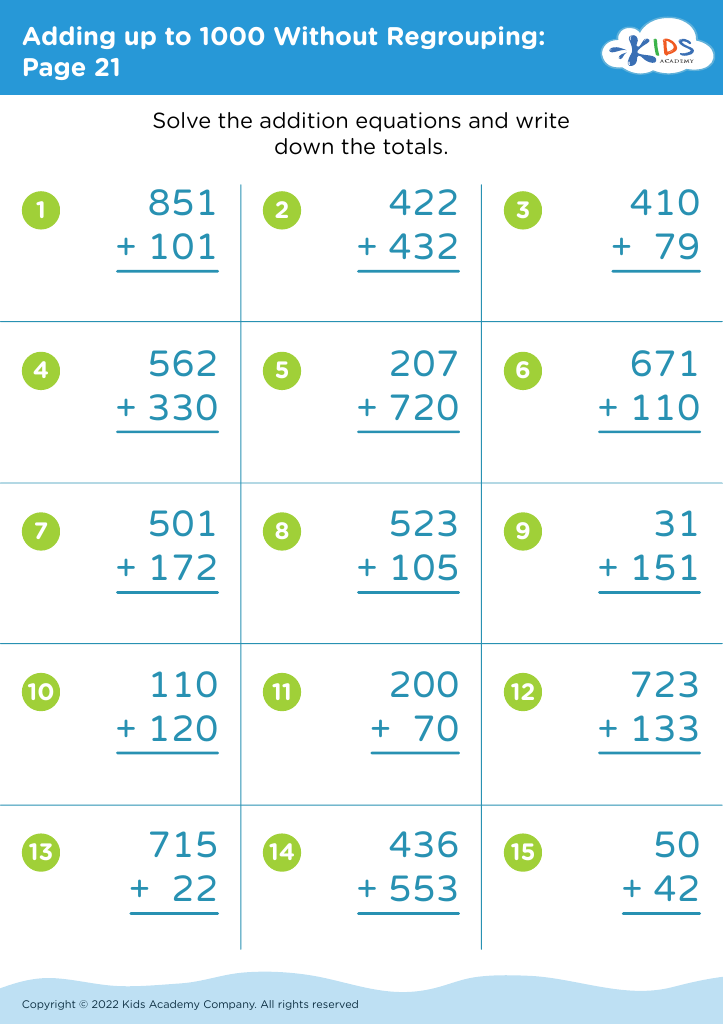
Adding up to 1000 Without Regrouping: Page 21
Worksheet
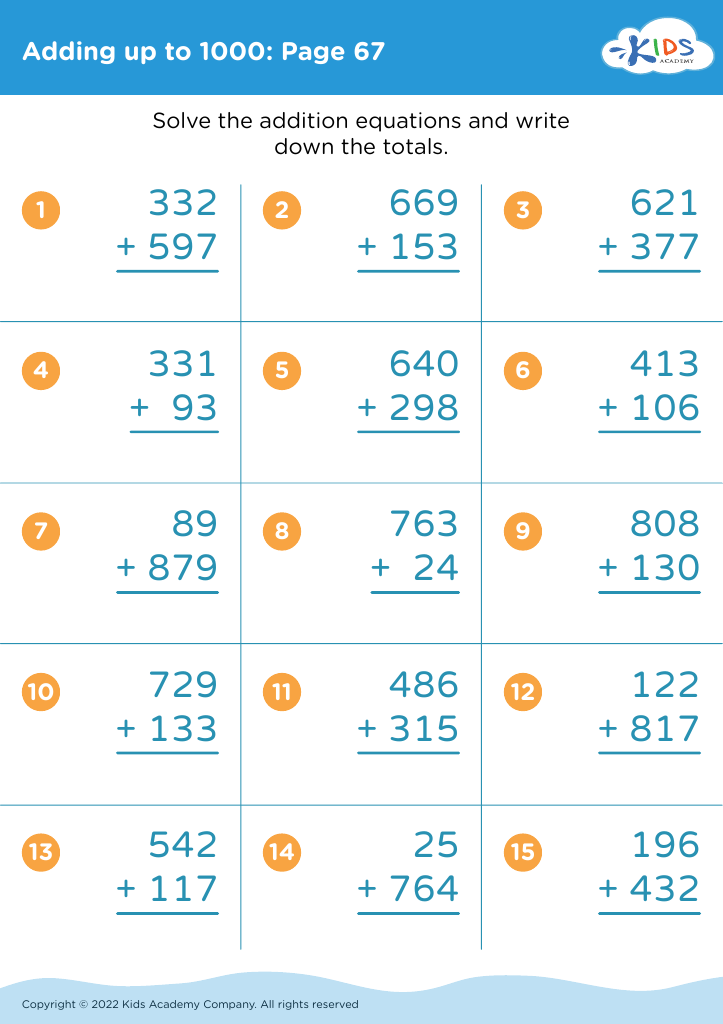
Adding up to 1000: Page 67

Adding up to 1000: Page 67

Adding up to 1000: Page 67
Worksheet


Understanding addition and multiplication is crucial for children aged 5-7 as it lays the groundwork for their future mathematical success. At this formative age, children are developing their cognitive skills and learning how to think critically about numbers. Grasping addition helps them recognize how numbers relate to one another, fostering an essential skill for daily problem-solving and logical reasoning.

Additionally, introducing multiplication to younger students, particularly as a series of repeated addition, enlarges their understanding of mathematical concepts and promotes number sense. It builds confidence as they begin to master these operations, establishing a solid mathematical foundation.

Furthermore, early comprehension of these concepts supports their ability to tackle more complex math in later grades. Parents and teachers play a vital role in this journey, ensuring that students not only memorize facts but also understand the "why" behind these operations. By encouraging exploration through games, real-life examples, and interactive activities, they cultivate a playful yet educational environment, making learning feel enjoyable. When children understand and appreciate addition and multiplication, they develop critical thinking skills and a positive attitude towards math, essential for their academic growth and lifelong learning.