Shape Recognition Comparison Worksheets for Ages 5-7
3 filtered results
-
From - To
Explore our engaging Shape Recognition Comparison Worksheets designed for children ages 5-7! These printables provide a fun and interactive way for young learners to enhance their shape recognition and comparison skills. By participating in colorful activities, kids will identify and compare different shapes, strengthening their understanding of geometry concepts. Our worksheets encourage critical thinking and promote fine motor skills as children trace, color, and match various shapes. Perfect for classroom use or at-home learning, these resources make learning enjoyable and effective. Help your child build a strong foundation in math with our exciting and educational shape recognition worksheets!
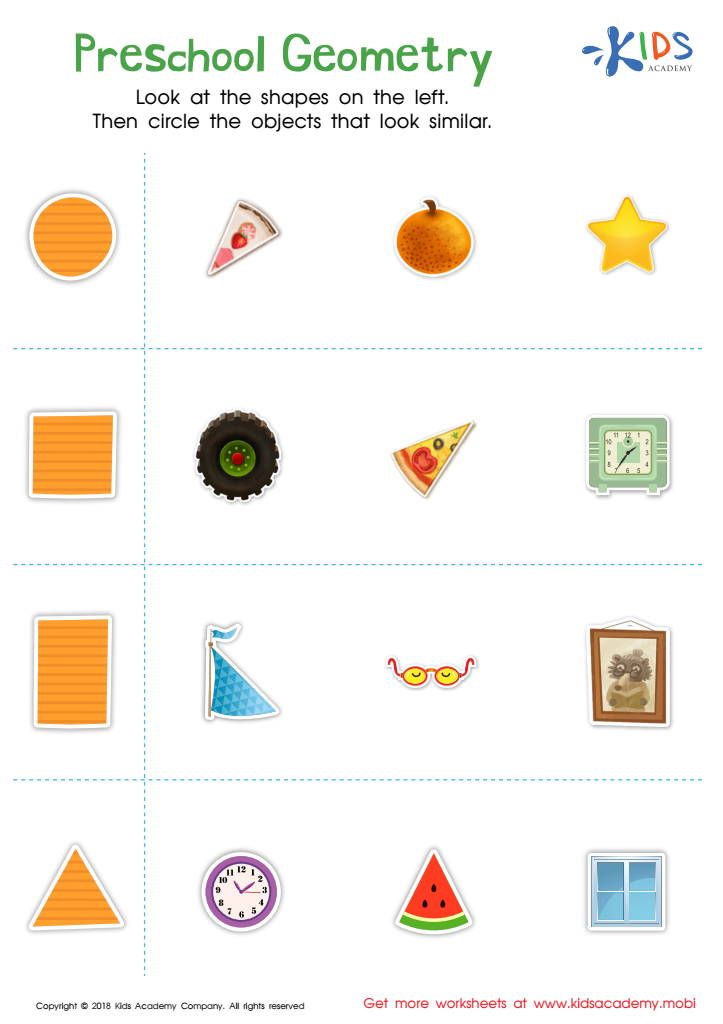
Preschool Geometry Worksheet
 Assign to My Students
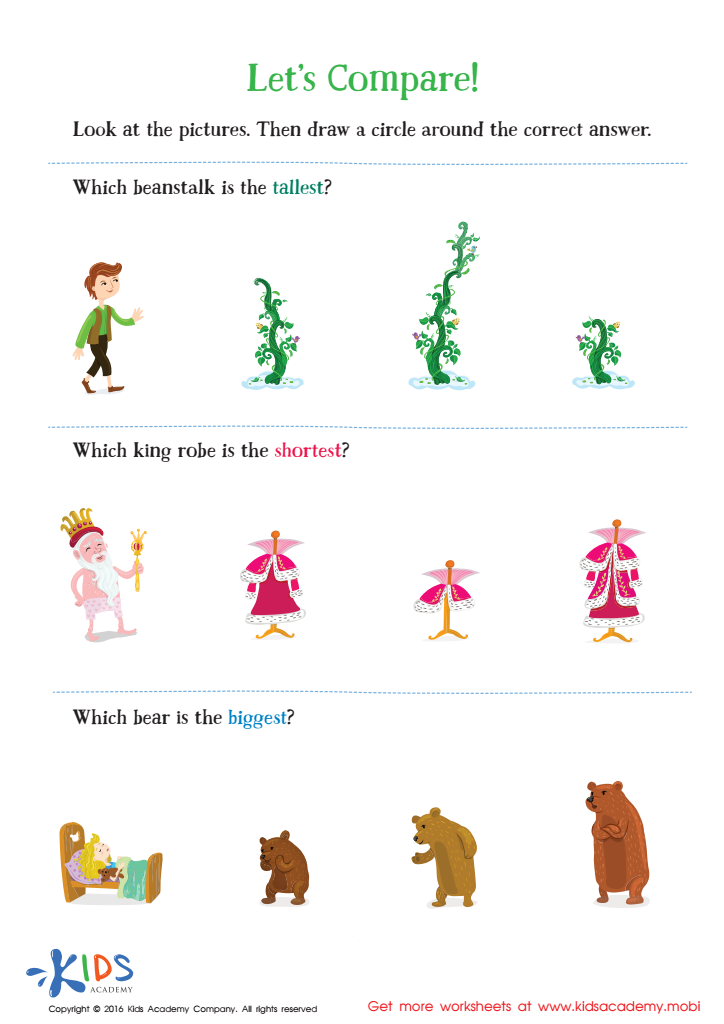
Fairy Tale Worksheet: Let's Compare
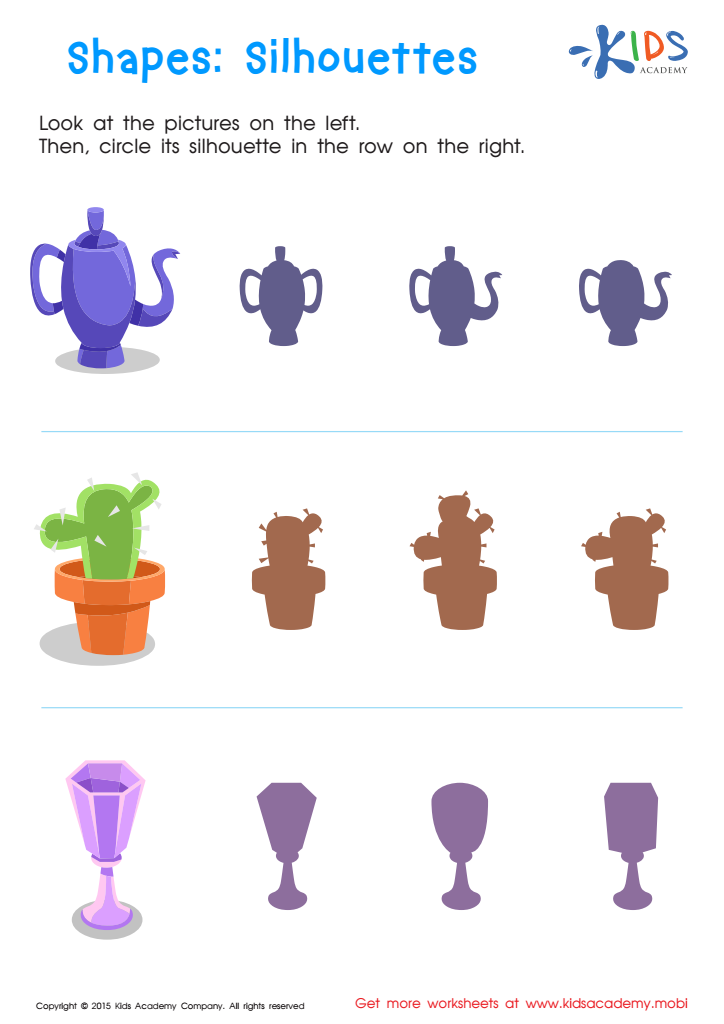
Silhouettes – Shapes Worksheet


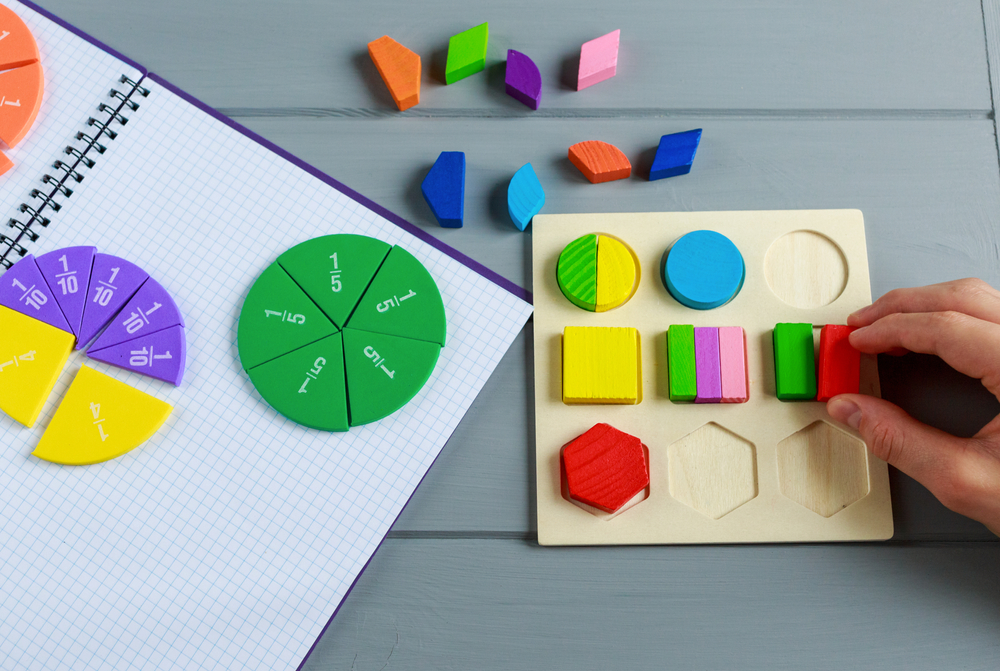





Shape recognition comparison is a crucial developmental skill for children aged 5 to 7, and it is essential for both parents and teachers to prioritize this area of learning. At this age, children are forming cognitive foundations that will affect their problem-solving abilities, spatial awareness, and overall mathematical understanding. Recognizing and comparing shapes helps young learners make sense of their environment, develop critical thinking skills, and enhance their ability to categorize and differentiate between objects.
Furthermore, engaging in shape recognition activities promotes fine motor skills as children manipulate shapes through drawing, cutting, or modeling with clay. This hands-on interaction reinforces learning and encourages creativity. In addition, understanding shapes and their properties aids in grasping concepts like symmetry and congruence, which are foundational for more advanced math topics later on.
By highlighting shape recognition comparison, parents and teachers foster an environment where inquiry and exploration are encouraged. Observing how children approach and connect with shapes opens opportunities for discussions around comparisons, measurements, and features, being critical for their cognitive development. Overall, emphasizing shape recognition not only enriches a child’s educational experience but also strengthens their confidence in learning, setting the stage for future academic success.








