Fine Motor Skills Fractions of Shapes Worksheets for Ages 5-7
7 filtered results
-
From - To
Discover our engaging Fine Motor Skills Fractions of Shapes Worksheets designed specifically for children aged 5-7! These fun and interactive worksheets support young learners in mastering fractions while simultaneously enhancing their fine motor skills. Each activity encourages gripping, cutting, and pasting, promoting dexterity as kids explore shapes and their fractional parts. Tailored to complement early math education, these worksheets foster a proactive learning environment, making math concepts both enjoyable and approachable. Enhance your teaching toolkit with these valuable resources, perfect for in-class activities or at-home learning. Help your child build confidence in their skills while having fun with fractions!
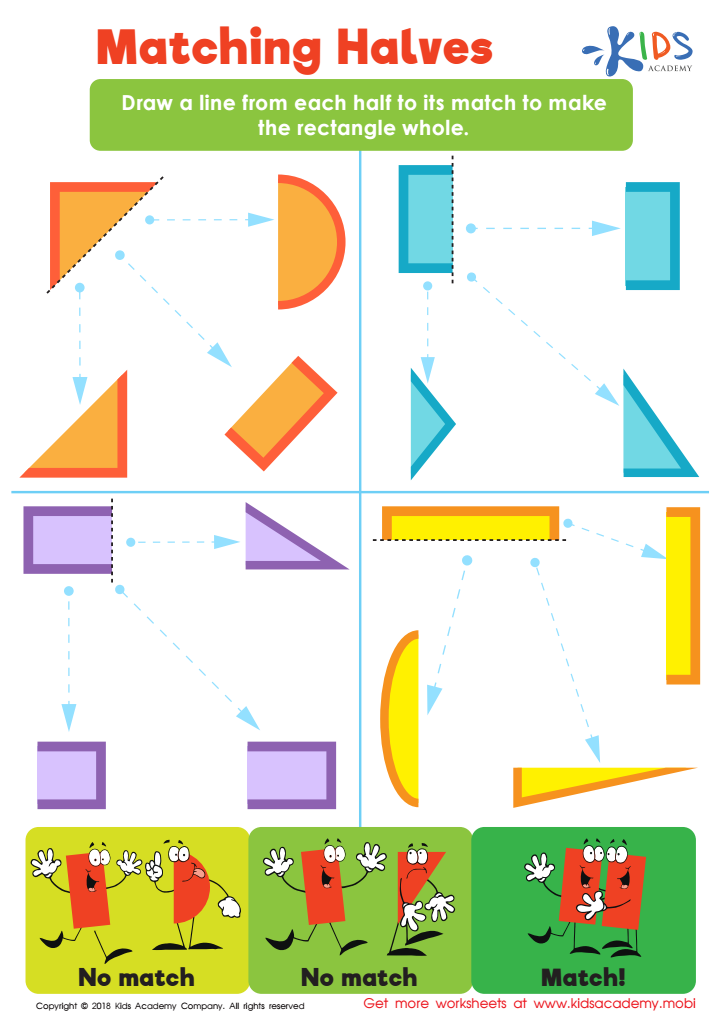
Matching Halves Worksheet
 Assign to My Students
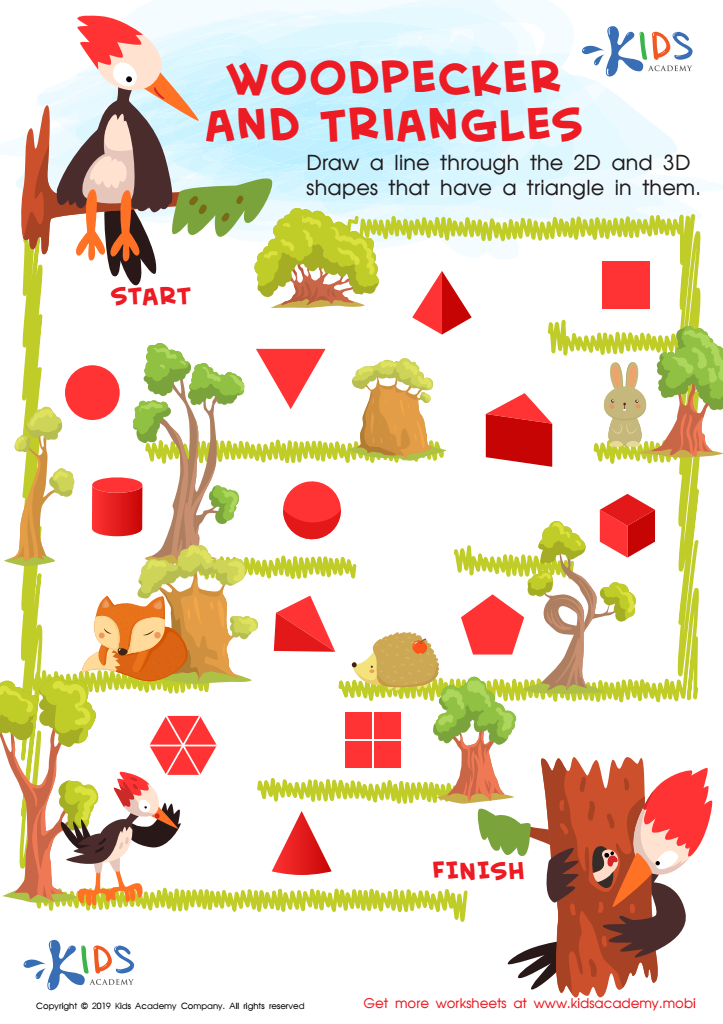
Woodpecker and Triangles Worksheet
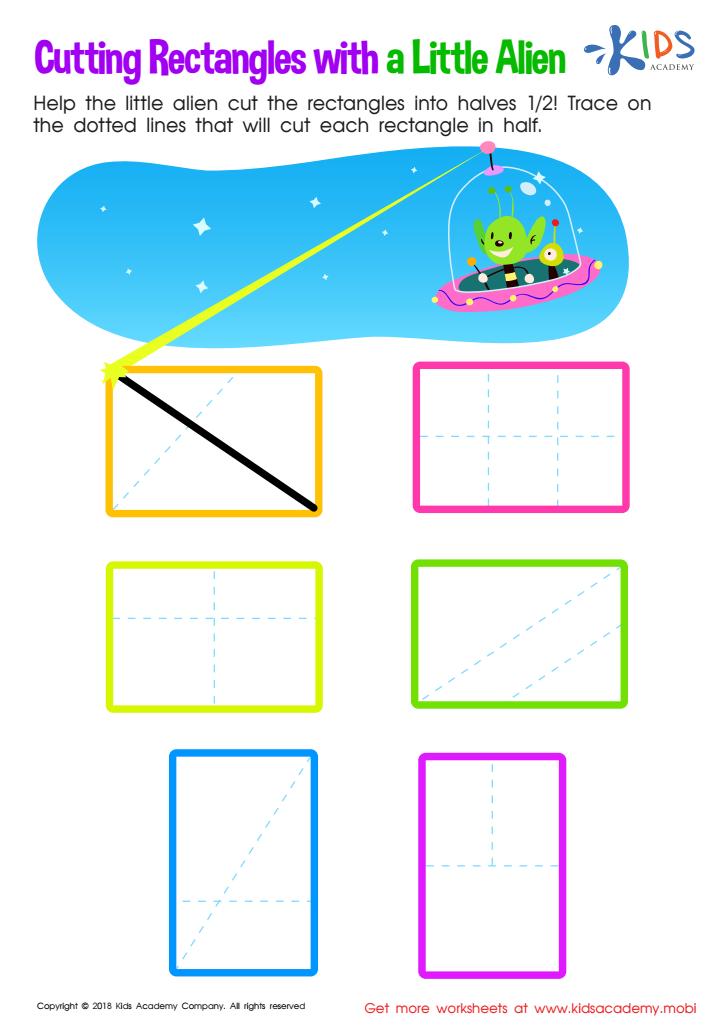
Cutting Rectangles with Alien Worksheet
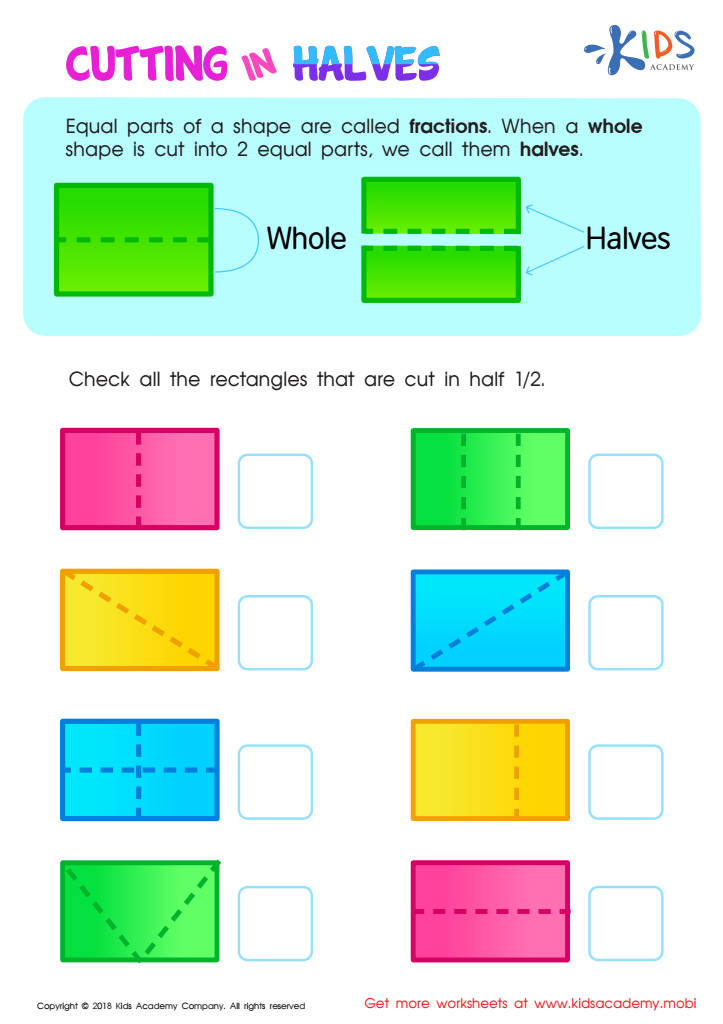
Cutting in Halves Worksheet
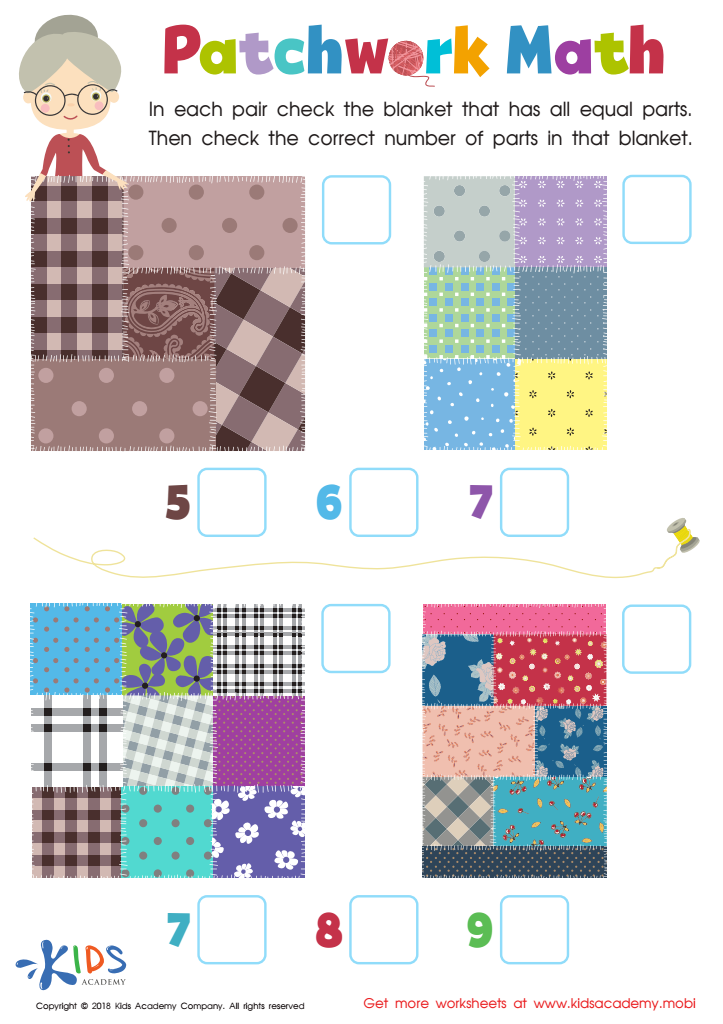
Patchwork Math Worksheet
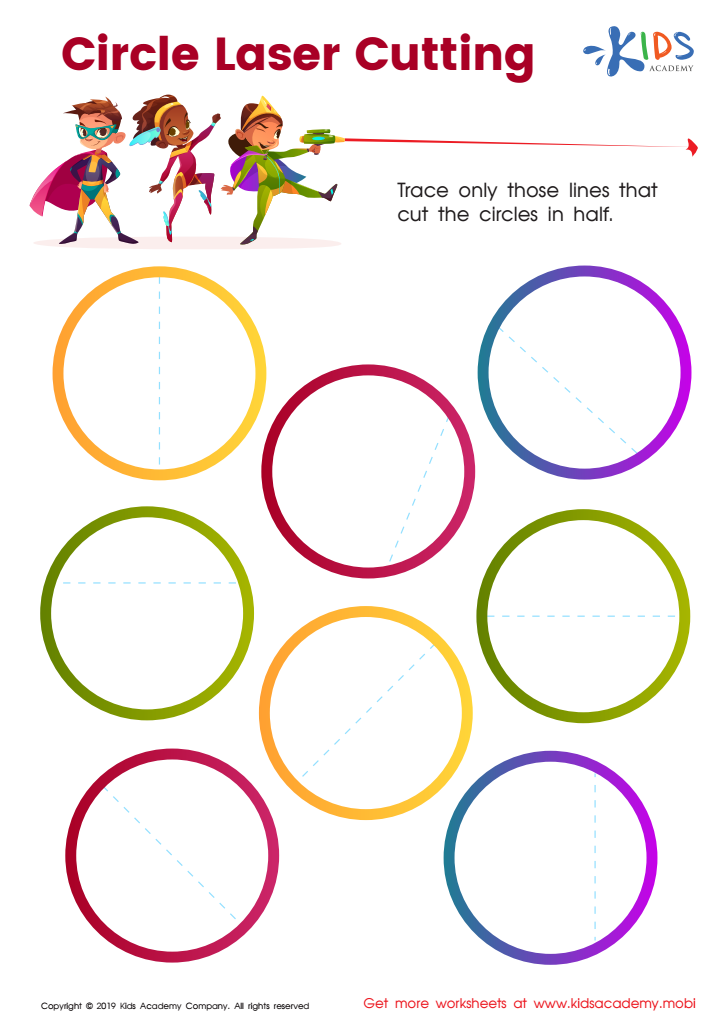
Circle Laser Cutting Worksheet
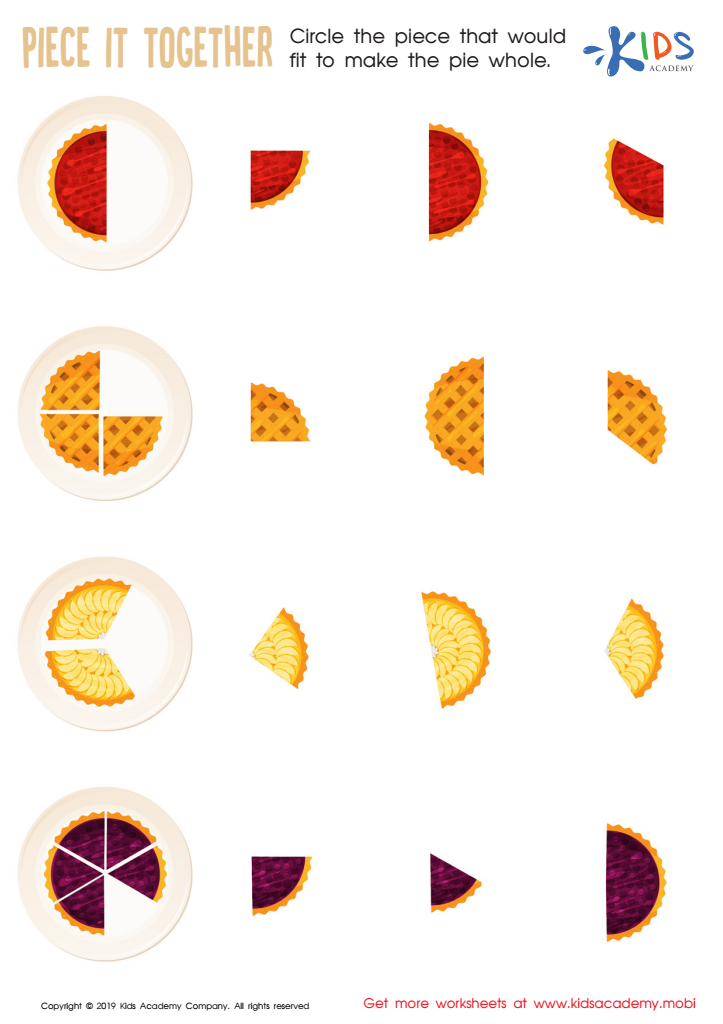
Piece it together Worksheet








Fine motor skills and understanding fractions of shapes are crucial developmental areas for children aged 5-7. Fine motor skills involve the coordination of small muscles in hands and fingers, enabling children to perform tasks such as cutting, pasting, and writing. Mastering these skills aids in their overall cognitive development and boosts their self-confidence as they execute tasks with precision.
Fractions of shapes introduce children to essential mathematical concepts. Recognizing how shapes can be divided into equal parts develops critical thinking and problem-solving skills. By understanding fractions, children learn to appreciate the concept of quantity, comparison, and relationships between parts and wholes.
Combining fine motor skills with fractions activities enhances learning experiences. For example, cutting out shapes into halves or quarters strengthens grip strength and dexterity while reinforcing mathematical understanding. Engaging in hands-on activities cultivates creativity and encourages exploration, making learning enjoyable.
Ultimately, parents and teachers who prioritize these developmental aspects equip children with essential skills that lay a strong foundation for future academic success. By nurturing fine motor skills and a grasp of fractions, caregivers foster independent, confident learners ready to tackle more complex challenges in mathematics and everyday life.