Color Identification Geometry Worksheets for Ages 5-7
5 filtered results
-
From - To
Discover our engaging Color Identification Geometry Worksheets designed for children aged 5 to 7. These vibrant resources help young learners explore basic geometric shapes while mastering essential color recognition skills. Each worksheet features captivating visuals and easy-to-follow activities that promote cognitive development through playful learning. By incorporating colors and shapes, kids will develop their observation skills and enhance their ability to differentiate between various geometric forms. Perfect for classrooms or at-home learning, these worksheets provide a fun and interactive approach to foundational geometry. Boost your child’s confidence and knowledge in a creative and enjoyable way with our Color Identification Geometry Worksheets!
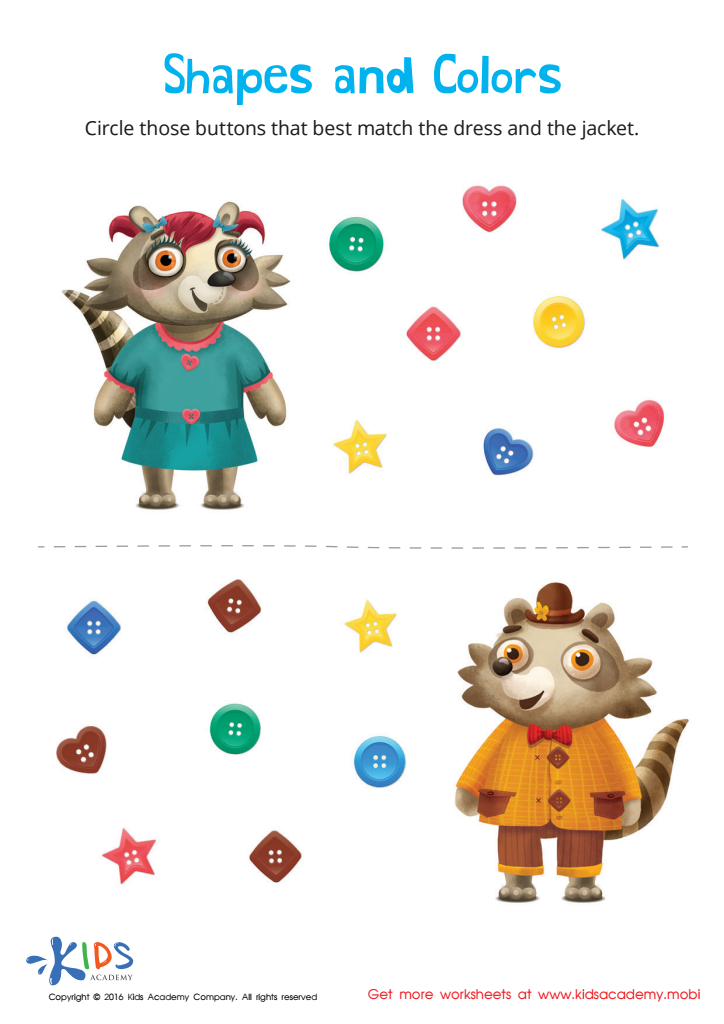
Matching: Shapes and Colors Worksheet











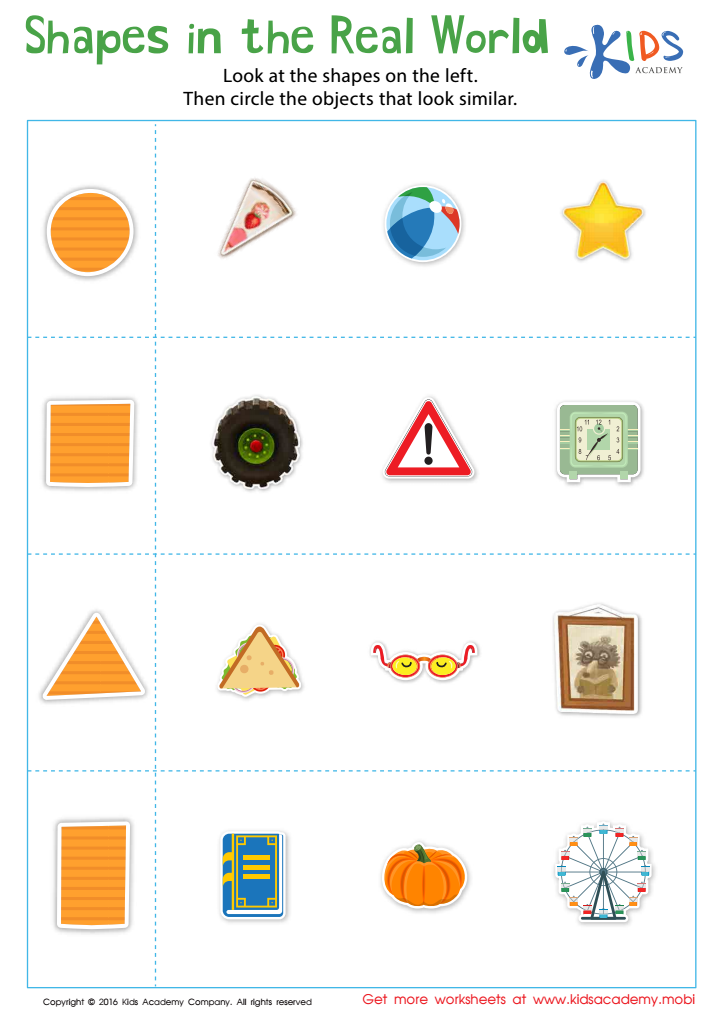
Shapes in the Real World Worksheet
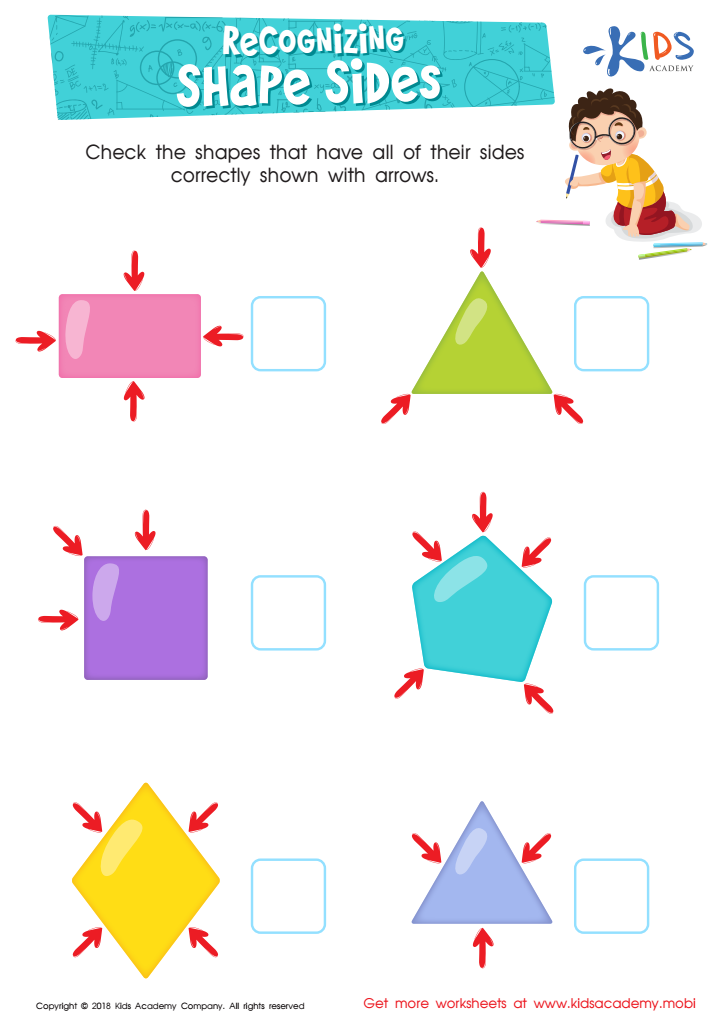
Recognizing Shape Sides Worksheet
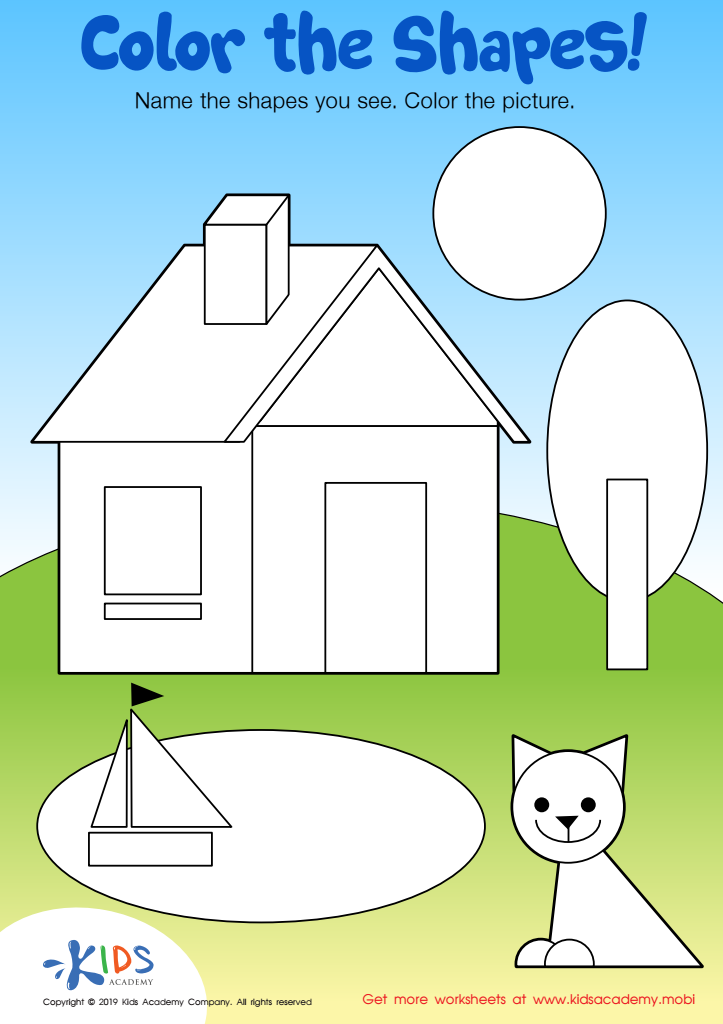
Color the Shapes Worksheet
 Assign to My Students
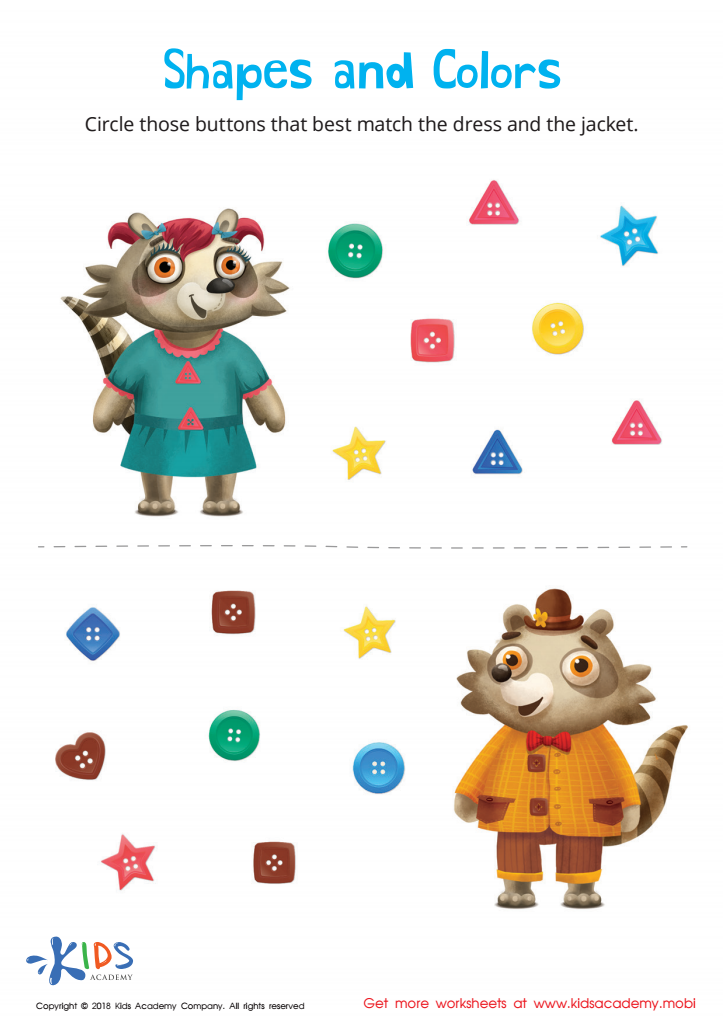
Shapes and Colors Worksheet








Color identification and geometry are foundational skills for children aged 5-7, significantly influencing their cognitive and social development. Parents and teachers should prioritize these subjects because they help in establishing the basics of visual perception, critical thinking, and problem-solving abilities. Color identification aids children in differentiating and categorizing objects, which enhances their observational skills and lays the groundwork for later learning in subjects like science and mathematics.
Understanding geometric shapes is equally important as it introduces children to spatial awareness and encourages them to think abstractly. Recognizing shapes such as circles, squares, and triangles helps in developing mathematical reasoning and patterns recognition, essential skills for future academic success. Additionally, these skills promote creativity and artistic expression as children begin to associate colors and shapes with their environment.
Moreover, integrating color and geometry in educational activities fosters engagement and collaboration. Group activities enhance social skills, encouraging teamwork and communication. By focusing on these components, parents and teachers create a rich learning environment that supports holistic development, preparing children for more complex concepts in the future while making learning enjoyable and interactive. Ultimately, investing in these early skills deems crucial for a child's lifelong learning journey.








