Differentiating shapes Geometry Worksheets for Ages 5-7
3 filtered results
-
From - To
Welcome to our Differentiating Shapes Geometry Worksheets for Ages 5-7! Designed for young learners, these engaging worksheets help children identify and distinguish between various shapes such as circles, squares, triangles, and more. Our resources encourage hands-on learning through exciting activities that promote shape recognition and understanding. Perfect for preschool and early elementary classrooms, these worksheets are tailored to accommodate varying skill levels, making them ideal for differentiated instruction. Foster your child’s spatial awareness and critical thinking skills while having fun with interactive tasks. Download our worksheets today and watch your child develop a solid foundation in geometry!
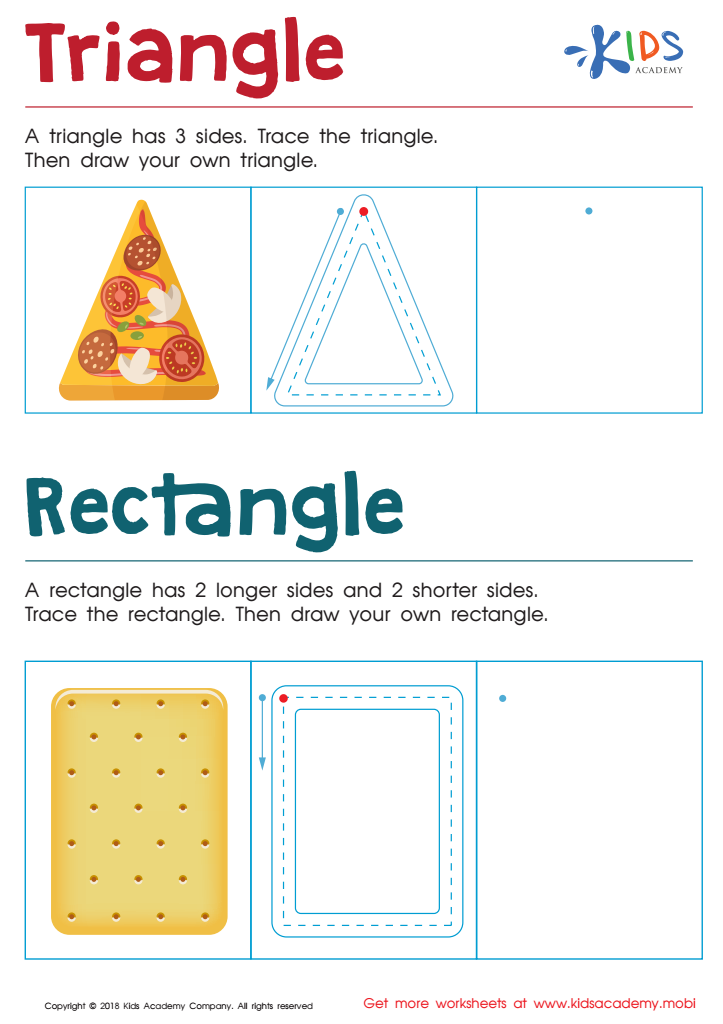
Triangle Rectangle Worksheet
 Assign to My Students











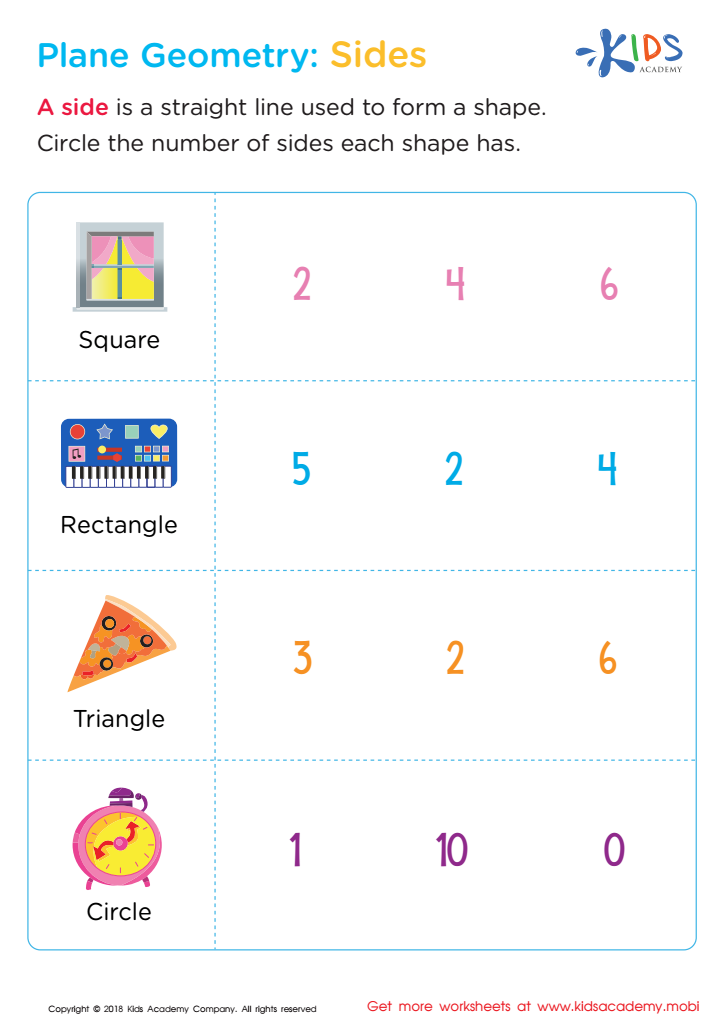
Plane Geometry: Sides Worksheet
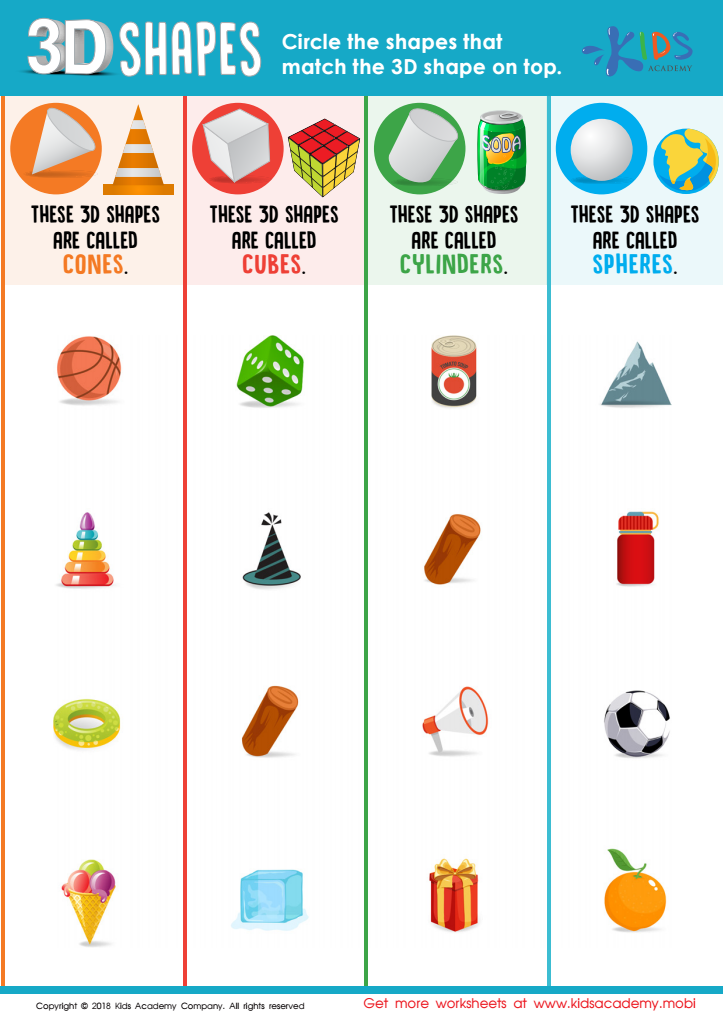
3D Shapes Worksheet








Differentiating shapes in geometry for children aged 5-7 is vital for several reasons. Firstly, this foundational concept helps improve children’s spatial awareness and critical thinking skills. By engaging with various shapes—such as circles, squares, triangles, and more—young learners begin to understand how these forms exist in their environment, leading to enhanced observational skills and cognitive development.
Moreover, differentiating shapes can cater to diverse learning styles and needs. Every child learns differently; some may benefit from hands-on activities, while others might excel through visual aids or oral discussions. By providing various ways to explore shapes, teachers and parents can ensure all students feel included and supported in their learning journeys.
Additionally, understanding shapes and their properties lays the groundwork for future math concepts, such as measurement, symmetry, and geometry in higher grades. This early exposure fosters a positive attitude towards math and can keep children motivated and engaged.
Investing time in teaching children to differentiate shapes not only boosts early math skills but also nurtures vital analytical and problem-solving abilities, preparing them for lifelong learning and future academic success. Therefore, both parents and teachers should prioritize geometry in early education.








