Addition Practice Numbers Worksheets for Ages 5-7 - Page 2
31 filtered results
-
From - To
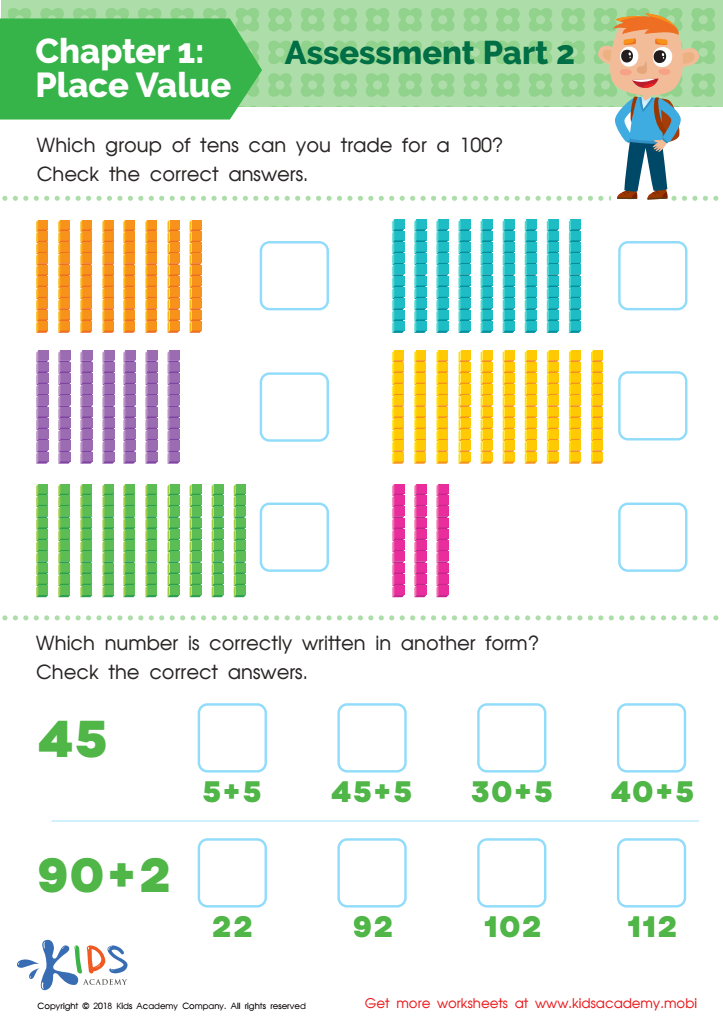
Place Value: Chapter 2 Worksheet
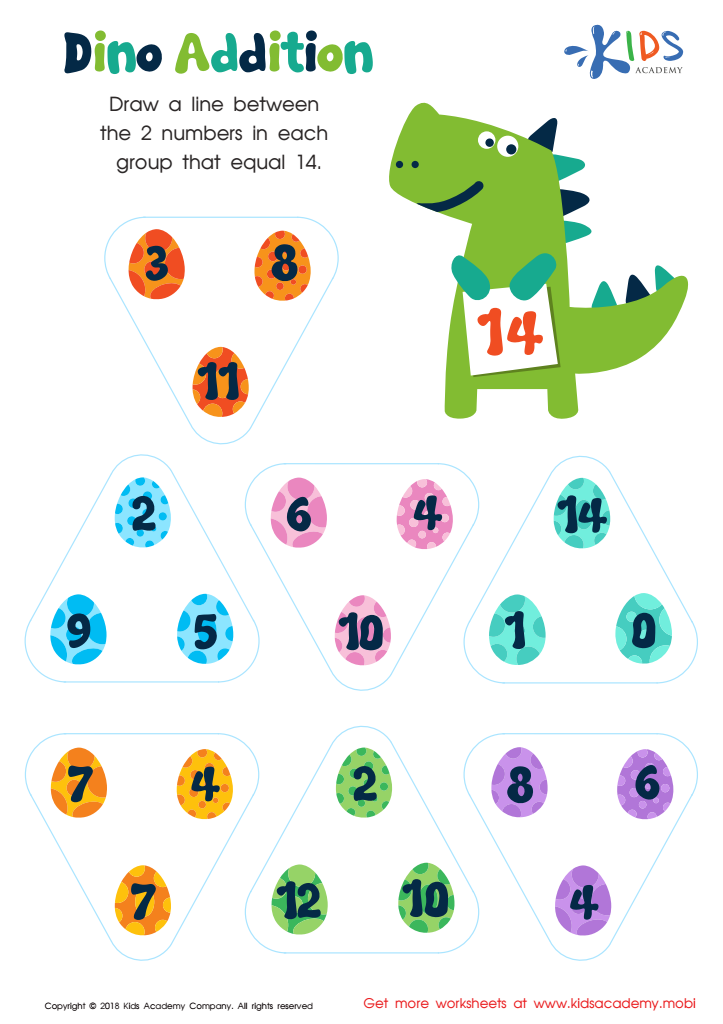
Dino Addition Worksheet
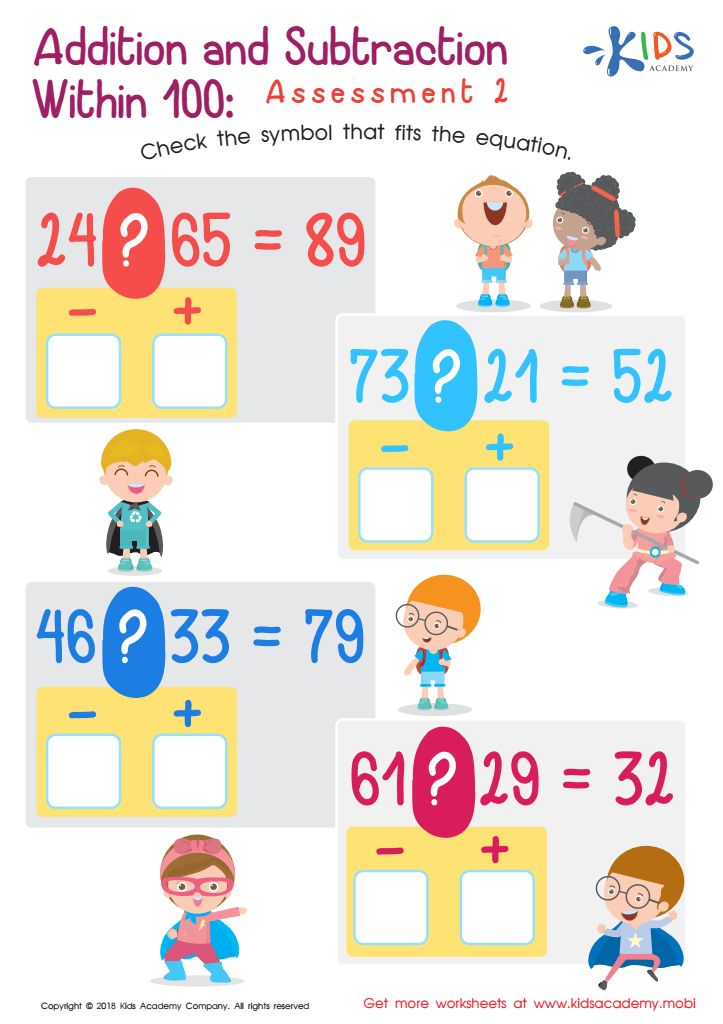
Addition and Subtraction Within 1: Assessment 2 Worksheet
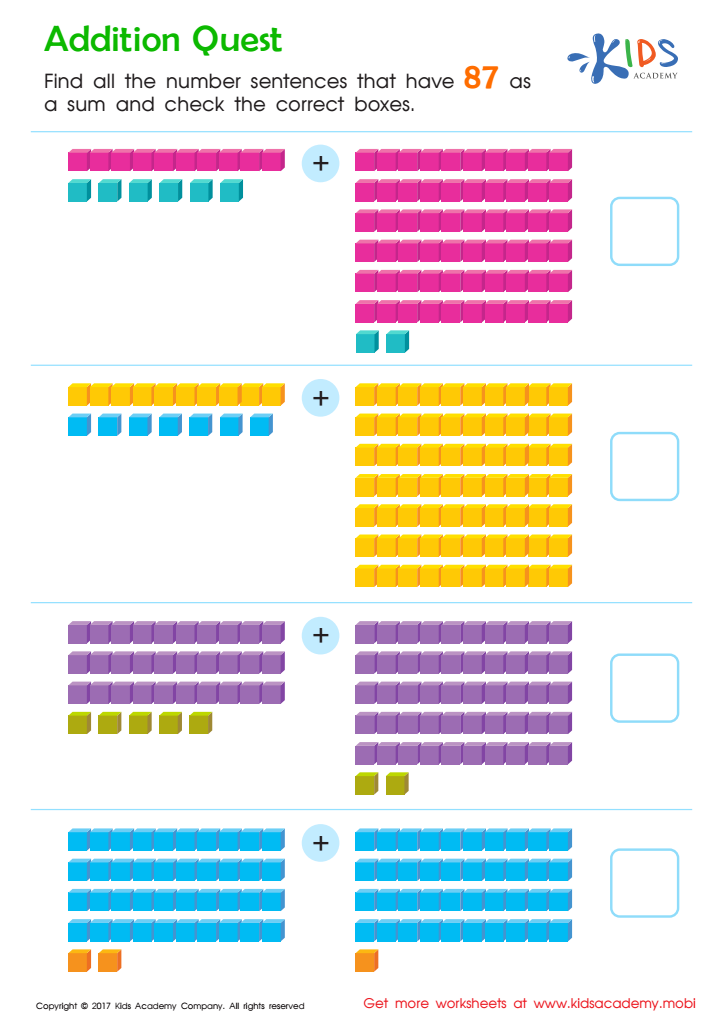
Addition Quest Worksheet: Part 1
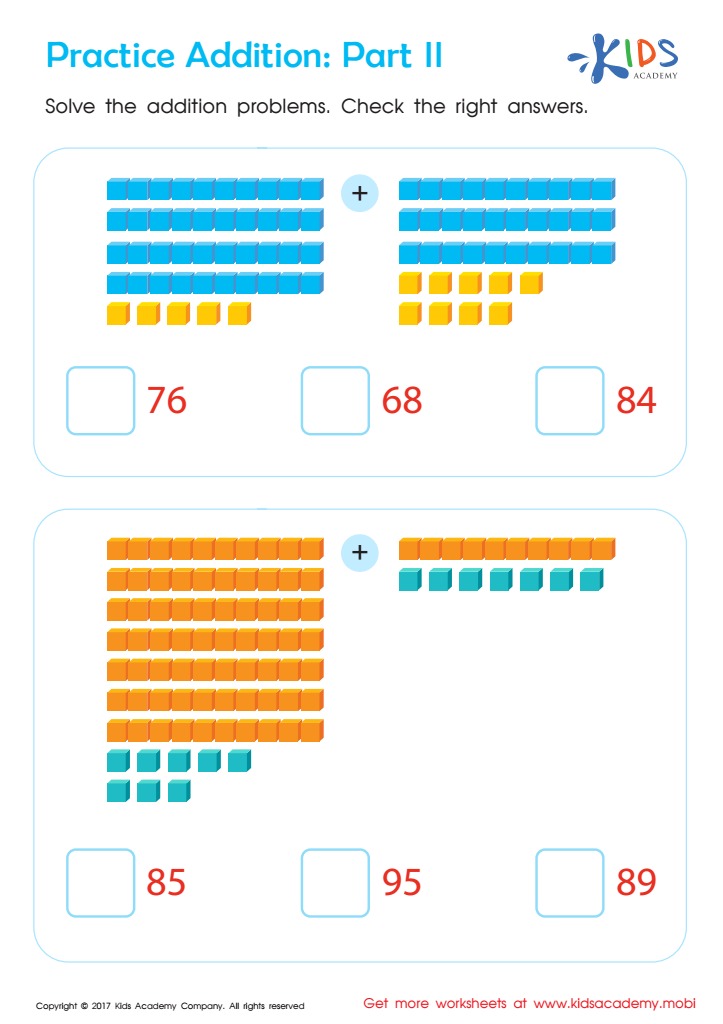
Practice Addition: Part 2 Worksheet
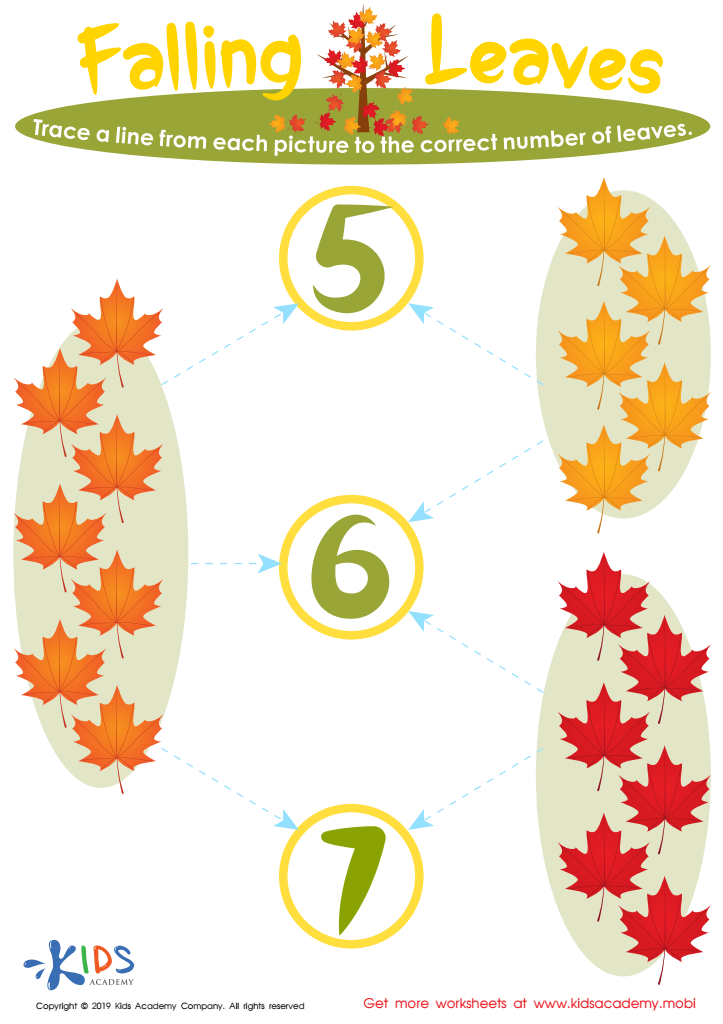
Falling Leaves Worksheet
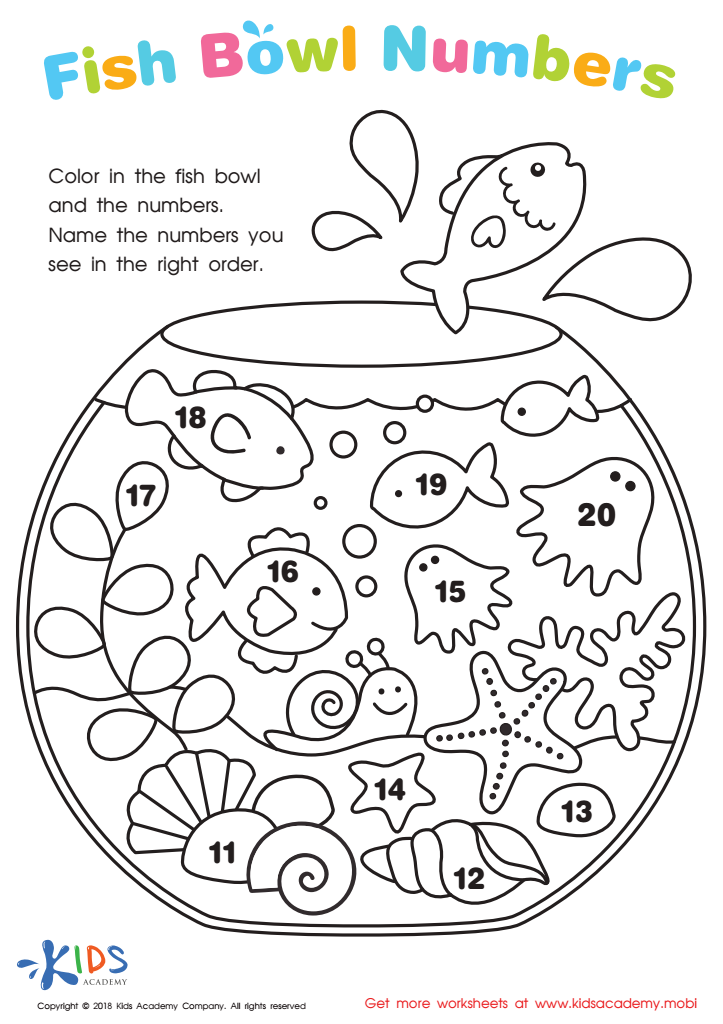
Fish Bowl Numbers Worksheet
 Assign to My Students








Addition practice for children aged 5-7 plays a crucial role in their early education and sets the foundation for future mathematical understanding. At this age, kids are developing their cognitive skills and learning to recognize patterns; mastering addition enhances critical thinking and problem-solving abilities. Engaging in addition practice helps to build children's confidence with numbers, as they gain a sense of accomplishment from mastering new concepts.
Moreover, strong addition skills are essential for everyday life, as they revolved around basic financial literacy, cooking, and even time management. Understanding how to add not only develops mathematical fluency but also encourages logical reasoning and critical thinking, necessary for tackling more complex arithmetic later on.
From a social perspective, math is often a group activity, whether in a classroom or at home. Collaborative games and practice activities can foster teamwork and communication skills among peers or with family members. This not only improves their math ability but also strengthens relationships.
In summary, parents and teachers should care about addition practice for children aged 5-7 as it fosters cognitive skills, builds confidence, and lays a strong mathematical foundation for lifelong learning and everyday practical skills.








