Comparing lengths Numbers Worksheets for Ages 5-7
4 filtered results
-
From - To
Introduce young learners to the exciting world of measurement with our Comparing Lengths Numbers Worksheets for Ages 5-7. These engaging, printable worksheets encourage children to compare lengths using fun illustrations and relatable scenarios, boosting their number sense and critical thinking skills. Perfect for early grade classrooms or at-home learning, these resources are designed to help kids grasp fundamental concepts of measurement while cultivating a love for math. With each activity, children practice counting, comparing, and identifying differences in lengths, setting a strong foundation for future mathematical learning. Nurture your child's curiosity and confidence with these expertly crafted worksheets!
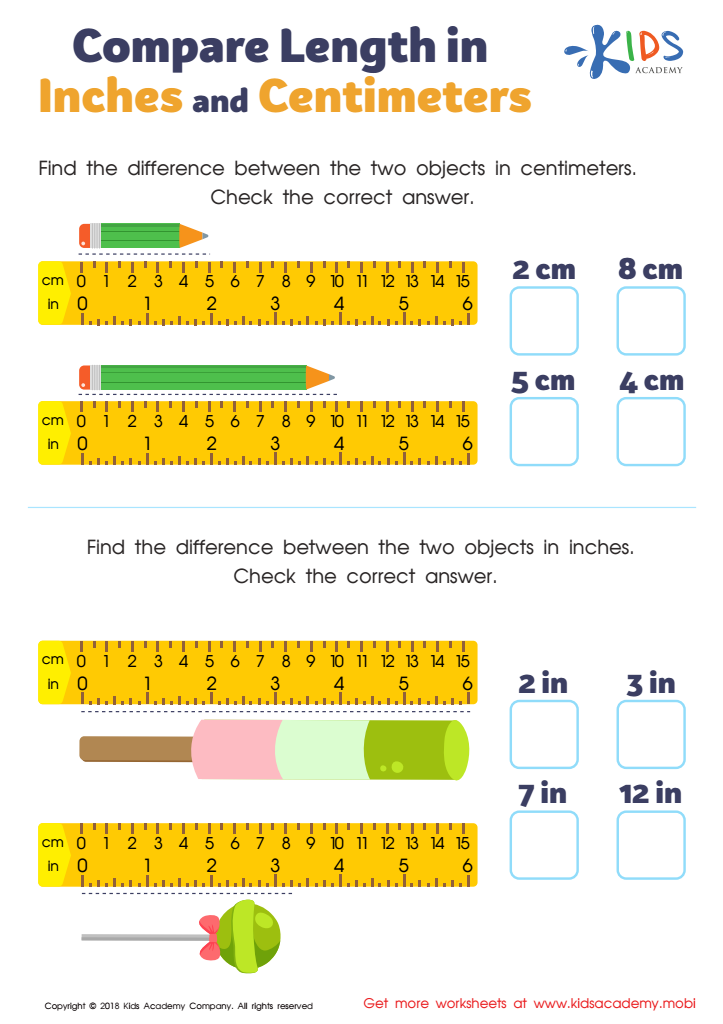
Compare Length in Inches and Centimeters Worksheet
 Assign to My Students
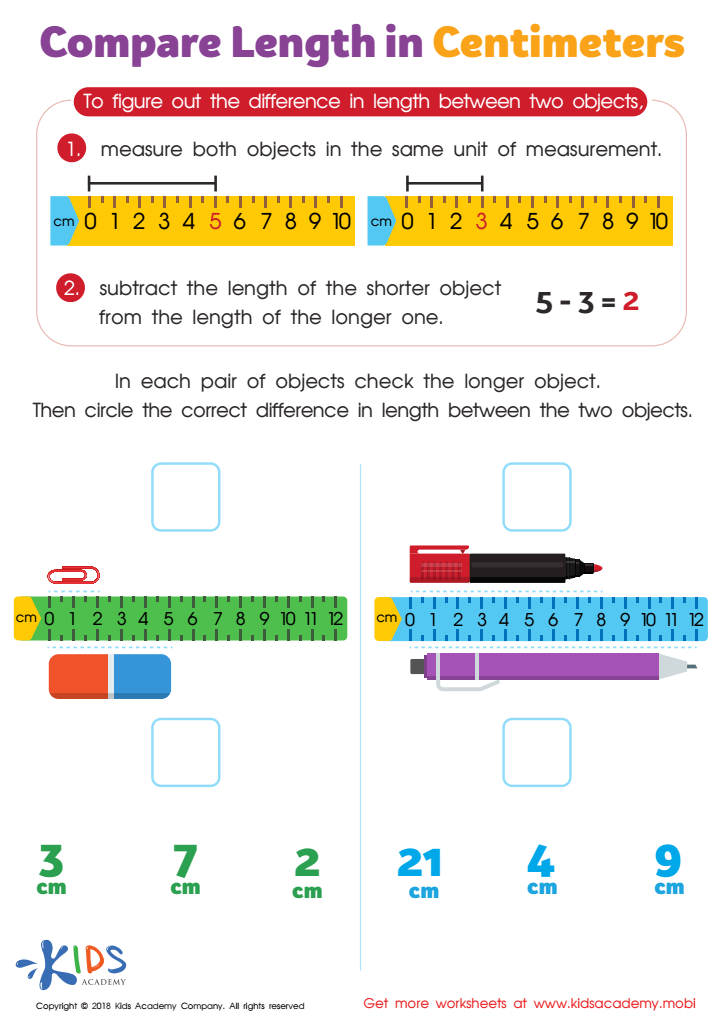
Compare Length in Centimeters Worksheet
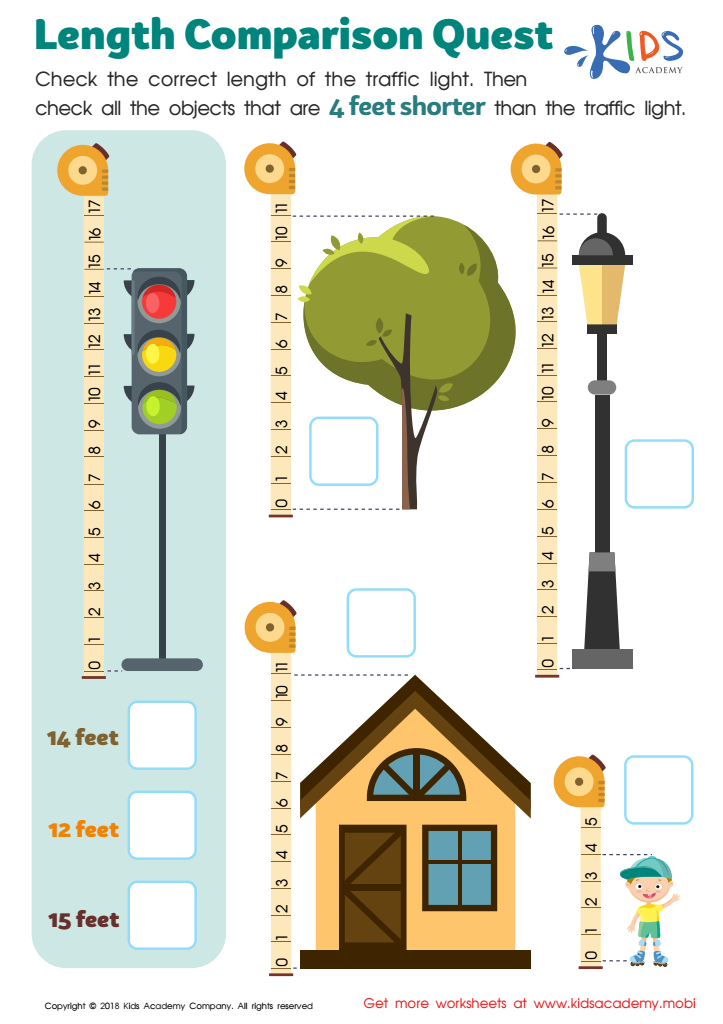
Length Comparison Quest Worksheet
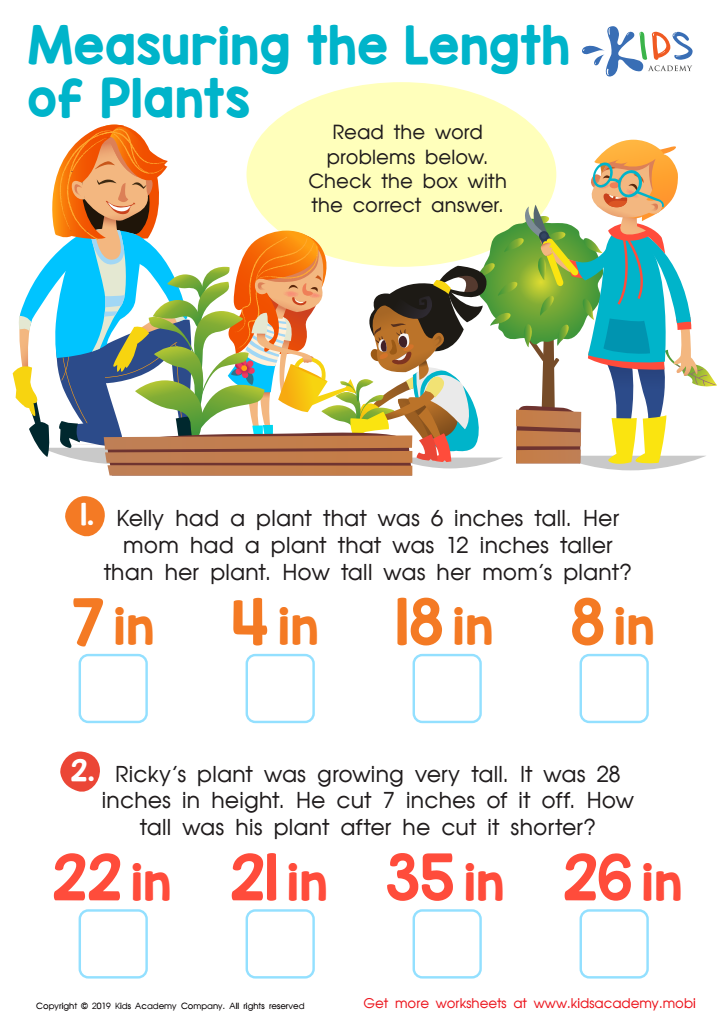
Measuring the Length of Plants Worksheet




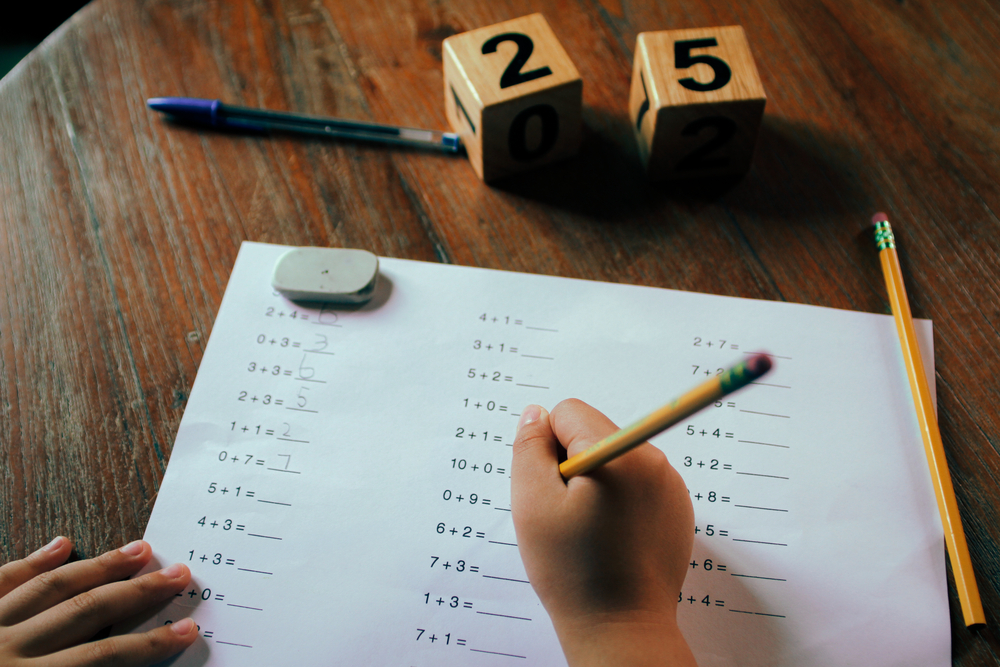



Parents and teachers should prioritize comparing lengths and numbers for children ages 5-7 because these foundational skills are crucial for their cognitive development and future learning. At this age, children are naturally curious and develop crucial problem-solving and critical thinking skills. Understanding and comparing lengths fosters spatial awareness, helping kids grasp concepts such as measurement, distance, and size comparison. This foundational knowledge is not only vital in everyday life but also serves as a stepping stone for more complex math and science concepts they will encounter later.
Moreover, comparing numbers reinforces early math skills such as counting, sequencing, and recognizing numerical value. These activities also integrate language skills by encouraging descriptive language and vocabulary growth when children verbalize their observations. Discussing lengths and numbers can also strengthen memory, attention to detail, and the ability to follow instructions.
Encouraging children to engage in these comparative tasks through playful learning activities ensures they find math enjoyable and builds their confidence in the subject. Ensuring children have these basic mathematical skills solidified by the age of 7 sets them on a positive trajectory for future academic success, making math less intimidating and more accessible as they progress in their education.








