Data interpretation Numbers Worksheets for Ages 5-7
5 filtered results
-
From - To
Explore our engaging Data Interpretation Numbers Worksheets designed for children ages 5-7! These interactive worksheets help young learners develop essential mathematical skills by introducing them to data interpretation concepts through fun, age-appropriate activities. Kids will practice reading and analyzing simple charts, graphs, and tables, enhancing their critical thinking and problem-solving abilities. Our resources are crafted to improve number recognition and comprehension while making learning enjoyable and effective. Perfect for classroom use or at-home practice, these worksheets aim to foster a solid foundation in math, preparing children for future academic success. Start their learning journey today with our comprehensive collection!
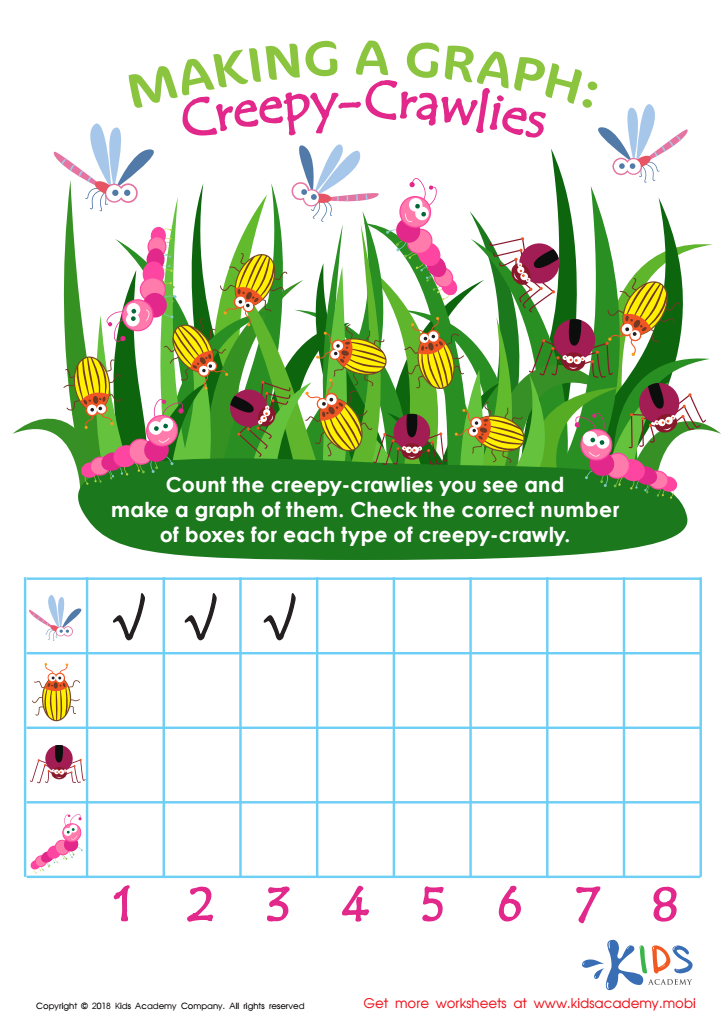
Making a Graph: Creepy Crawlies Worksheet
 Assign to My Students
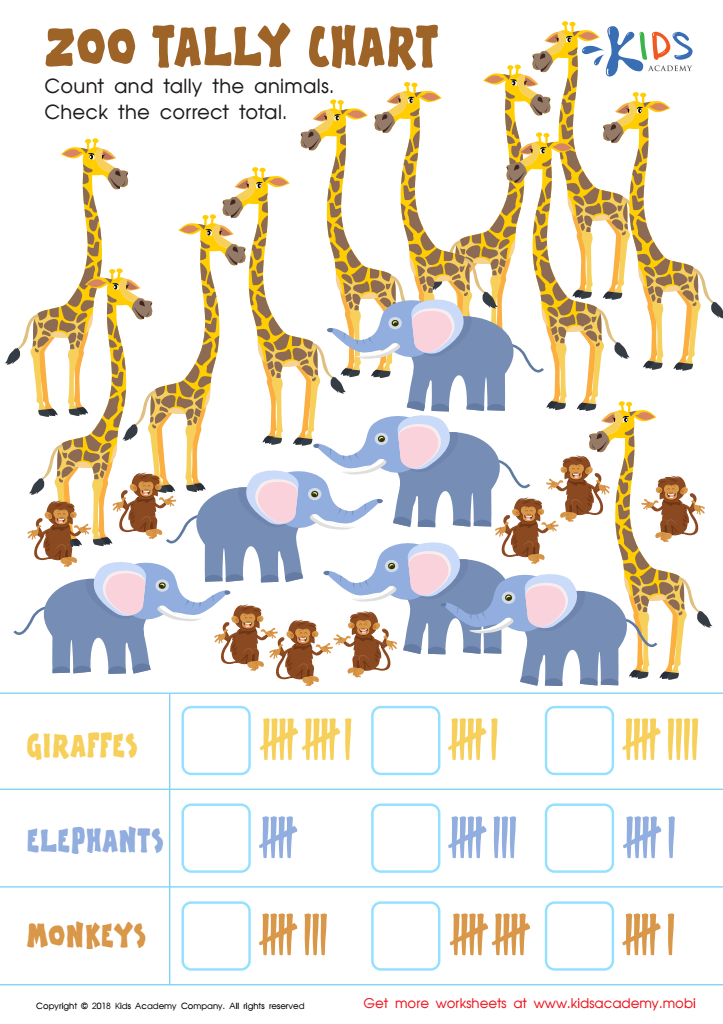
Zoo Tally Chart Worksheet
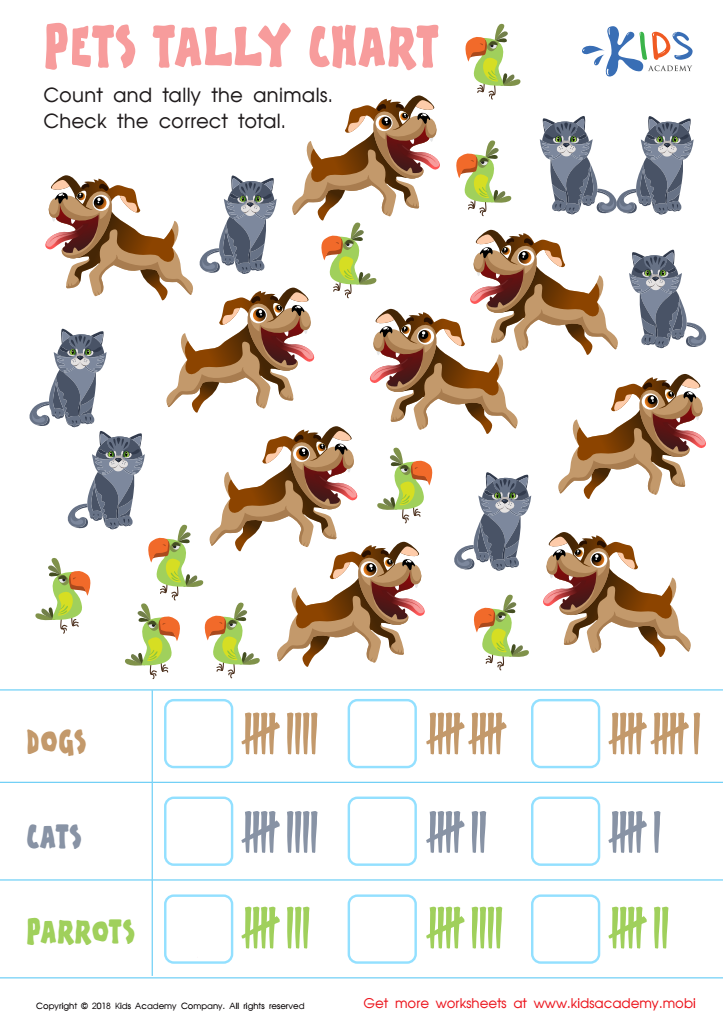
Pets Tally Chart Worksheet
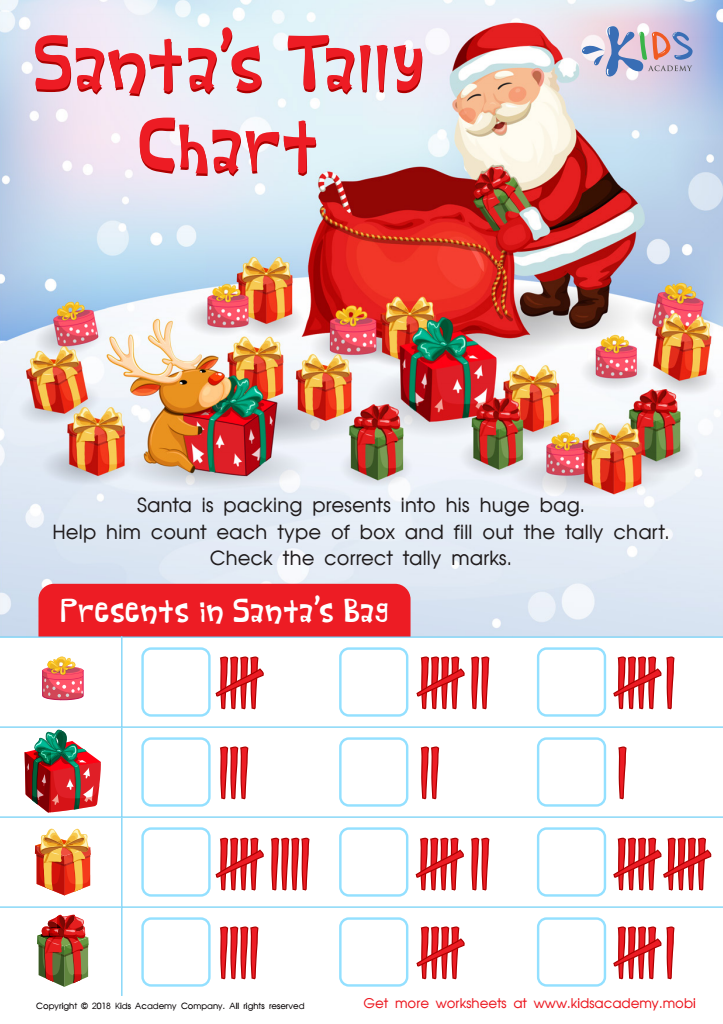
Santa Tally Chart Worksheet
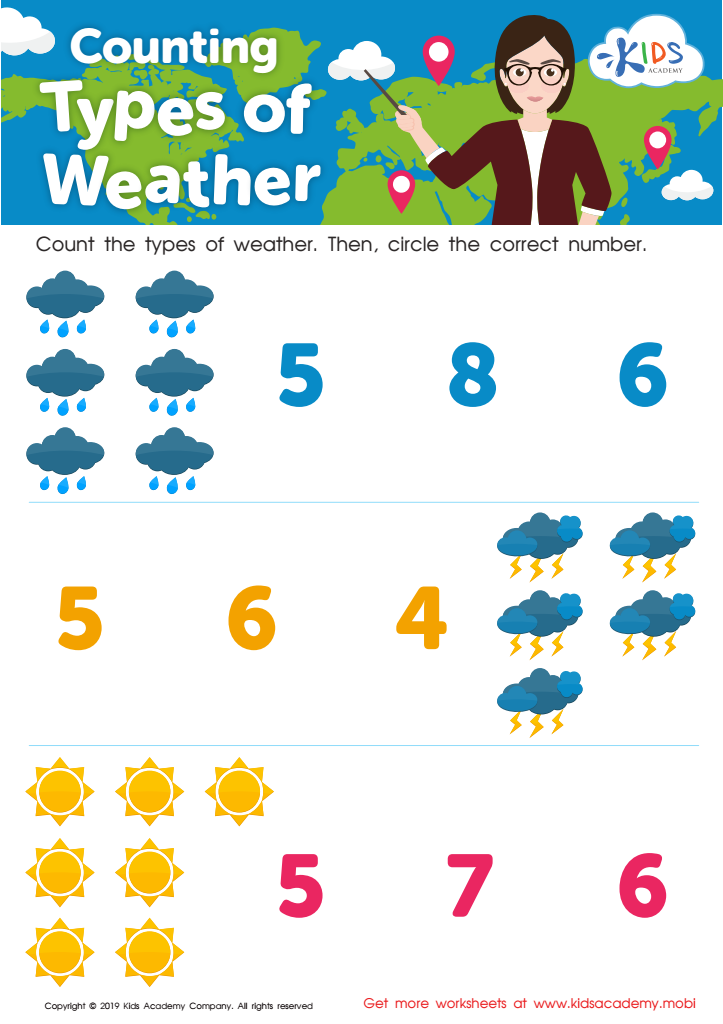
Counting Types of Weather Worksheet








Data interpretation is a crucial skill for children aged 5-7, and it's important for parents and teachers to prioritize it in early education. At this age, children are naturally curious about the world around them, and introducing them to data interpretation helps harness that curiosity. Understanding numbers and basic statistics lays the groundwork for critical thinking, analytical skills, and decision-making abilities.
When children learn to interpret data, they develop a framework for understanding information presented in everyday life, such as charts in the news, schedules, and even social media trends. Engaging with data can also foster communication skills as children learn to convey what they have discovered and discuss their findings with peers and adults.
Additionally, early data skills contribute to a foundation in mathematics, making more complex concepts in later grades more accessible. Regular exposure to data interpretation can help prevent math anxiety, making children more confident and competent in working with numbers.
Ultimately, teaching data interpretation promotes a love for learning and empowers children to think critically about information from a young age, enabling them to make informed choices throughout their lives. Emphasizing these skills may bridge their academic success and personal growth in an increasingly data-driven world.








