Multiplication practice Numbers Worksheets for Ages 5-7
5 filtered results
-
From - To
Welcome to our Multiplication Practice Numbers Worksheets for Ages 5-7! Our engaging and interactive worksheets are designed to introduce young learners to the exciting world of multiplication. Tailored for children aged 5-7, these activities make learning fun and accessible. Each worksheet is crafted to build foundational skills, boost confidence, and enhance problem-solving abilities. With colorful images and clear instructions, your child will enjoy mastering multiplication concepts at their own pace. Visit our website to access a wide variety of multiplication practice sheets and lay a strong mathematical foundation for your child today!
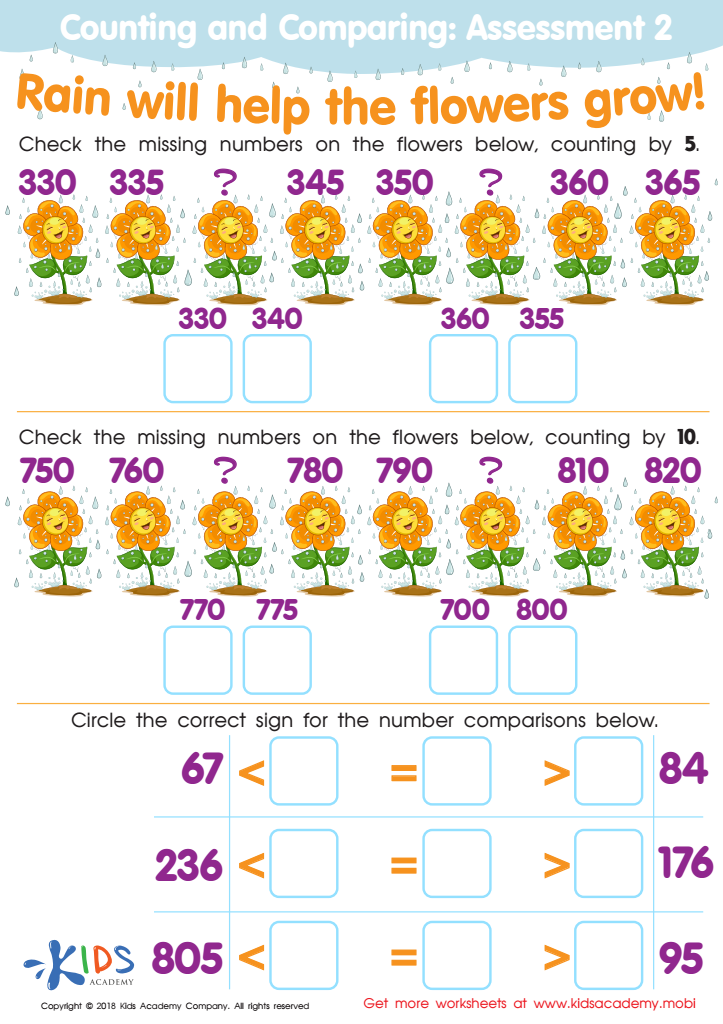
Counting and Comparing: Assessment 2 Worksheet
 Assign to My Students
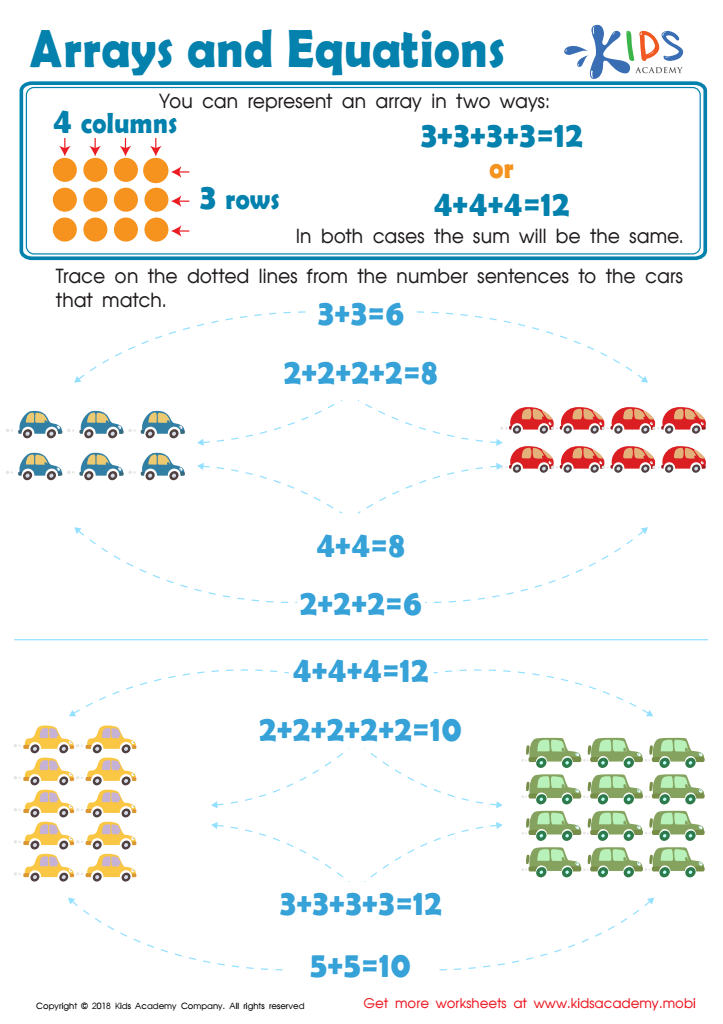
Arrays and Equations Worksheet
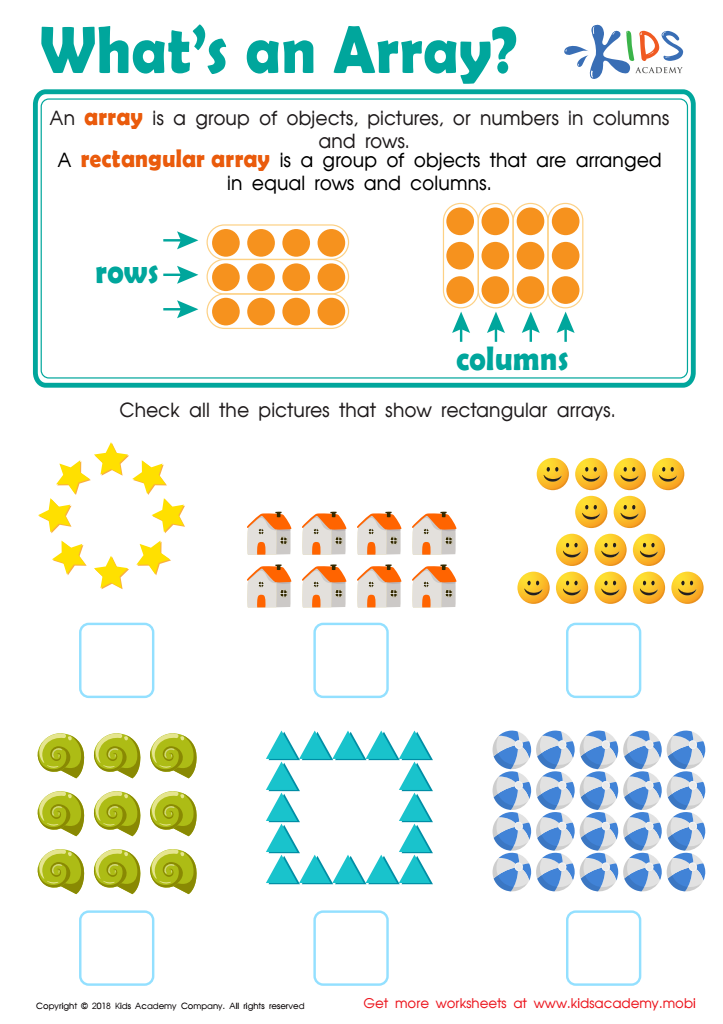
What's an Array? Worksheet
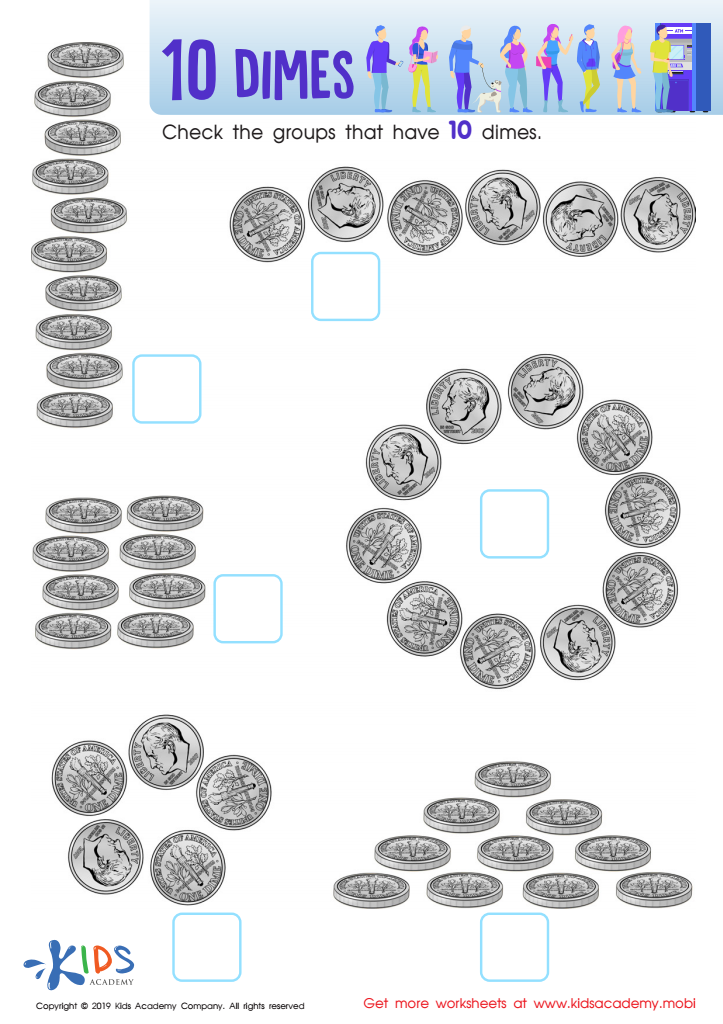
10 Dimes Worksheet
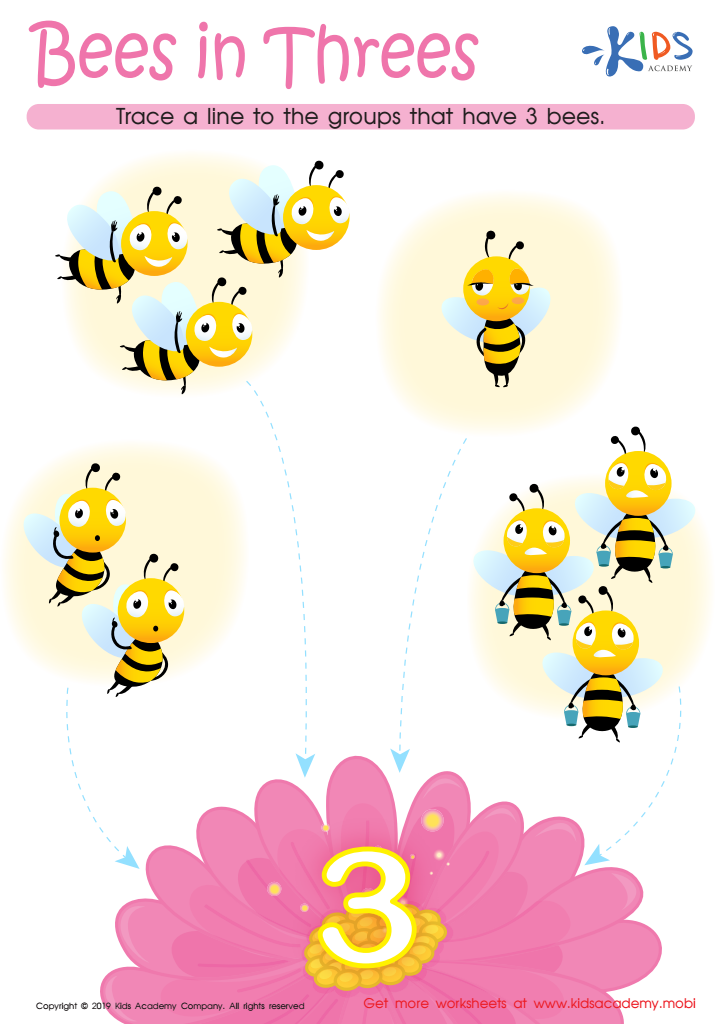
Bees in Threes Worksheet








Parents and teachers should care about multiplication practice for children aged 5-7 because early math skills lay a crucial foundation for future academic success. Multiplication is a core mathematical concept that enhances number sense, enabling kids to grasp how numbers work together in a structured manner. Introducing multiplication at an early age can boost cognitive development, promoting critical thinking and problem-solving abilities.
At this developmental stage, children's brains are highly receptive to learning through engaging and repetitive practice. Introducing them to multiplication through games, visual aids, and real-life examples can make learning fun and help them grasp these concepts more quickly. Familiarity with multiplication increases a child's confidence and encourages a positive attitude toward math, reducing math anxiety later in life.
Additionally, multiplication is used in many practical everyday tasks, from calculating expenses to understanding time and measurements. By securing a robust foundation in multiplication, children can navigate these tasks more competently.
Furthermore, early math skills are strongly linked to later academic achievements and career prospects, as various studies suggest. By ensuring children have a solid understanding of multiplication, parents and teachers invest in their intellectual growth, overall well-being, and future opportunities in a world increasingly driven by quantitative literacy.








