Animal identification Math Worksheets for Ages 5-7 - Page 2
33 filtered results
-
From - To
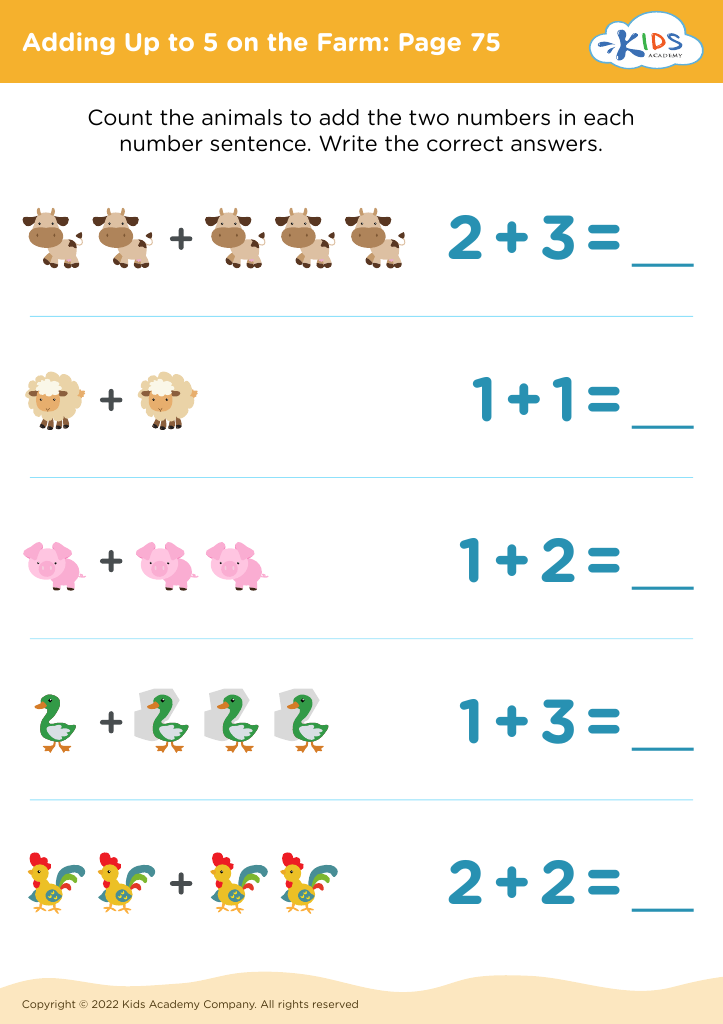
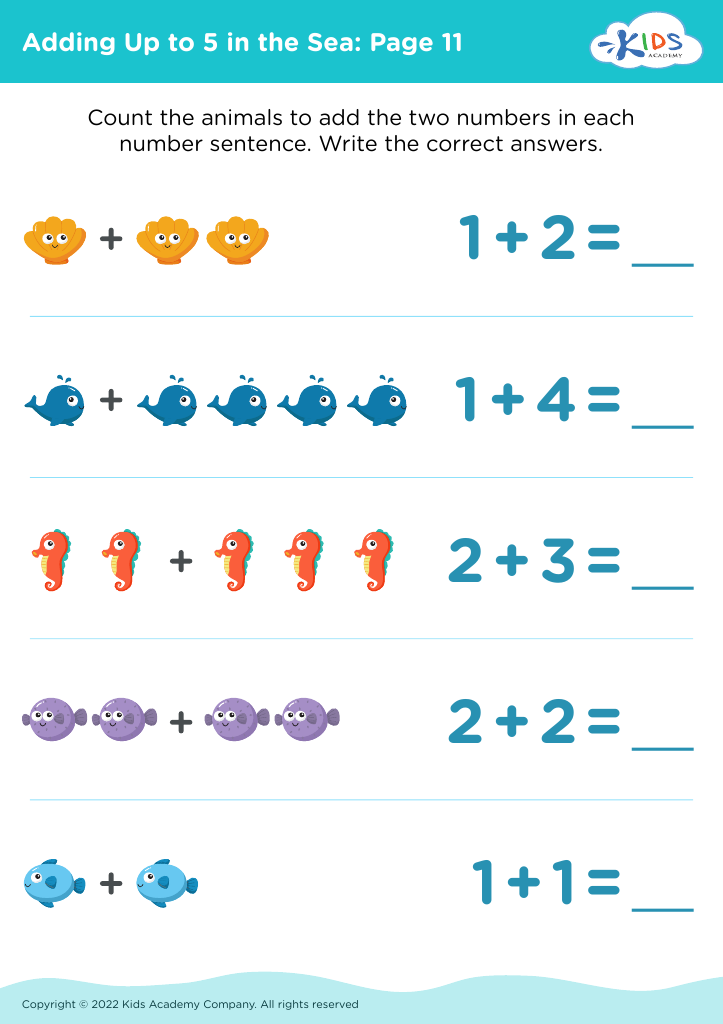
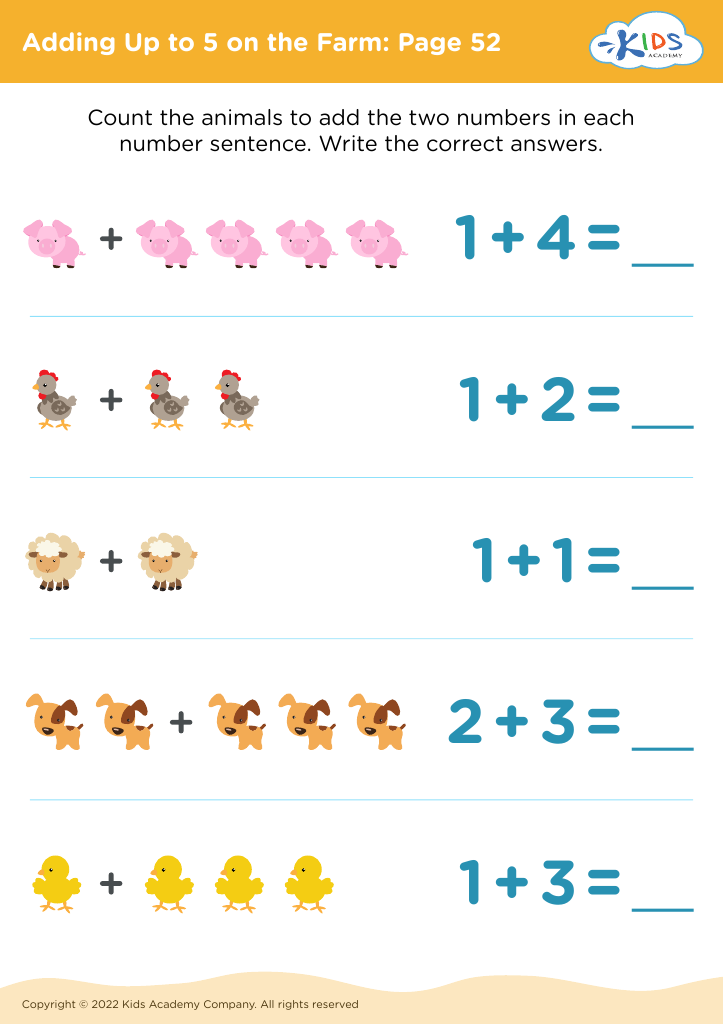
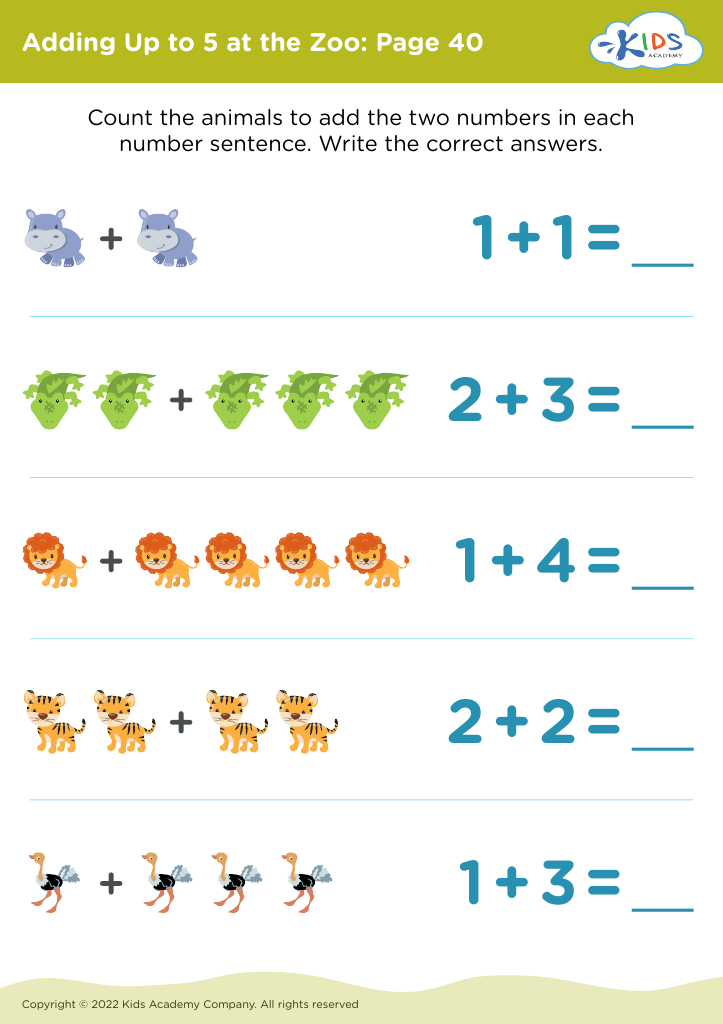
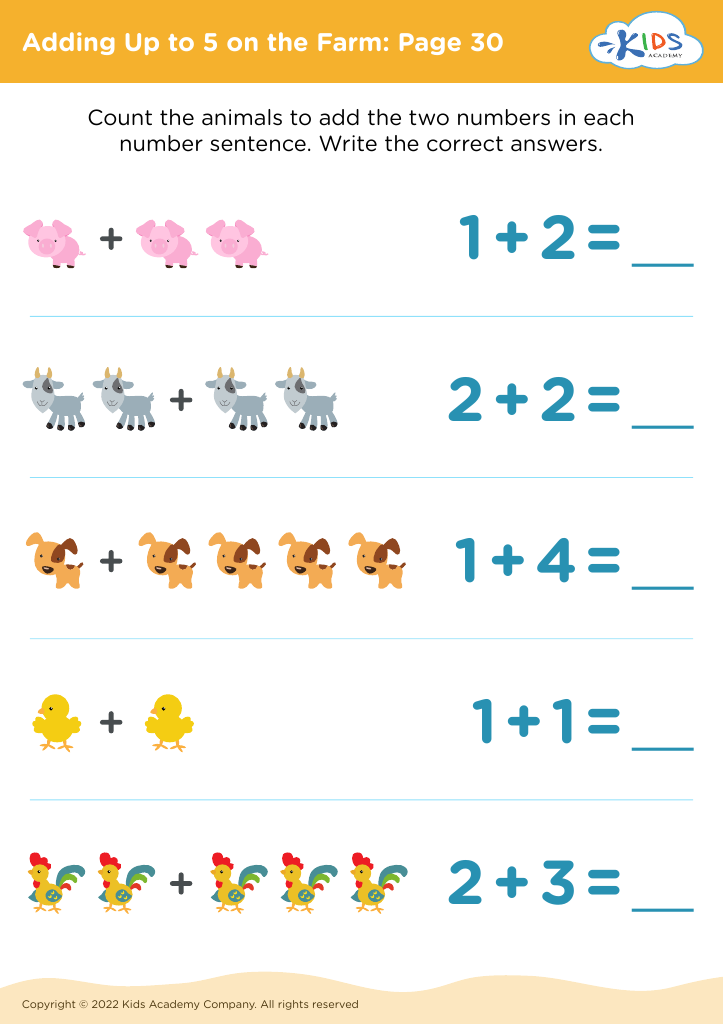
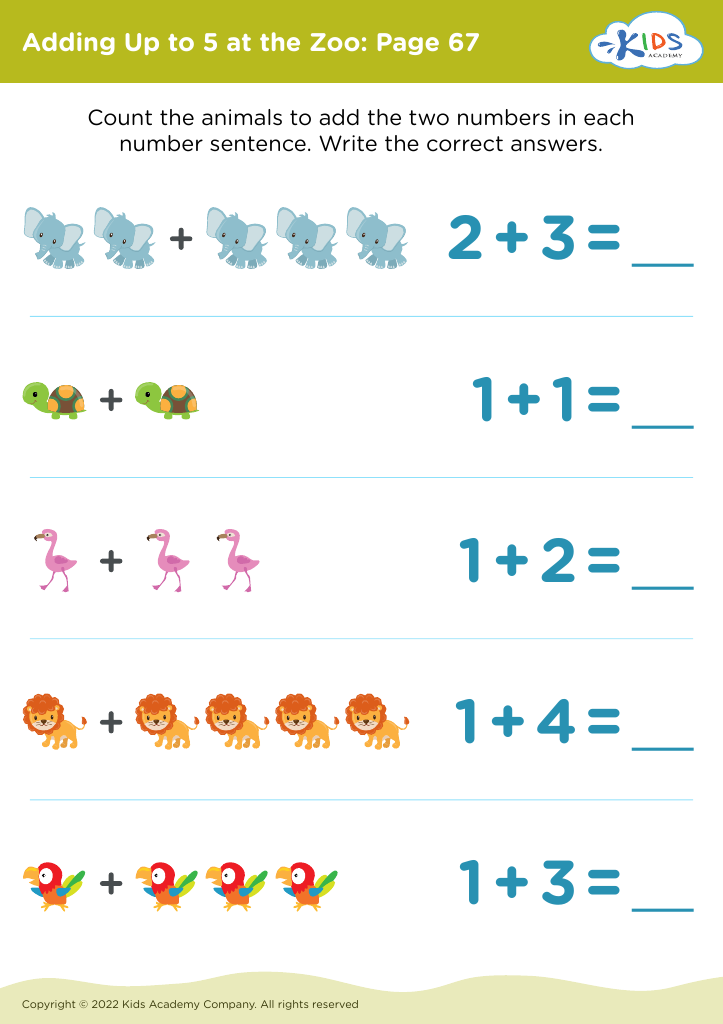
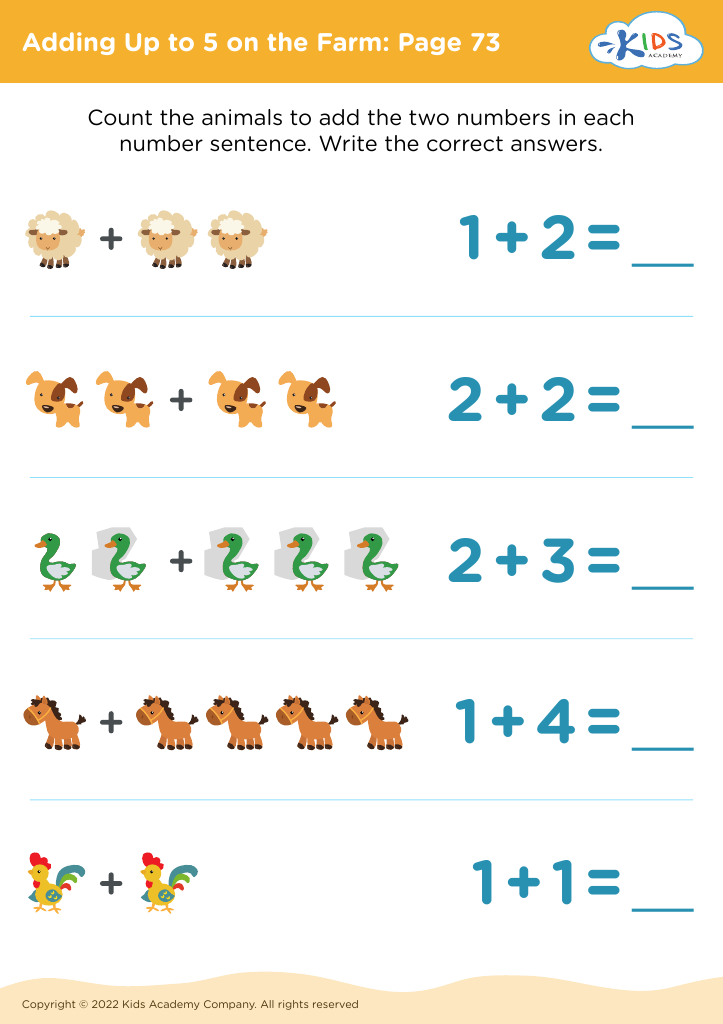
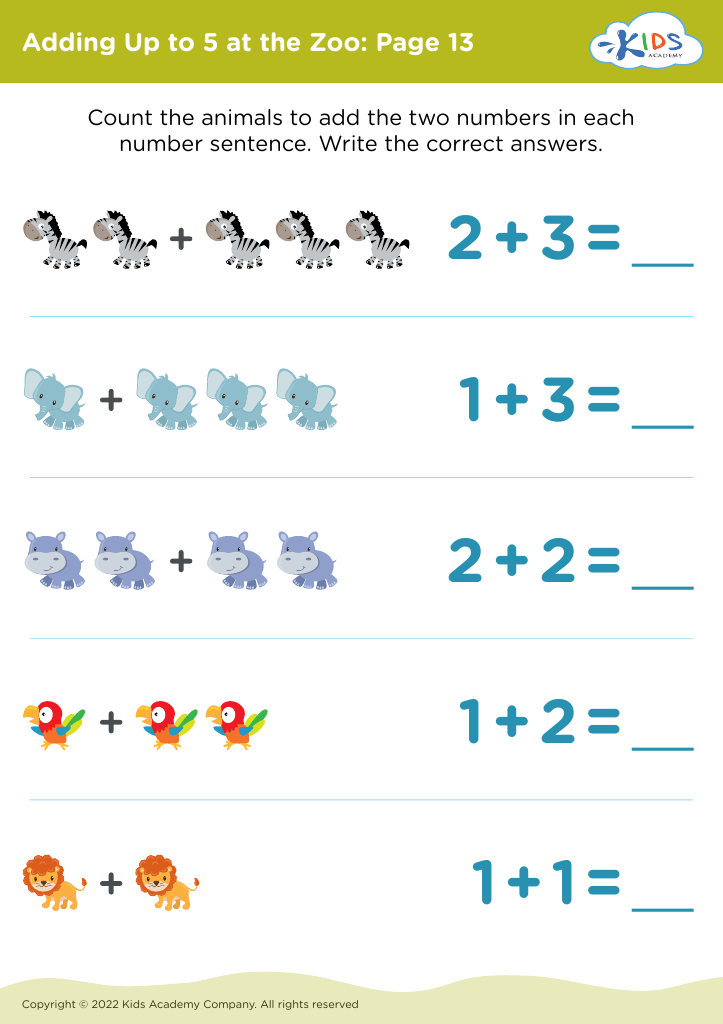
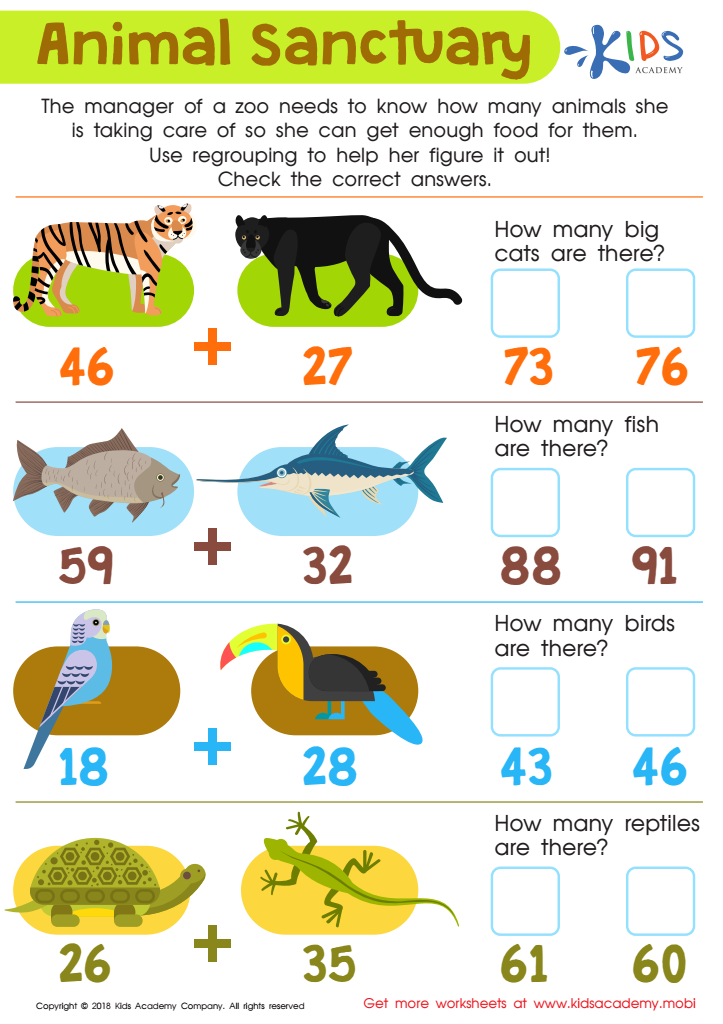
Animal Sanctuary Worksheet
 Assign to My Students








Parents and teachers should care about Animal Identification Math for ages 5-7 because it blends foundational math skills with engaging real-world applications. At this developmental stage, children are naturally curious and enjoy exploring the world around them. By linking math concepts to animal identification, educators can capture children's interest and make learning more enjoyable.
Firstly, integrating animals into math lessons helps children develop essential counting skills. They can practice counting different types or numbers of animals, which reinforces their understanding of numerical concepts. For example, asking, "How many ducks do you see?" not only teaches counting but also allows children to make connections with the natural world.
Secondly, sorting and classifying animals based on characteristics such as size, shape, or habitat introduces basic principles of categorization and sets—key concepts in math. These activities help children develop critical thinking and logical reasoning skills.
Furthermore, incorporating animals into math problems improves attention and retention. Children are more likely to remember information when it is presented in a context they find engaging and meaningful. For instance, story problems involving animals can improve comprehension and problem-solving abilities.
Ultimately, Animal Identification Math nurtures a love for learning, boosts confidence in math, and fosters an early appreciation for wildlife and nature. It's a delightful, multifaceted approach to education that supports holistic development in young learners.








