Boost critical thinking Math Worksheets for Ages 5-7
4 filtered results
-
From - To
Enhance your child's mathematical abilities with our "Boost Critical Thinking Math Worksheets for Ages 5-7." Designed for young learners, these engaging worksheets foster critical thinking by encouraging children to analyze, solve, and apply math concepts in creative ways. Tailored for early grade students, our resources focus on essential skills like pattern recognition, problem-solving, and logical reasoning through fun activities. Each worksheet is crafted to inspire curiosity and build confidence in young minds, making math enjoyable and interactive. Discover a variety of themed worksheets that will not only boost critical thinking but also lay a solid foundation for your child's future success in mathematics!

 Assign to My Students
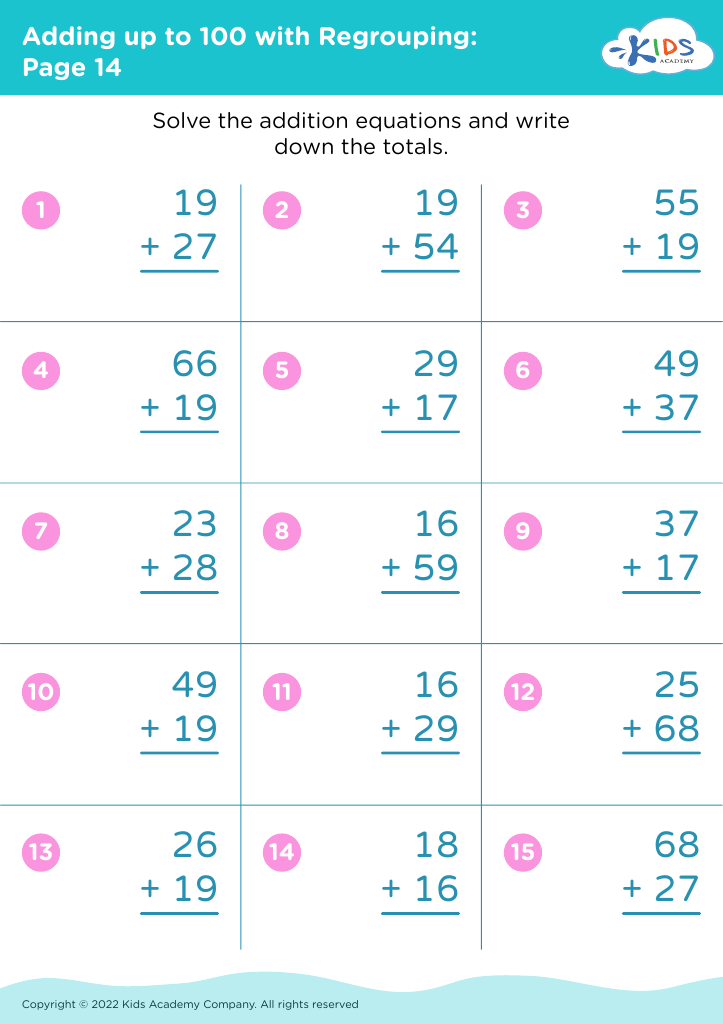
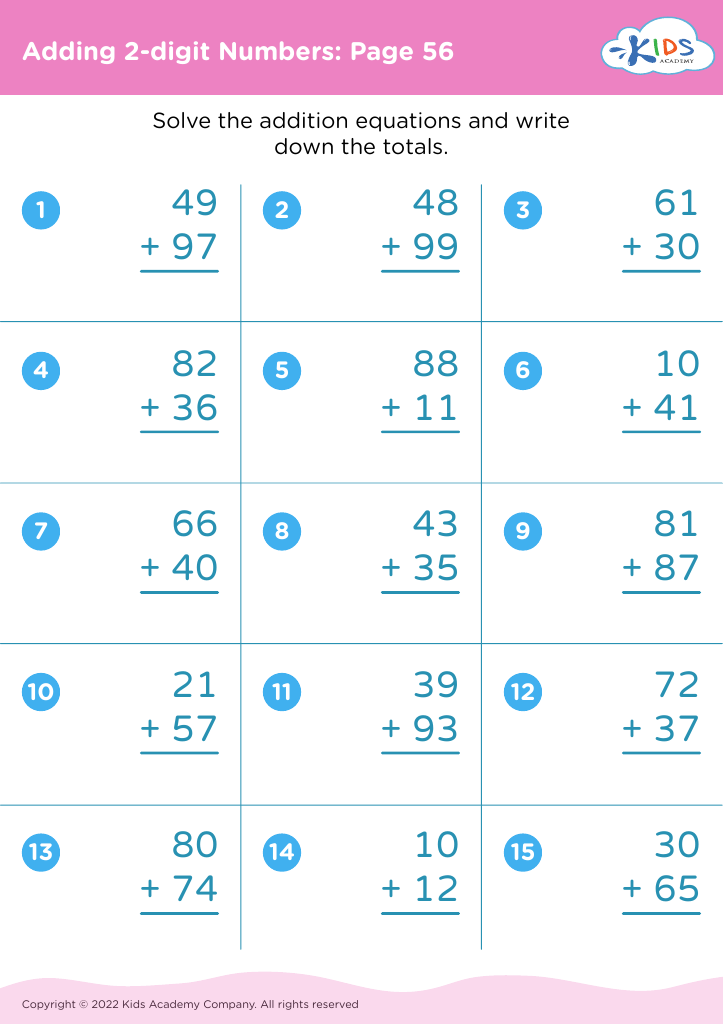
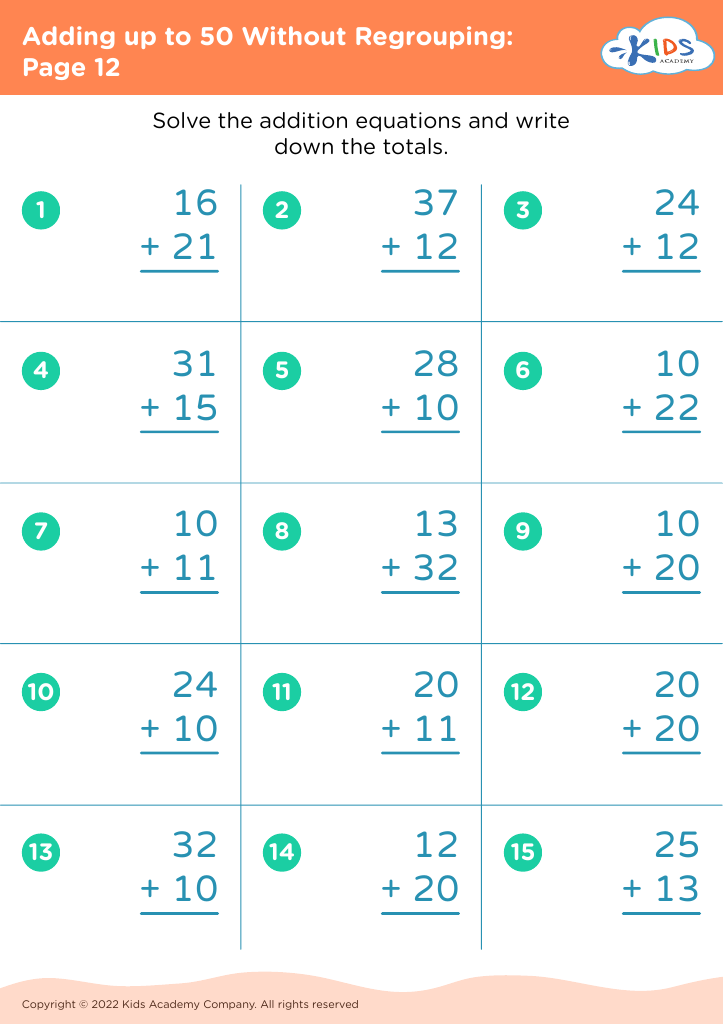








Boosting critical thinking skills in math for children aged 5-7 is crucial for their overall development and future academic success. At this age, children's minds are highly receptive to new concepts, making it an ideal time to nurture their analytical abilities. Engaging in critical thinking encourages children to ask questions, explore different problem-solving strategies, and learn to think independently.
By focusing on critical thinking in math, parents and teachers help children develop foundational skills that extend beyond numerical fluency. This approach fosters reasoning and logical thinking, essential abilities they will need throughout their academic careers and daily life. These skills enable young learners to approach challenges with confidence and creativity, encouraging persistence when faced with difficult problems.
Additionally, incorporating critical thinking into math lessons promotes a love for learning, as children are invited to explore and discover rather than simply memorize facts. This flexibility in thinking leads to deeper understanding, better retention of concepts, and improved problem-solving capabilities. Moreover, fostering these skills early on assists in building resilience, as children learn to view mistakes as opportunities for growth. Ultimately, investing in critical thinking in math sets the foundation for a lifetime of inquisitive minds and empowered learners.








