
Graph reading skills Math Worksheets for Ages 5-7
3 filtered results
Difficulty Level
Grade
Age
-
From - To
Subject
Activity
Standards
Enhance your child's understanding of graph reading with our engaging math worksheets designed for ages 5-7. These worksheets introduce essential graphing concepts through fun activities that capture young learners' curiosity. Children will enjoy interpreting various types of graphs, including bar graphs and pictographs, while developing critical thinking and analytical skills. Our worksheets are tailored to support both independent learning and guided instruction, fostering a solid foundation in math. Download these printable resources today to help your child enhance their graph reading skills and gain confidence in their mathematical abilities—all while having fun!
Favorites
With answer key
Interactive
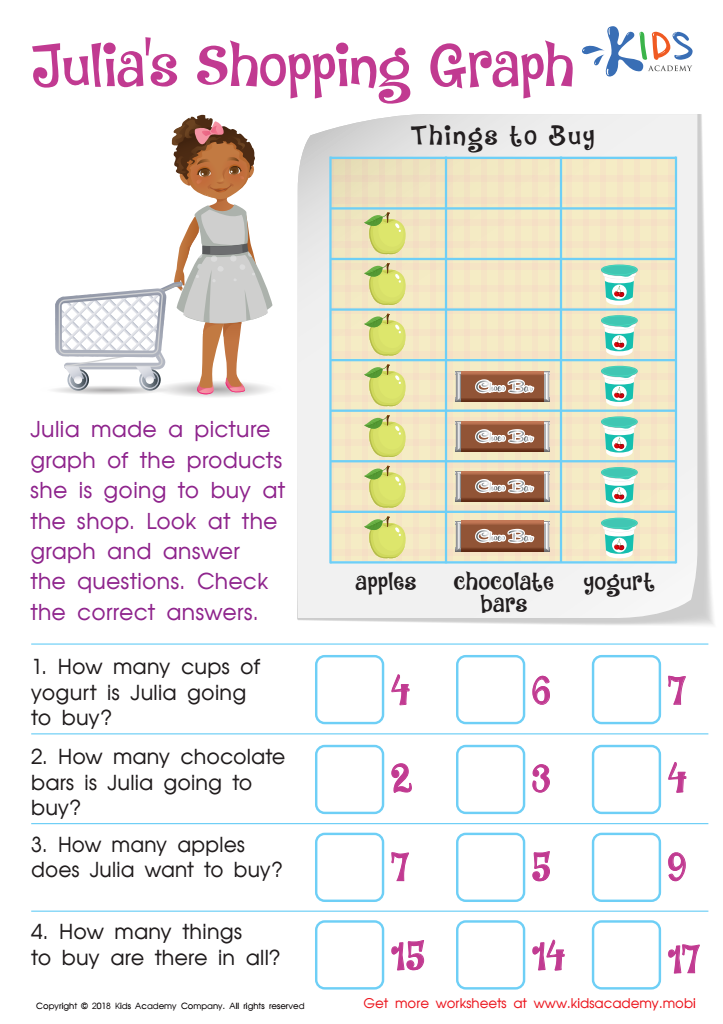
Julia's Shopping Graph Worksheet
This fun PDF worksheet provides little mathematicians with practice using pictographs. They will answer questions about Julia's graph, helping to assess their understanding of reading and interpreting data. Counting and choosing the correct answer is sure to be an enjoyable experience!
 Assign to My Students
Julia's Shopping Graph Worksheet
Worksheet
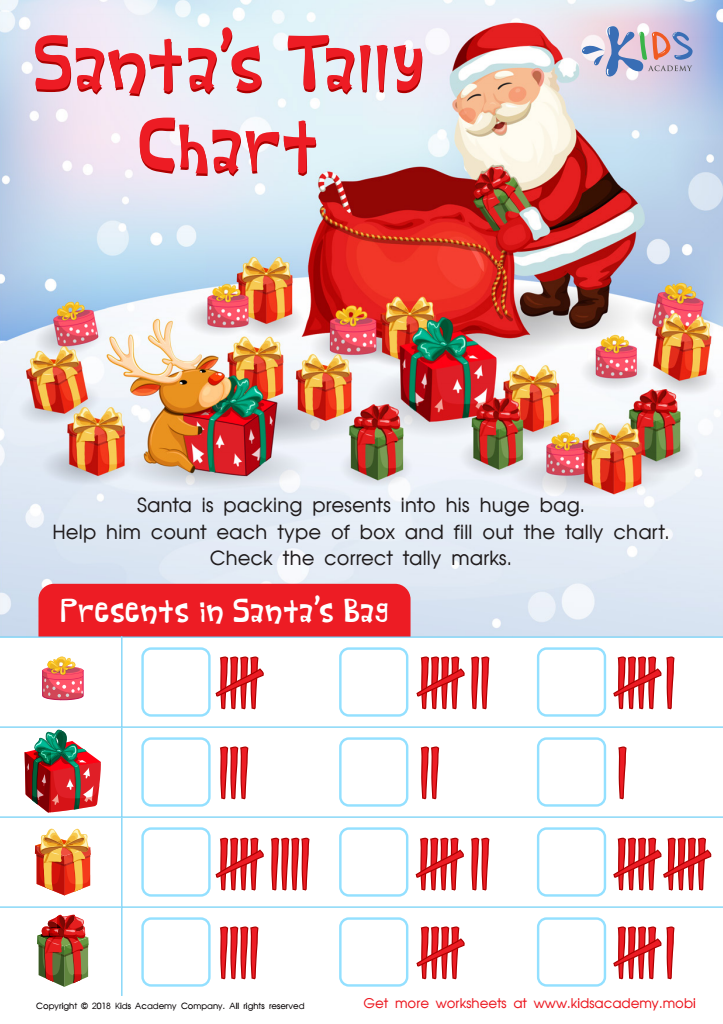
Santa Tally Chart Worksheet
Santa's got a big bag of gifts to count! Kids can help with this fun PDF worksheet, practicing visual recognition and representation skills while they sort and tally the presents. They'll also work on charting as they fill in the tally chart and send Santa off for a happy holiday. Ho, Ho, Ho!
Santa Tally Chart Worksheet
Worksheet
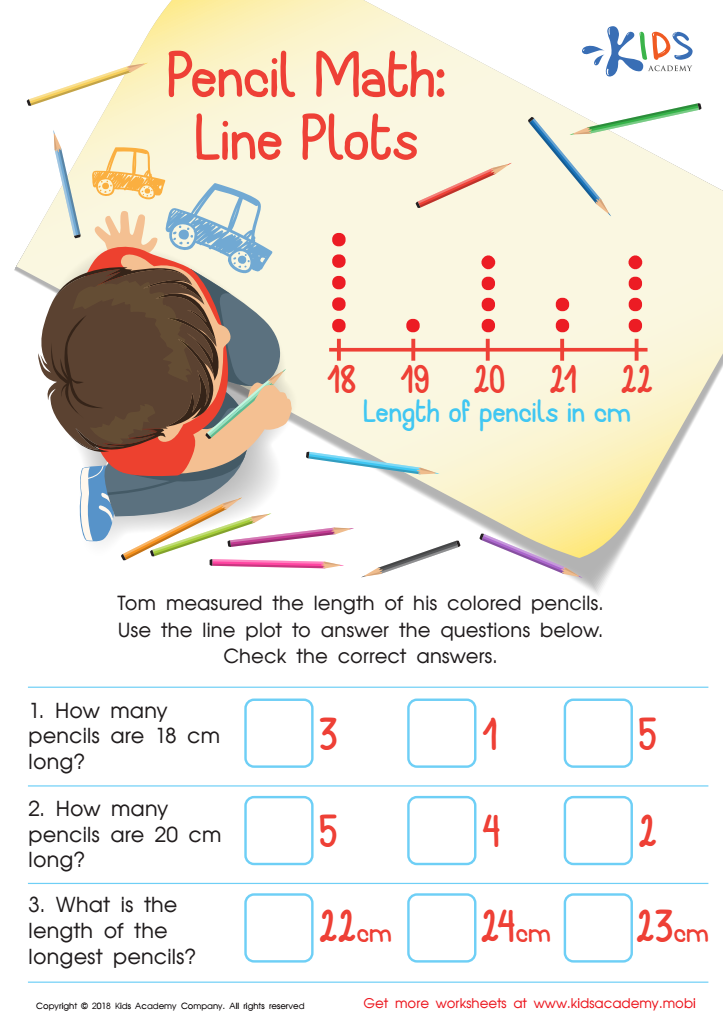
Pencil Math: Line Plots Worksheet
Your child will meet Tom in this worksheet, helping him find the length of his colored pencils. Tom has written the lengths in cm, and the line plot will help your kids answer the questions. Check the correct answers for each, including how many pencils are of a certain length. The line plot makes it easy to find the answers.
Pencil Math: Line Plots Worksheet
Worksheet
Join Kids Academy for Free
Who is primarily going to use this learning content?








Graph reading skills are fundamental for children ages 5-7, as they lay the groundwork for developing essential mathematical understanding and critical thinking abilities. At this developmental stage, children are beginning to make sense of data, patterns, and relationships. Graphs, such as bar graphs and pictographs, serve as visual representations of information, helping young learners engage with numbers in a tangible way.
Learning to read graphs not only enhances children’s mathematical skills but also fosters their ability to think analytically. By interpreting graphs, children practice skills like observing, comparing, and contrasting data points. This engagement cultivates their ability to ask questions, identify trends, and make informed conclusions, skills that are vital in all areas of learning.
Moreover, graph reading reinforces the importance of organization and clarity in presenting information, a skill relevant in academics and real-world situations. When parents and teachers encourage graph-related activities, they are promoting a fun, interactive approach to learning math. Incorporating graph reading into everyday contexts empowers children to see the relevance of math in daily life, increasing their confidence and interest in the subject. Ultimately, nurturing these skills at a young age sets a strong foundation for future success in mathematics and data literacy.








