Identifying Animals Math Worksheets for Ages 5-7
5 filtered results
-
From - To
Discover our exciting "Identifying Animals Math Worksheets" designed specifically for children ages 5-7! These engaging worksheets combine essential math skills with the joyful theme of animals. Perfect for young learners, your child will practice counting, sorting, and classifying various animals while developing their mathematical abilities. Each worksheet features colorful illustrations and age-appropriate tasks that keep kids entertained and motivated. These resources not only enhance math skills but also help children learn about different animal species, fostering their curiosity about the world around them. Explore our collection and provide your child with a fun, educational experience that promotes both math proficiency and animal identification!
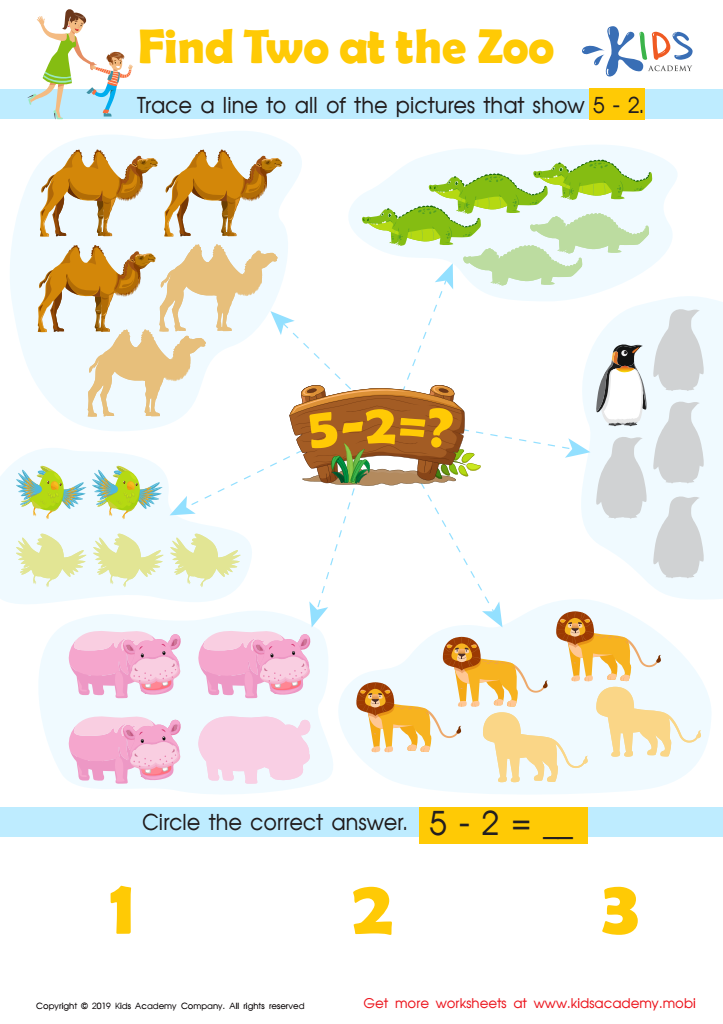
Find Two at the Zoo Worksheet
 Assign to My Students
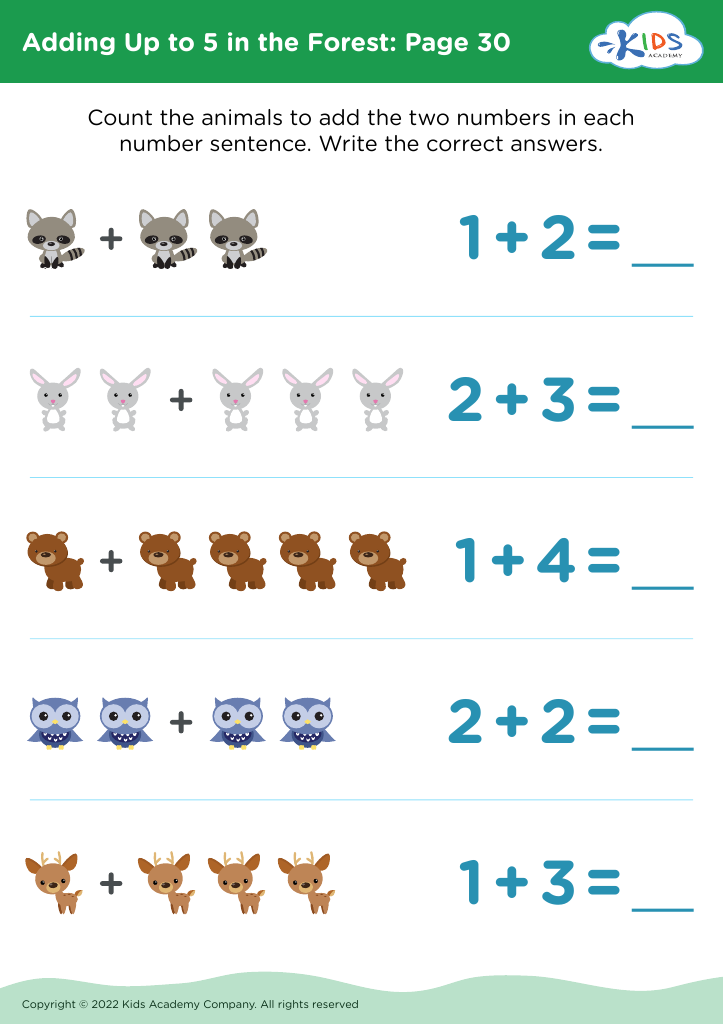







Identifying Animals Math for ages 5-7 is crucial for both parents and teachers as it combines essential foundational skills in mathematics with engaging, real-world contexts. At this developmental stage, children are naturally curious about their surroundings, and animals are fascinating subjects that can capture their attention and imagination. By integrating math concepts—such as counting, sorting, and classification—through the lens of animals, educators and parents can make learning more relatable and enjoyable.
Additionally, this approach fosters critical thinking and problem-solving skills. For instance, children can learn to categorize animals by size, habitat, or diet, promoting logical reasoning. Patterns, comparisons, and simple addition or subtraction can also be introduced using animal-themed activities, enhancing their numerical literacy.
Moreover, animal identification connects to broader learning areas, including biology and environmental awareness, instilling a sense of responsibility towards nature. Collaborating on these activities encourages communication and bonding between parents and children, or between peers in a classroom setting.
Ultimately, embedding math within a context that excites young learners not only boosts their engagement but also lays a solid groundwork for more complex academic skills in the future.








