Learning number patterns Math Worksheets for Ages 5-7
4 filtered results
-
From - To
Discover engaging and educational Math Worksheets focused on Learning Number Patterns designed for children ages 5-7 at Kids Academy! Our fun, interactive worksheets help young learners develop essential math skills by recognizing and completing number patterns. Perfect for kindergarten and early grade school, these exercises enhance critical thinking and problem-solving abilities while making learning enjoyable and accessible. Each worksheet is thoughtfully crafted to boost confidence and promote a love for math. Give your child a head start in mathematics with our expertly designed, age-appropriate number pattern resources. Visit Kids Academy today to explore our extensive collection!
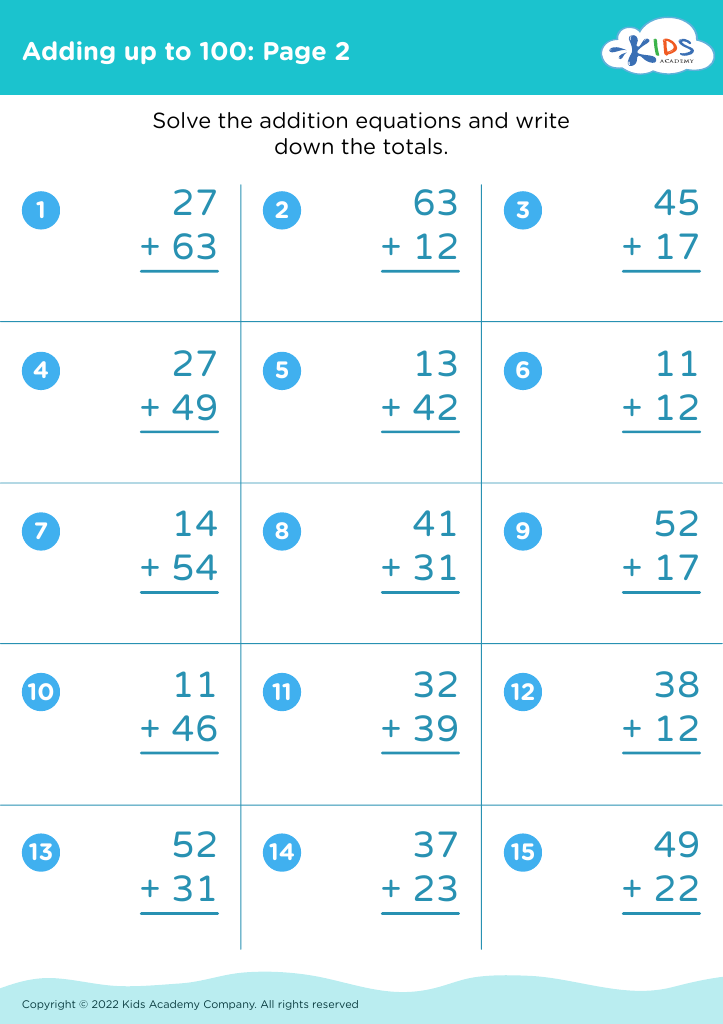
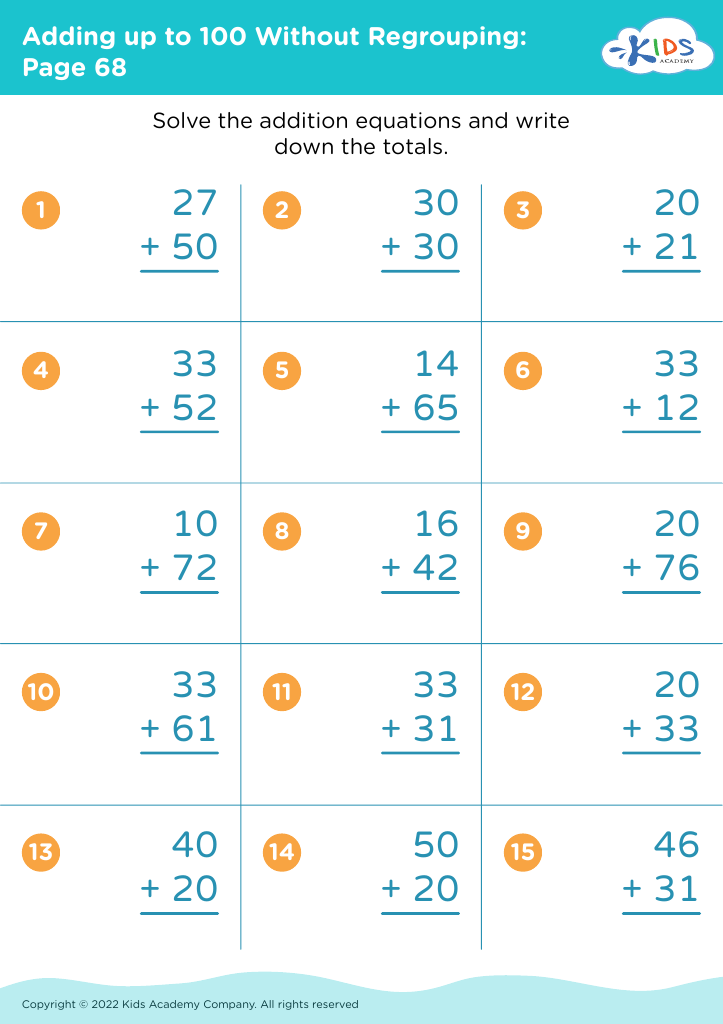
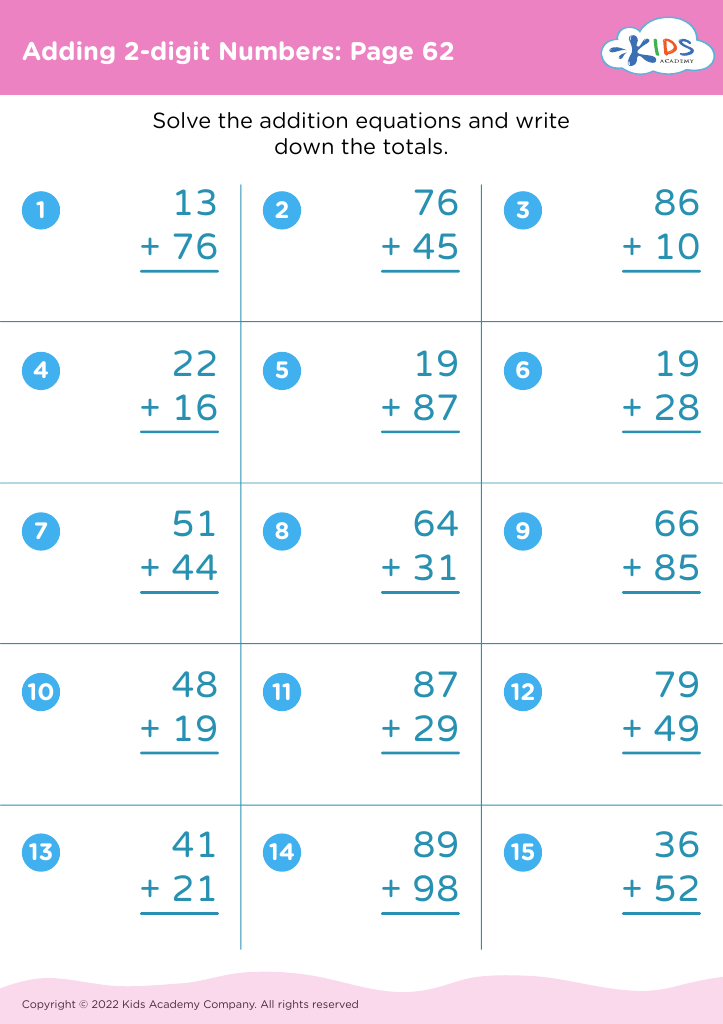
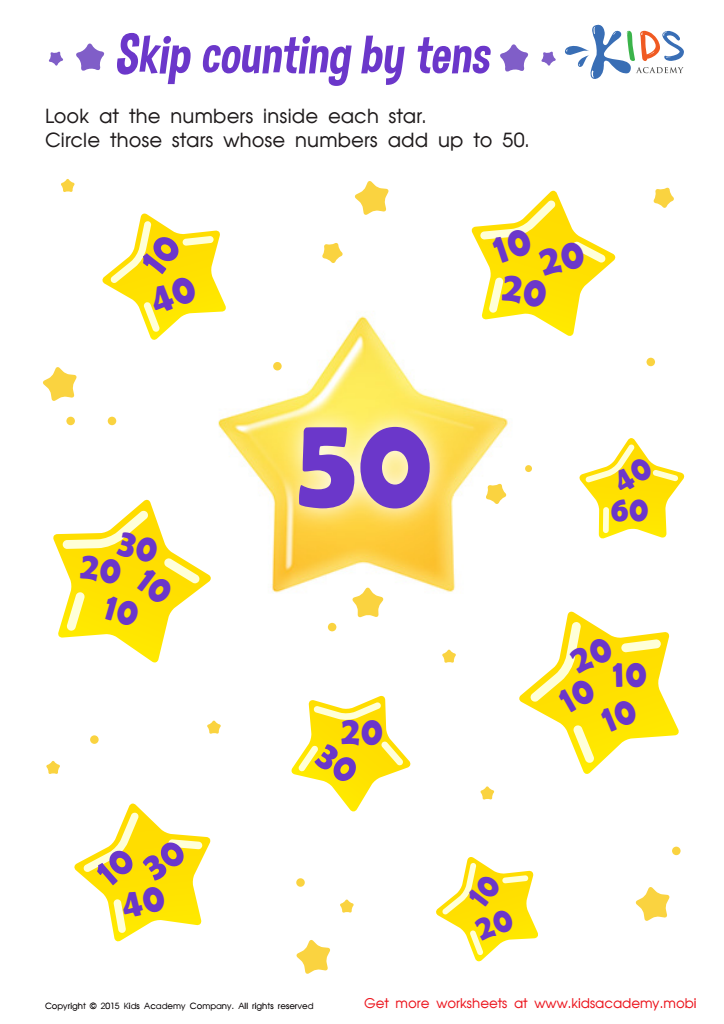
Learn Dozens: Skip Counting by Tens Printable
 Assign to My Students


.jpg)




Understanding number patterns is fundamental for children ages 5-7 as it establishes the groundwork for future mathematical concepts. First and foremost, recognizing patterns enhances cognitive skills. It trains young minds to make predictions, identify relationships, and develop problem-solving strategies, all vital cognitive abilities for academic success.
Secondly, learning number patterns, such as counting by 2s or 5s, plays a crucial role in building arithmetic proficiency. These foundational skills are precursors to more complex mathematical operations like addition, subtraction, multiplication, and division. For instance, when a child understands counting by 2s, they are subconsciously being introduced to the concept of multiplication by 2.
Moreover, identifying number patterns sharpens a child's observational skills, teaching them to focus on details and see the bigger picture in sequences. This attention to detail translates beyond math, aiding learning in subjects such as reading and science, where recognizing patterns also proves beneficial.
In addition, engaging with number patterns makes math enjoyable and interactive. Varied activities centered around patterns can keep young learners enthusiastic about the subject, fostering a positive attitude toward math from an early age. Such enthusiasm is crucial for long-term educational development.
Therefore, concentrating on number patterns for children aged 5-7 is a strategic approach to nurture their cognitive toolkit, setting them up for long-term success and a lifelong love for learning.








