
Practicing subtraction Math Worksheets for Ages 5-7
4 filtered results
Difficulty Level
Grade
Age
-
From - To
Subject
Activity
Standards
Our "Practicing Subtraction Math Worksheets for Ages 5-7" provide engaging and educational resources for young learners. Tailored to help children from kindergarten through 1st grade, these worksheets feature fun themes and easy-to-understand problems that enhance subtraction skills. They support visual learning through colorful illustrations and interactive exercises, making the process of learning subtraction enjoyable. The worksheets aim to build a solid mathematical foundation by reinforcing early arithmetic skills and boosting confidence. Perfect for at-home practice or classroom use, these subtraction worksheets are essential tools for encouraging problem-solving and critical thinking in young minds.
Favorites
With answer key
Interactive
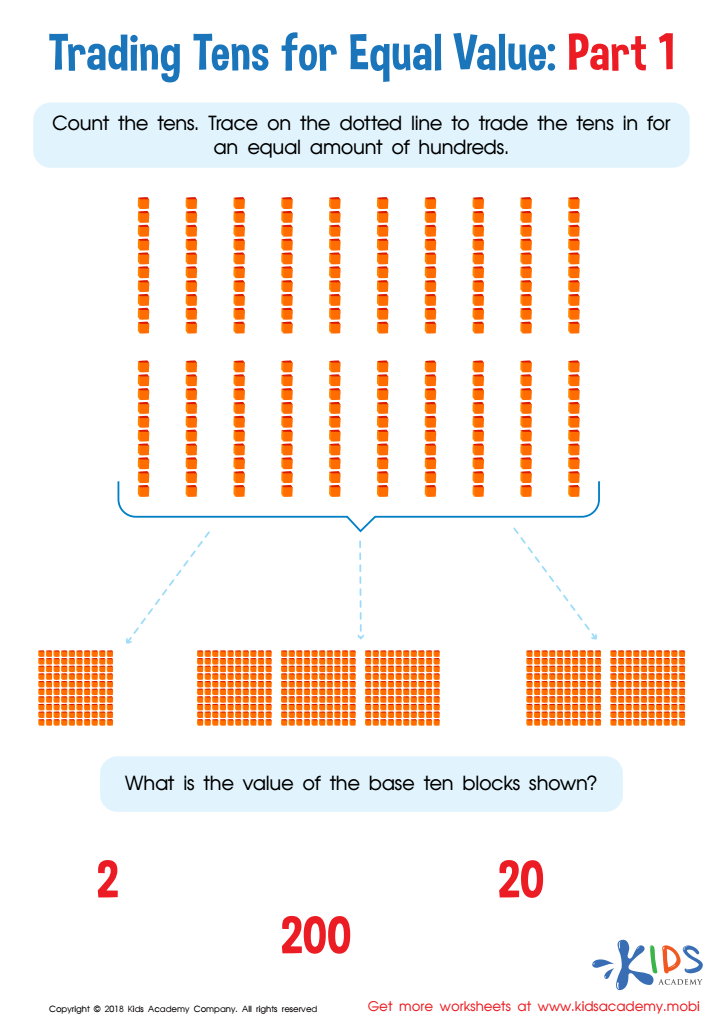
Trading Tens for Equal Value Worksheet: Part 1
This worksheet helps 3rd graders count large numbers and recognize base numbers. It lists 10 cubes and asks students to identify the hundreds, then circle the base blocks. This colorful pdf provides a fun, visual way to help students strengthen their math basics.
 Assign to My Students
Trading Tens for Equal Value Worksheet: Part 1
Worksheet
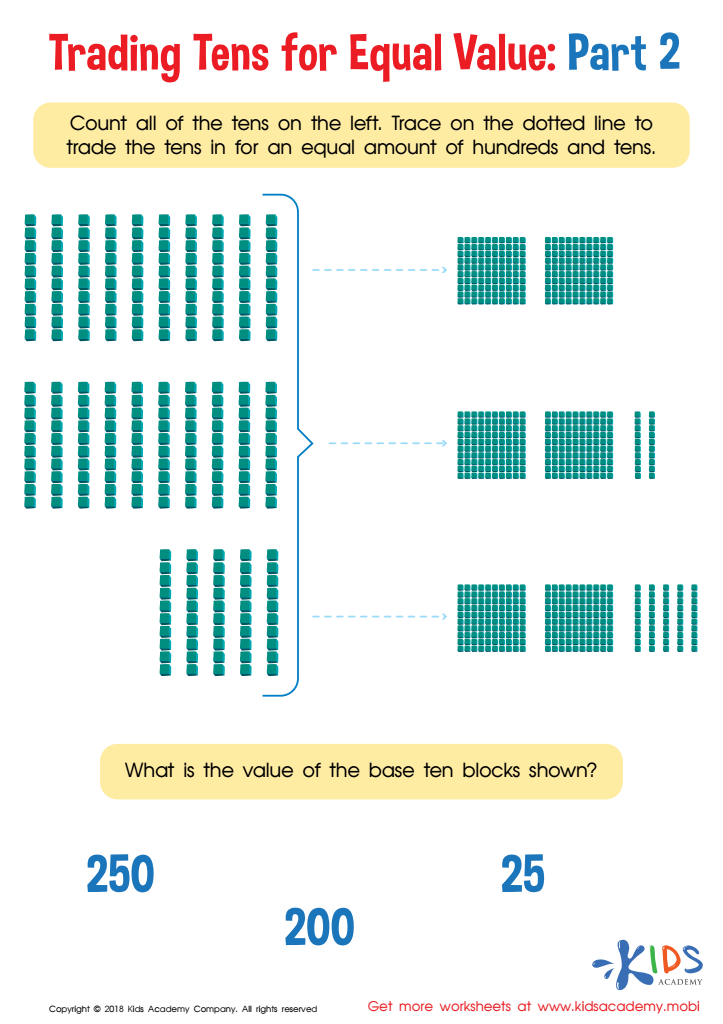
Trading Tens for Equal Value Worksheet: Part 2
Exchange coins for bills and cubes for longs or flats with this helpful place value worksheet! Encourage children to count all the tens, then trace the dotted line to the correct answer and determine the value. This concept can be tricky to teach in elementary math, but this worksheet can help!
Trading Tens for Equal Value Worksheet: Part 2
Worksheet
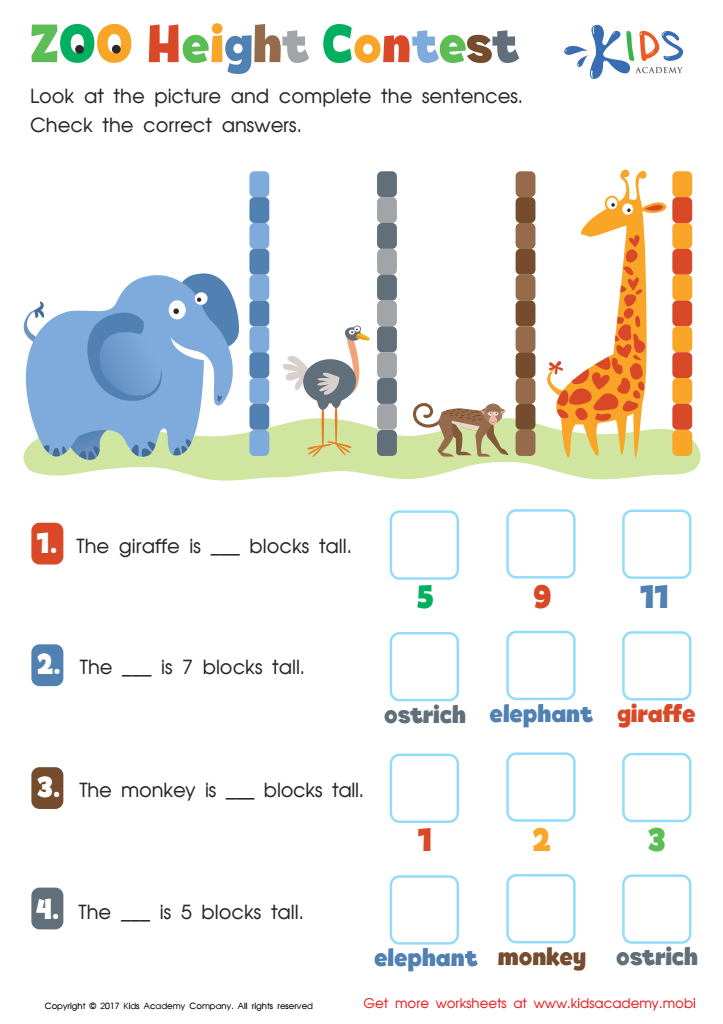
Zoo Height Contest Worksheet
Let's head to the zoo and use colorful blocks to measure your child's favorite animals! With this Kids Academy worksheet, help them practice and prepare for learning measurement. Guide them in looking at the zoo animals and counting blocks to find the height. Then, read the questions and check the box next to the correct answer.
Zoo Height Contest Worksheet
Worksheet
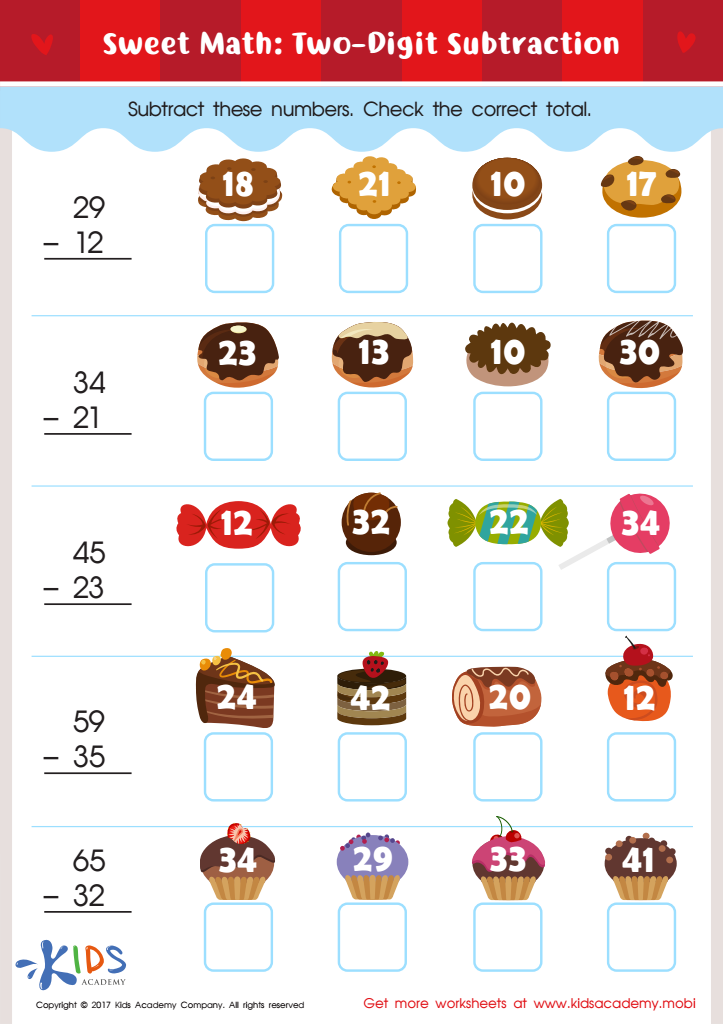
Two Digit Subtraction Worksheet
Make subtraction practice fun and easy with Kids Academy's delightful two digit subtraction worksheet PDF! Your child will love finding the sweet treat containing the correct answer to each 2-digit problem. Offer this quick practice and watch them learn!
Two Digit Subtraction Worksheet
Worksheet
Join Kids Academy for Free
Who is primarily going to use this learning content?








Practicing subtraction for children aged 5-7 is essential as it lays a fundamental foundation for their overall mathematical development, which is crucial for their academic success and daily life skills. At this age, children are developing cognitive skills such as memory, attention, and logical reasoning. Thus, engaging in subtraction exercises helps to enhance these cognitive abilities by promoting critical thinking and problem-solving.
Moreover, mastering subtraction is indispensable for understanding more complex mathematical concepts they will encounter later on, such as division, fractions, and algebra. It also promotes numerical literacy, which is vital for performing everyday tasks like shopping, cooking, and time management.
Subtraction practice also fosters confidence and a positive attitude towards learning. Success in understanding and applying subtraction can lead to a sense of achievement, encouraging children to engage more eagerly with future mathematical challenges. Additionally, these activities often involve interactive and hands-on learning tools which can improve fine motor skills and hand-eye coordination.
For parents and teachers, regularly practicing subtraction ensures children keep pace with educational standards and curriculum expectations. By prioritizing subtraction in early education, they’re not just teaching numbers; they’re building a strong, adaptable foundation for future academic and practical life skills.








