Problem Solving Math Worksheets for Ages 5-7 - Page 2
32 filtered results
-
From - To
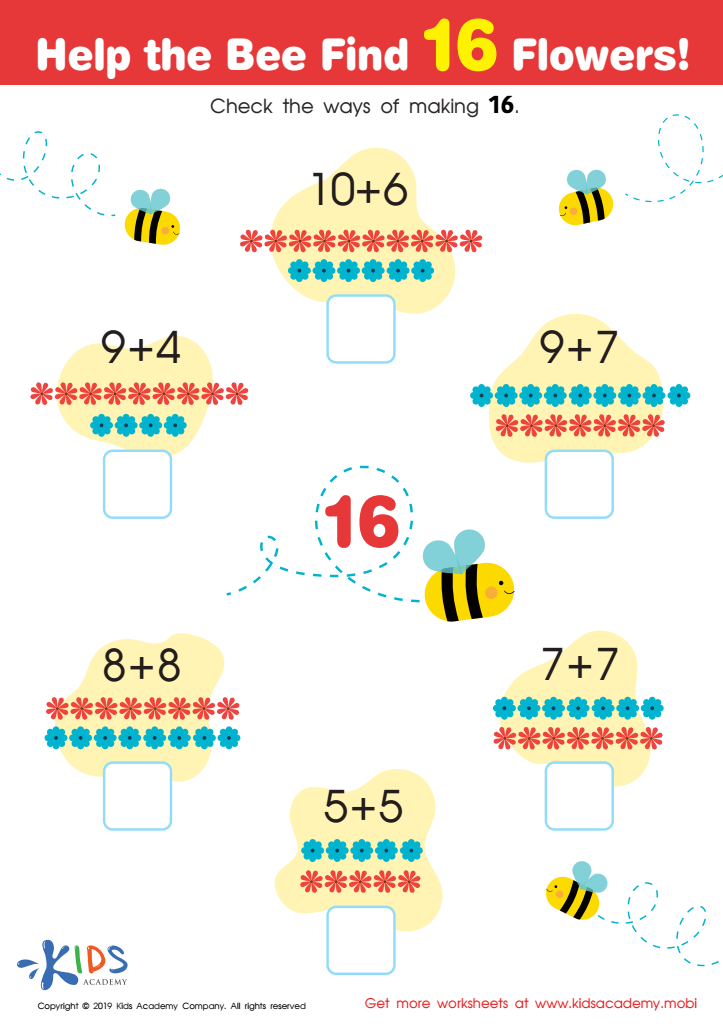
Help the Bee Find 16 Flowers Worksheet
 Assign to My Students
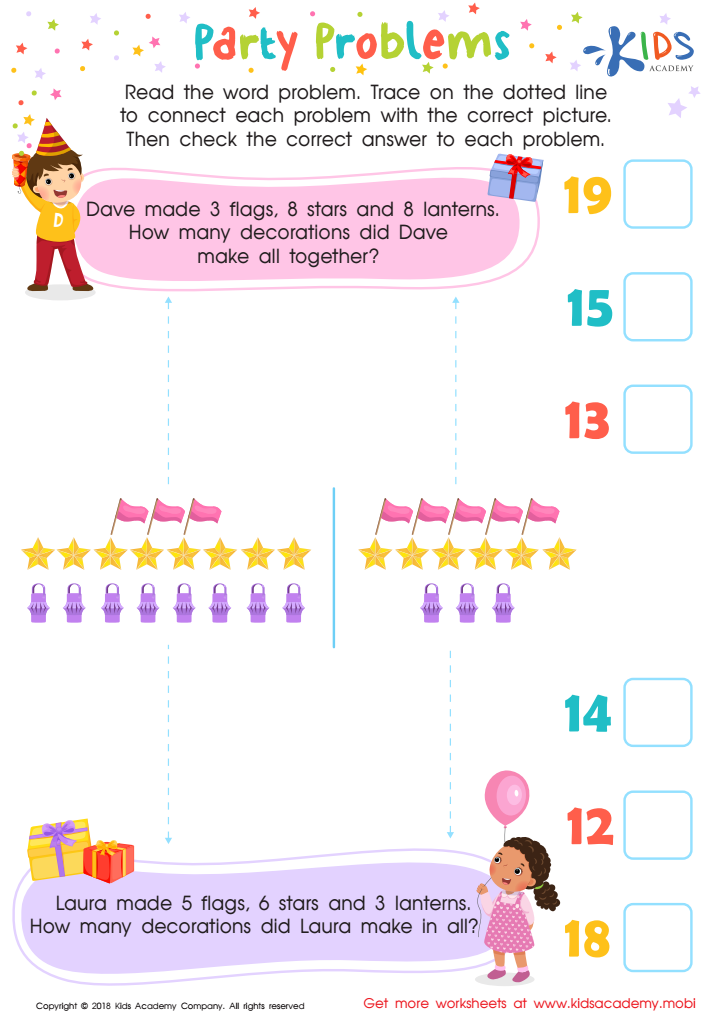
Party Problems Worksheet
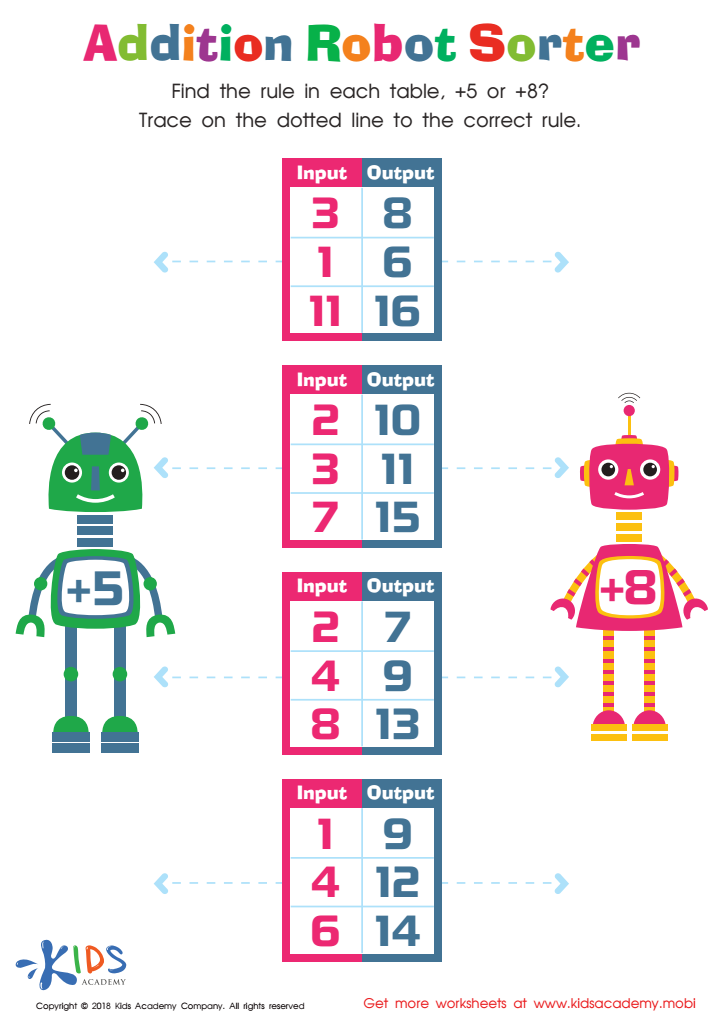
Addition Robot Sorter Worksheet
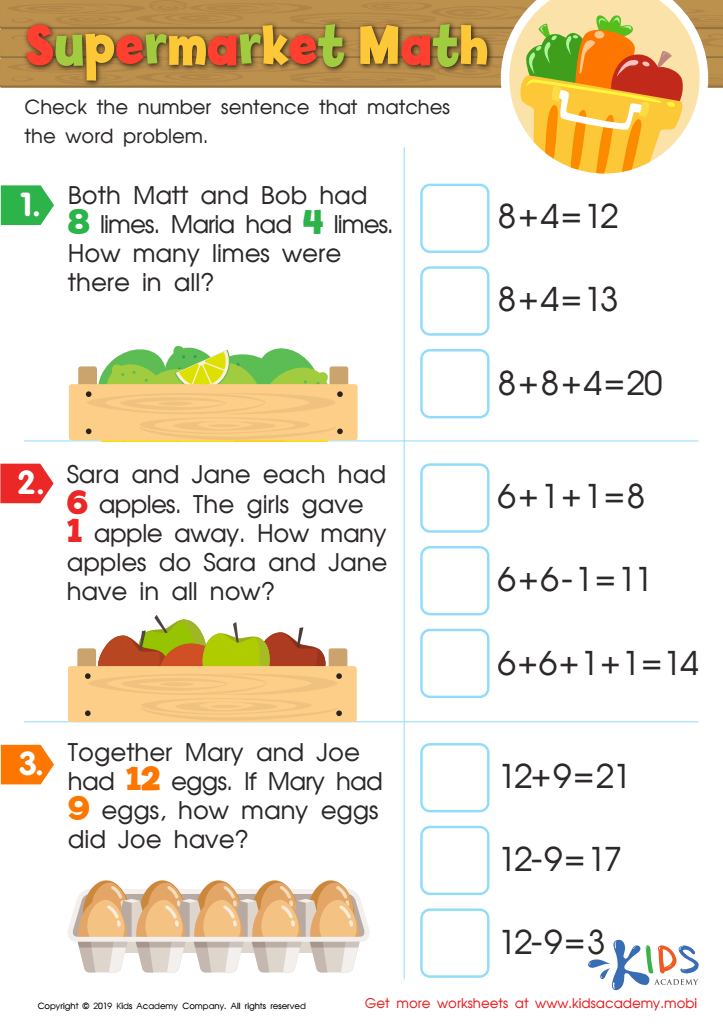
Supermarket Math Worksheet
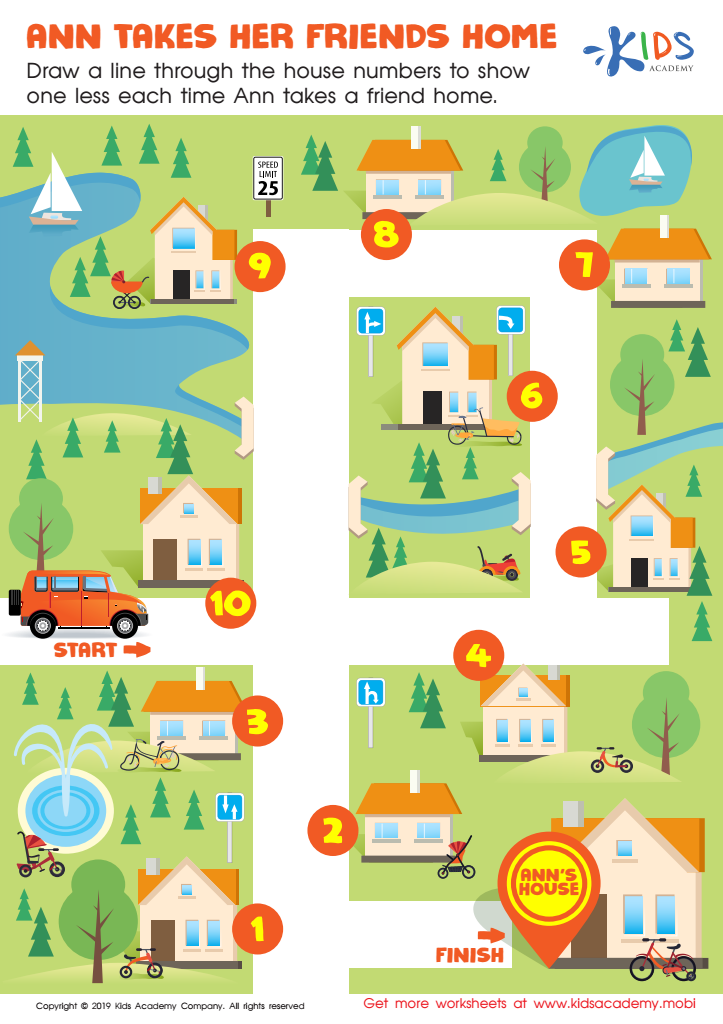
Ann Takes her Friends Home Worksheet








Parents and teachers should prioritize Problem Solving Math for children aged 5 to 7, as this foundational skill is pivotal for their cognitive development. At this age, children are naturally curious and eager to explore their environment, making it an optimal time to introduce math through problem-solving scenarios. Engaging with mathematical problems encourages critical thinking, reasoning, and the ability to approach challenges methodically.
Problem solving not only enhances mathematical skills but also fosters essential life skills, such as perseverance, creativity, and collaboration. By working through problems, children learn to analyze situations, identify patterns, and devise multiple strategies to arrive at solutions. This process builds confidence and resilience when facing difficulties, preparing them for future academic and personal challenges.
Moreover, incorporating problem-solving math into daily activities can make learning fun and relevant, encouraging positive attitudes toward math from an early age. It helps develop a deeper understanding of basic concepts, such as addition and subtraction, in a way that feels less like rote memorization and more like an exciting adventure. Ultimately, by focusing on problem-solving techniques, parents and teachers lay a strong groundwork for children's ongoing mathematical journey, supporting their success in later years.








