Recognizing equivalent fractions Math Worksheets for Ages 5-7
5 filtered results
-
From - To
Welcome to our "Recognizing Equivalent Fractions" Math Worksheets for Ages 5-7! Designed to make learning fun, these engaging worksheets help young learners discover the concept of equivalent fractions through vibrant visuals and interactive activities. Children will practice identifying and creating equivalent fractions with straightforward exercises that promote critical thinking and boost confidence in math. Our worksheets cater to different learning styles, encouraging hands-on exploration and collaboration. Perfect for classroom use or home study, these resources lay a strong foundation for understanding fractions. Download our free worksheets today and help your child master equivalent fractions in an enjoyable way!
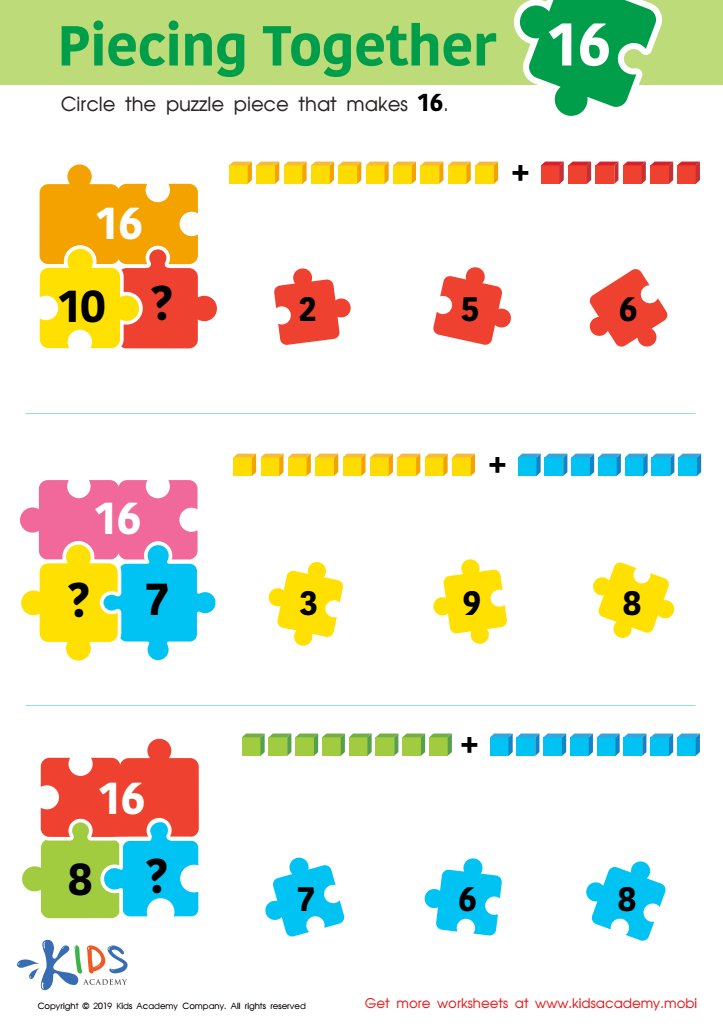
Piecing Together 16 Worksheet
 Assign to My Students








Recognizing equivalent fractions is a crucial skill for young learners, and parents or teachers should prioritize its instruction for several reasons. First, it lays the foundation for a deeper understanding of fractions. At ages 5-7, children begin to grasp the concept that different fractions can represent the same value, which promotes critical thinking and number sense. By learning to recognize equivalent fractions, children develop a flexible approach to mathematics.
Second, this understanding helps bridge the gap to more complex mathematical concepts. As they progress in their education, students will encounter operations involving fractions, proportions, and ratios. A firm grasp of equivalent fractions makes these advanced topics more accessible and less intimidating.
Moreover, recognizing equivalent fractions promotes problem-solving skills and boosts confidence. Children learn to approach challenges with a sense of accomplishment when they see that different fractions can be equivalent, allowing for inventive solutions to math problems.
Lastly, this skill supports collaboration and communication in math discussions, fostering a love for the subject. By engaging in nuanced concepts like equivalent fractions, parents and teachers can inspire curiosity and a positive attitude towards mathematics, ultimately shaping confident, competent learners.








