Introduce your young learners to the world of numbers with our specially designed "Recognizing Numbers Math Worksheets" for ages 5-7. These engaging and educational worksheets feature fun activities that help children identify, trace, and write numbers, laying a strong foundation in early math skills. From counting exercises to number matching games, each printable worksheet boosts number recognition and enhances cognitive development. Perfect for homeschooling or classroom use, our resources are created to make learning enjoyable and interactive. Help your child confidently recognize and engage with numbers, setting them on a path to math success.

Check out this FREE Trial Lesson on Math for age 5-7!

Understanding Place Value Ones and Tens

Favorites
With answer key
Interactive
  • 5-7
  • Recognizing numbers
  • Math
Green Digit Value Worksheet

Green Digit Value Worksheet

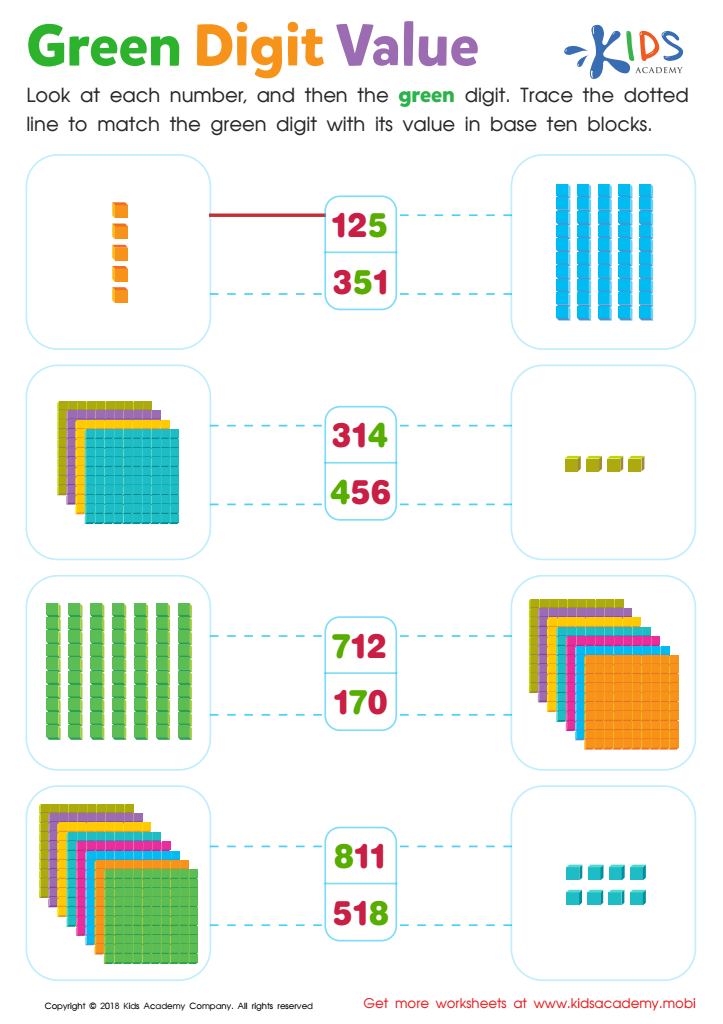
Math can be stressful for kids. But you can help relieve their anxiety with this simple worksheet. It gives them practice to help them prepare for tougher tasks. Have your child look at the numbers and green digit, then trace the dotted lines to match the green digit with its value in base ten blocks. This will help make math more manageable.
Green Digit Value Worksheet
Worksheet
Find The Difference Worksheet

Find The Difference Worksheet

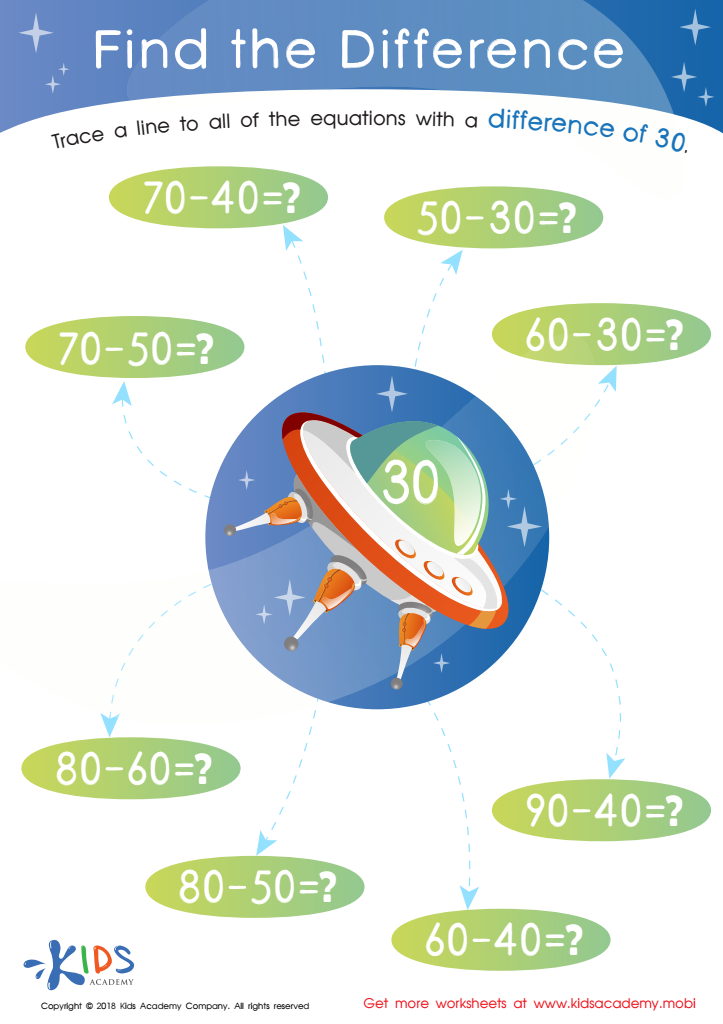
Kindergarteners need to work out subtraction problems and get the right answers. To help them, point to the alien ship with '30' in it on the worksheet. Get them to follow a line to the equations with a difference of 30. Solving these simple subtraction problems will give the answers.
Find The Difference Worksheet
Worksheet
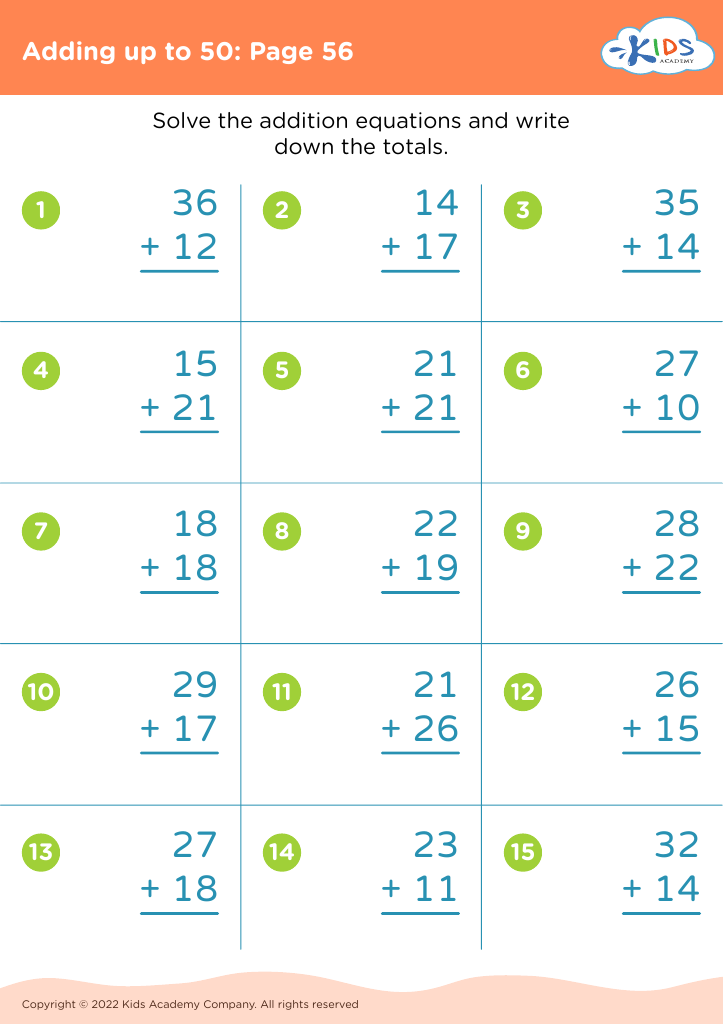
Adding up to 50: Page 56

Adding up to 50: Page 56

Adding up to 50: Page 56
Worksheet
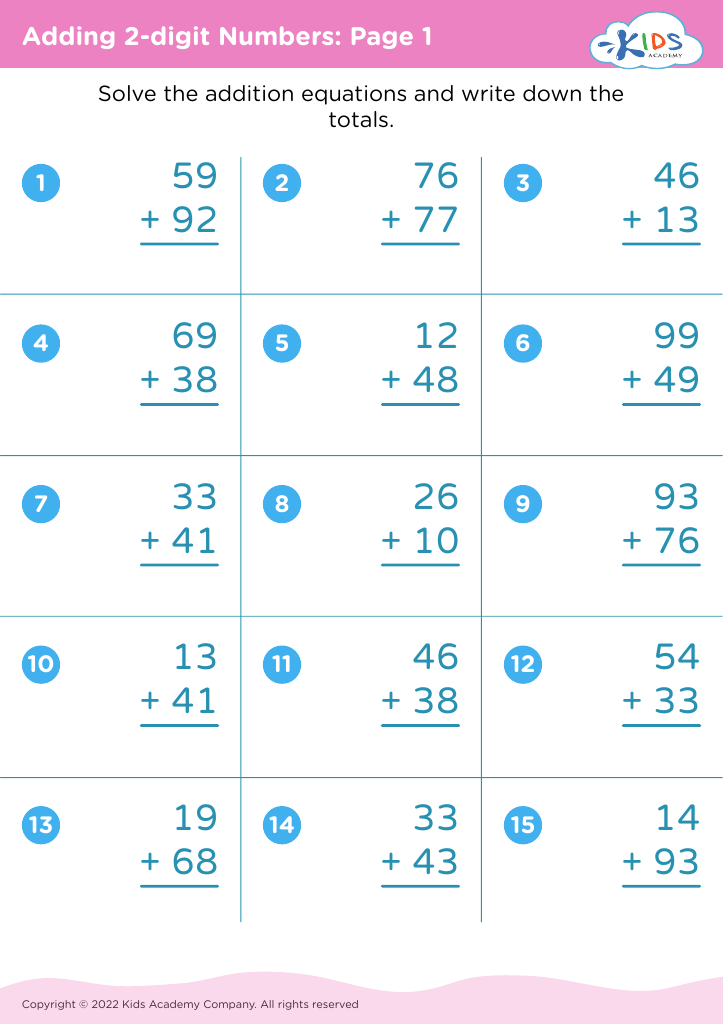
Adding 2-digit Numbers: Page 1

Adding 2-digit Numbers: Page 1

Adding 2-digit Numbers: Page 1
Worksheet
Tens and Ones Worksheet

Tens and Ones Worksheet

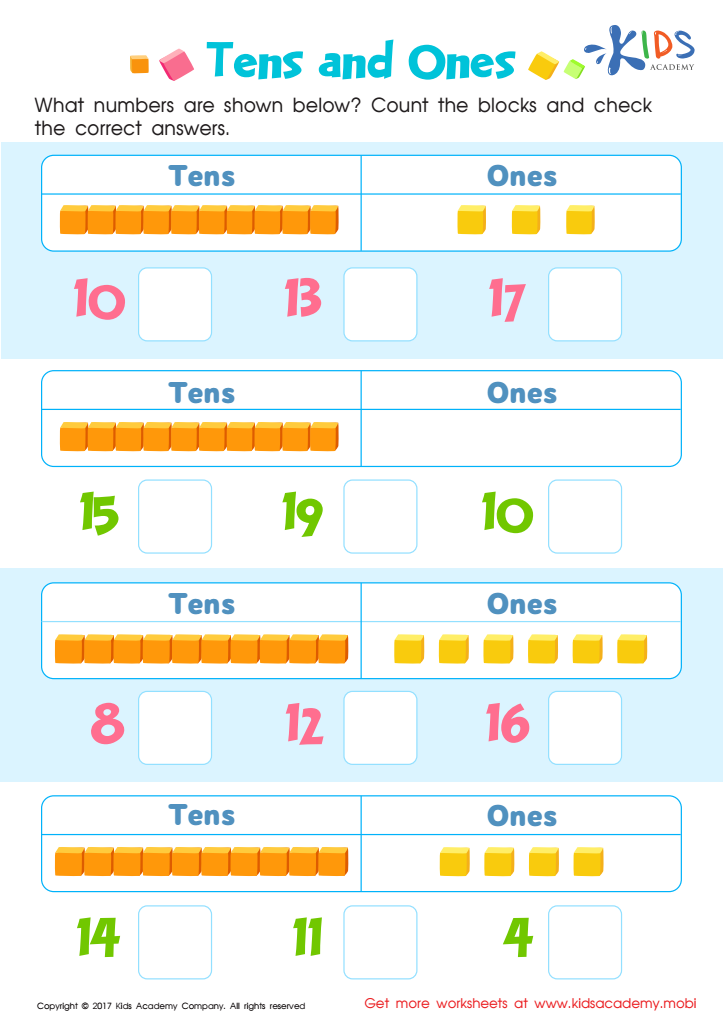
Help your child make math fun with this worksheet! Count the blocks on both sides and enter the total in the box below the figures. This will help them overcome any math-related anxieties they might have and let them enjoy the learning process.
Tens and Ones Worksheet
Worksheet
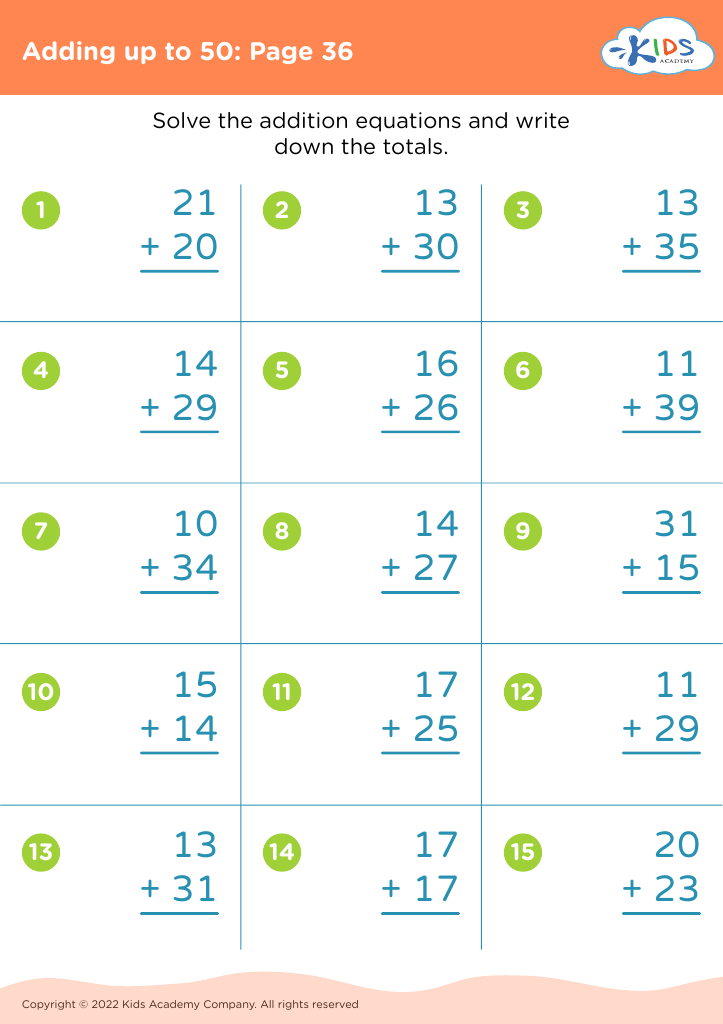
Adding up to 50: Page 36

Adding up to 50: Page 36

Adding up to 50: Page 36
Worksheet
Free place value worksheet PDF

Free Place Value Worksheet

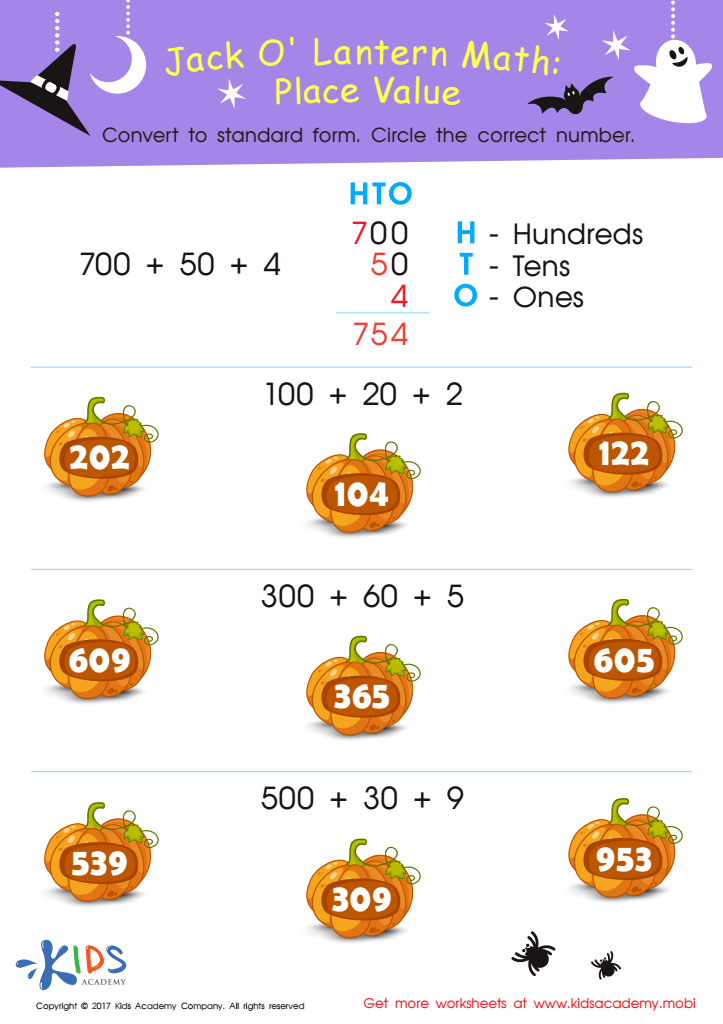
This Halloween-themed worksheet helps children practice converting equations to standard form and understand place value for better problem-solving. Download this free PDF for a fun way to do it!
Free Place Value Worksheet
Worksheet
Community Helpers: 1 less Worksheet


Community Helpers: 1 less Worksheet

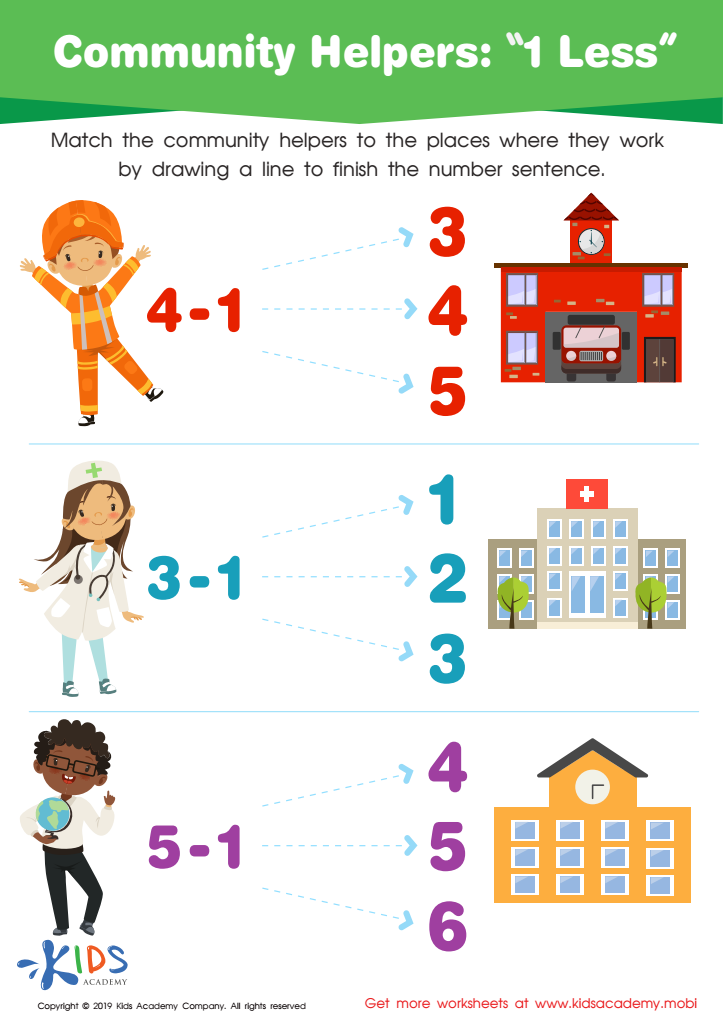
Look at this worksheet with your child and ask them to identify the different community helpers. Match them to the places where they work by drawing a line to finish the number sentence. This helps them identify the people that help keep the community organized and running smoothly. Examples of community helpers include doctors, police officers, firefighters, teachers, etc.
Community Helpers: 1 less Worksheet
Worksheet


Recognizing numbers at an early age is foundational for a child's future success in math and overall academic development. For children ages 5-7, understanding numbers helps develop essential cognitive skills like problem-solving, logical thinking, and pattern recognition. When children can recognize and understand numbers, they gain confidence in their ability to learn and engage with math-related activities, both in and out of the classroom.

Early number recognition supports the development of more advanced math skills, such as addition, subtraction, and understanding place value. It also lays the groundwork for critical life skills, from telling time to handling money. Moreover, being comfortable with numbers early on enhances a child's ability to understand and use mathematics in everyday situations, making them more adaptable and resourceful.

For teachers and parents, fostering these skills involves creating a supportive learning environment that promotes curiosity and a love for numbers. Simple activities like counting objects, playing number-based games, and integrating number talk into daily routines can make a significant difference. By prioritizing early number recognition, adults are equipping children with the tools they need for both academic achievement and everyday competence, thus setting the stage for lifelong learning and success.