Recognizing shapes Math Worksheets for Ages 5-7 - Page 2
33 filtered results
-
From - To
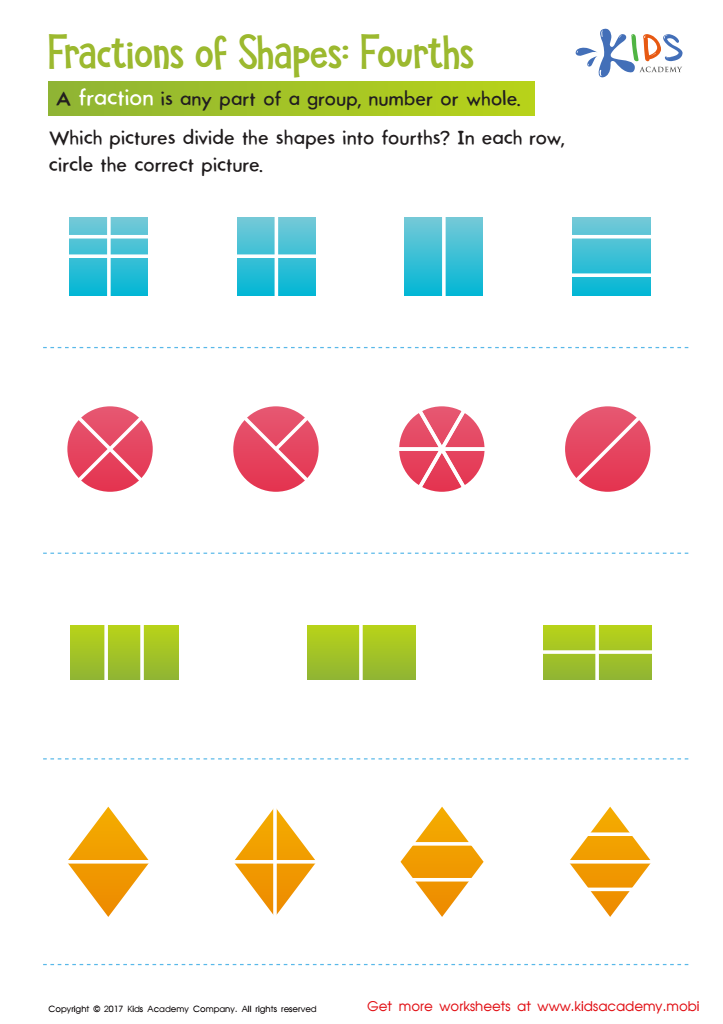
Fractions of Shapes Worksheet
 Assign to My Students






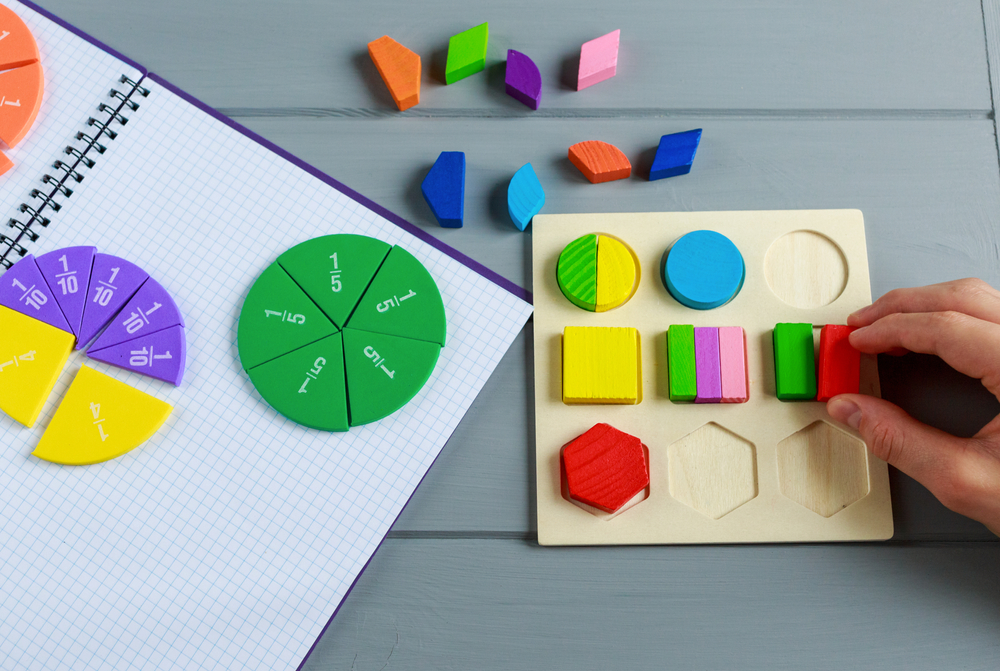
Recognizing shapes is a critical foundational skill for children aged 5-7, and both parents and teachers should prioritize its importance. This early math concept lays the groundwork for geometrical understanding and spatial awareness, essential for later mathematical learning. As children identify and categorize shapes, they enhance their cognitive abilities, boosting critical thinking and problem-solving skills.
Furthermore, shape recognition fosters fine motor skills as children engage in activities like drawing, crafting, or using manipulatives. These hands-on experiences support sensory development and promote creativity. By incorporating shape recognition into daily activities, parents and teachers can create a richer learning environment. For example, turning a walk outside into a shape scavenger hunt can make learning enjoyable and interactive.
Additionally, recognizing shapes can enhance a child's ability to understand complex concepts later, such as fractions, symmetry, and more advanced geometry. It also integrates seamlessly with language development, as children learn to articulate their understanding of shapes and their properties.
Investing time and resources in teaching shape recognition prepares young learners for academic success and cultivates a lifelong appreciation for math and problem-solving. Encouraging this skill now benefits children in their immediate learning and equips them for future challenges in their educational journey.








