Sea creatures identification Math Worksheets for Ages 5-7
3 filtered results
-
From - To
Dive into learning with our Sea Creatures Identification Math Worksheets for Ages 5-7! These engaging worksheets combine math and marine life to enhance numeracy skills while sparking curiosity about ocean creatures. Each activity encourages kids to count, sort, and classify different sea animals, building strong math foundations. Ideal for classroom or home use, our beautifully designed printables make learning math fun and interactive. Support your child’s educational journey with activities that turn identifying starfish, dolphins, and jellyfish into an exciting adventure. Unlock their potential today with our math-enhanced sea life explorations!
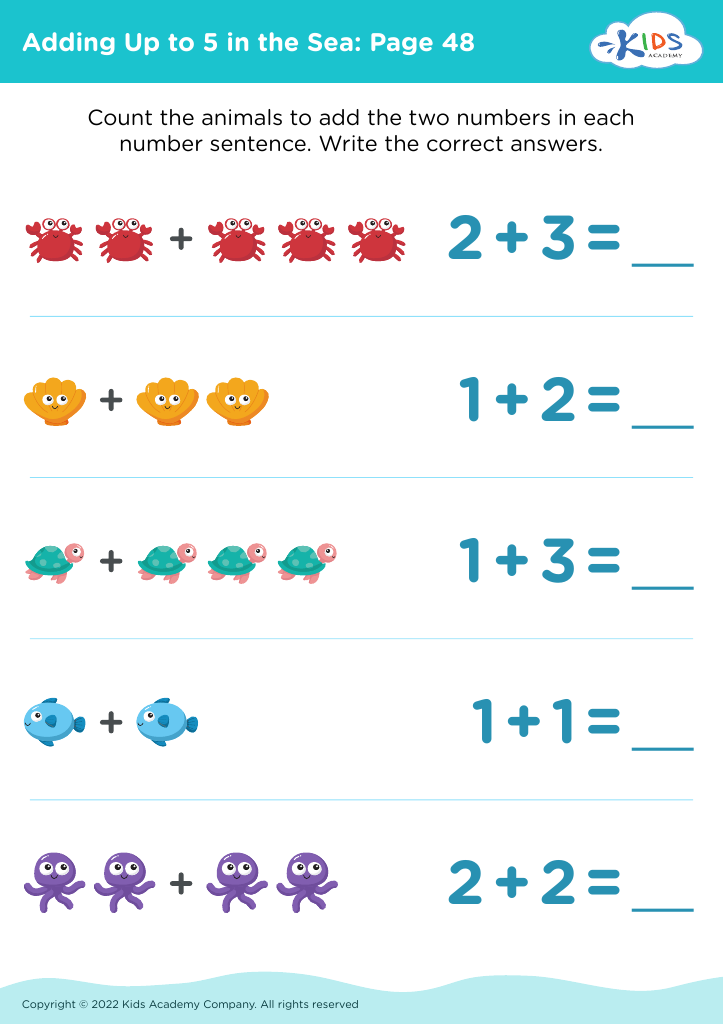
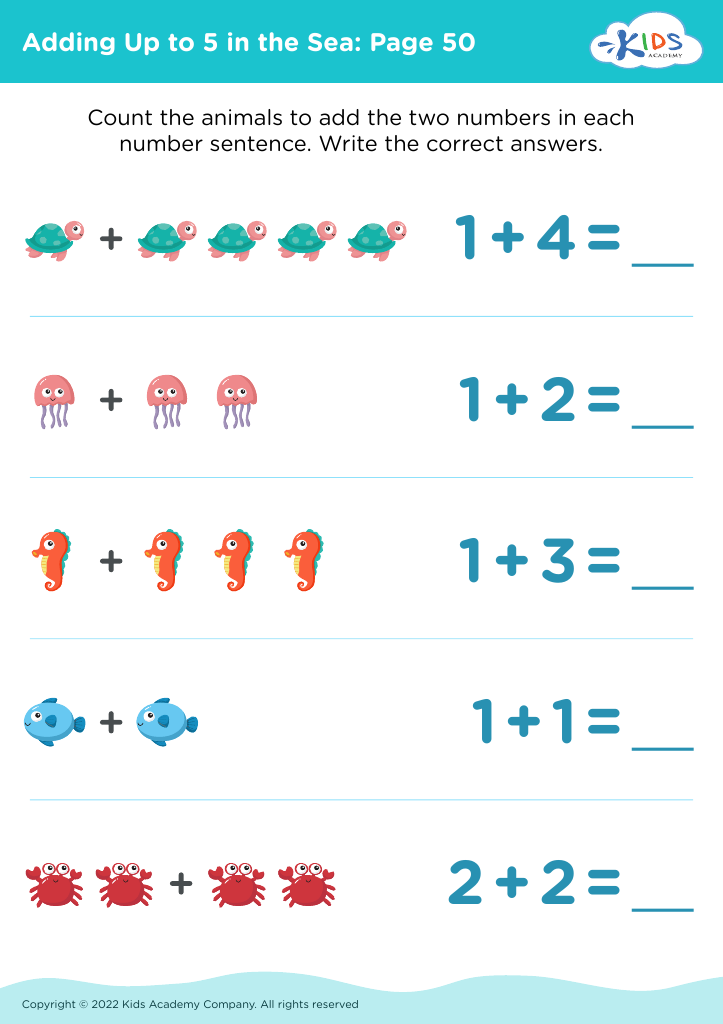
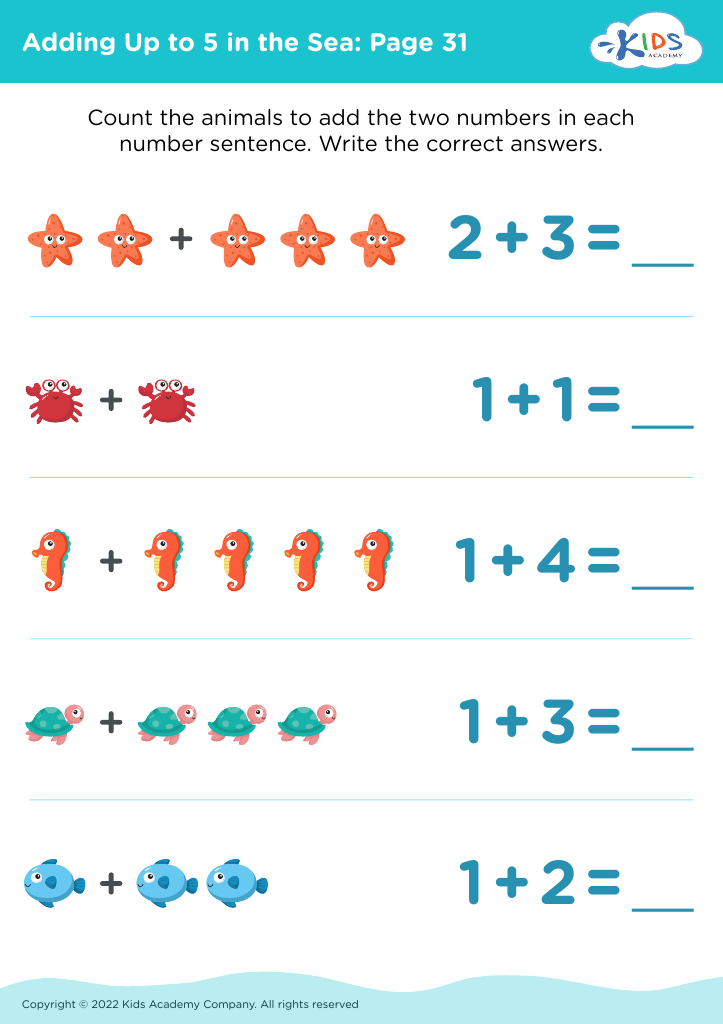




.jpg)


Parents and teachers should care about sea creatures identification math for children aged 5-7 because it combines multiple areas of learning in a fun and engaging way. At this age, kids are naturally curious about the world around them, and sea creatures are often a source of fascination. Integrating math with marine biology takes advantage of this curiosity and makes learning more attractive and effective.
First, identification skills help children in recognizing patterns and differences, essential steps in mathematical thinking. Adding a math component, such as counting the number of legs on an octopus or comparing the sizes of different fish, gives kids practical reasons to use numbers and think quantitatively.
Second, it lays groundwork for future STEM learning by integrating science and math early on. When children learn to identify sea creatures and solve simple math problems related to them, they are building analytical and critical thinking skills that will be vital in their educational journey.
Lastly, this interdisciplinary approach makes learning more meaningful by connecting academic concepts to real-world interests. It helps children see math as not just numbers on a page but as a tool to understand and explore their natural world. This relevance can foster a lifelong love for learning, making education a more exciting adventure rather than a set of isolated subjects.








