Shape comparison Math Worksheets for Ages 5-7
4 filtered results
-
From - To
Explore our engaging Shape Comparison Math Worksheets designed specifically for children aged 5-7! These interactive resources help young learners develop essential shape recognition and comparison skills through fun and varied activities. Your child will enjoy identifying, comparing, and contrasting different shapes while building a solid foundation in math concepts. Our worksheets encourage critical thinking and enhance fine motor skills through colorful illustrations and hands-on exercises. Ideal for both classroom use and at-home learning, these worksheets will make math enjoyable and accessible. Perfect for early educators and parents alike, download our Shape Comparison Math Worksheets today to inspire a love for learning!
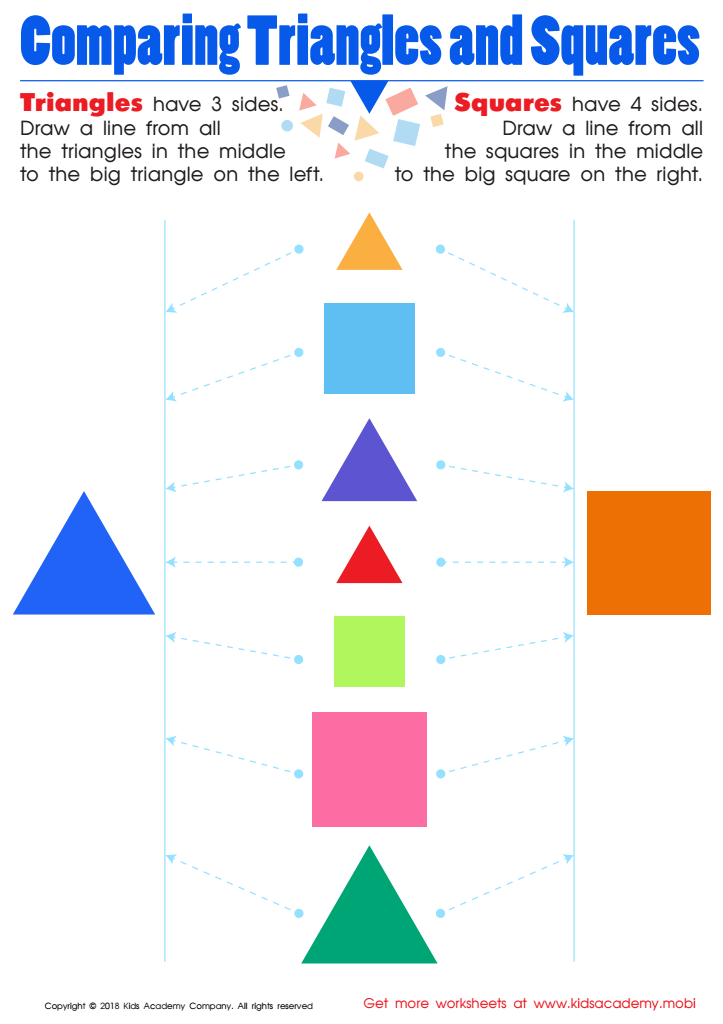
Comparing Triangles Squares Worksheet
 Assign to My Students
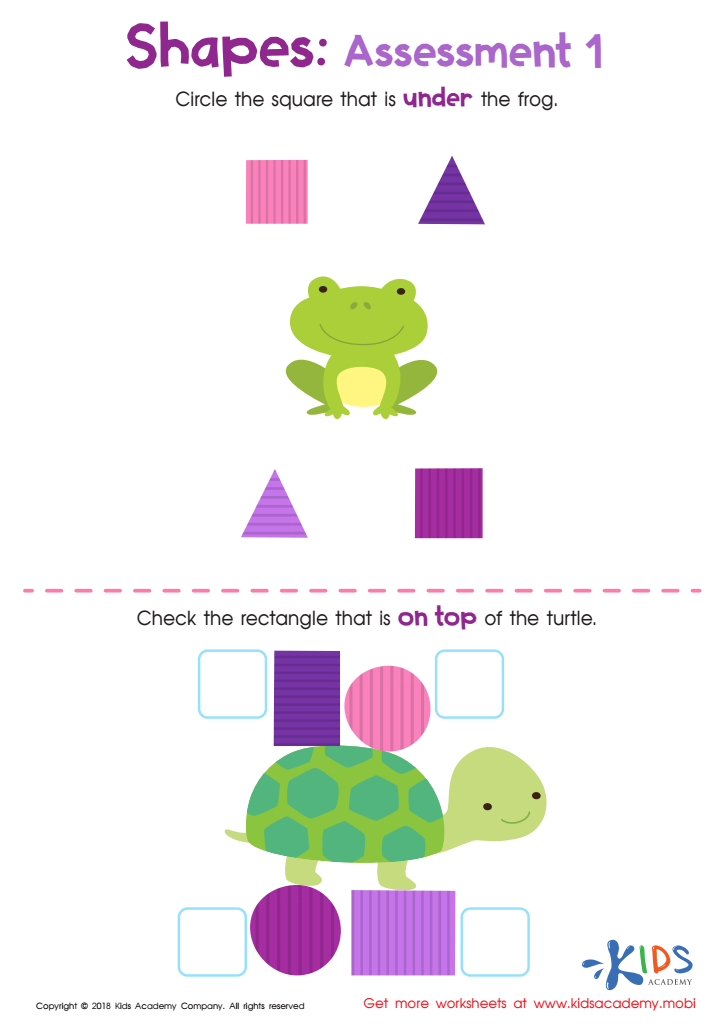
Geometry – Assessment 1 Worksheet
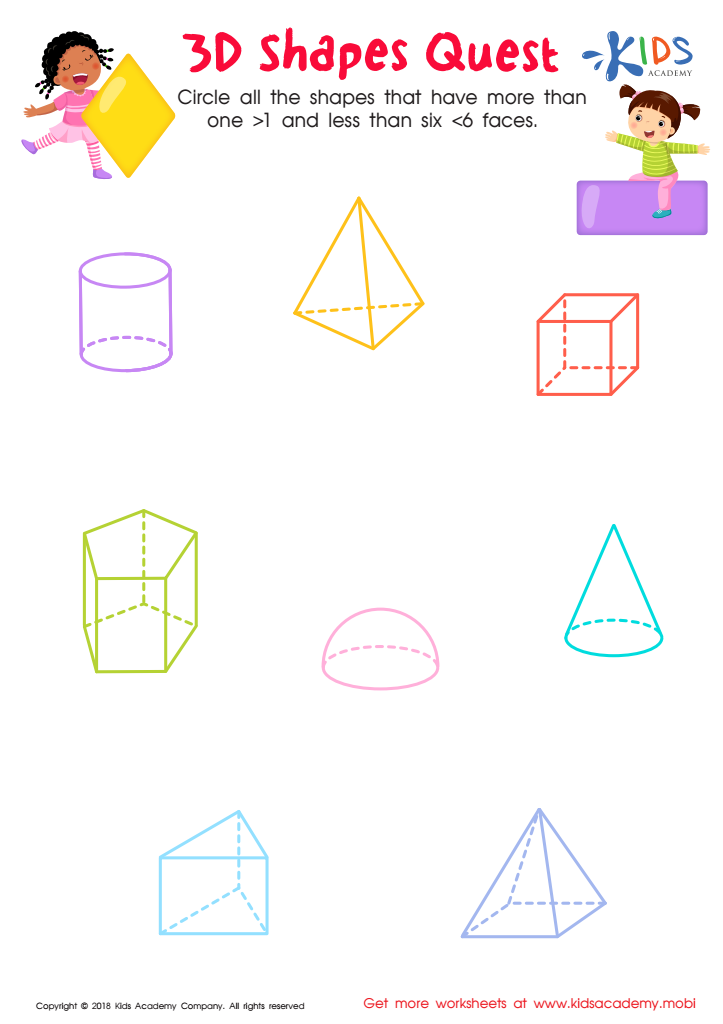
3D Shapes Quest Worksheet
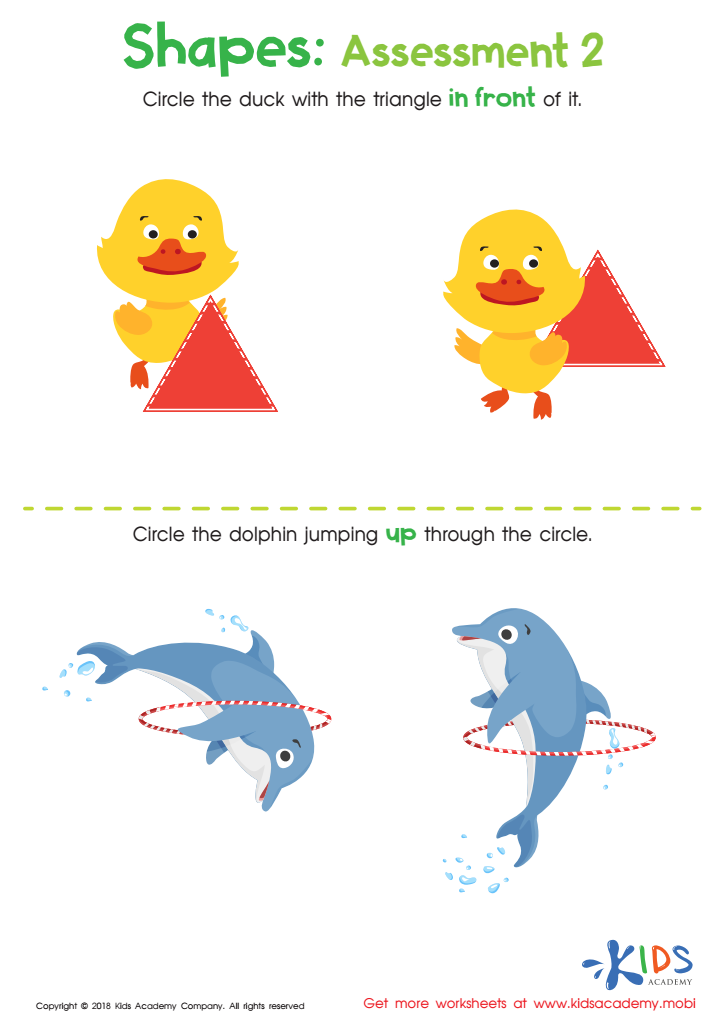
Geometry – Assessment 2 Worksheet








Shape comparison math is a vital developmental stage for children aged 5-7, and both parents and teachers should prioritize it for several compelling reasons. At this age, children are building foundational skills essential for more complex math concepts. Understanding shapes and their properties helps children improve their spatial awareness and critical thinking. This foundational knowledge in geometry sets the stage for future success in math and sciences.
Engaging children in shape comparison activities promotes language development as they learn to articulate similarities and differences between shapes. Through activities like sorting or classifying shapes, children develop observational skills and contribute to their cognitive development. Moreover, hands-on experiences with shapes nurtures their curiosity and encourages exploration.
Additionally, shape comparison fosters collaboration and social skills when children work in pairs or small groups, enhancing their ability to communicate and make collaborative decisions. By integrating shape comparison math into daily learning experiences, parents and teachers support children's overall reasoning and problem-solving abilities. Recognizing these factors underscores the importance of nurturing a love for learning and laying robust groundwork for future academic concepts. In essence, fostering shape comparison skills not only enhances mathematical understanding but also nurtures critical life skills.








