
Solve word problems Math Worksheets for Ages 5-7
3 filtered results
Difficulty Level
Grade
Age
-
From - To
Subject
Activity
Standards
Introduce young learners to the delightful world of math with our “Solve Word Problems” worksheets, designed exclusively for ages 5-7. These engaging activities combine fun stories with simple arithmetic challenges, helping children build critical thinking and problem-solving skills. Each worksheet provides scenarios that involve addition, subtraction, and basic operations, making math both fun and relatable. Perfect for early grade students, our worksheets support classroom learning and aid in developing confidence and fluency in math. Encourage your child's love for numbers and enhance their academic journey with our delightful and educational word problem worksheets. Download now and make learning math an adventure!
Favorites
With answer key
Interactive
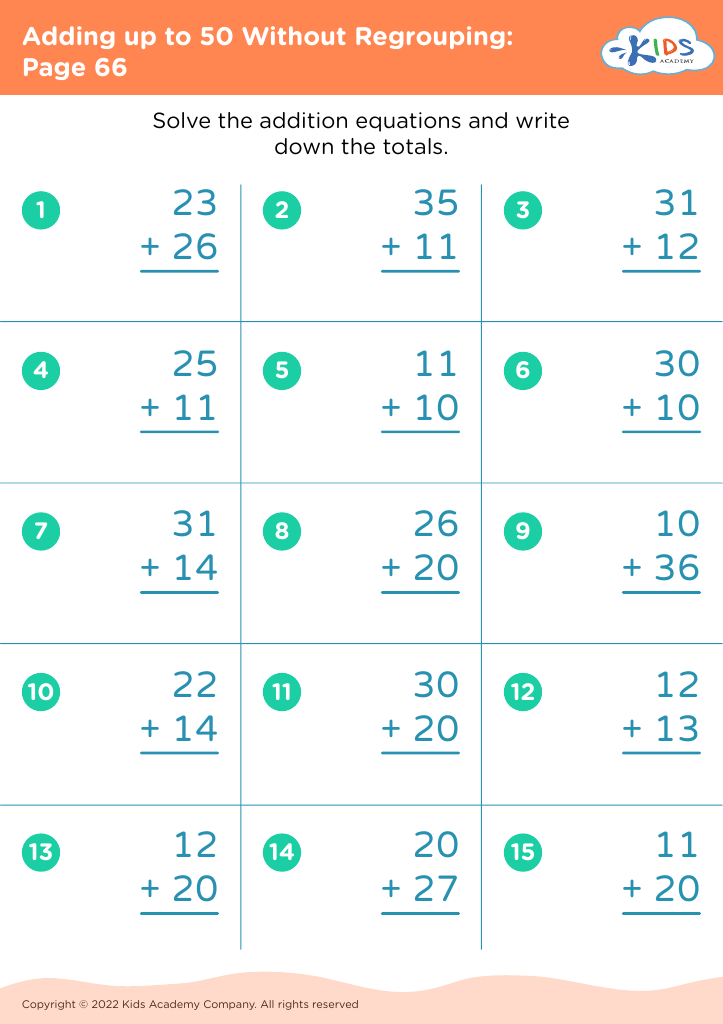
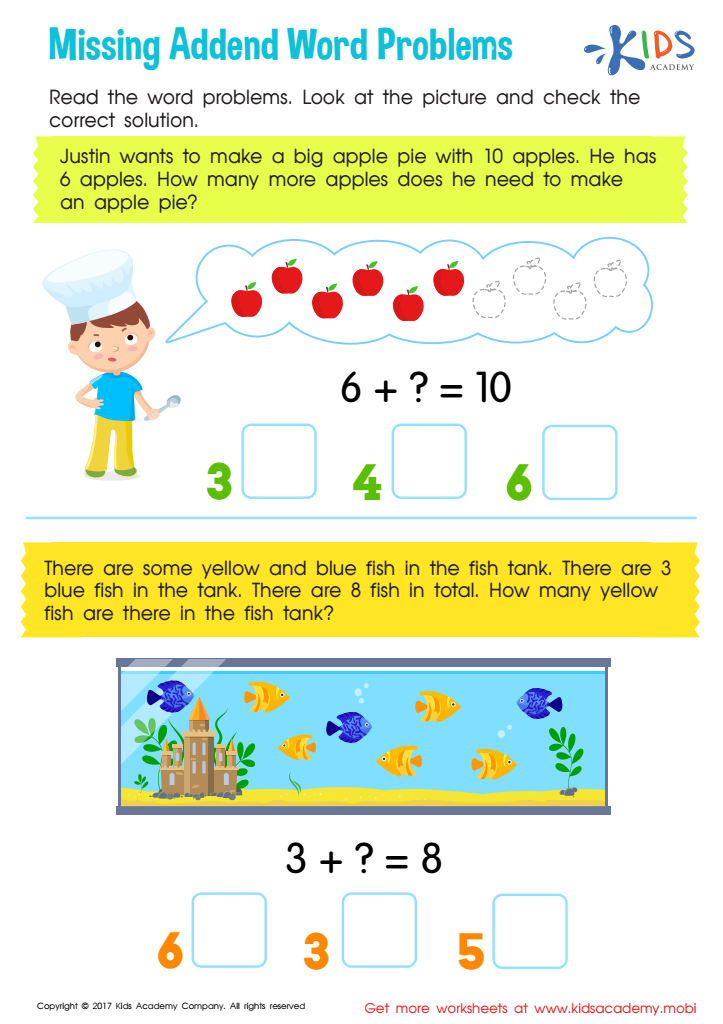
Missing Addend Word Problems Worksheet
Doing many addition and subtraction problems is key for fluency and mastery. Word problems can help kids understand how math works in everyday life. Our math worksheet uses fun scenarios and pictures to teach how to find the missing addend. It's the perfect tool to help kids understand math better!
 Assign to My Students
Missing Addend Word Problems Worksheet
Worksheet
Join Kids Academy for Free
Who is primarily going to use this learning content?



.jpg)




Engaging children aged 5-7 in solving word problems is crucial for their early cognitive development and numeracy skills. Word problems require kids to translate textual information into mathematical equations, thereby enhancing their reading comprehension and problem-solving abilities. For parents and teachers, emphasizing word problems helps students develop critical thinking skills, as they must determine which operations to use and how to apply them, fostering logical thinking.
Furthermore, real-world applications of math concepts introduced through word problems make learning more relevant and interesting for young minds. This practical application can spark a child’s curiosity and motivation to learn, potentially reducing math anxiety and forging a positive attitude towards the subject. Early exposure ensures a strong foundation, making advanced topics easier to grasp in later years.
Additionally, word problems encourage children to practice and develop their communication skills, as they often need to explain their reasoning or approach, either verbally or in writing. This interaction helps solidify their understanding and promotes collaborative learning when tackled in group settings. Therefore, incorporating word problems into early education not only aids in mathematical proficiency but also contributes significantly to a child’s overall intellectual and social development. Parents and teachers investing effort in this area pave the way for well-rounded, capable, and confident learners.








