Time-telling skills Math Worksheets for Ages 5-7
5 filtered results
-
From - To
Boost your child's time-telling abilities with our engaging Time-telling Skills Math Worksheets designed for ages 5-7. These expertly crafted worksheets from Kids Academy incorporate a variety of fun, interactive activities that teach young learners to read analog and digital clocks, understand concepts of hours and minutes, and practice sequencing daily events. Ideal for building a solid foundation in essential math skills, these worksheets make learning time-telling fun and effective through colorful illustrations and practical exercises. Equip your child with the confidence to master this vital life skill with our comprehensive collection tailored specifically for early learners.
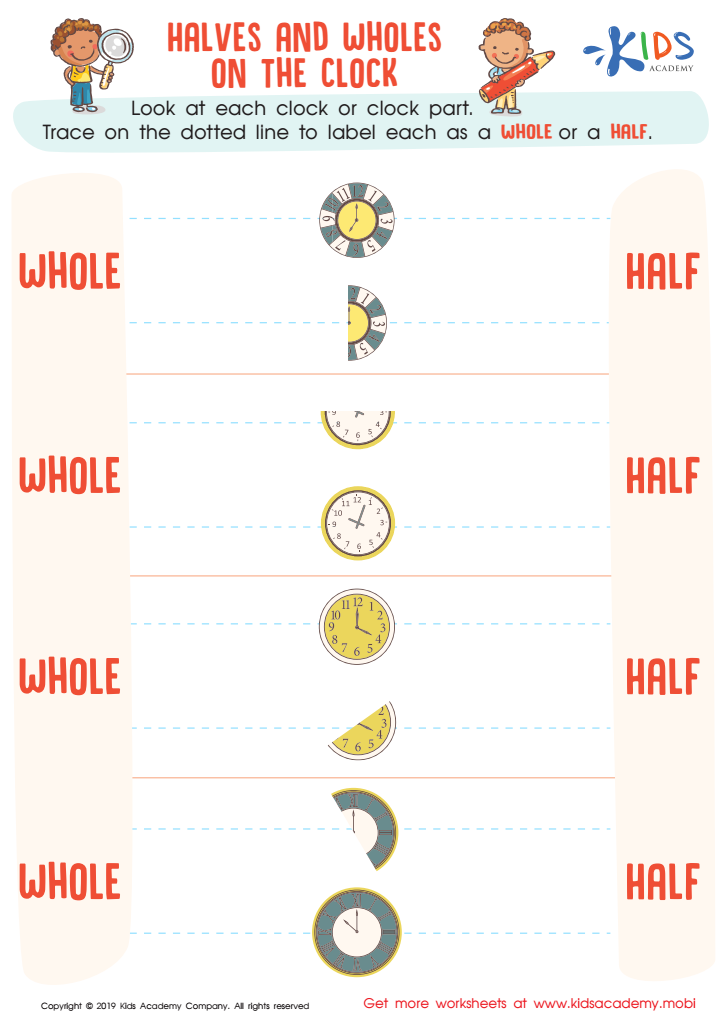
Halves and Wholes on the Clock Worksheet
 Assign to My Students
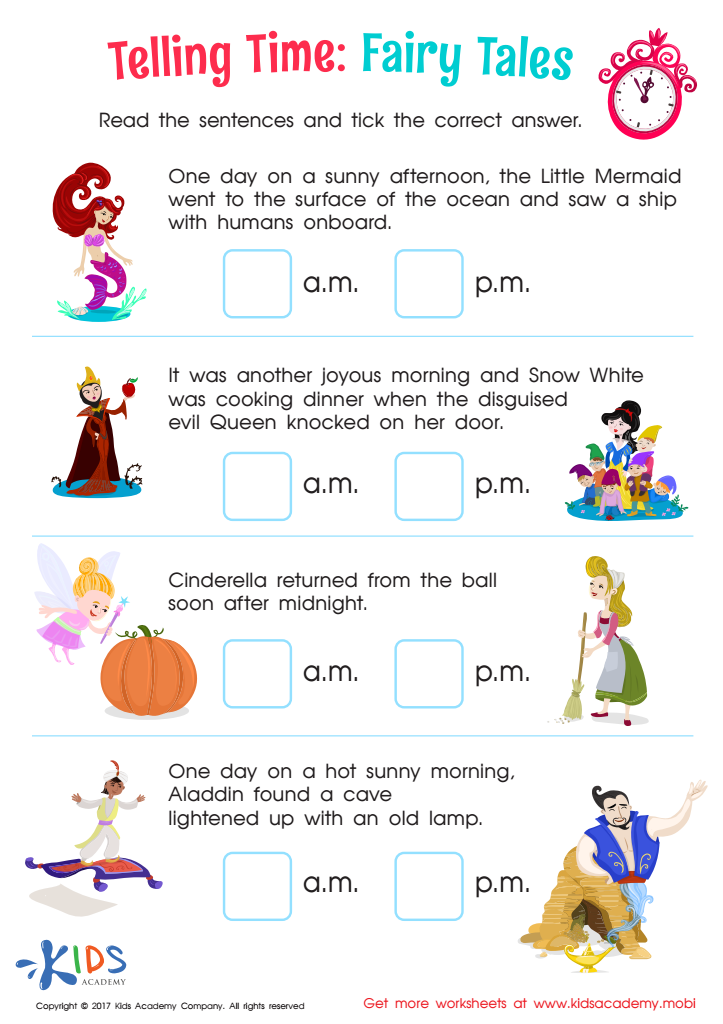
Telling Time: Fairy Tales Worksheet
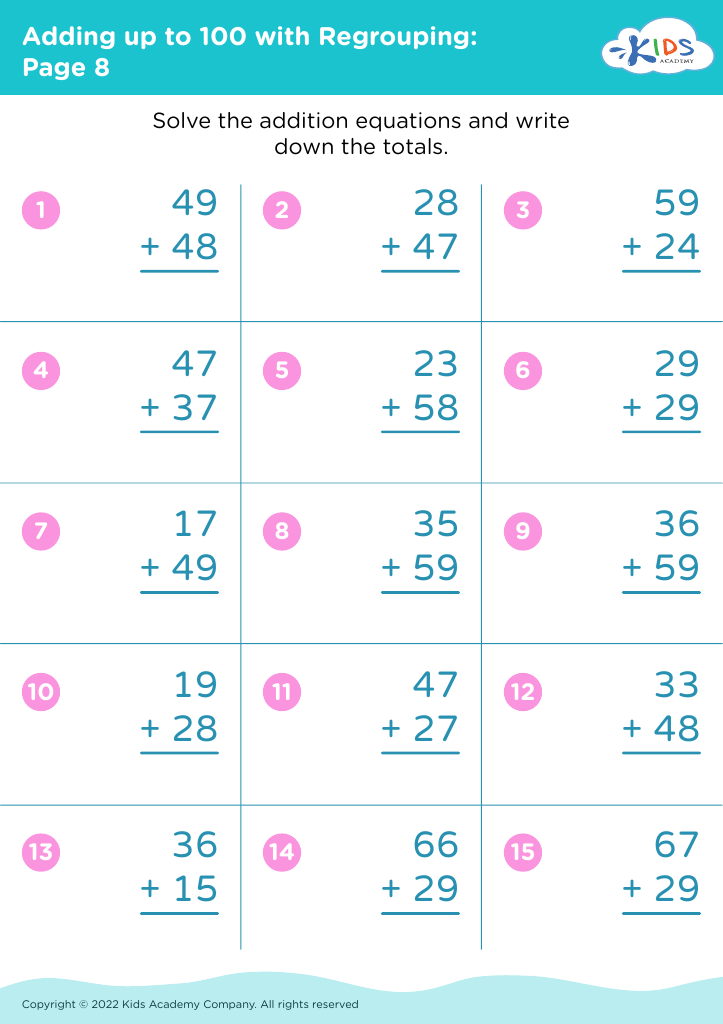
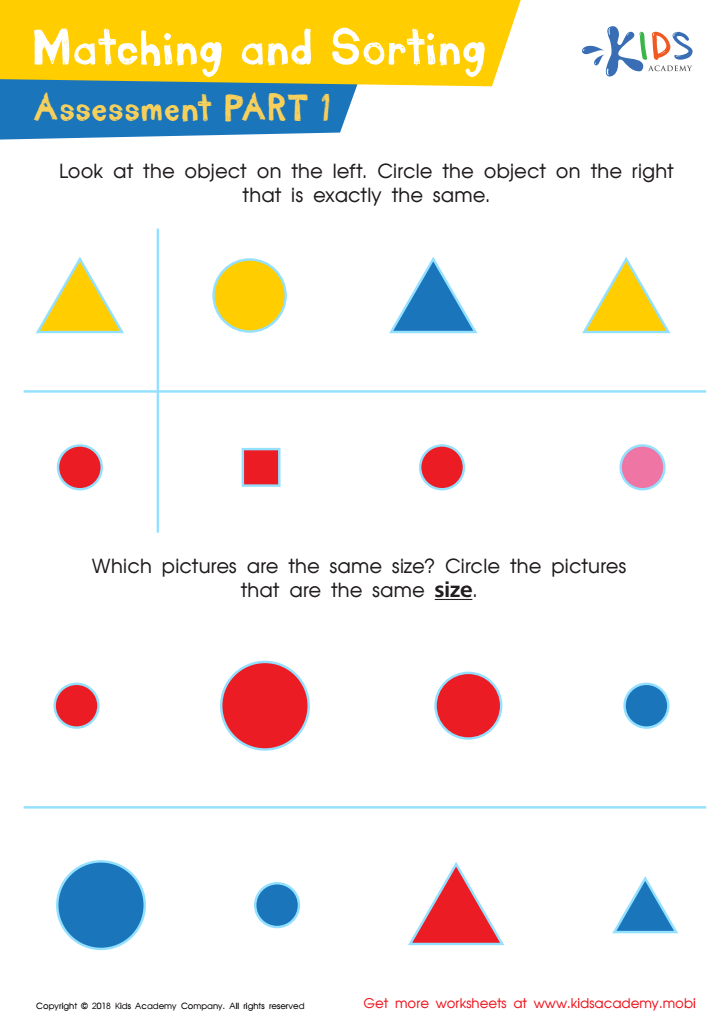
Matching and Sorting for Kindergarten: Assessment 1 Worksheet
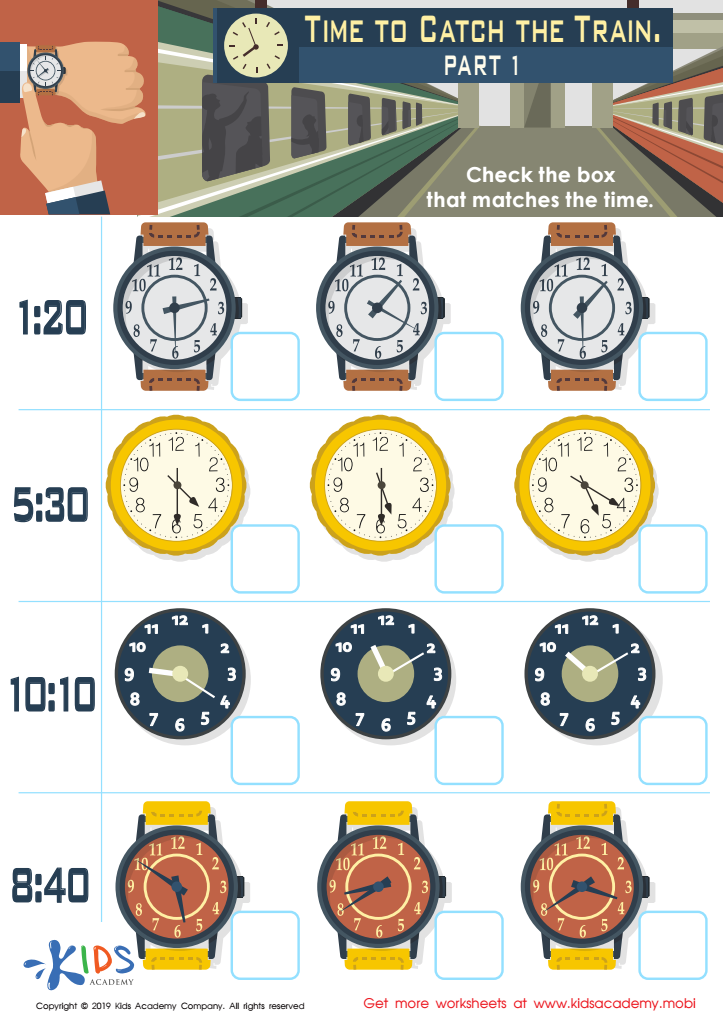
Time to Catch the Train Part 1 Worksheet







Time-telling skills are integral to a child's early development for several reasons, particularly for children ages 5-7. Firstly, understanding time helps instill a sense of routine and structure. Children who can tell time can better align themselves with daily activities, from waking up and having meals to attending school and participating in extracurricular activities. This sense of routine fosters responsibility and a sense of security in knowing what to expect throughout the day.
Secondly, time-telling is a foundational math skill that bridges to more complex topics. When children learn to tell time, they also practice counting, number recognition, the concept of sequencing, and basic arithmetic, as they differentiate between hours and minutes. It lays the groundwork for understanding more advanced mathematical concepts in the future, enhancing overall numeracy.
Moreover, teaching time-telling fosters critical thinking and problem-solving skills. As children learn to distinguish between various times and calculate intervals, they develop logical reasoning abilities. Additionally, these skills are essential for independence. Being able to tell time allows children to manage their schedules, understand the importance of punctuality, and develop time-management abilities that will benefit them throughout life.
In summary, time-telling skills not only support academic success but also play a critical role in a child's day-to-day life and long-term development. Parents and teachers should prioritize these skills to help children grow into well-organized, punctual, and mathematically capable individuals.








