Understanding clocks Math Worksheets for Ages 5-7
5 filtered results
-
From - To
Help your child master the concept of time with our "Understanding Clocks Math Worksheets" designed specifically for ages 5-7. These engaging and interactive worksheets introduce young learners to reading analog and digital clocks, effectively promoting their understanding of hours, minutes, and daily routines. Featuring colorful illustrations and age-appropriate activities, children will enjoy hands-on practice and build critical time-telling skills. As they complete exercises that encourage both recognition and application, your child will gain confidence in understanding and managing time. Foster a love for learning with our thoughtfully crafted resources that make math fun and educational! Start your child's time-telling journey today!
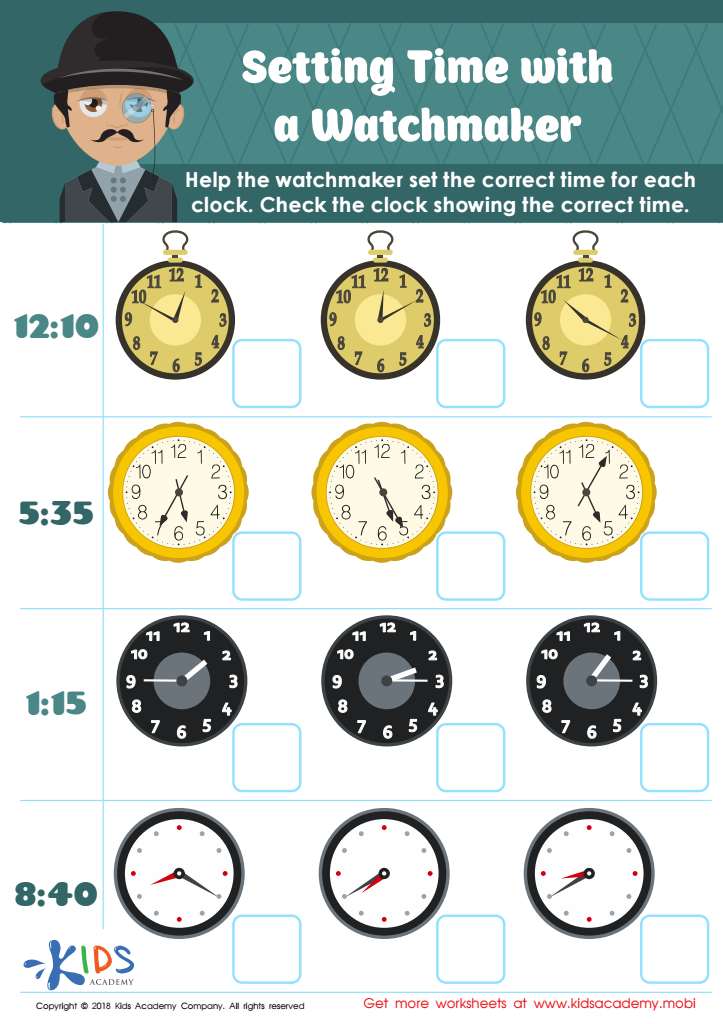
Setting Time with Watchmaker Worksheet
 Assign to My Students
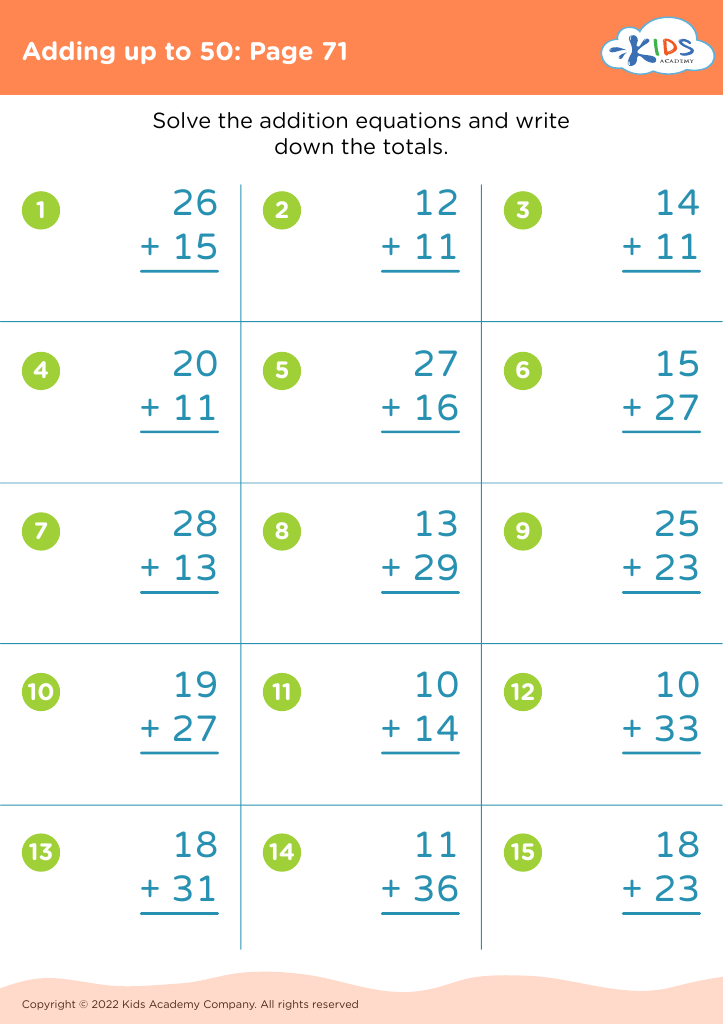
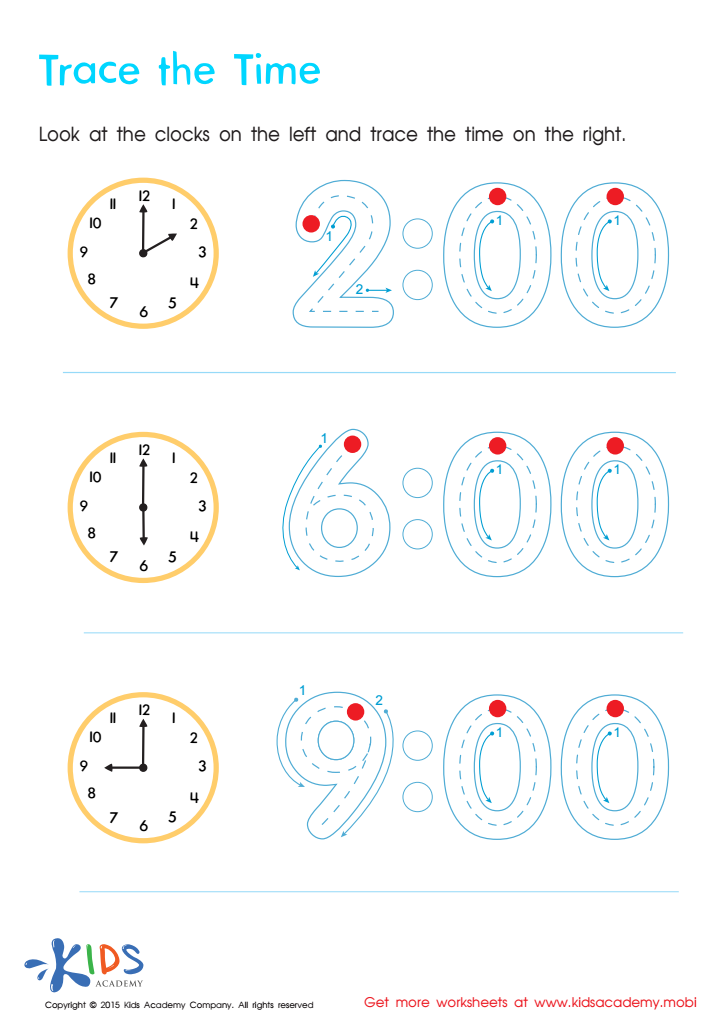
Telling The Time Worksheet: Part 2
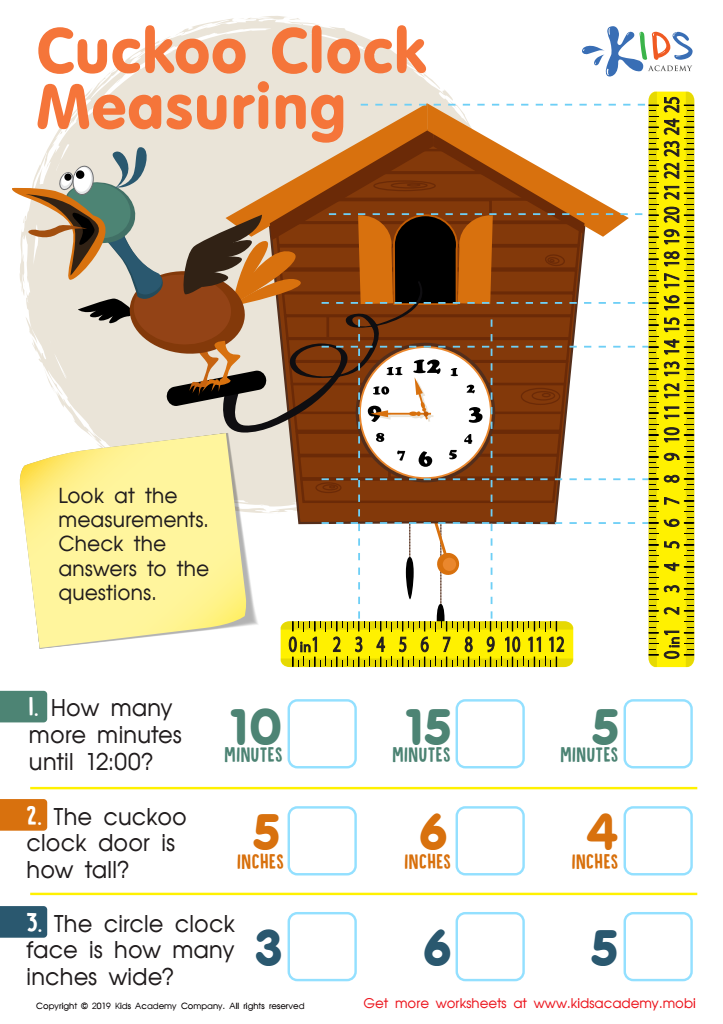
Cuckoo Clock Measuring Worksheet
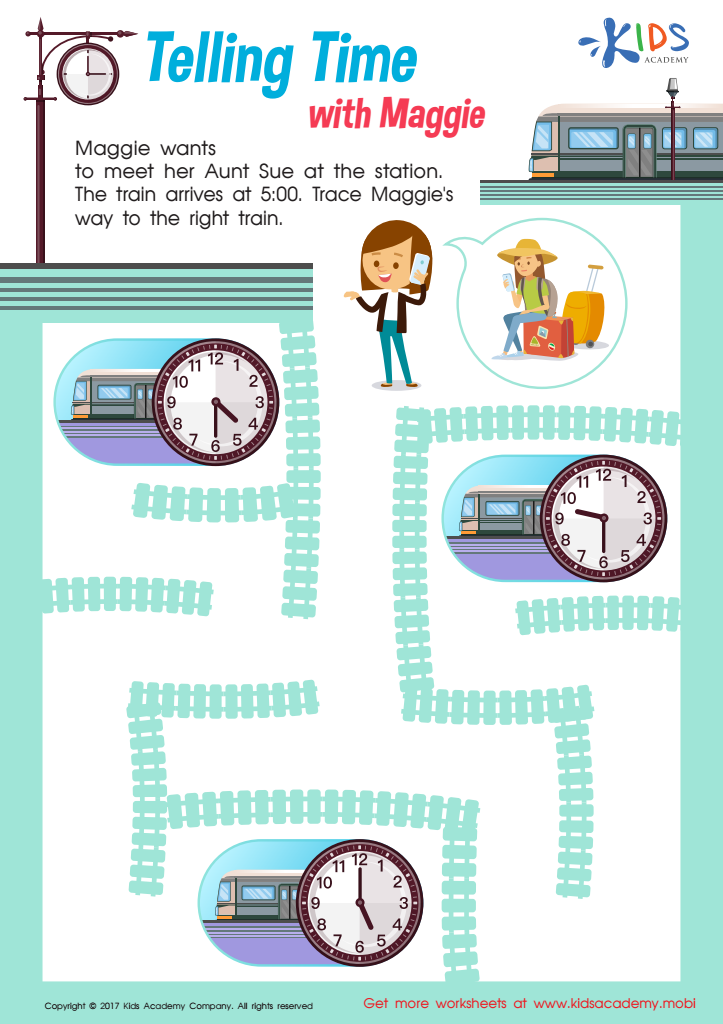
Telling Time With Maggie Time Worksheet








Understanding clocks and basic time-telling skills is crucial for children aged 5-7, as it lays the foundation for their cognitive development in various areas. First, learning to tell time fosters mathematical skills, reinforcing concepts like counting, sequencing, and recognizing patterns. Engaging with clocks helps children visualize numbers and enhances their understanding of measurement.
Additionally, time management is an essential life skill that promotes independence and responsibility. As children learn to track time, they begin to understand the importance of routines, punctuality, and planning their activities. This can help them manage their daily lives more effectively as they grow older.
Furthermore, understanding clocks opens avenues for conversations about community, culture, and history, as timekeeping has played a significant role throughout human civilization. Equipping children with these skills boosts their confidence and encourages a sense of achievement.
Teachers and parents who prioritize time-telling can introduce engaging activities and games, creating a fun learning environment. As children practice with tools like analog and digital clocks, they develop tactile learning experiences, making it more impactful. Ultimately, instilling time-awareness during these formative years fosters well-rounded, self-sufficient individuals.








