Understanding equations Math Worksheets for Ages 5-7
7 filtered results
-
From - To
Discover fun and engaging "Understanding Equations Math Worksheets for Ages 5-7" to help young learners grasp the basics of equations with ease. These interactive worksheets from Kids Academy are designed to build a strong foundation in math by introducing simple equations through vibrant visuals and hands-on activities. Perfect for both classroom and at-home learning, these resources make complex concepts accessible and enjoyable. Boost your child's confidence and proficiency in math with our expertly crafted worksheets tailored for young minds. Begin the journey of mastering equations today with Kids Academy!
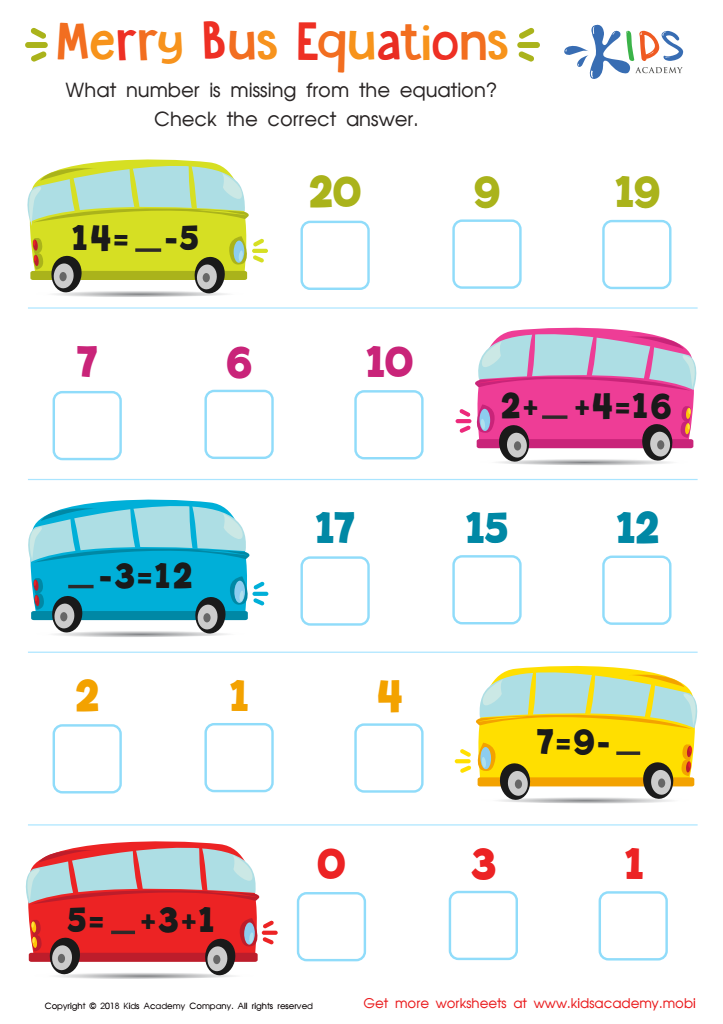
Merry Bus Equations Worksheet
 Assign to My Students
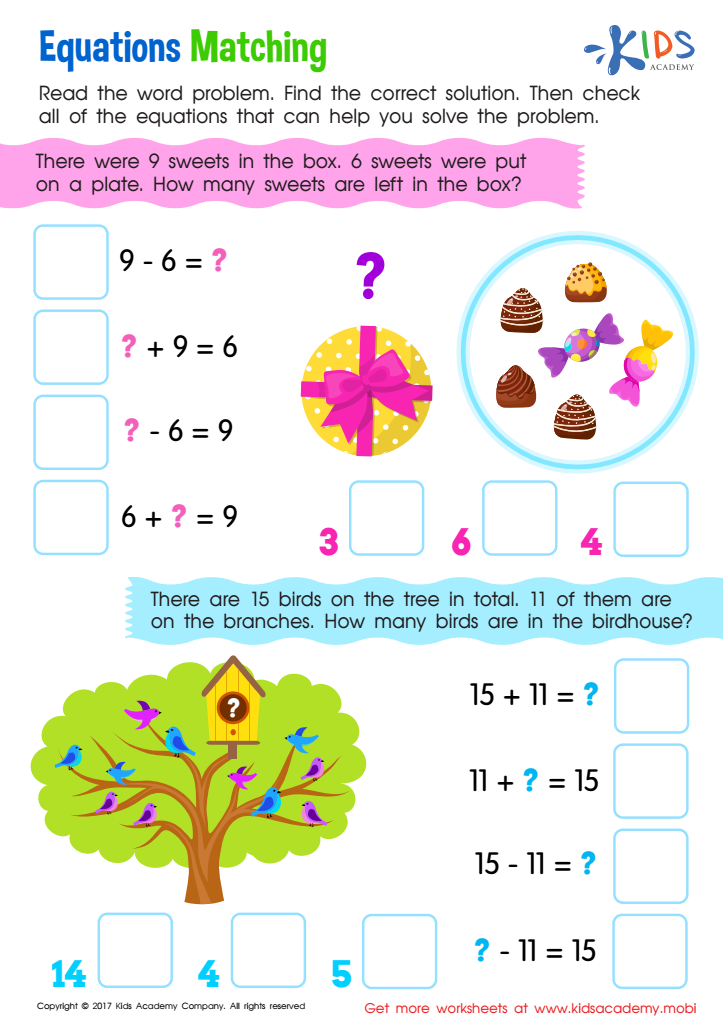
Equations Matching Word Problems Worksheet
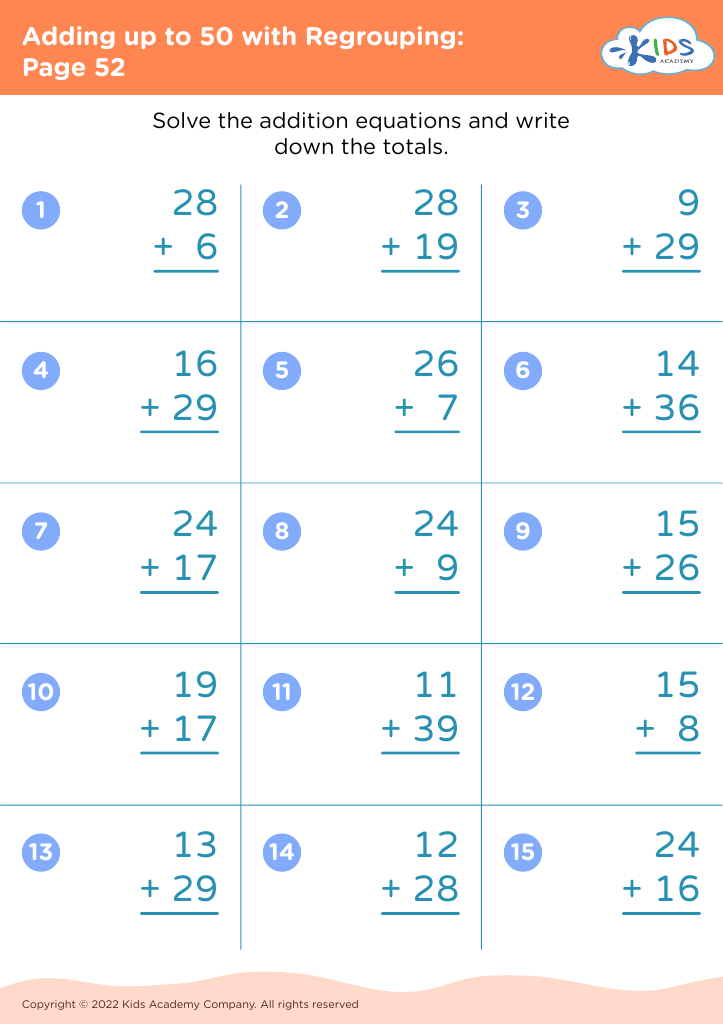
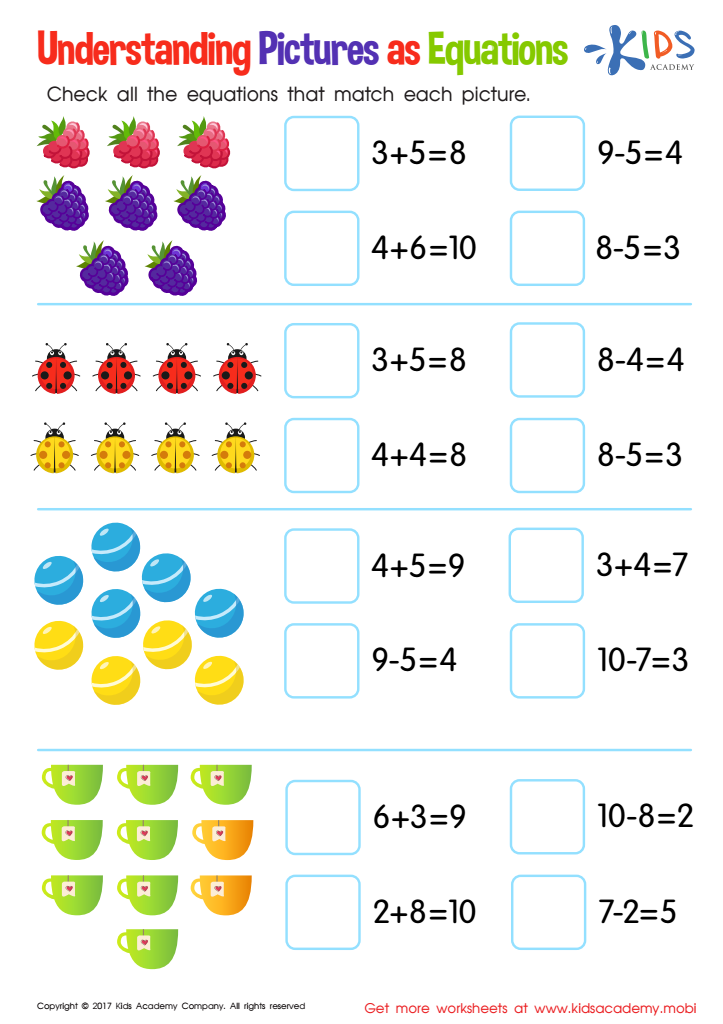
Understanding Pictures as Equations Worksheet
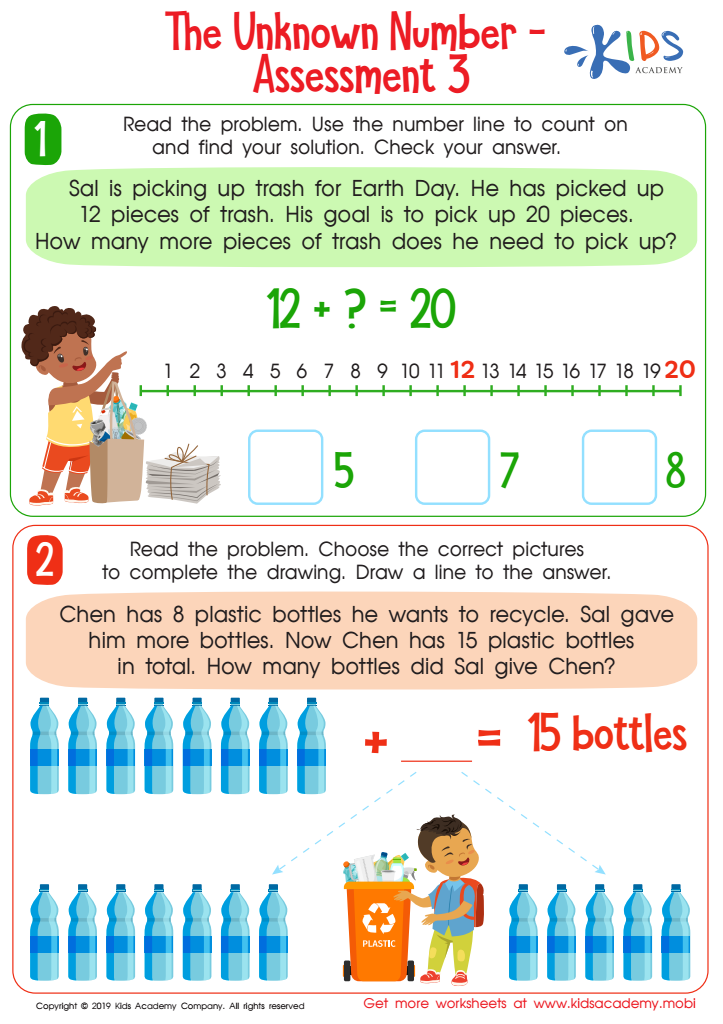
The Unknown Number - Assessment 3 Worksheet
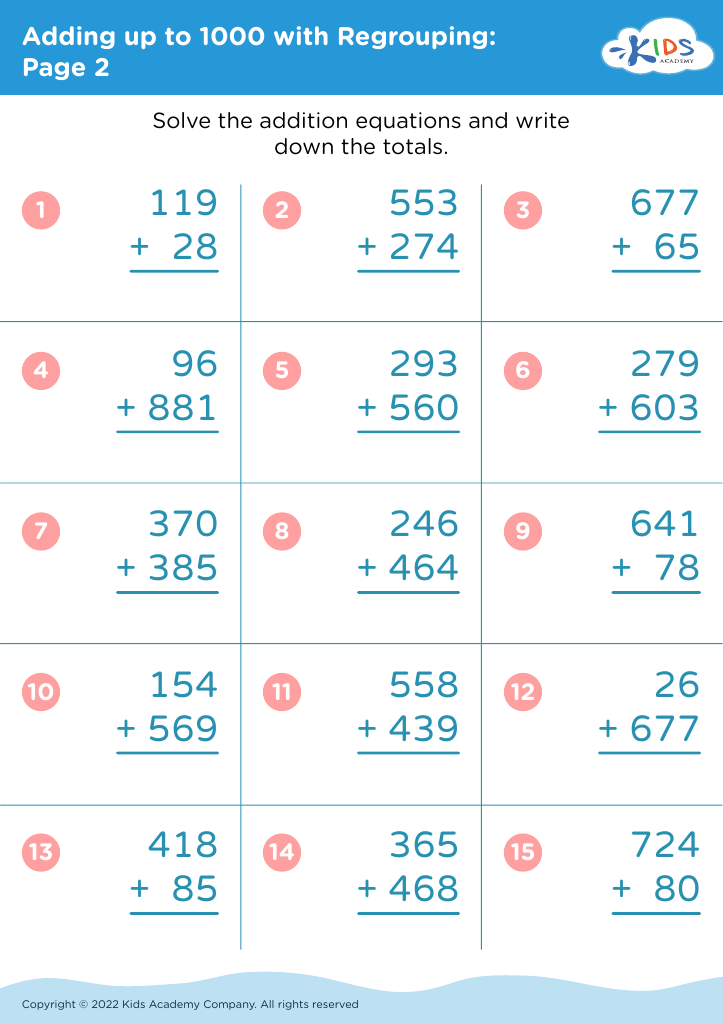
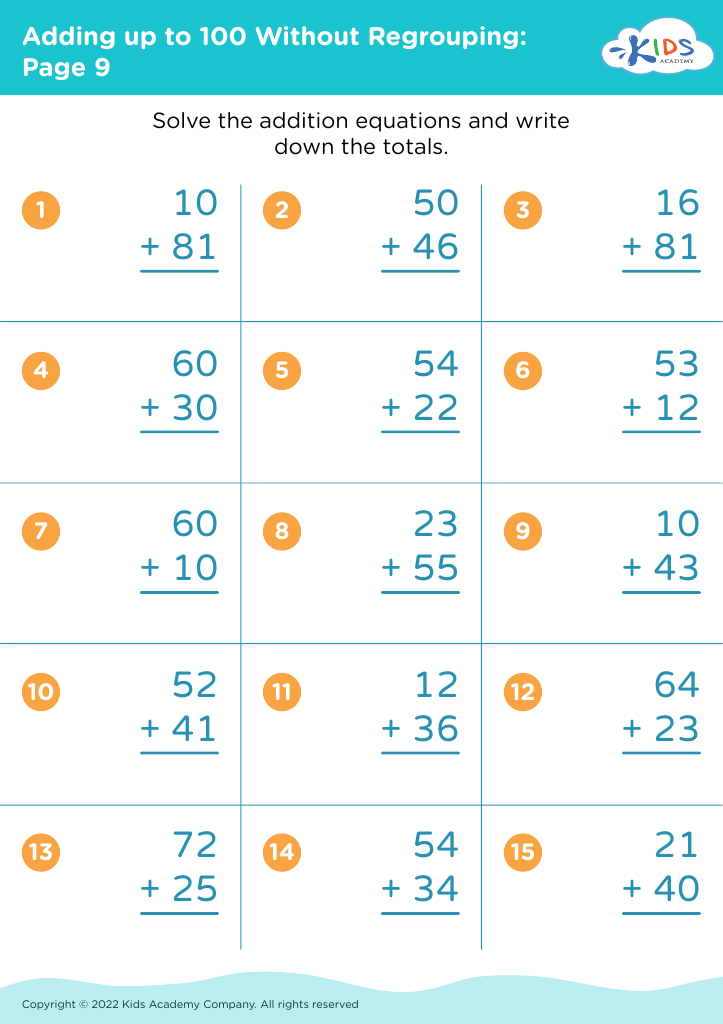







Understanding equations in early math education, especially for children ages 5-7, is fundamental. Equipping young learners with this skill builds a strong foundation for future mathematical learning and logical thinking. At this tender age, children are incredibly receptive and capable of grasping basic arithmetic concepts that set the stage for more complex problem-solving skills.
For parents and teachers, engaging children in understanding equations goes beyond achieving good grades; it's about fostering a growth mindset and a love for learning. Introducing kids to equations helps them recognize patterns, understand relationships between numbers, and develop critical thinking. Simple equations like 2 + 3 = 5 teach them the concept of balance and equality, which are not just math skills but life skills as well.
Interactive and contextual learning through fun activities like counting games and visual aids can make equations less intimidating and more playful. Moreover, early familiarity with these concepts can boost self-confidence, reduce math anxiety, and encourage kids to tackle challenges with a positive attitude.
Ultimately, by prioritizing early math education, parents and teachers pave the way for lifelong academic success and an inquisitive mind that sees the world through a lens of problem-solving and curiosity.








