Understanding habitats Math Worksheets for Ages 5-7
3 filtered results
-
From - To
Discover our "Understanding Habitats" math worksheets for ages 5-7, designed to make learning fun and interactive! These engaging worksheets combine essential math skills with fascinating insights into various habitats. Perfect for young learners, they encourage exploration of numbers and counting while fostering an appreciation for nature. Through hands-on activities, kids will practice addition, subtraction, and sorting, all linked to exciting themes like forests, oceans, and deserts. Each worksheet aims to build foundational math skills while creatively linking them to the environment, promoting both cognitive and ecological awareness. Unlock the wonders of learning with our vibrant and educational resources today!
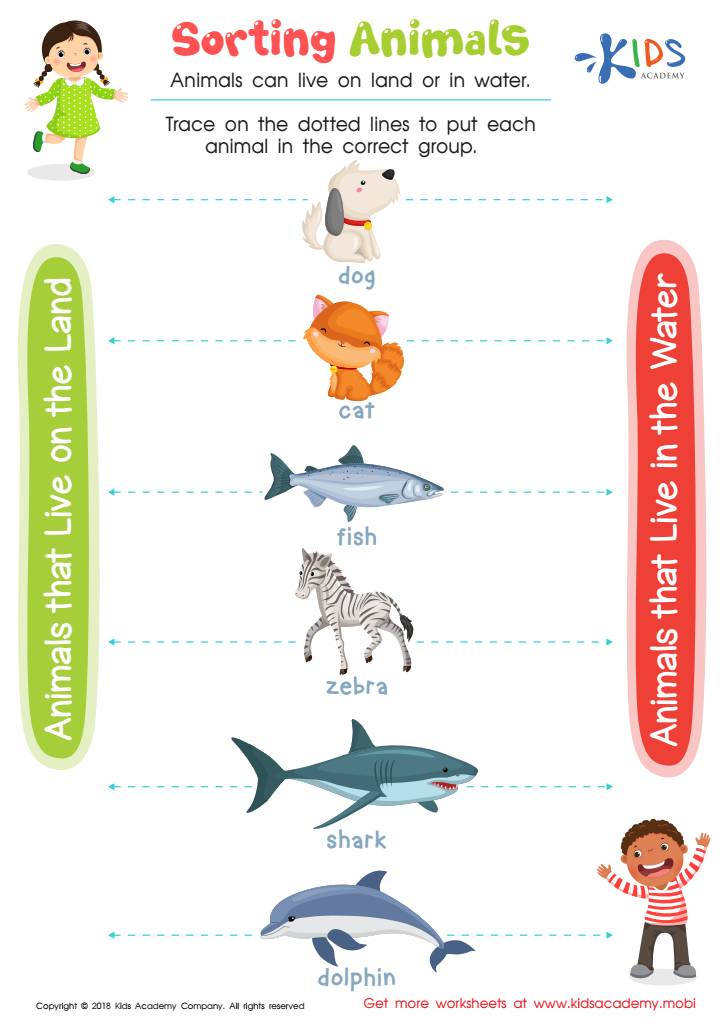
Sorting Animals Worksheet
 Assign to My Students
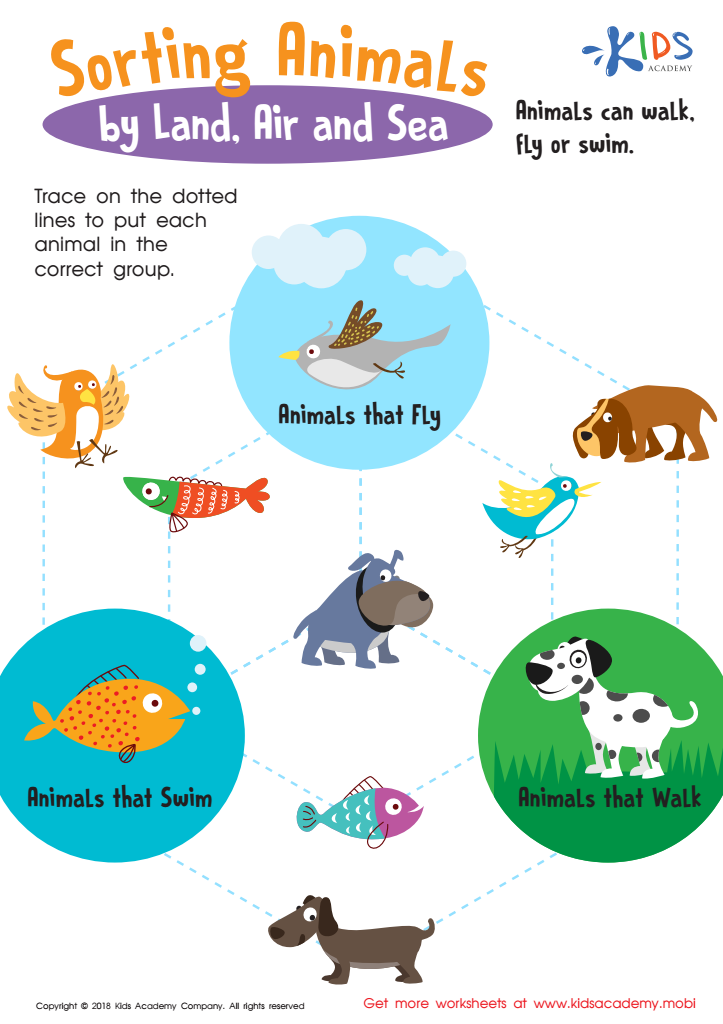
Sorting Animals by Land, Air and Sea Worksheet







Understanding habitats is crucial for children aged 5-7, as it combines foundational math skills with vital ecological awareness. At this young age, students are naturally curious about the world around them, making it an ideal time to teach them about different environments—such as forests, deserts, oceans, and wetlands. Incorporating math into habitat lessons not only enhances their arithmetic skills but also helps them develop critical thinking and problem-solving abilities.
Parents and teachers should care because learning about habitats through math encourages children to apply numbers and measurements in real-world contexts. For instance, activities such as measuring animal populations or calculating the area of different habitats allow young learners to see how math relates to nature. This interdisciplinary approach fosters a love for learning, as children can relate mathematical concepts to their everyday experiences.
Furthermore, as environmental stewards, children need to understand the importance of biodiversity and ecosystems. This early knowledge can ignite a passion for conservation, shaping responsible and informed future citizens. By focusing on habitats through a mathematical lens, educators and parents can help cultivate both academic skills and environmental consciousness in young children, setting the foundation for lifelong learning and ecological responsibility.








