Understanding number sequences Math Worksheets for Ages 5-7
7 filtered results
-
From - To
Discover our engaging "Understanding Number Sequences Math Worksheets" designed specifically for children ages 5-7. These worksheets lay the foundation for early math skills by helping young learners recognize patterns and develop number sequencing abilities. Through a variety of fun and interactive exercises, kids will practice counting, identifying sequences, and filling in missing numbers in a supportive learning environment. Each worksheet encourages critical thinking and strengthens their mathematical understanding, setting them up for future success in math. Ideal for use at home or in the classroom, our worksheets are a perfect resource to reinforce important concepts while making learning enjoyable!
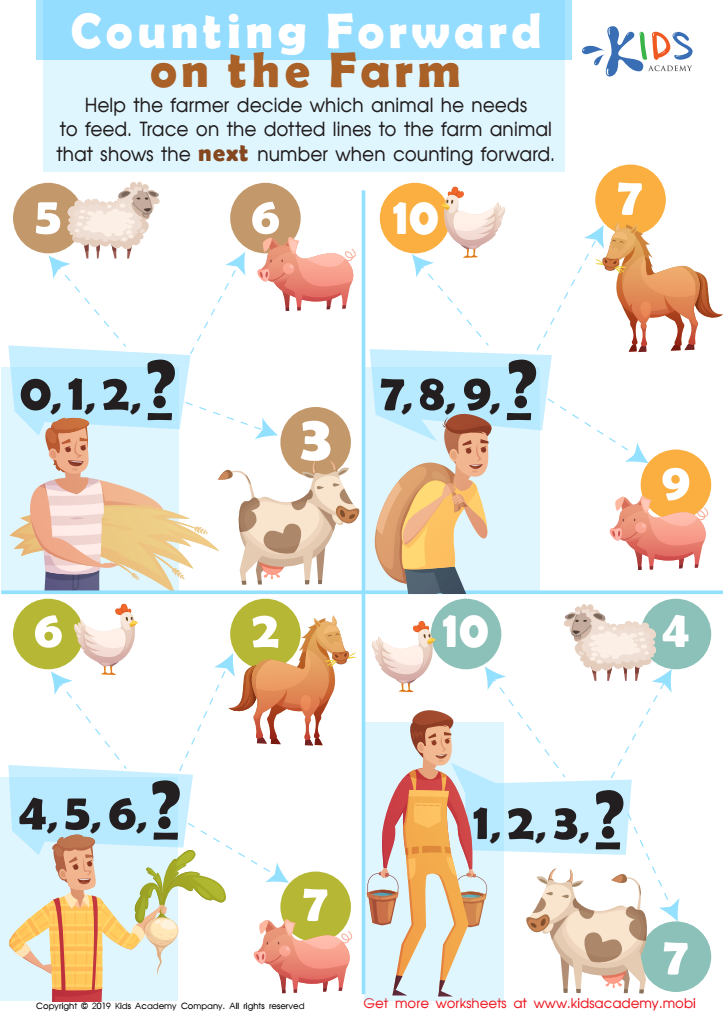
Counting Forward On the Farm Worksheet
 Assign to My Students
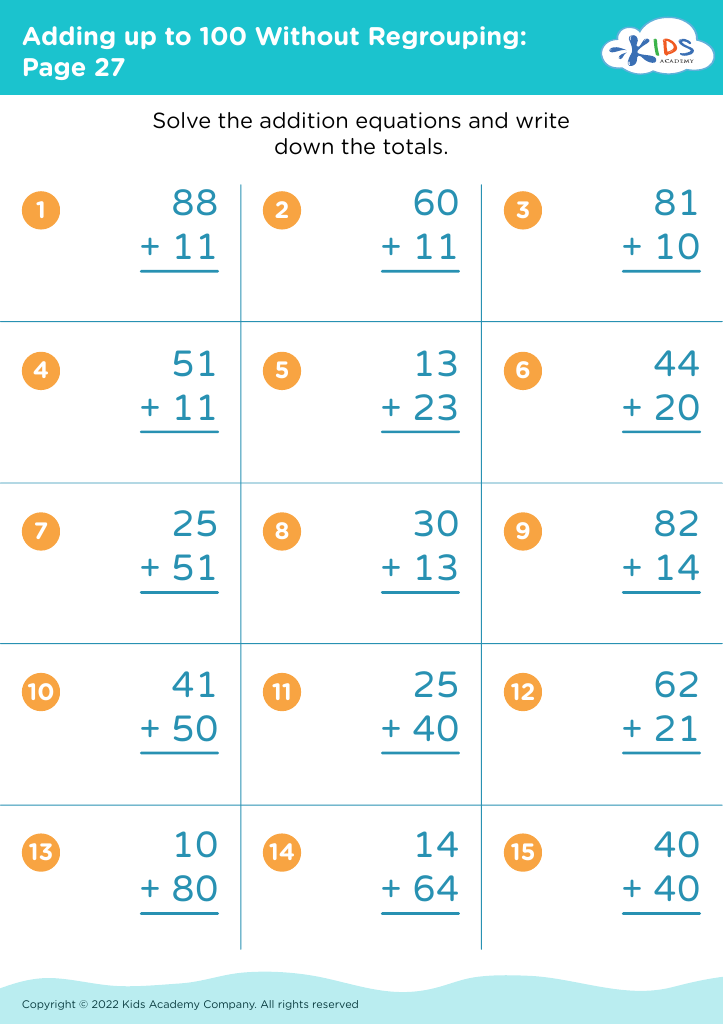
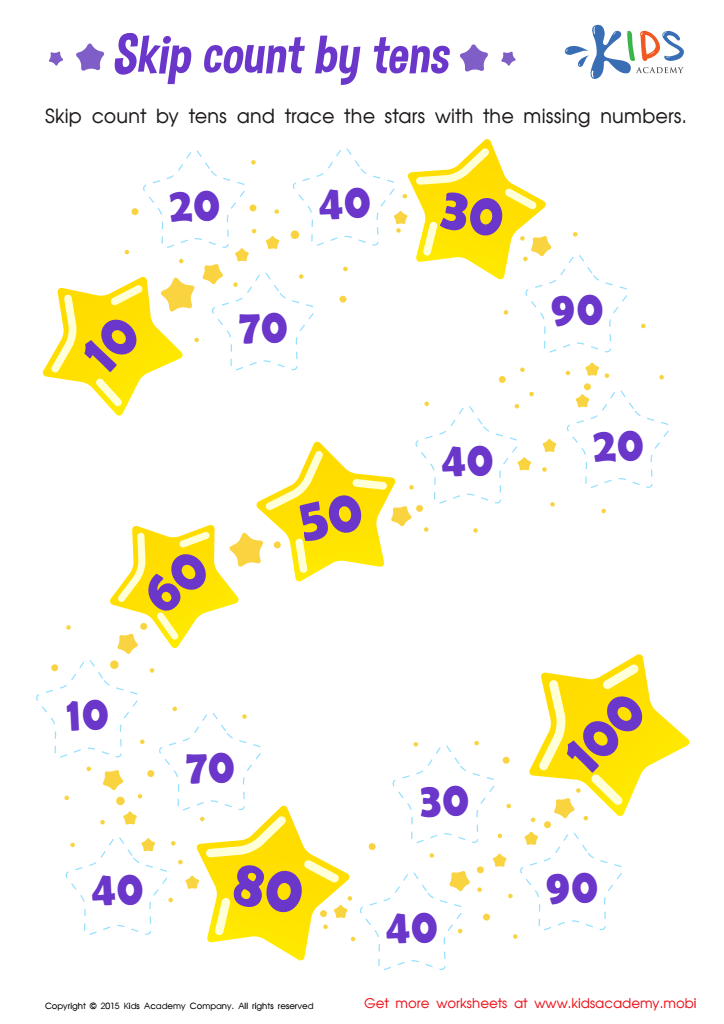
Learn dozens: Skip Count by Tens Printable
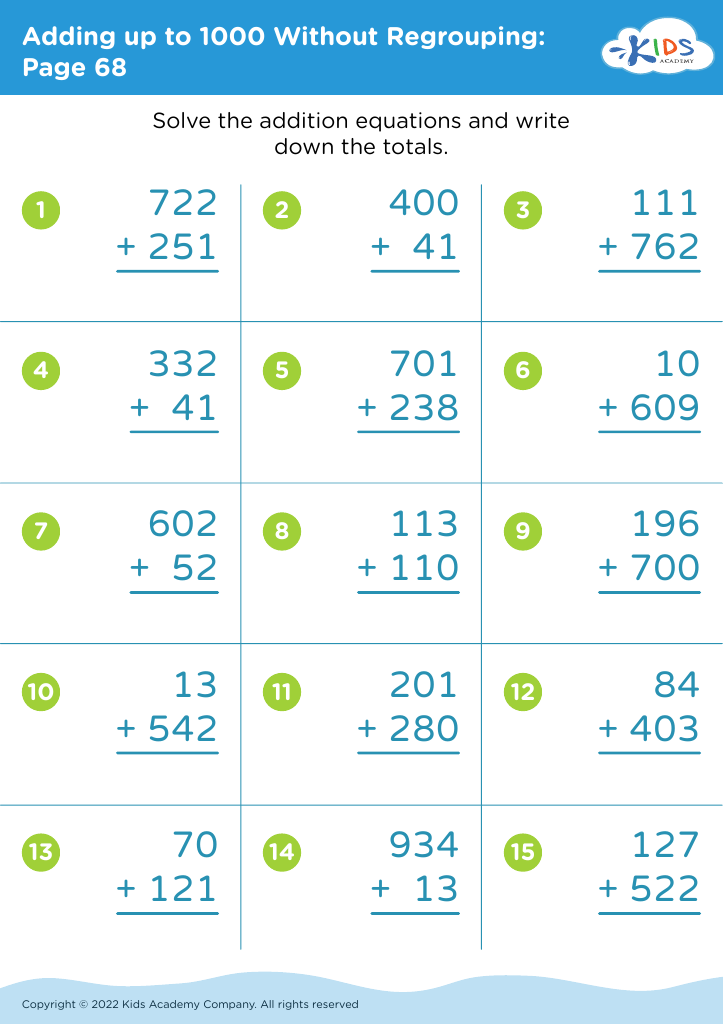
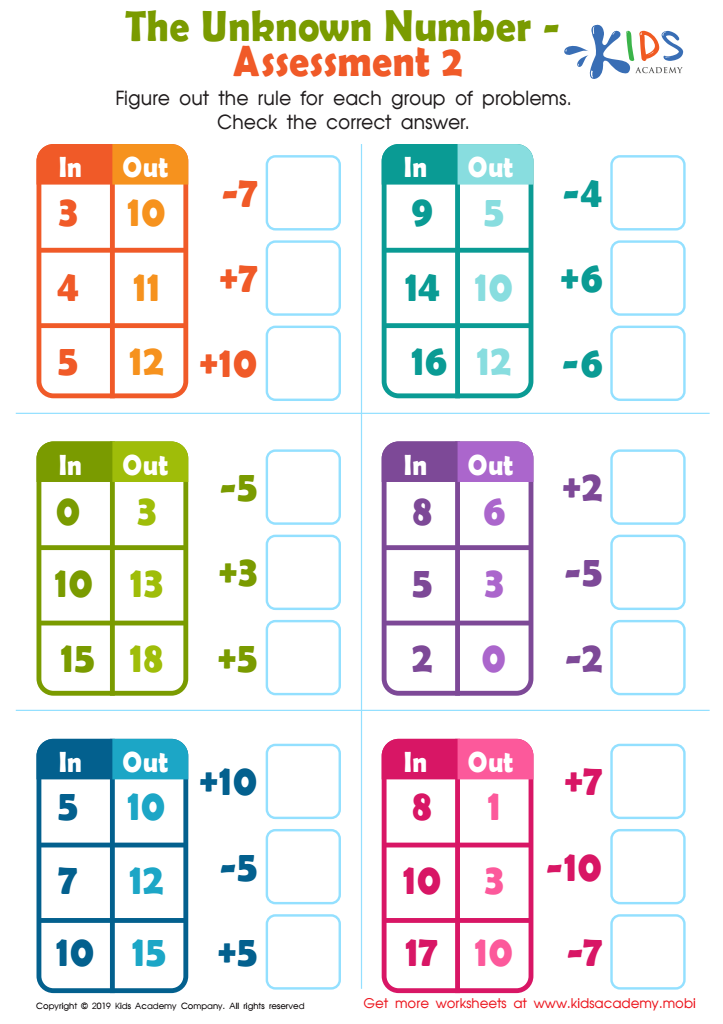
The Unknown Number - Assessment 2 Worksheet
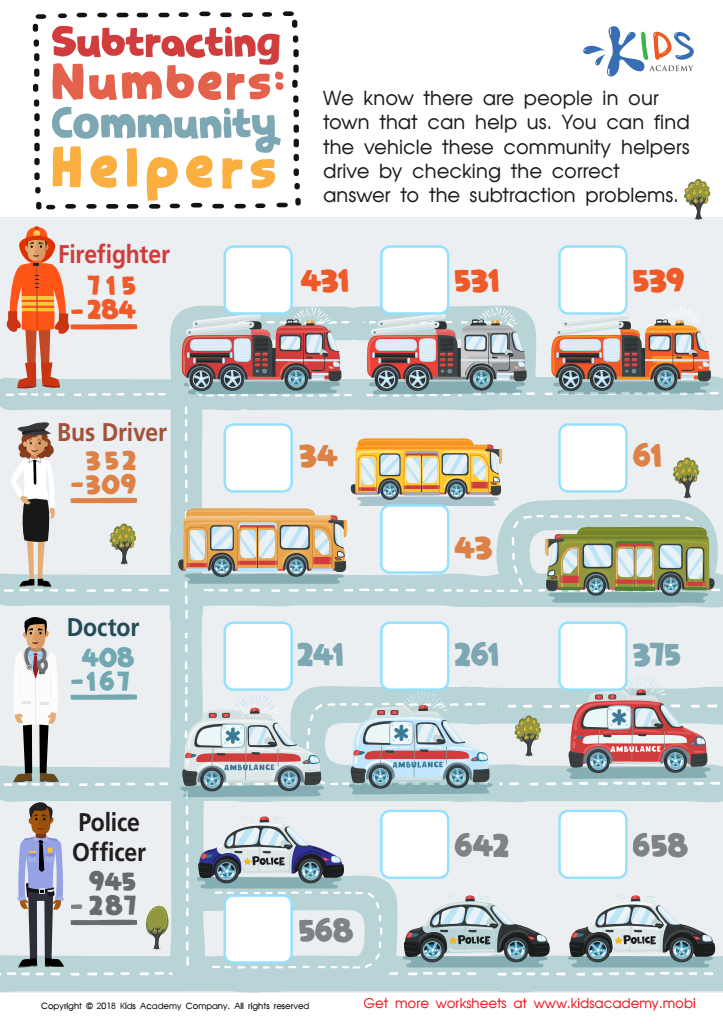
Subtracting Numbers: Community Helpers Worksheet







Understanding number sequences is a fundamental aspect of mathematics that significantly impacts the learning journey of children aged 5-7. During these formative years, children begin to recognize patterns, make connections between numbers, and develop essential problem-solving skills. Parents and teachers should care about number sequences because they serve as a foundation for more complex mathematical concepts such as addition, subtraction, and even multiplication.
When children understand sequences, they learn to predict what comes next, enhancing their analytical thinking. It builds their confidence and eagerness to explore other mathematical topics. Fostering this understanding encourages number sense, which is crucial for everyday situations, such as counting objects or managing money.
Additionally, a strong grasp of number sequences enhances a child’s cognitive abilities, allowing them to recognize patterns not just in math, but across various subjects. Engaging with sequences through games, songs, and visual aids can make learning enjoyable and memorable.
Ultimately, a solid foundation in number sequences lays the groundwork for academic success, paving the way for a lifetime appreciation of mathematics. By investing in this critical learning stage, parents and teachers equip children with skills that extend beyond numbers, promoting overall reasoning and critical thinking essential for lifelong learning.








