
Visual learning enhancement Math Worksheets for Ages 5-7
8 filtered results
Difficulty Level
Grade
Age
-
From - To
Subject
Activity
Standards
Discover our Visual Learning Enhancement Math Worksheets designed for ages 5-7! These engaging, beautifully illustrated worksheets help young learners understand and master mathematical concepts through visual aids. Perfect for early grade students, our activities make learning math fun and interactive, enhancing comprehension and retention. From basic addition and subtraction to shape recognition and pattern identification, each worksheet is thoughtfully crafted to foster a love for math at a young age. Give your child the tools they need to succeed with our vibrant and effective visual-based math resources. Explore our collection today and spark a lifetime of learning!
Favorites
With answer key
Interactive
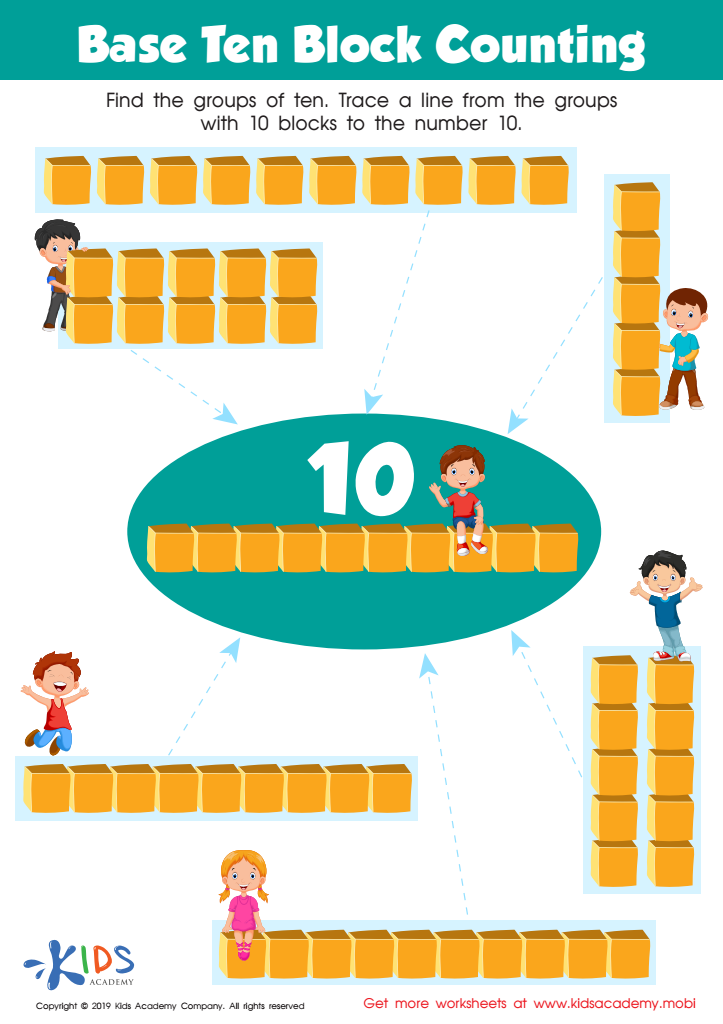
Base Ten Block Counting Worksheet
Introduce your kids to counting with educational DVDs and video games. Then use this worksheet: look at the picture and help them find the groups of ten; trace a line from the groups with 10 blocks to the number 10. This will help them practice and gain a better understanding of counting.
 Assign to My Students
Base Ten Block Counting Worksheet
Worksheet
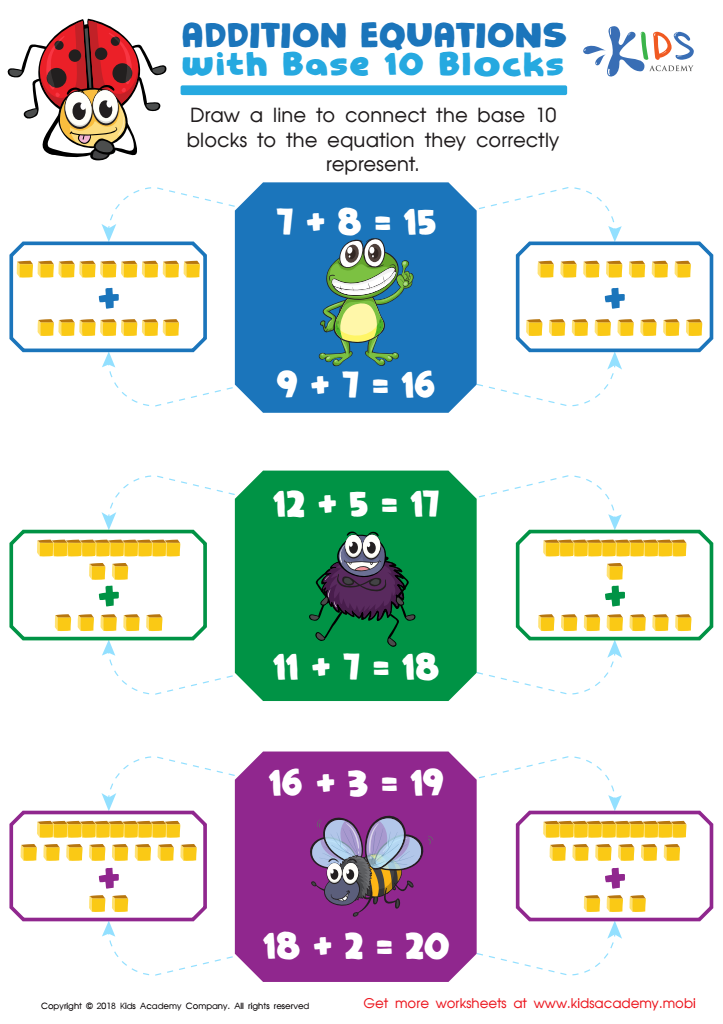
Addition Equations With Base 10 Blocks Worksheet
If your students are struggling with base 10 addition, this worksheet is here to help. Guide them with connecting the blocks to the equation with a line. It's a fun and colourful way to encourage learning.
Addition Equations With Base 10 Blocks Worksheet
Worksheet
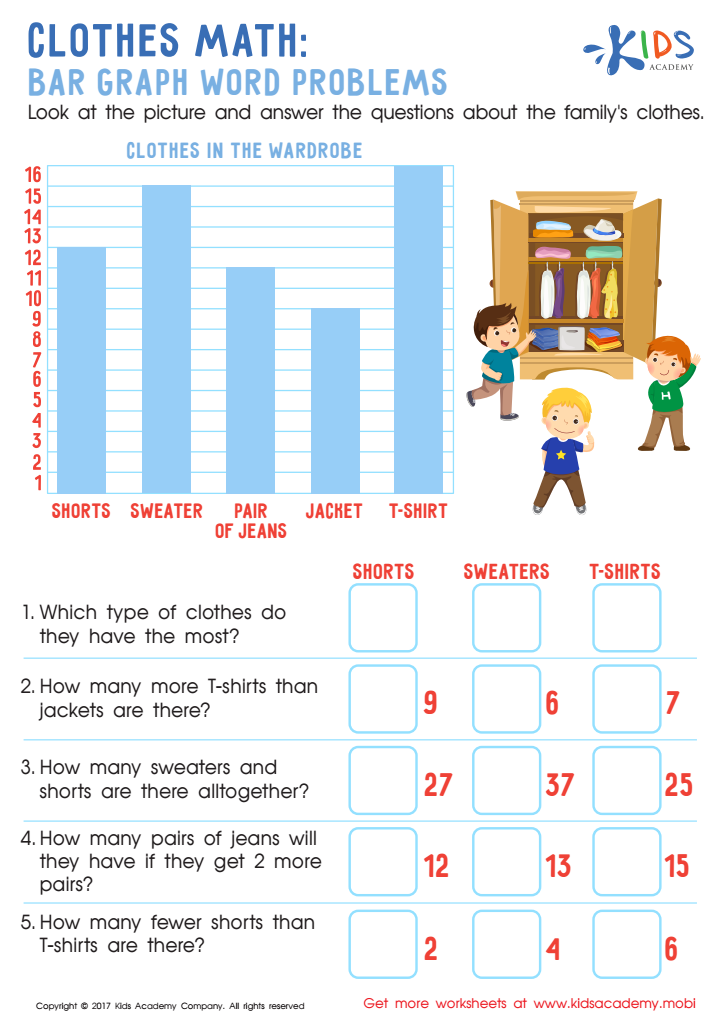
Clothes Math: Bar Graph Word Problems Worksheet
Introduce your kids to a family like theirs with this worksheet. They'll look at the picture of three children in front of a wardrobe and the graph of clothes inside. Ask them questions about the number of items like jeans, sweaters, shorts, jackets, and t-shirts. Let them explore their understanding of counting and family similarity.
Clothes Math: Bar Graph Word Problems Worksheet
Worksheet
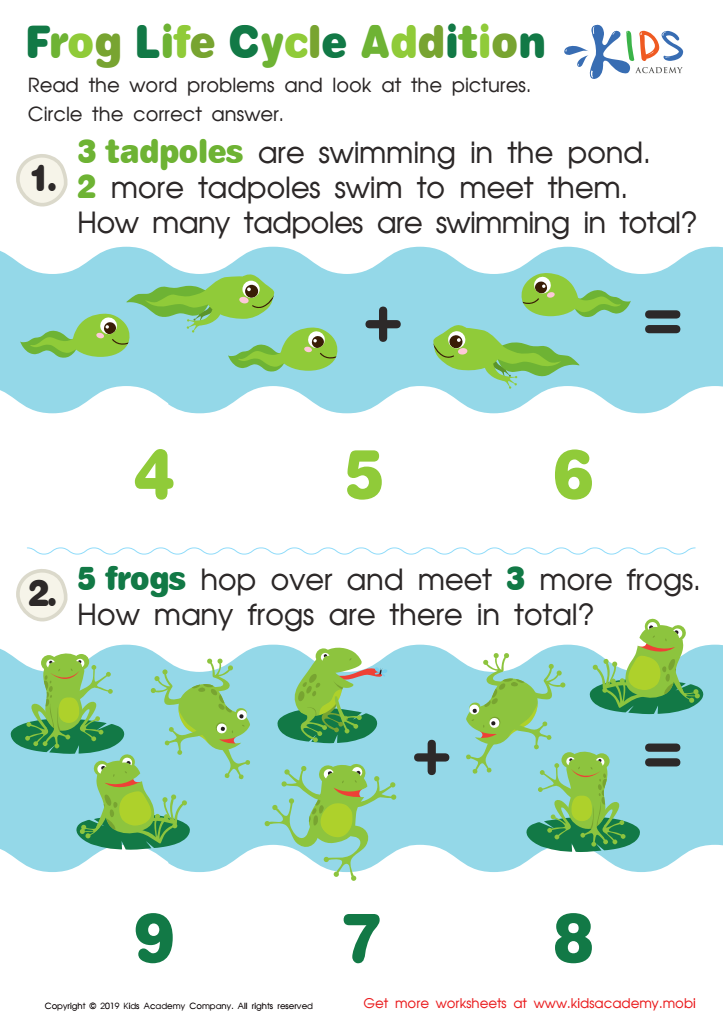
Frog Life Cycle Addition Worksheet
Look at this worksheet with your kids. Read the two word problems aloud, pointing at the pictures showing the frog's life cycle. Help your kids add simple equations and circle the correct answer. Fascinating creatures, frogs go through a cycle before becoming an adult.
Frog Life Cycle Addition Worksheet
Worksheet
Join Kids Academy for Free
Who is primarily going to use this learning content?







Visual learning enhancement in math for children aged 5-7 is crucial for several reasons. This formative developmental stage is characterized by significant cognitive and perceptual growth, and visual aids can dramatically improve their understanding and retention of mathematical concepts. Here's why parents and teachers should prioritize this approach:
First, young learners are predominantly visual thinkers. They process images more quickly and easily than abstract symbols. Using pictures, diagrams, and physical objects to represent math problems allows them to better grasp complex ideas, such as counting, addition, and subtraction.
Second, visual learning caters to diverse learning styles. It helps bridge the gap for children who may struggle with reading or auditory instructions, ensuring that every child has the opportunity to succeed.
Third, it enhances engagement and motivation. Brightly colored visuals and interactive activities captivate children's attention more effectively than monotone text or speech. This makes learning math fun and encourages a positive attitude toward the subject.
Finally, visual aids help in developing critical thinking and problem-solving skills. By visually demonstrating how math problems unfold, children can more easily understand processes and patterns, laying a solid foundation for more advanced mathematical learning in later years.
In essence, integrating visual learning strategies in early math education not only supports academic success but also fosters a lifelong appreciation for the subject.








