
Critical Thinking Matching Worksheets for Ages 5-7
4 filtered results
Difficulty Level
Grade
Age
-
From - To
Subject
Activity
Standards
Unlock your child's potential with our "Critical Thinking Matching Worksheets for Ages 5-7". Developed by experts, these engaging activities foster logical reasoning and problem-solving skills. Perfectly tailored for young learners, each worksheet challenges kids to make connections, identify patterns, and improve their cognitive abilities. Whether at home or in the classroom, these printable resources provide a fun, interactive way for children to enhance their critical thinking. Boost your child's confidence and prepare them for future academic success while they enjoy learning. Explore our collection today and watch your little one grow smarter, one activity at a time!
Favorites
With answer key
Interactive
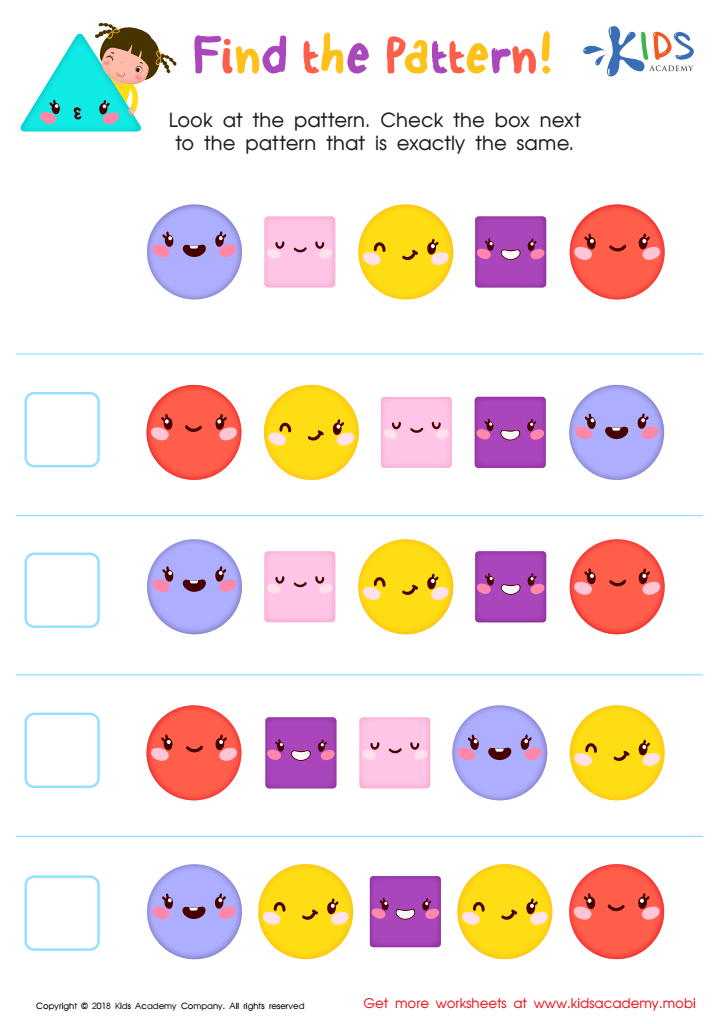
Find the Pattern Worksheet
This colorful pattern worksheet is perfect for testing your kids' pattern recognition. The bright colors will keep them engaged, while they check the box next to the pattern that is the same. Ask your kids to identify the colors used and see how well they can spot similarities!
 Assign to My Students
Find the Pattern Worksheet
Worksheet
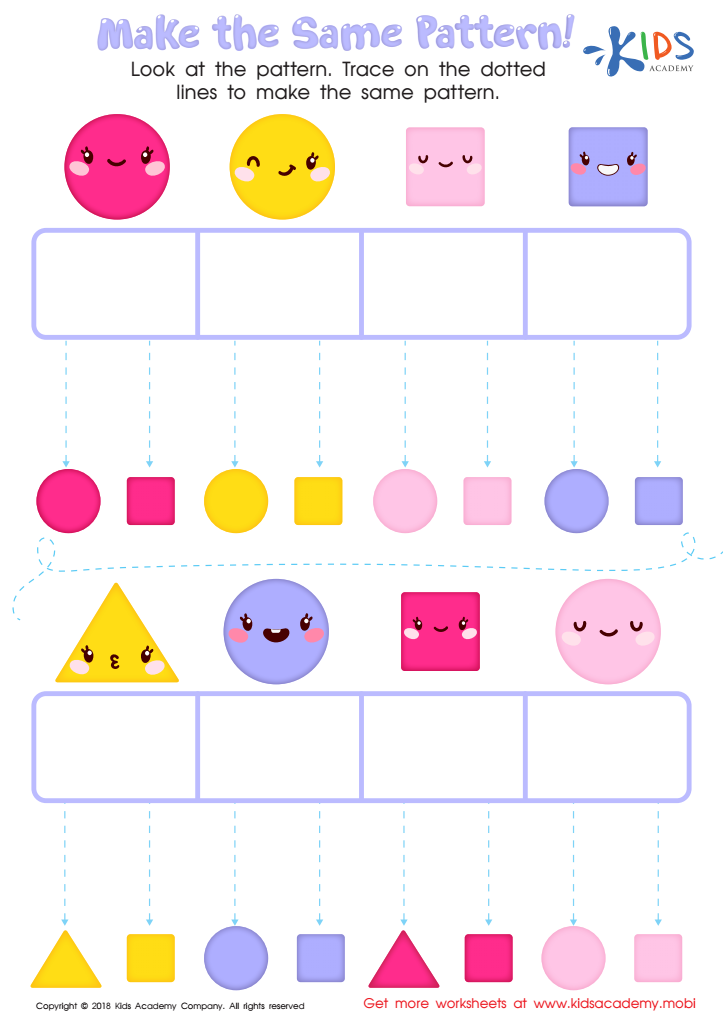
Make the Same Pattern Worksheet
Help your child look at the patterns in the tracing sheet and guide them to trace the dotted lines to match the shapes. This exercise tests their ability to copy pictures correctly, so emphasize the importance of paying attention to the instructions and details.
Make the Same Pattern Worksheet
Worksheet
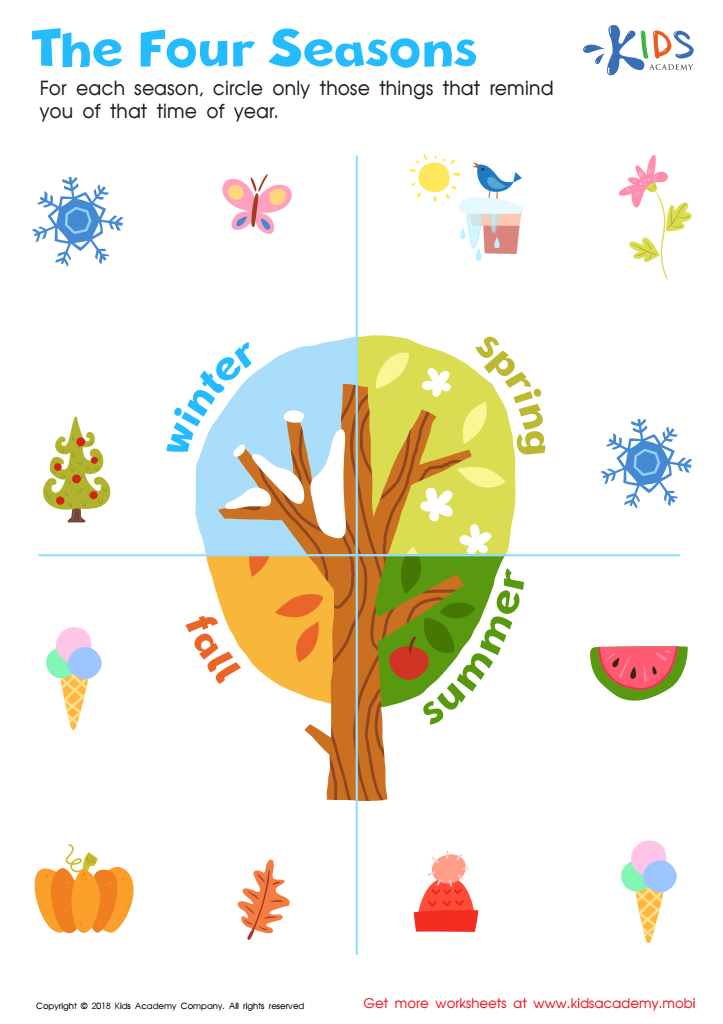
The Four Seasons Worksheet
Tell your child to circle things that remind them of each season. The tree has four squares, one for each season. Some things in each square match the season, others don't. Ask if any are out of place. Help them circle only items that remind them of that season.
The Four Seasons Worksheet
Worksheet
Join Kids Academy for Free
Who is primarily going to use this learning content?








Critical Thinking Matching games are essential for children aged 5-7 as they foster crucial cognitive development during formative years. Parents and teachers should prioritize these activities because they stimulate analytical thinking, enabling young minds to evaluate and correlate information logically. By engaging in matching games, children practice important skills such as pattern recognition, classification, and problem-solving, which lay the foundation for future academic success.
These activities also bolster attention to detail and enhance memory retention, as children must remember attributes of different objects to find matches. Furthermore, they support language development, as discussing their choices enhances vocabulary and expressive abilities. Socially, matching games encourage cooperation and turn-taking when played in group settings, promoting essential communication and interpersonal skills.
Matching games are fun and engaging, ensuring that children remain motivated and enthusiastic about learning. When incorporated into daily routines, these activities create a structured, yet enjoyable, learning environment where children feel confident and curious. As a holistic developmental tool, Critical Thinking Matching not only supports cognitive growth but also contributes to emotional and social development, preparing young learners for more complex academic challenges ahead. Therefore, investing time and resources in these games is a vital aspect of early childhood education.








