Converting units Measurement Worksheets for Ages 5-7
4 filtered results
-
From - To
Discover engaging converting units measurement worksheets designed exclusively for children ages 5-7! These educational worksheets make learning fun by introducing young learners to basic conversion concepts. Each printable activity helps kids understand and practice converting units within the systems they encounter daily, such as length, weight, and volume. Perfect for early grade students, our worksheets cultivate essential math skills through interactive problems and colorful illustrations. Boost your child's confidence in measurements and conversions with these easy-to-follow worksheets, ideal for classroom use or additional practice at home. Prepare your young math whizzes for a bright future with Kids Academy!
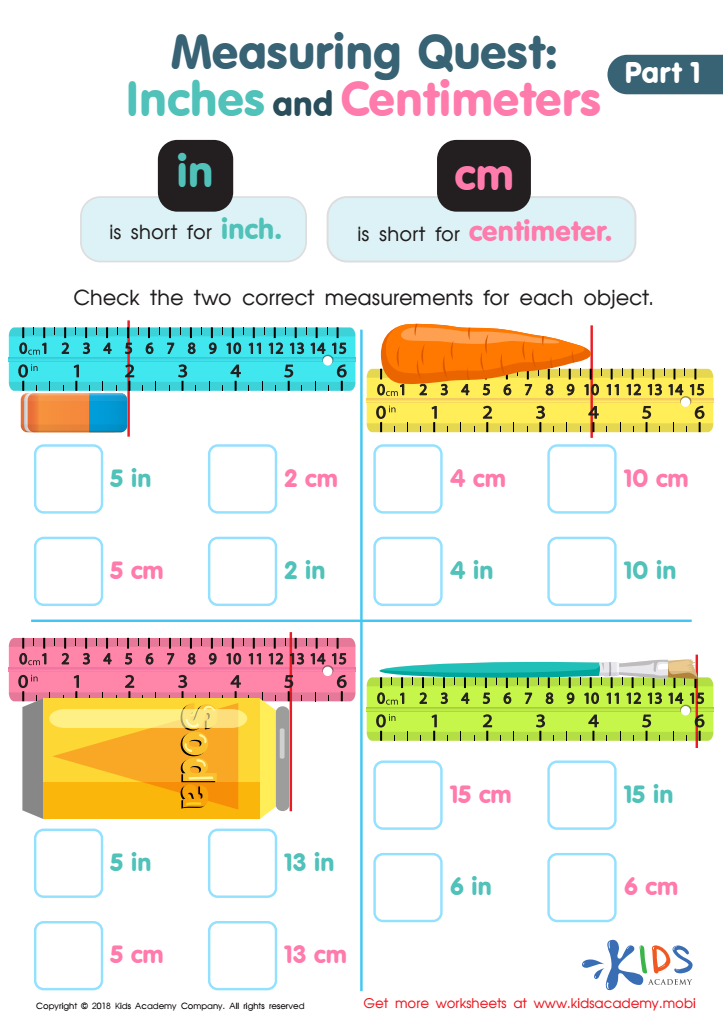
Measuring Quest: Inches and Centimeters Worksheet
 Assign to My Students
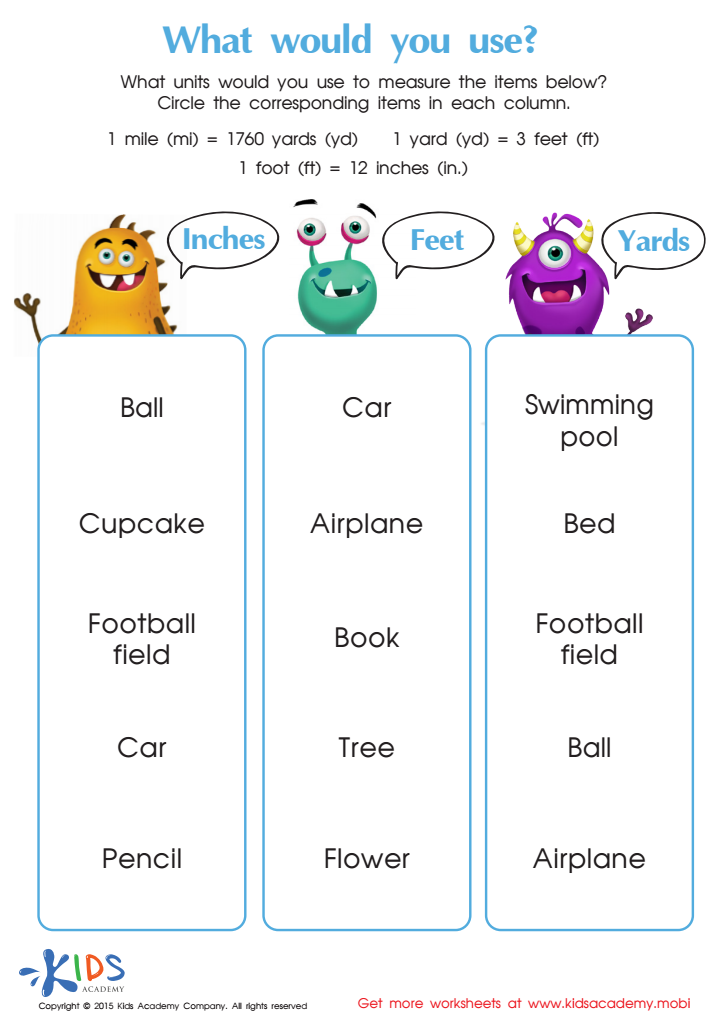
Learning about measuring objects in inches, feet and yards Worksheet
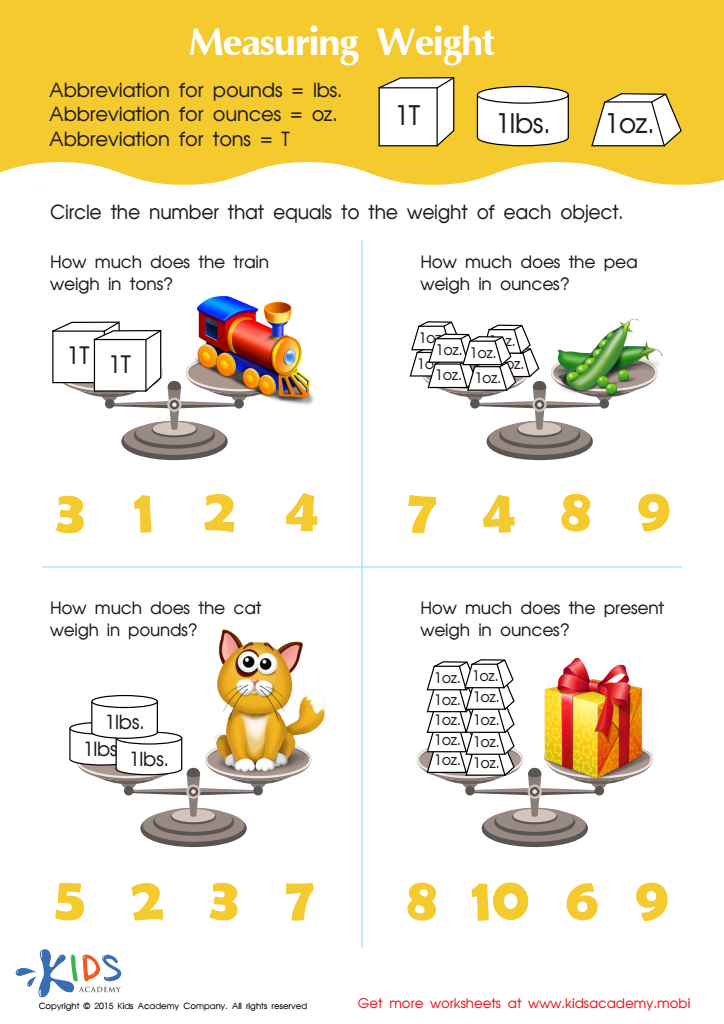
Measuring Weight in Ounces, Pounds and Tons Worksheet
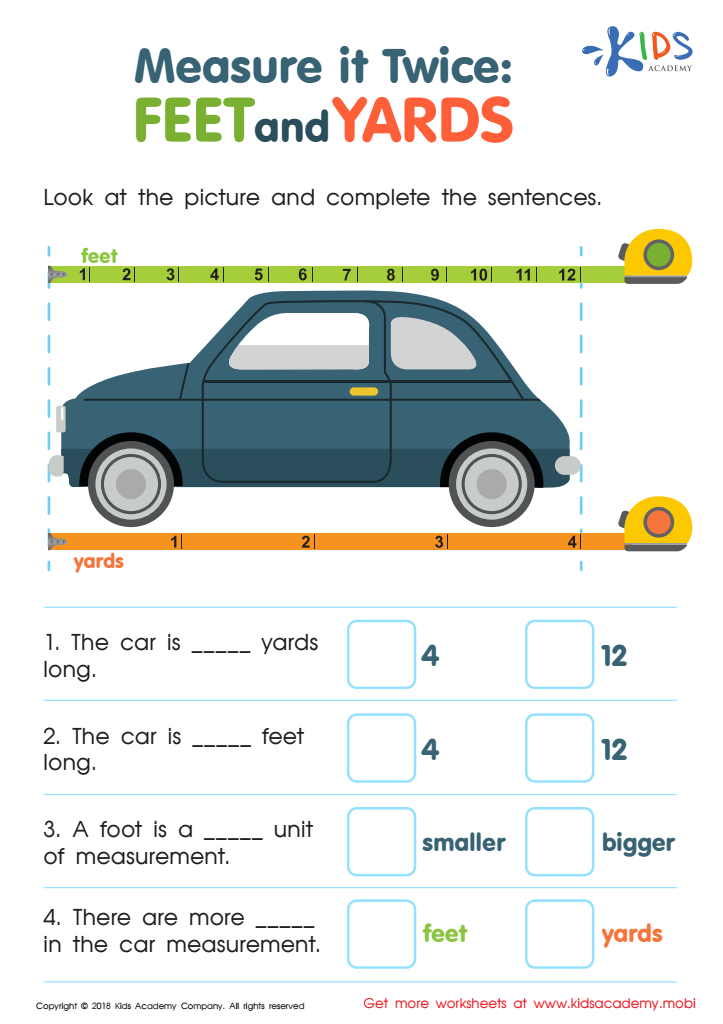
Measure It Twice: Feet and Yards Worksheet








Parents and teachers should care about teaching unit conversion to children aged 5-7 because it lays the foundation for critical thinking and practical problem-solving skills. At this age, children are naturally curious and their brains are exceptionally receptive to new concepts, making it the perfect time to introduce the basics of measurement and unit conversion.
Understanding unit conversion helps children grasp fundamental mathematical principles, moving them beyond rote counting to more complex thinking involving comparisons and measurements. For example, learning that 12 inches equal 1 foot, or that 100 centimeters equal 1 meter, provides a clear, tangible way to understand abstract numerical concepts.
Practical applications of unit conversion are plentiful. When children participate in cooking, they can learn how to convert between tablespoons, teaspoons, and cups, which makes the lesson immediately relevant. This not only builds their math skills but also enhances their confidence in completing everyday tasks.
Additionally, introducing these concepts early encourages a growth mindset; children learn that math is a useful, fun, and integral part of their daily lives, rather than something to be feared. By investing in these early mathematical foundations, parents and teachers are setting their children up for long-term success in both academics and real-world situations.








