
Counting skills Measurement Worksheets for Ages 5-7
7 filtered results
Difficulty Level
Grade
Age
-
From - To
Subject
Activity
Standards
Enhance your child's counting skills with our engaging measurement worksheets designed for ages 5-7. These worksheets provide fun, interactive activities that help kids understand numbers and develop essential math skills. From counting objects to comparing measurements, our resources take a hands-on approach, making learning enjoyable and effective. Each worksheet is tailored to suit various learning styles, ensuring that every child can thrive. Perfect for use at home or in the classroom, these counting skills worksheets support foundational math concepts while fostering a love for learning. Explore our collection and watch your child's confidence in counting grow!
Favorites
With answer key
Interactive
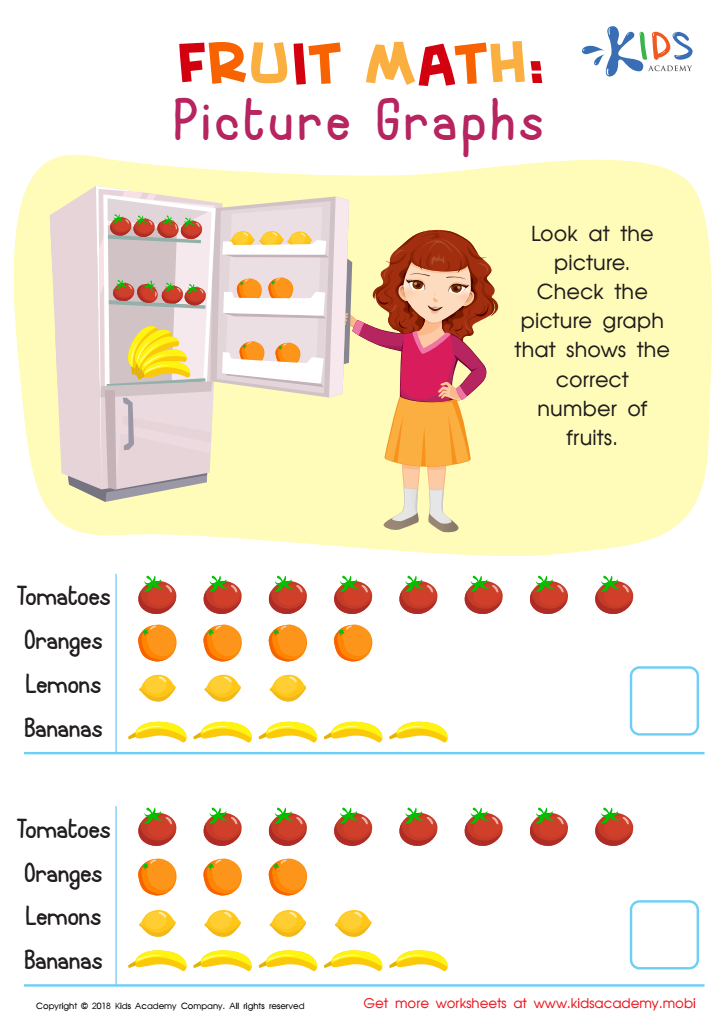
Fruit Math: Picture Graphs Worksheet
Help your child learn to draw graphs by having them look at pictures. Ask them to identify a graph that accurately portrays the data and have them explain why. This will prepare them to easily draw more complex graphs in the future. For example, have them look at the picture with the number of fruits in the colorful worksheet and explain why the graph is accurate.
 Assign to My Students
Fruit Math: Picture Graphs Worksheet
Worksheet
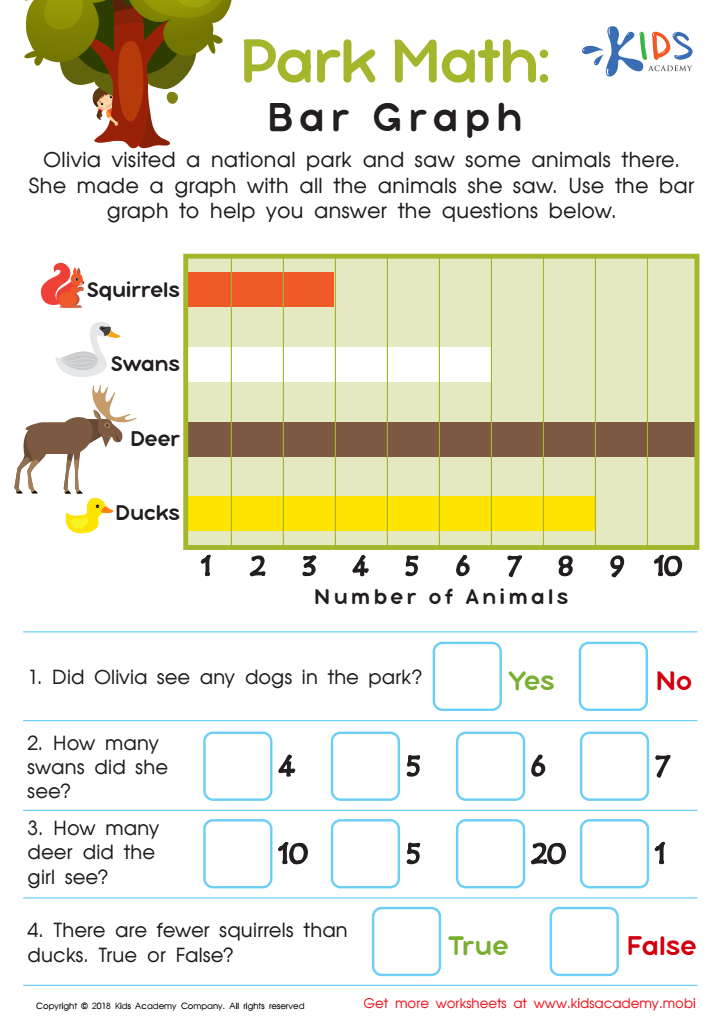
Park Math: Bar Graph Worksheet
Do your children love the park? Ask them to tell you some of their favorite animals. Then, have them look at Olivia's graph. She visited a National Park and recorded all the animals she saw. Use the graph to answer the questions given.
Park Math: Bar Graph Worksheet
Worksheet
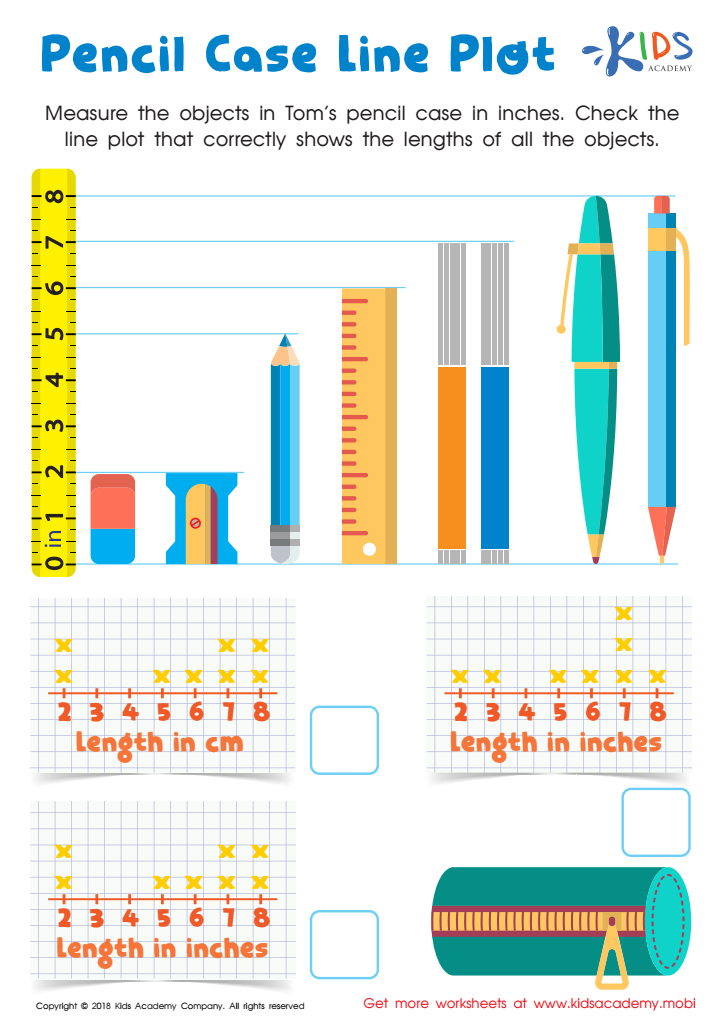
Pencil Case Line Plot Worksheet
Explain to your child that a line plot is a way to organize information. For example, if they need to arrange objects, they should draw a line plot. Now, have them help Tom measure the objects in his pencil case in inches. Then, have them check the line plot that accurately shows the length.
Pencil Case Line Plot Worksheet
Worksheet
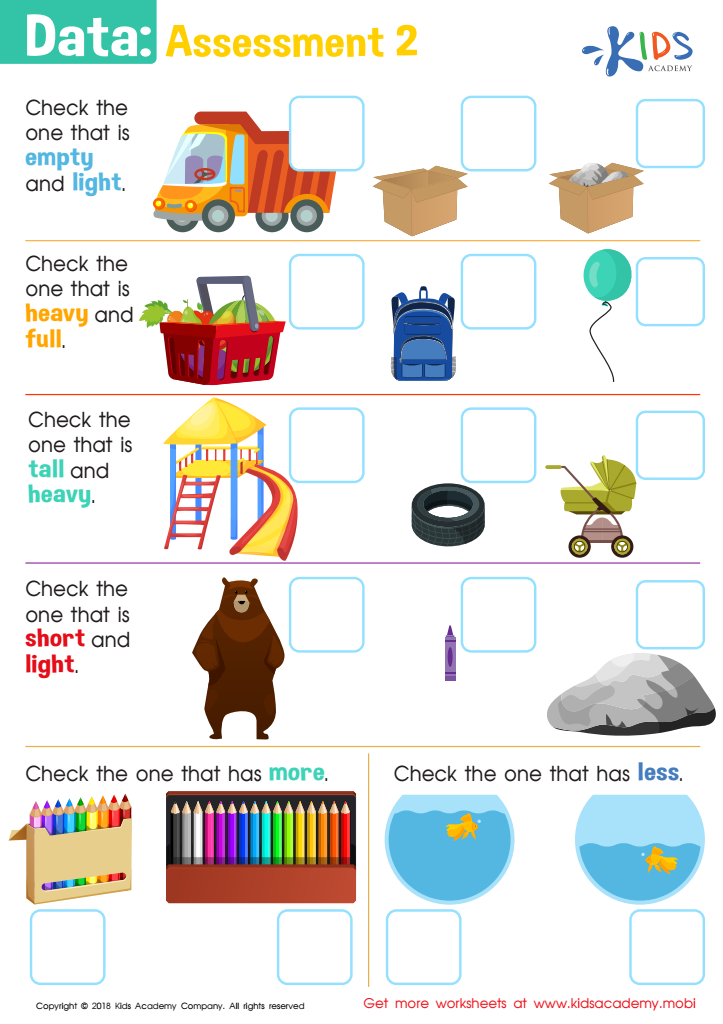
Data: Assessment 2 Worksheet
This PDF helps you assess your students' understanding of concepts like empty/light, full/heavy, tall/short, and more/less. With this worksheet, students use pictures to answer questions and check off the appropriate box. It's a fast, easy way to determine what concepts they have learned and which need more work.
Data: Assessment 2 Worksheet
Worksheet
How Many Brothers and Sisters? Worksheet
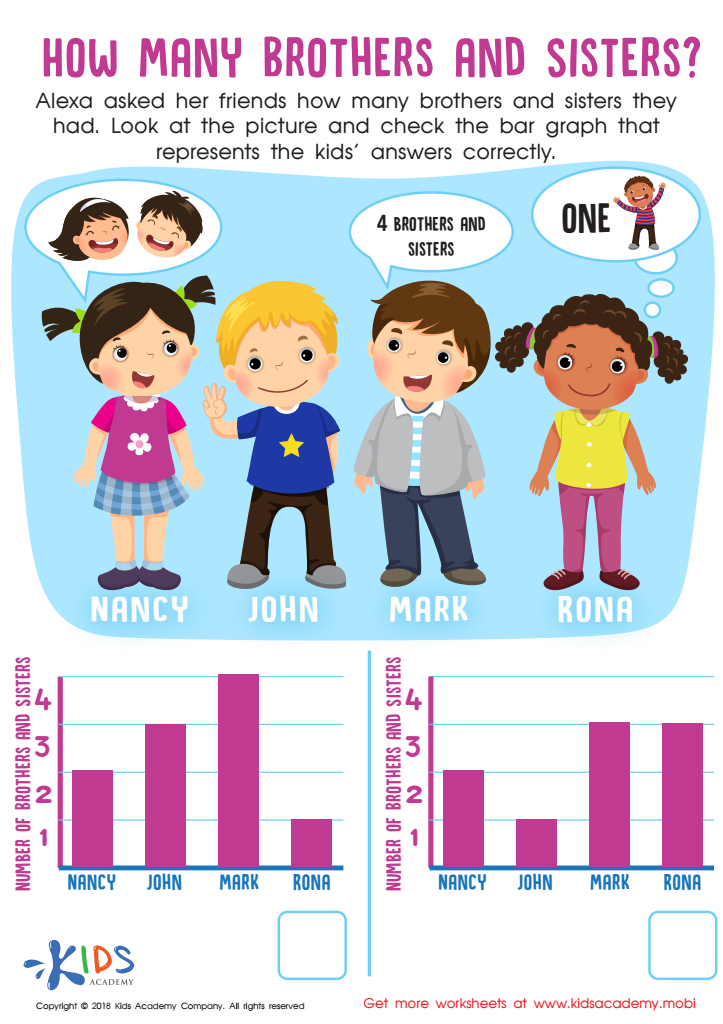
With this worksheet, Alexa has asked her friends how many siblings they have. Have your child look at the picture and use it to answer the bar graph correctly. Can they tell you how many siblings their friends have? See if they can get it right!
How Many Brothers and Sisters? Worksheet
Worksheet
Aircraft Line Plot Worksheet
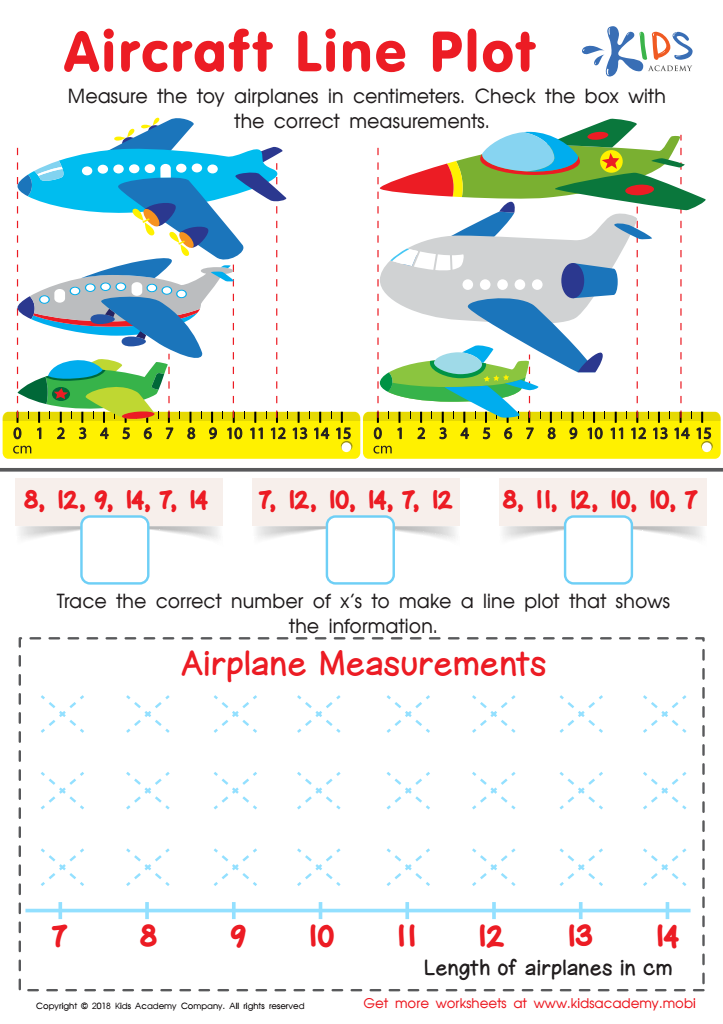
If your kids are aviation enthusiasts, they'll love this worksheet! Look at the picture with them, then ask them to measure the toy planes in cm. Check the box with the right measurements and then trace the x's to make a line plot with the data.
Aircraft Line Plot Worksheet
Worksheet
Line Plot Worksheet
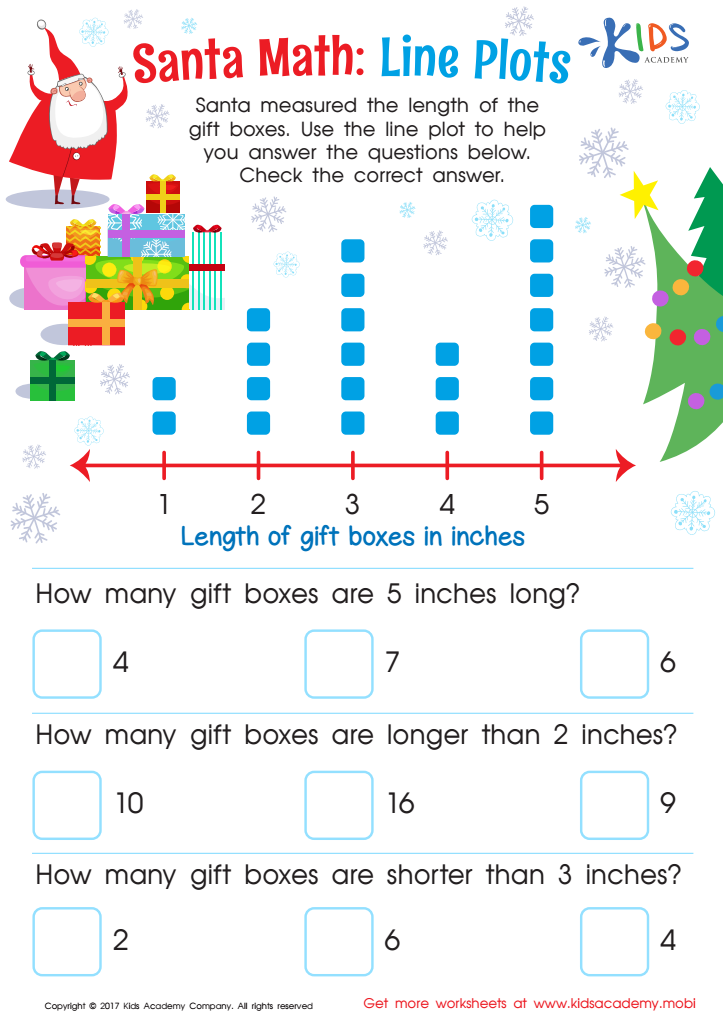
Help your child measure presents with Santa using this 2nd grade line plot worksheet! It's a fun way to boost math skills and analyze data. Plus, it's sure to delight your child!
Line Plot Worksheet
Worksheet
Join Kids Academy for Free
Who is primarily going to use this learning content?








Counting skills and measurement are foundational components of early mathematics education for children ages 5-7. Developing these skills is crucial for several reasons. Firstly, counting is one of the building blocks of math; it enables children to understand quantities, establish a number sense, and form the basis for addition and subtraction. Mastery of counting fosters confidence as students progress into more complex mathematical concepts, enhancing their overall academic performance.
Measurement, on the other hand, introduces children to size, length, weight, and volume, enabling them to engage with the world around them. Understanding measurement helps children develop critical thinking and problem-solving skills, as it requires them to make comparisons, analyze data, and apply math in real-life contexts. Engaging in measurement activities promotes hands-on learning, making math more tangible and enjoyable.
Additionally, both counting and measurement nurture important life skills, such as organization and comparison, essential for personal development and decision-making. When parents and teachers prioritize these skills, they lay the groundwork for enriched learning experiences, fostering a love for math in younglings. Ultimately, investing time in counting and measurement during early childhood leads to a solid mathematical foundation, supporting future academic success and lifelong skills.








