
Number Recognition Measurement Worksheets for Ages 5-7
5 filtered results
Difficulty Level
Grade
Age
-
From - To
Subject
Activity
Standards
Enhance your child's number recognition skills with our engaging measurement worksheets designed for ages 5-7! These interactive printable worksheets provide a fun and educational way for young learners to recognize, identify, and understand numbers. Through activities that combine numbers with measurement concepts, children will practice counting, comparing quantities, and recognizing numerical patterns. Our worksheets are tailored to support different learning styles, ensuring a comprehensive approach to early math education. Perfect for home or classroom use, these resources foster confidence and proficiency in essential math skills. Download today and watch your child's number recognition abilities flourish!
Favorites
With answer key
Interactive
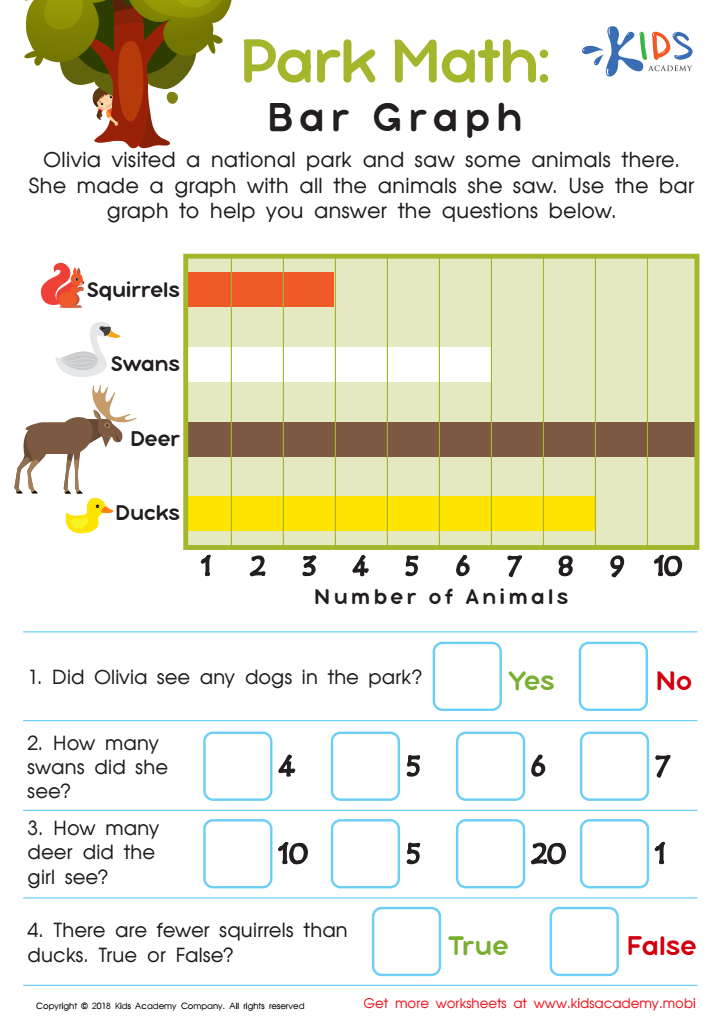
Park Math: Bar Graph Worksheet
Do your children love the park? Ask them to tell you some of their favorite animals. Then, have them look at Olivia's graph. She visited a National Park and recorded all the animals she saw. Use the graph to answer the questions given.
 Assign to My Students
Park Math: Bar Graph Worksheet
Worksheet
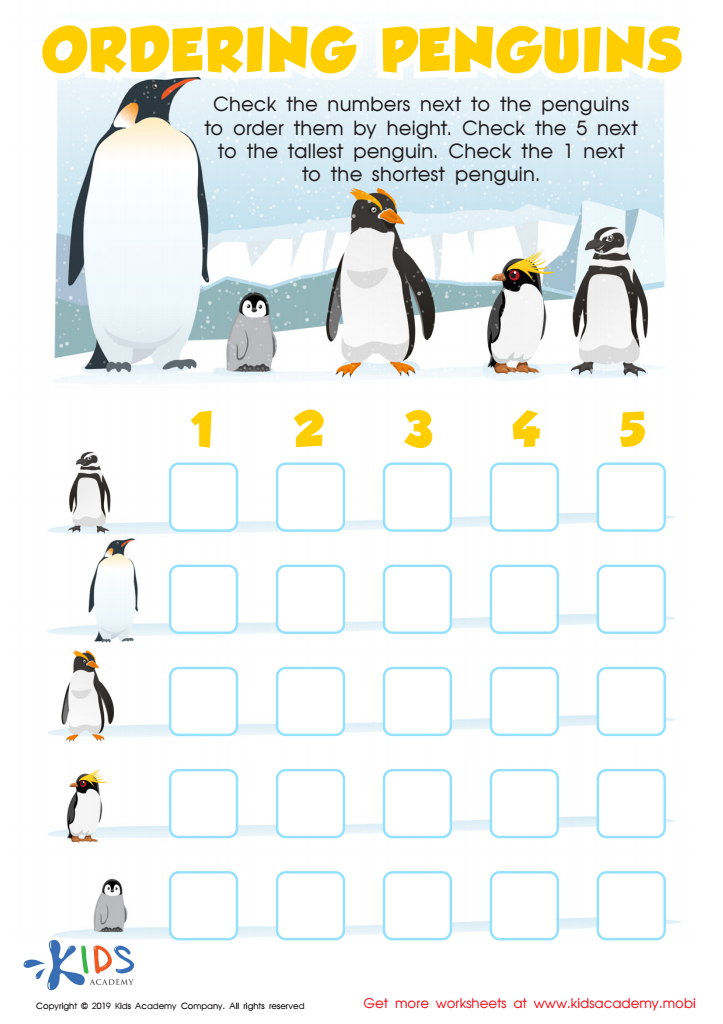
Ordering Penguins Worksheet
Check photos of penguins with your kids, then help them order by height. Tallest gets a 5, shortest gets a 1. Learn cool facts while having fun!
Ordering Penguins Worksheet
Worksheet
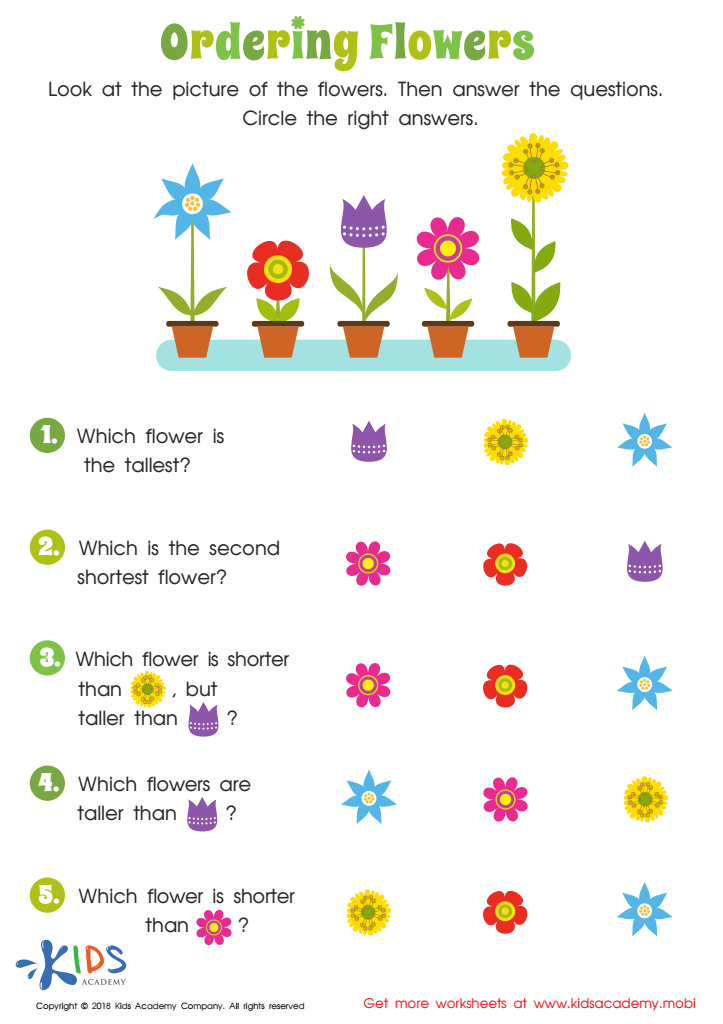
Ordering Flowers Worksheet
Preschoolers can start learning measurement with visuals! This worksheet uses colorful flowers of different heights. Ask your learner to observe the flowers, then help them compare/answer which is taller/shorter. It's an easy way for them to begin learning about measurement.
Ordering Flowers Worksheet
Worksheet
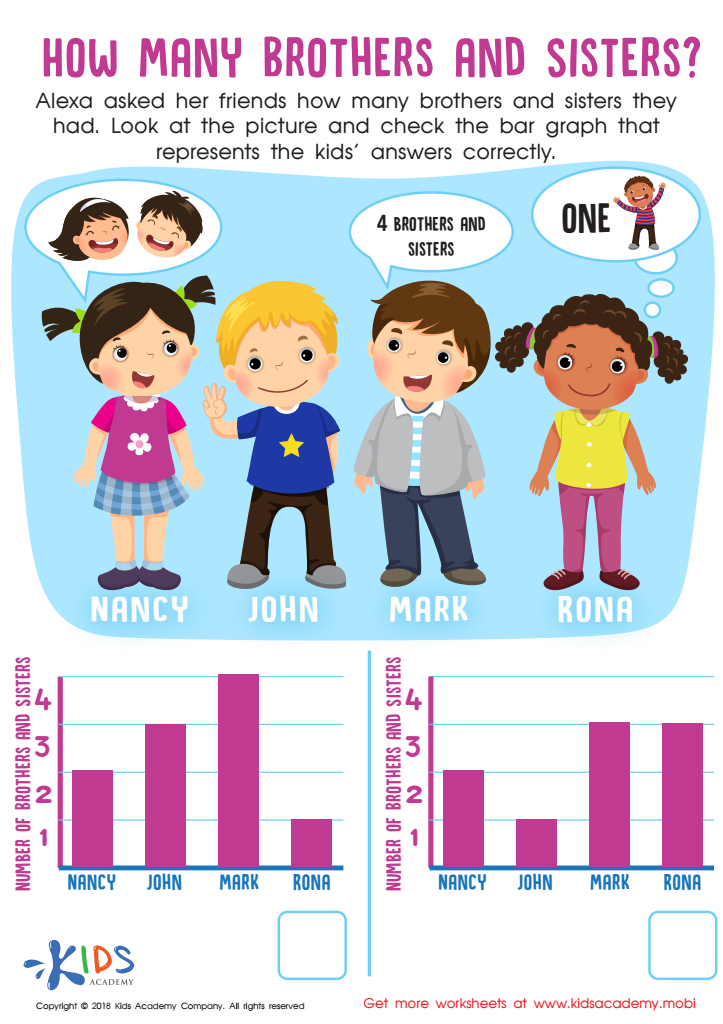
How Many Brothers and Sisters? Worksheet
With this worksheet, Alexa has asked her friends how many siblings they have. Have your child look at the picture and use it to answer the bar graph correctly. Can they tell you how many siblings their friends have? See if they can get it right!
How Many Brothers and Sisters? Worksheet
Worksheet
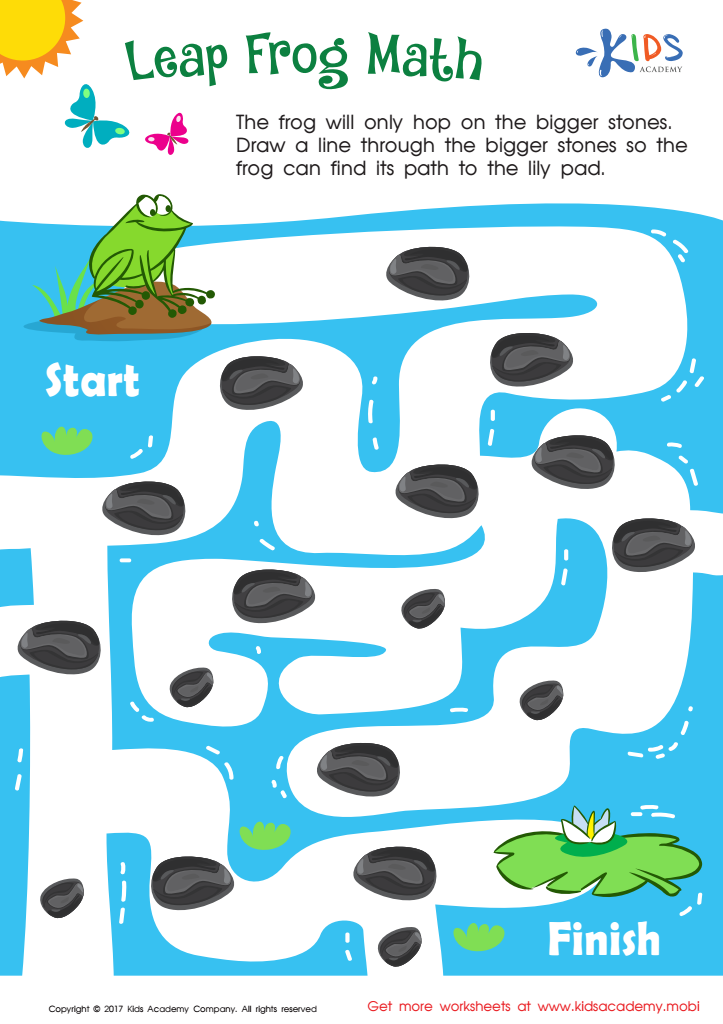
Math Puzzle Worksheet
Kids will use their math skills to help the frog get through the maze by selecting the larger stones. Perfect for kindergarteners, it develops the ability to identify size differences.
Math Puzzle Worksheet
Worksheet
Join Kids Academy for Free
Who is primarily going to use this learning content?








Number recognition is a foundational skill for early learners, and it plays a crucial role in their overall mathematics development. For children aged 5 to 7, the ability to recognize and identify numbers helps them understand quantitative concepts, which is essential for everyday problem-solving and critical thinking. This age group is critical because it sets the stage for future school success.
Parents and teachers should be particularly invested in fostering number recognition because it impacts a child's confidence and interest in math. Engaging with numbers in meaningful ways can stimulate curiosity and motivation, making math a more enjoyable subject. Additionally, number recognition skills facilitate basic operations such as addition and subtraction, which are imperative for more complex mathematical concepts introduced in later years.
Moreover, mastering number recognition enhances children's ability to make sense of their environment, allowing them to count objects, understand prices, and engage in comparisons that contribute to their decision-making skills. Early intervention in number recognition can prevent difficulties in later education, reducing math anxiety and enhancing academic performance. Thus, nurturing this skill establishes a solid groundwork not only for math but also for the broader spectrum of learning experiences. Active involvement of parents and teachers creates an enriching learning environment where children can thrive.








