Number Sequencing Skip Counting Worksheets for Ages 5-7
3 filtered results
-
From - To
Unlock your child's mathematical potential with our engaging Number Sequencing Skip Counting Worksheets, designed specifically for children aged 5-7. These worksheets promote vital skills in counting by 2s, 5s, and 10s, enhancing their understanding of patterns and number relationships. Each activity is visually appealing and age-appropriate, ensuring that learning remains fun and interactive. As kids practice skip counting, they'll boost their confidence in arithmetic and develop a strong foundation for future math success. Explore our collection of printable worksheets today and watch your child flourish as they embark on their exciting journey of number sequencing!
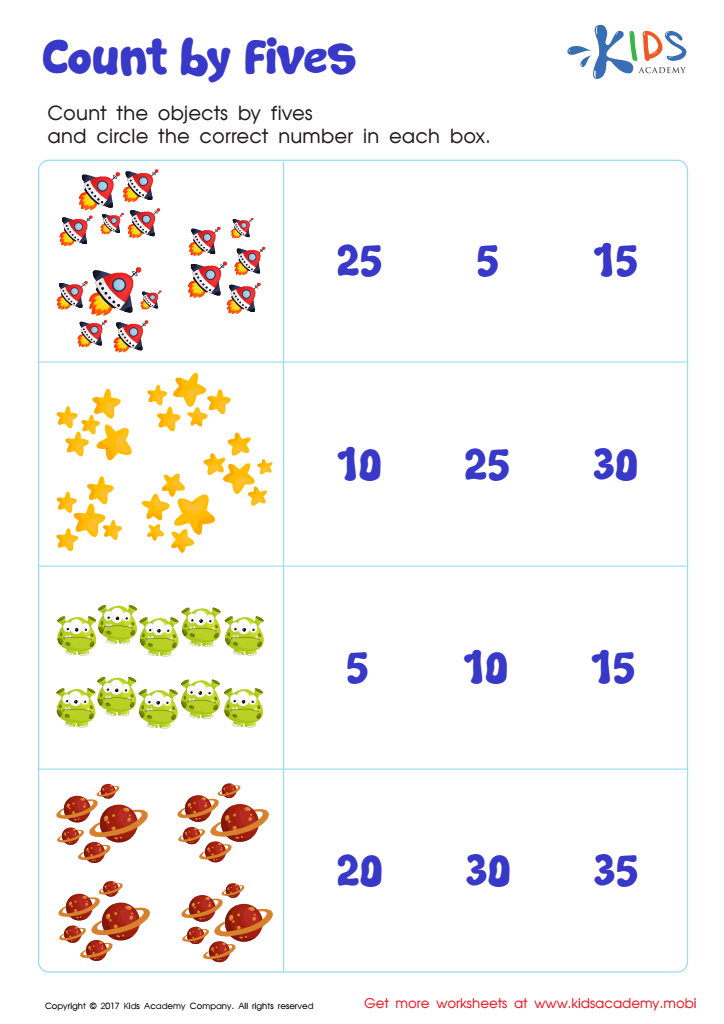
Skip Counting by 5s: Space Math Printable
 Assign to My Students
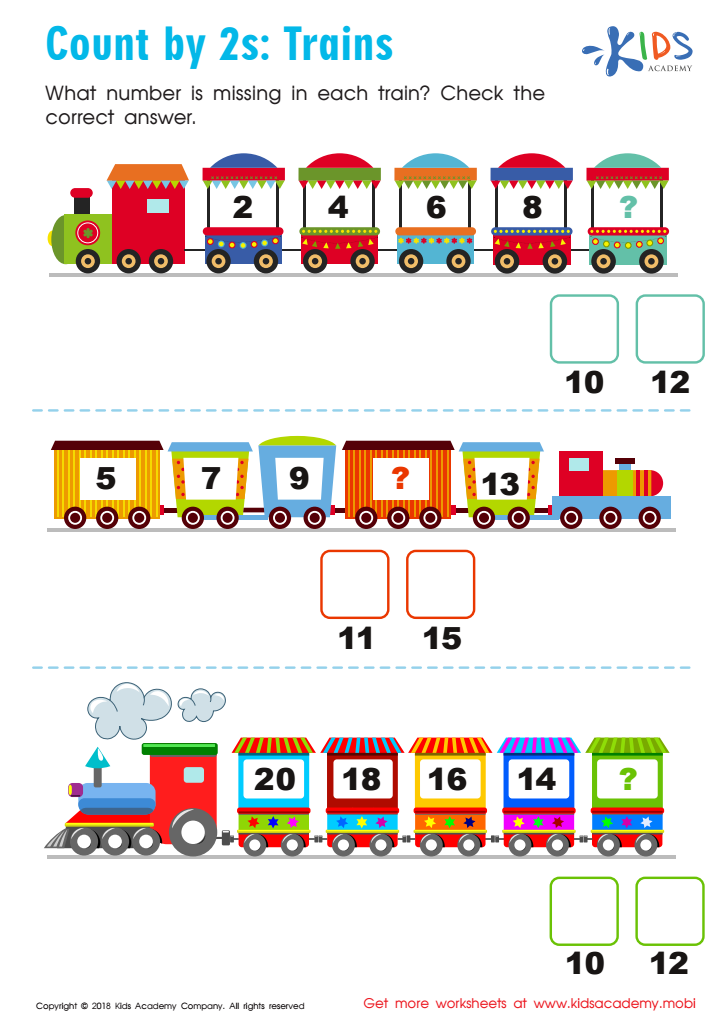
Count by 2's: Trains Worksheet
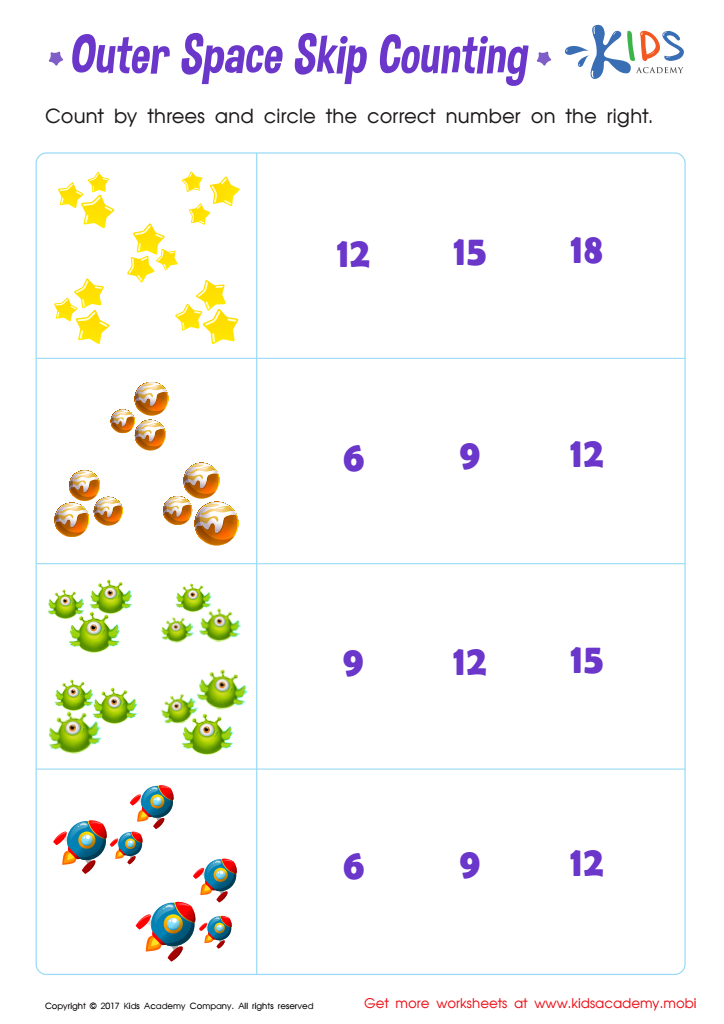
Skip Counting by 3s: Outer Space Skip Counting Printable








Number sequencing and skip counting are foundational skills in early mathematics development that significantly enhance children's numerical comprehension. For parents and teachers, understanding these concepts is essential for several reasons.
Firstly, skip counting—counting by twos, fives, and tens—helps build a solid foundation for more complex arithmetic operations. By mastering these skills, children improve their ability to recognize patterns in numbers, which is crucial for understanding multiplication and division later on.
Secondly, engaging in number sequencing activities fosters cognitive development. It nurtures critical thinking and problem-solving skills as children learn to organize numbers and understand relationships between them. This early exposure equips them with the tools to tackle mathematical challenges in later grades more confidently.
Moreover, children from ages 5-7 are in a vital stage of brain development where they are most receptive to learning through play and interaction. By incorporating number sequencing and skip counting into daily routines, both parents and teachers can create fun, engaging experiences that promote a love for math.
In sum, investing time in these essential skills lays the groundwork for future academic success, enhances cognitive abilities, and cultivates a positive attitude towards mathematics.








