Visual discrimination Sorting Worksheets for Ages 5-7
3 filtered results
-
From - To
Introduce your child to the exciting world of visual discrimination with our engaging Sorting Worksheets tailored for ages 5-7. Designed to enhance critical cognitive skills, these worksheets help children distinguish between different shapes, colors, and sizes, laying a strong foundation for early math proficiency. As kids sort various objects, they'll not only sharpen their visual recognition abilities but also develop problem-solving and organizational skills. Perfect for home or classroom use, our visually stimulating activities keep young learners entertained while they learn. Unlock their potential and encourage exploration with our fun, educational resources today!
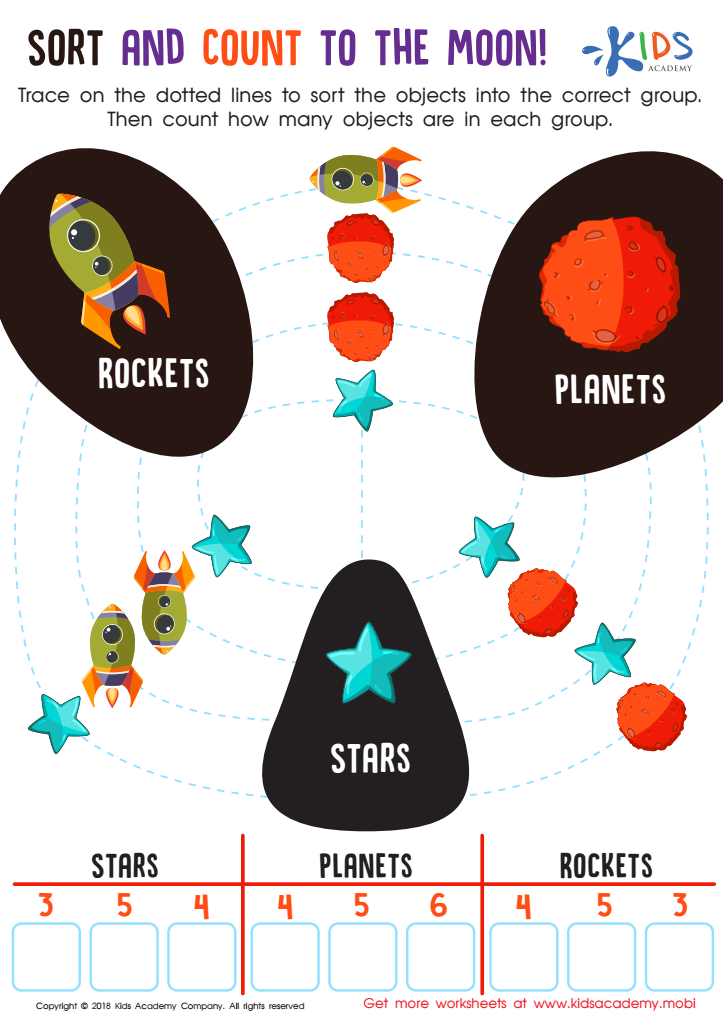
Sort and Count to the Moon Worksheet
 Assign to My Students
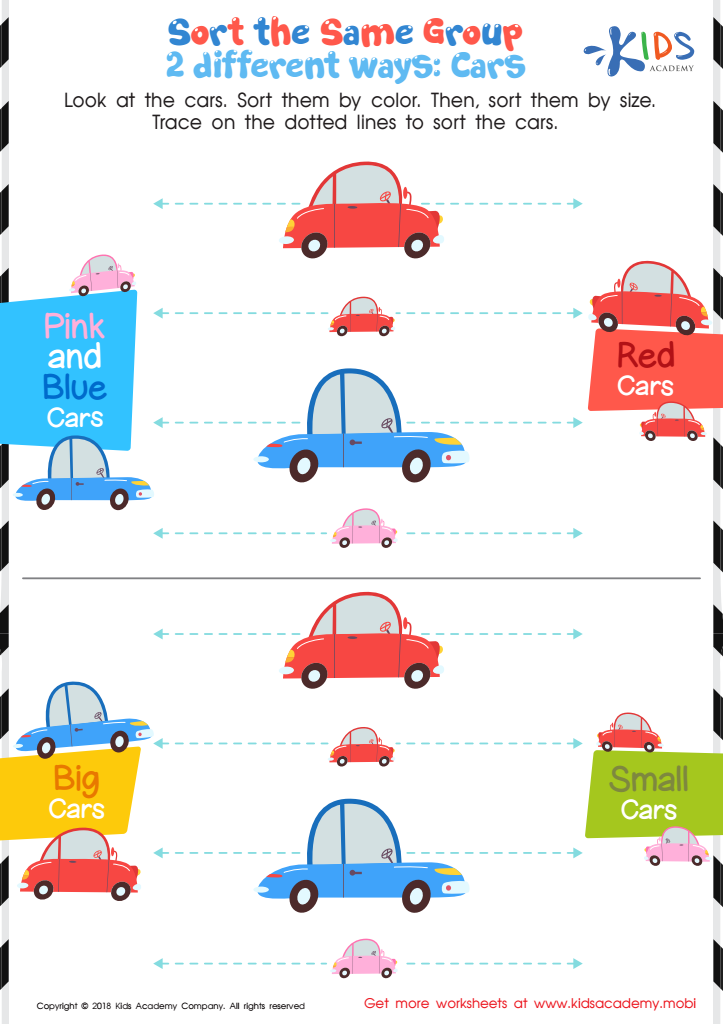
Sort the Same Group 2 Different Ways: Cars Worksheet
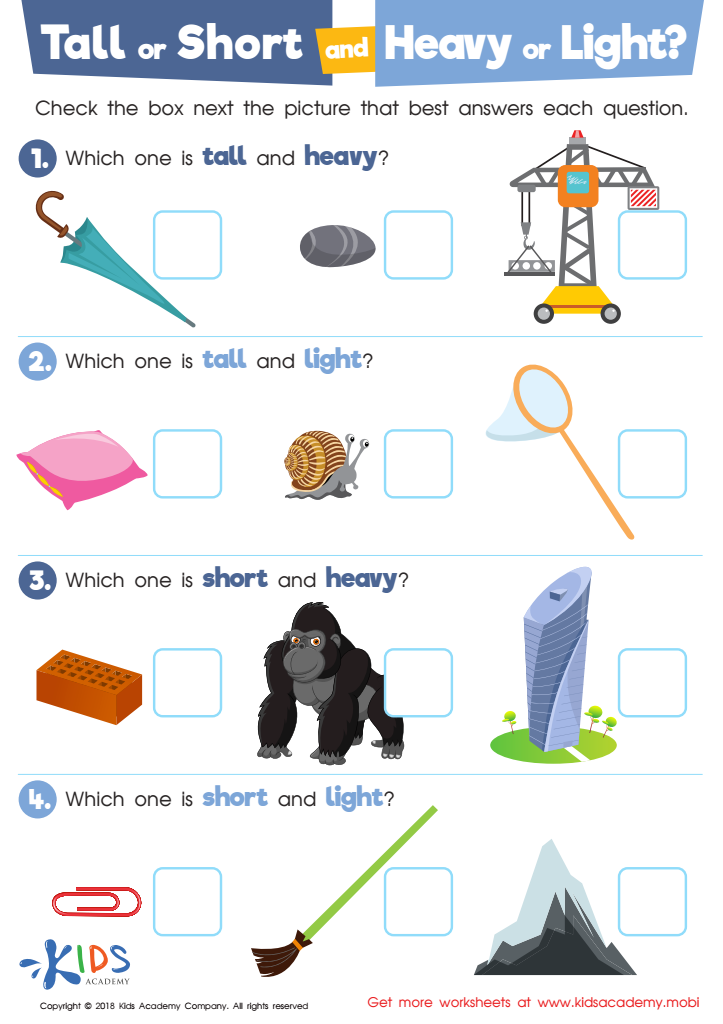
Tall or Short and Heavy or Light? Worksheet







Visual discrimination sorting is a fundamental skill for children aged 5-7 that plays a crucial role in their overall development. This skill involves the ability to recognize differences and similarities among objects, which is essential for critical cognitive processes such as reading, math, and problem-solving. Parents and teachers should care about visual discrimination sorting because it significantly impacts a child's learning efficiency and academic success.
Engaging in sorting activities helps children sharpen their attention to detail, enhancing their ability to observe and categorize information. This translates not only into improved literacy skills, where they learn to differentiate letters and sounds, but also into mathematical reasoning, as sorting lays the groundwork for understanding numerical concepts, patterns, and classifications.
Additionally, visual discrimination can aid in boosting a child's confidence and independence. Mastering sorting tasks allows children to take pride in their abilities and encourages them to tackle more complex challenges with a positive mindset. Further, sorting activities can be a fun and interactive way for parents and teachers to bond with children, creating meaningful learning experiences.
Ultimately, fostering visual discrimination serves as a stepping stone for lifelong learning, making it a vital focus for caregivers in these formative years.








