Cognitive Development Subtraction Worksheets for Ages 5-7
5 filtered results
-
From - To
Enhance your child's cognitive development with our engaging subtraction worksheets designed for ages 5-7! These thoughtfully crafted exercises focus on building essential subtraction skills while promoting critical thinking and problem-solving abilities. Through colorful visuals and interactive formats, kids will enjoy learning as they solve each problem. Our worksheets aim to foster a solid foundational understanding of subtraction concepts, helping young learners develop confidence and fluency in math. Ideal for both classroom and home use, these resources make learning subtraction fun and effective. Inspire your child's mathematical journey today with our purposeful and skill-building subtraction activities!
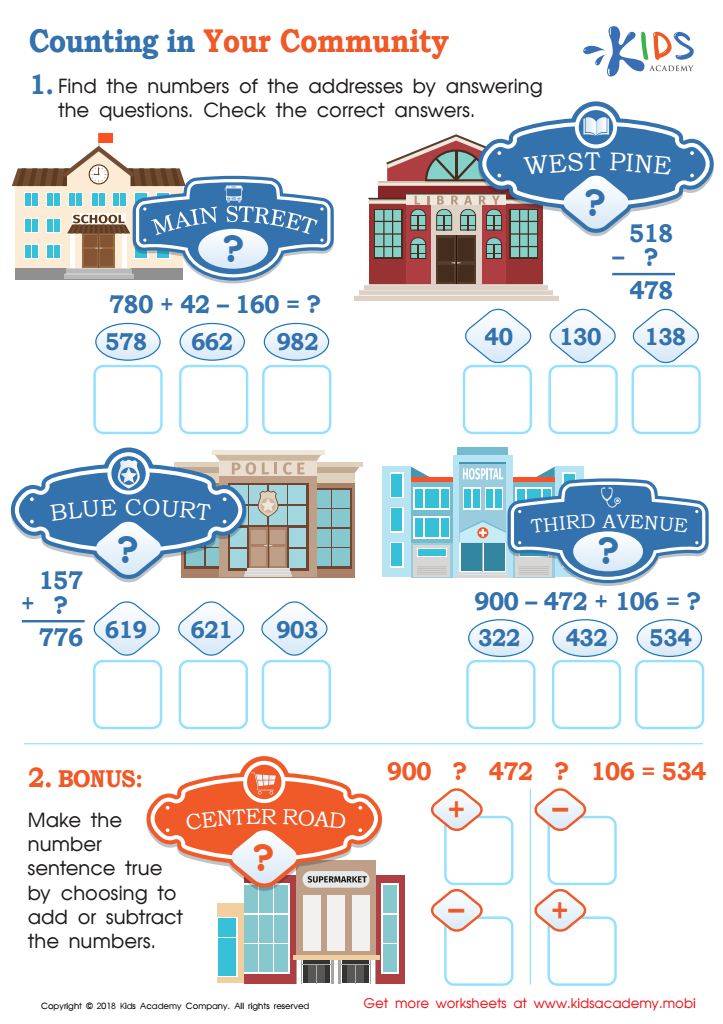
Counting in Your Community Worksheet
 Assign to My Students
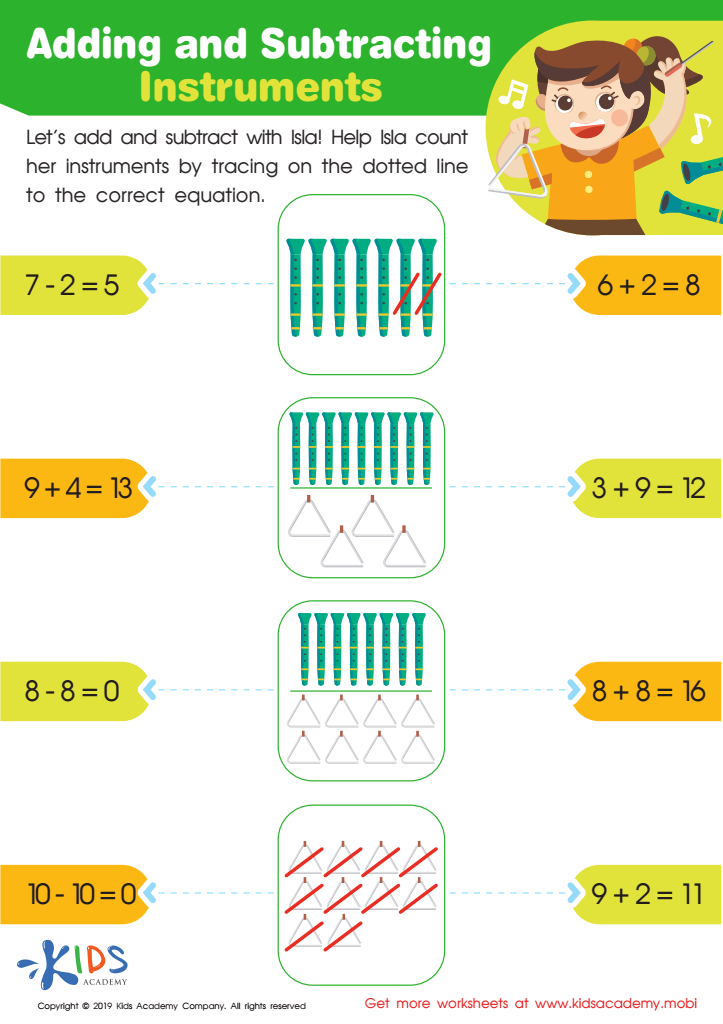
Adding and Subtracting: Instruments Worksheet
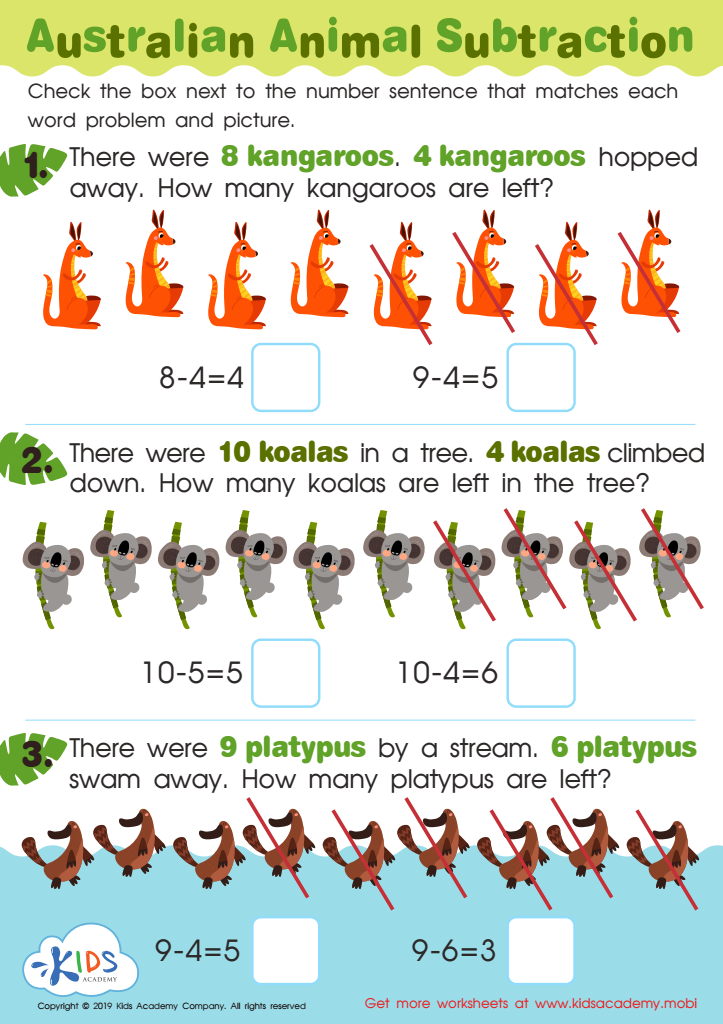
Australian Animal Subtraction Worksheet
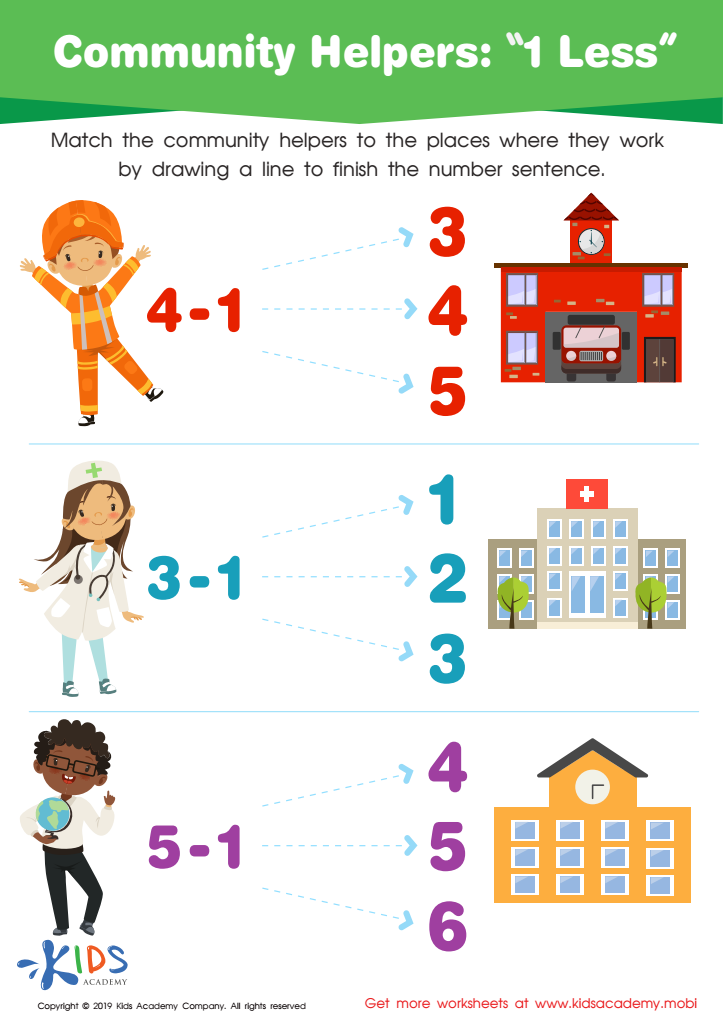
Community Helpers: 1 less Worksheet
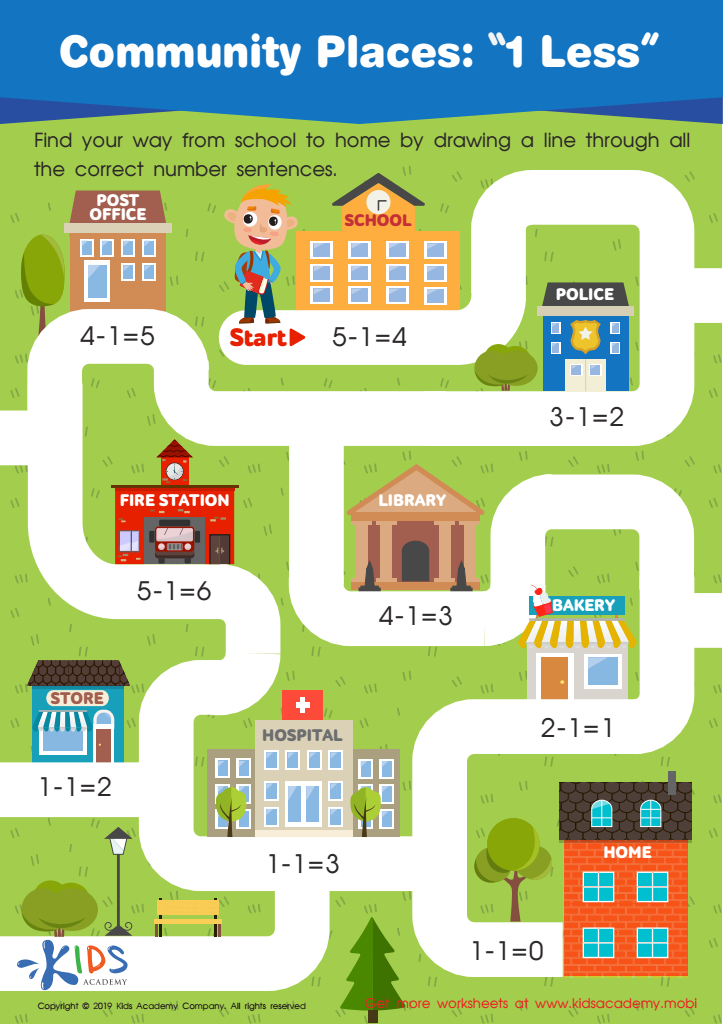
Community Places: 1 Less Worksheet








Cognitive development in children is crucial as it lays the foundation for their future learning, problem-solving skills, and overall cognitive abilities. For children ages 5 to 7, understanding subtraction is particularly vital as it enhances their mathematical reasoning and critical thinking. This is a formative period where students transition from concrete thinking to more abstract concepts, and mastering subtraction enables them to develop not just arithmetic skills, but also fosters resilience in facing challenges.
Parents and teachers play an essential role in this development. A solid grasp of subtraction aids children in making sense of everyday situations—such as sharing, comparing quantities, and budgeting. Additionally, engaging with subtraction can enhance their self-esteem and confidence in mathematics, ultimately influencing their attitude towards the subject and their academic success.
Furthermore, incorporating fun and interactive learning methods, like games or hands-on activities, can make subtraction enjoyable, easing anxiety and promoting a love for learning. By supporting cognitive development in subtraction, parents and teachers empower children to develop the necessary skills for their future academic journey, encouraging a lifelong appreciation of mathematics and problem-solving. Thus, focusing on subtraction during this critical developmental stage is crucial for holistic educational growth.








