Reading analog clocks Time Worksheets for Ages 5-7
3 filtered results
-
From - To
Discover our engaging "Reading Analog Clocks Time Worksheets" designed for children aged 5-7! These interactive worksheets help young learners master the art of telling time on analog clocks while developing essential math skills. With brightly illustrated clocks and fun exercises, children will enjoy practicing hours and minutes, enhancing their numerical understanding in an enjoyable way. Tailored to fit the developmental needs of early learners, our materials are ideal for use at home or in the classroom. Let your child gain confidence in reading time and exploring the concept of time management with our educational resources today!
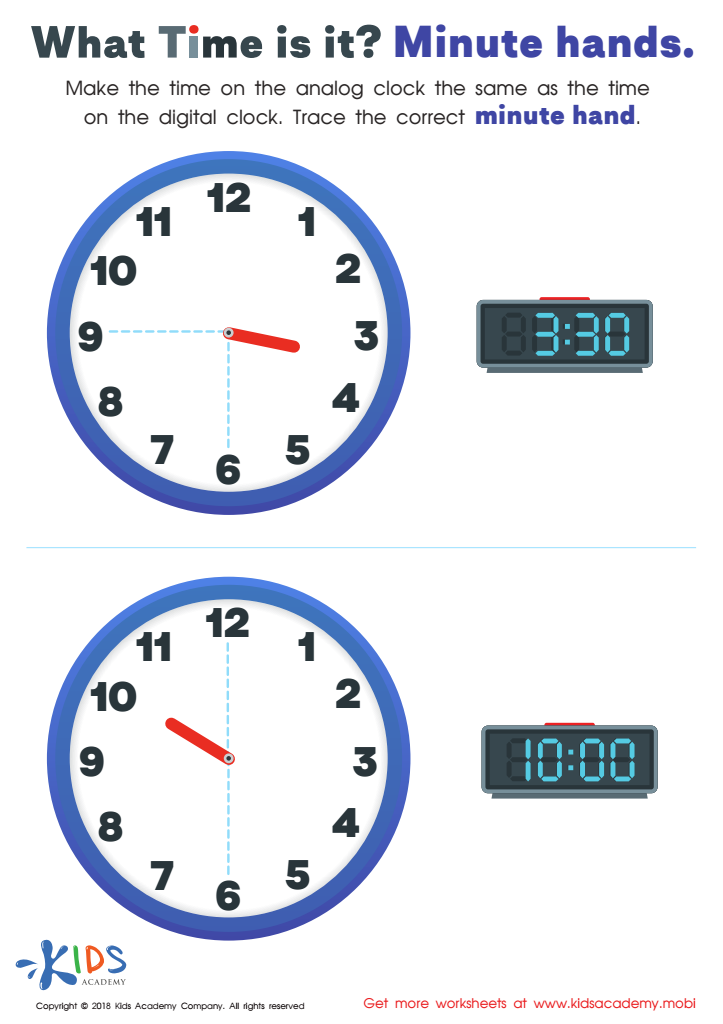
What Time Is it? Minute Hands Worksheet
 Assign to My Students
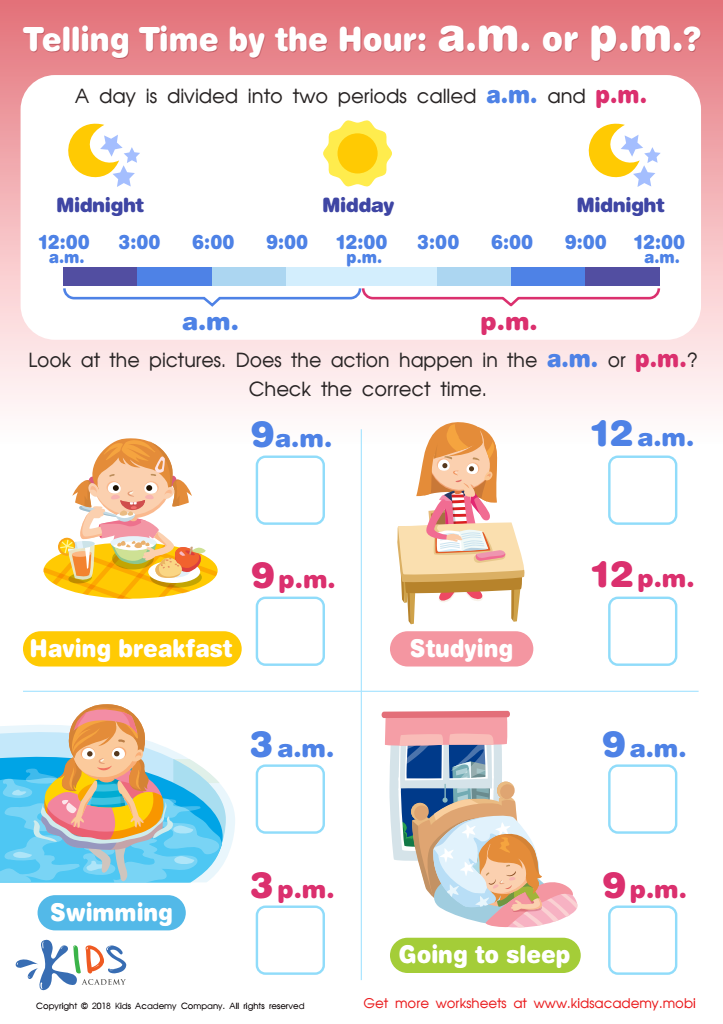
Tilling Time by the Hour: a.m. or p.m.? Worksheet
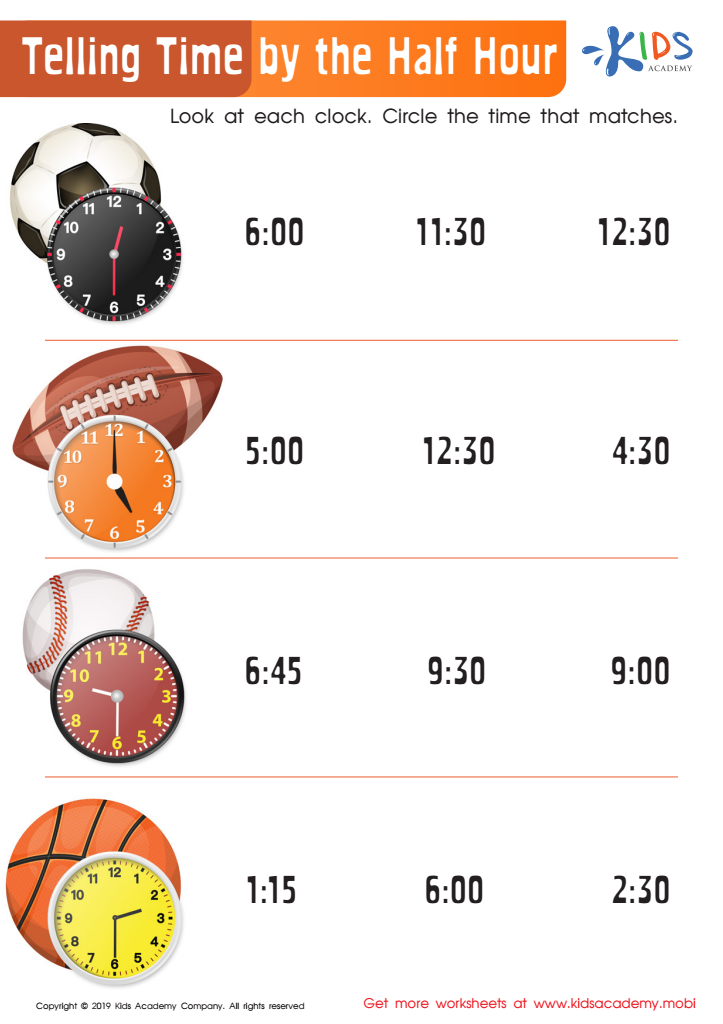
Telling Time by the Half Hour Worksheet







Understanding how to read analog clocks is crucial for children aged 5-7 as it lays the foundation for crucial life skills. This skill not only promotes time management and personal responsibility but also enhances cognitive development. Learning to read analog clocks engages children's critical thinking and problem-solving abilities. They develop a deeper understanding of time concepts, such as hours and minutes, which reinforces their math skills and improves their ability to conceptualize and compute.
Furthermore, teaching children to read analog clocks promotes mindfulness and awareness of their surroundings. In an increasingly digital world, where digital clocks dominate, showing children how to interpret traditional timepieces nurtures a connection to conventions and practices from the past, enriching their cultural understanding.
Additionally, this skill encourages independence. Children can manage their time, from waking up for school to planning playdates. Parents and teachers become key facilitators in this learning process by incorporating the use of analog clocks in daily activities, storytime, or even games. Ultimately, caring about teaching children to read analog clocks empowers them to navigate their daily lives more effectively, building confidence along the way as they develop an essential life skill.








