Hand-eye Coordination Word Problems Worksheets for Ages 5-7
3 filtered results
-
From - To
Enhance your child’s hand-eye coordination while developing essential math skills with our engaging Word Problems Worksheets designed for ages 5-7! These interactive worksheets feature fun scenarios that combine problem-solving with physical activities, encouraging kids to think critically and apply their knowledge in real-life situations. Tailored to young learners, the problems promote the integration of movement and cognitive tasks, making learning both enjoyable and effective. Ideal for classroom or home use, our resources foster concentration, agility, and math fluency in young minds. Download today to spark your child’s curiosity and build confidence in their abilities through playful learning!
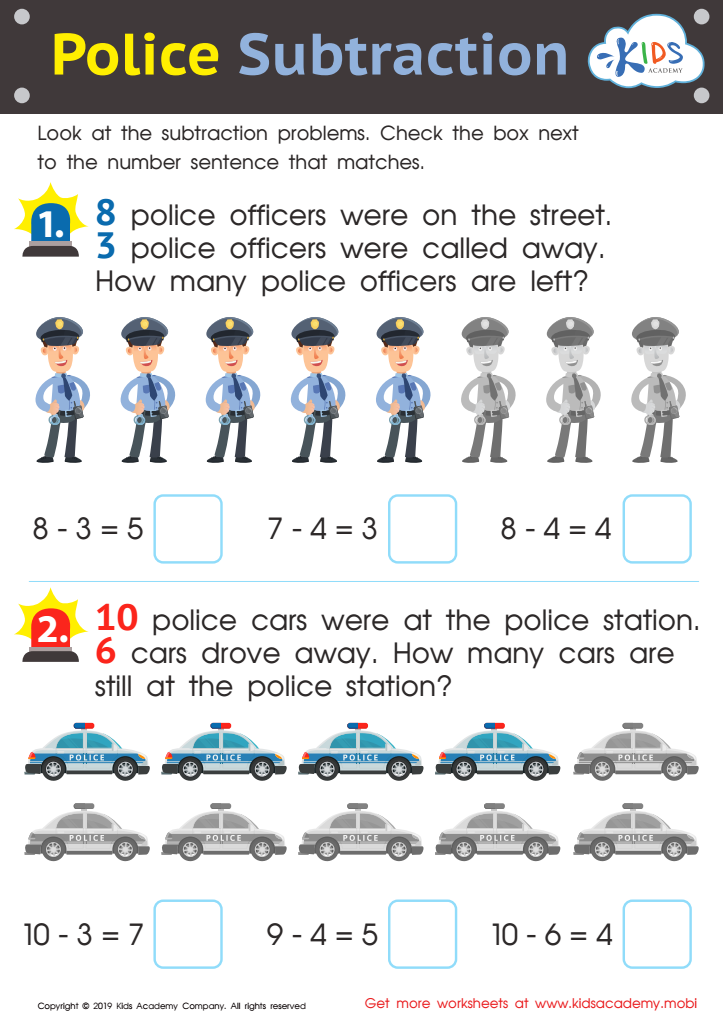
Police Subtraction Worksheet
 Assign to My Students
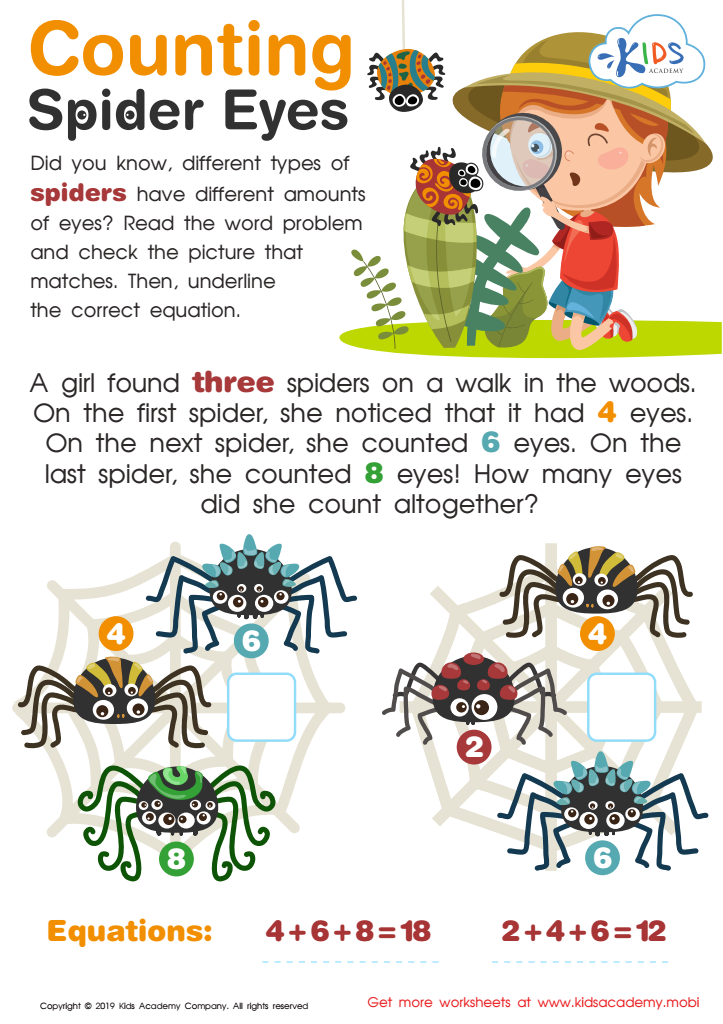
Counting Spider Eyes Worksheet
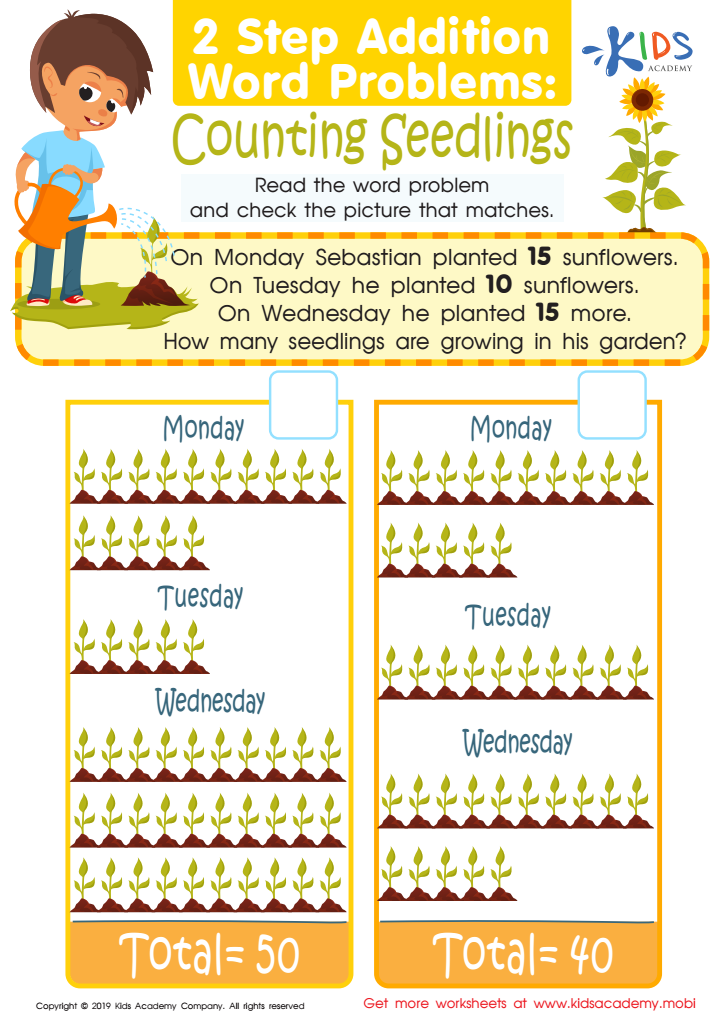
Counting Seedlings Worksheet








Hand-eye coordination is a crucial developmental milestone for children aged 5-7, significantly impacting their ability to interact with the world around them. Parents and teachers should care about hand-eye coordination word problems because they directly connect cognitive skills with physical development. These activities not only enhance visual processing and spatial awareness but also build problem-solving and critical thinking skills.
For young learners, hand-eye coordination word problems often involve engaging scenarios that require them to think critically while using their motor skills to solve. This bridges the gap between academia and real-life applications, preparing them for everyday tasks and academic success.
Helping children develop strong hand-eye coordination through these problems can lead to improved performance in sports, art, and desk activities, thereby boosting their self-esteem and social involvement. Furthermore, consistent practice in tackling these problems fosters patience and resilience, as children learn that perseverance can lead to mastery.
Lastly, early experiences with hand-eye coordination set the foundation for future learning, especially in subjects like math and science, where precision is paramount. Overall, caring about this aspect of development is investing in a child’s holistic growth and future learning potential.








