Fraction comparison Reading Worksheets for Ages 5-7
12 filtered results
-
From - To
Enhance your child's understanding of fractions with our engaging Fraction Comparison Reading Worksheets, designed specifically for ages 5-7. These printable worksheets help young learners grasp the essential concepts of comparing fractions through colorful illustrations and fun activities. Each worksheet encourages critical thinking and provides exercises that challenge kids to analyze and compare different fractions, fostering both math and reading skills simultaneously. Perfect for home or classroom use, our resources make learning enjoyable and effective. Discover how these worksheets can support your child’s mathematical foundation and boost their confidence in tackling fractions. Get started today and watch their skills grow!
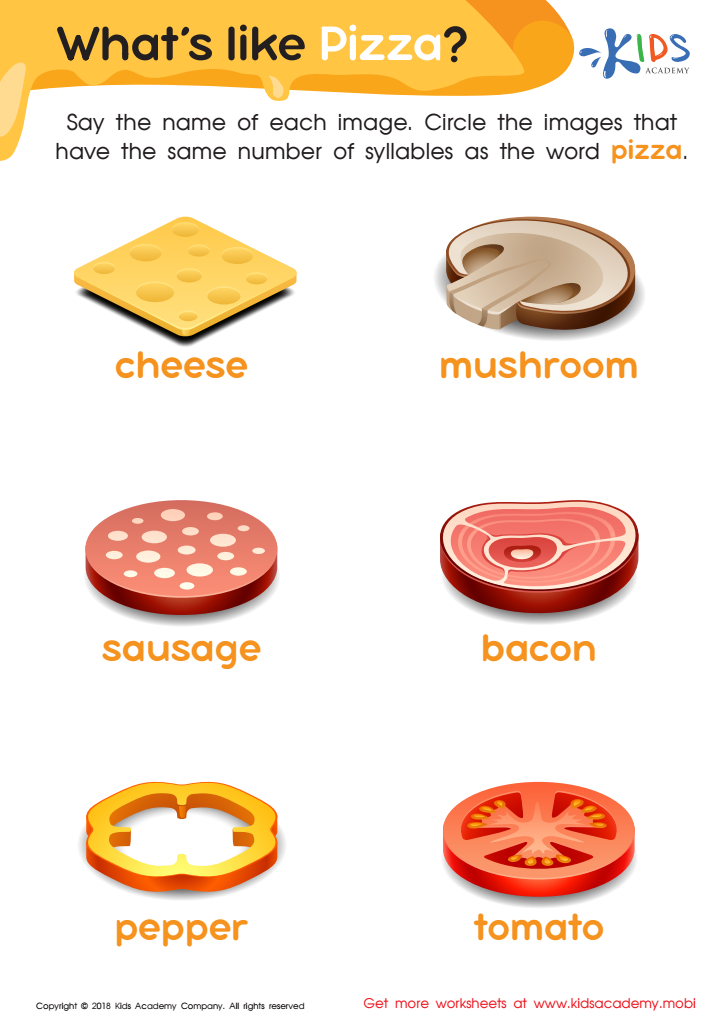
What's Like Pizza? Worksheet
 Assign to My Students
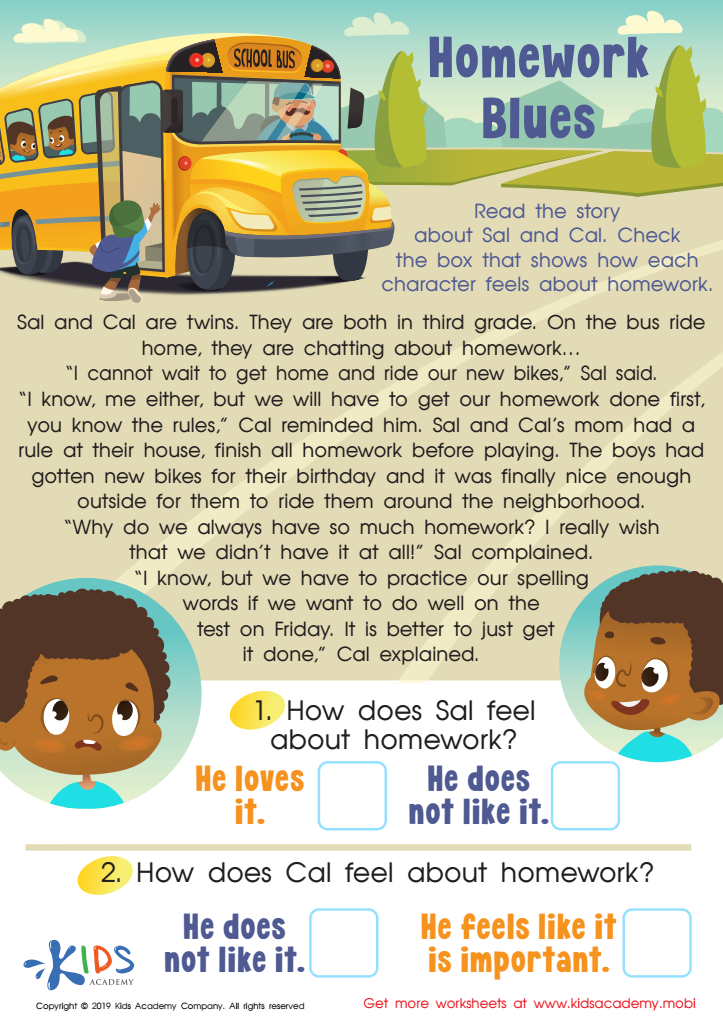
Homework Blues Worksheet
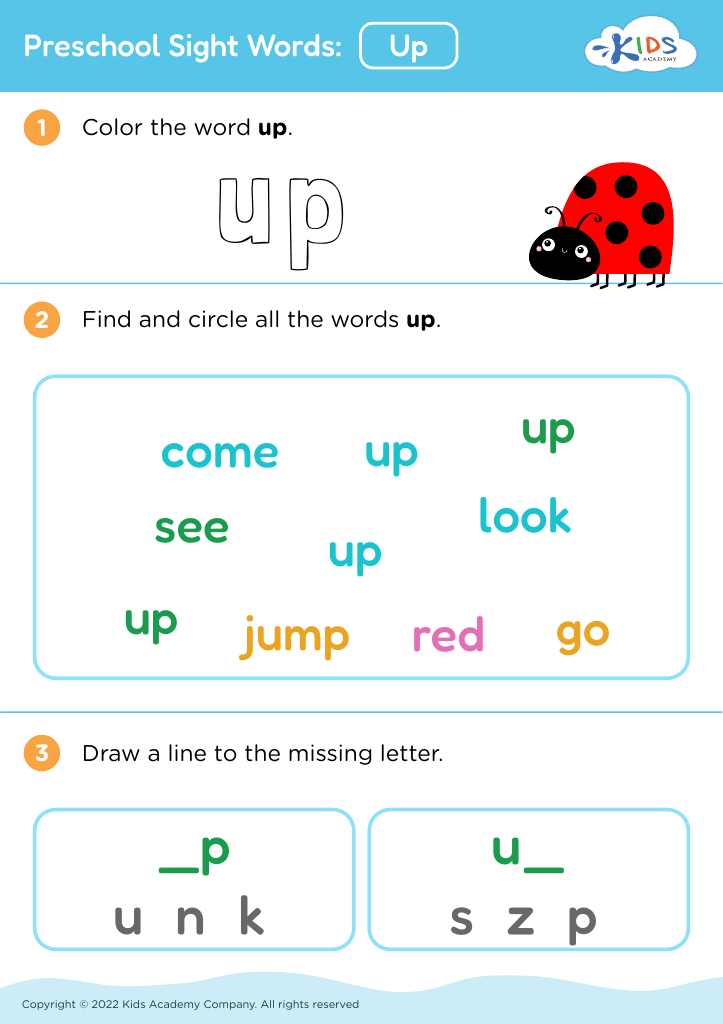
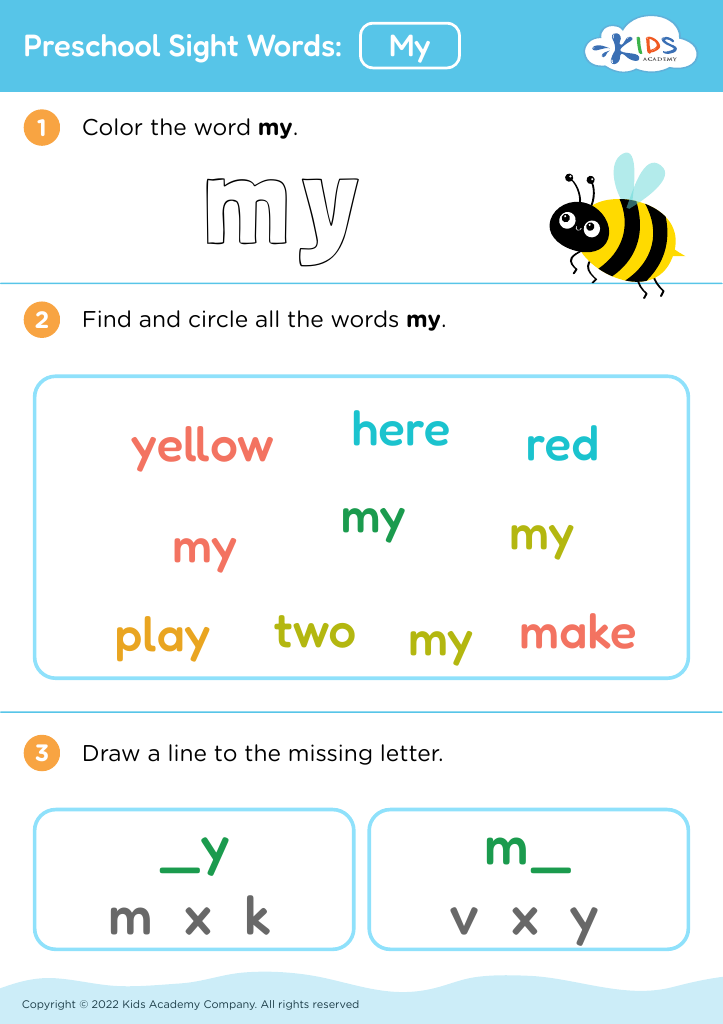








Understanding fraction comparison is a fundamental skill for children aged 5-7, serving as a building block for their mathematical development. Parents and teachers should prioritize this area for several reasons. First, early mastery of fraction concepts helps children make sense of division and sharing, fundamental concepts they encounter in daily life. By comparing fractions, they also enhance their problem-solving and critical thinking abilities, as these skills are honed through identifying relationships between numbers.
Additionally, recognizing fractions contributes to understanding more advanced mathematical concepts down the line, including addition, subtraction, and even introduction to ratios and percents. When children can visually and cognitively comprehend fractions, they are more likely to feel confident and engaged in mathematics.
Moreover, this foundational knowledge can influence a child's attitude towards learning; a child who finds joy and success in math at an early age is more likely to cultivate a lifelong interest in the subject. Finally, collaborating with parents and teachers to reinforce these concepts can help create a cohesive learning environment where children feel supported. It is essential for educators and caregivers to embrace and facilitate fraction comparison reading, fostering an early love for math in young learners and setting them on a path to success.








