Pattern recognition Reading Worksheets for Ages 5-7
4 filtered results
-
From - To
Unlock young minds with our Pattern Recognition Reading Worksheets designed for ages 5-7! These engaging materials help children identify and understand patterns, crucial for developing advanced reading and comprehension skills. By exploring patterns in stories, letters, and sounds, young learners boost their cognitive abilities and build a strong vocabulary foundation. Perfectly tailored to capture imaginations, each worksheet blends fun activities with educational content, encouraging children to recognize sequences and anticipate what comes next. Help your child master early reading skills and foster a love for learning with our vibrant and interactive pattern recognition worksheets. Get started today!
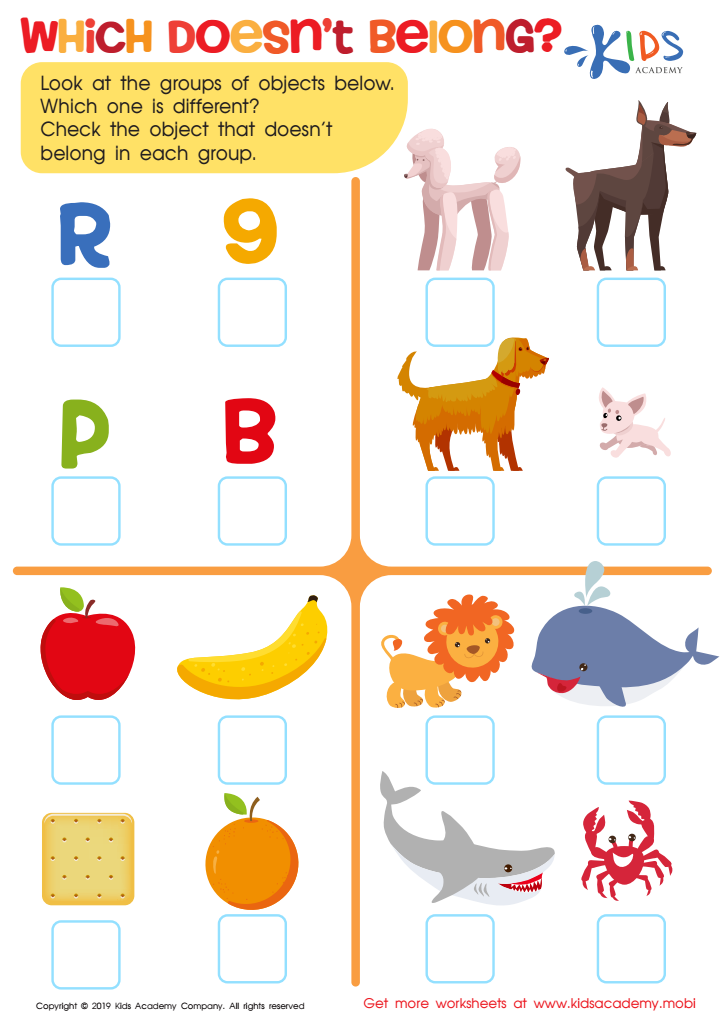
Which Doesn't Belong? Worksheet
 Assign to My Students
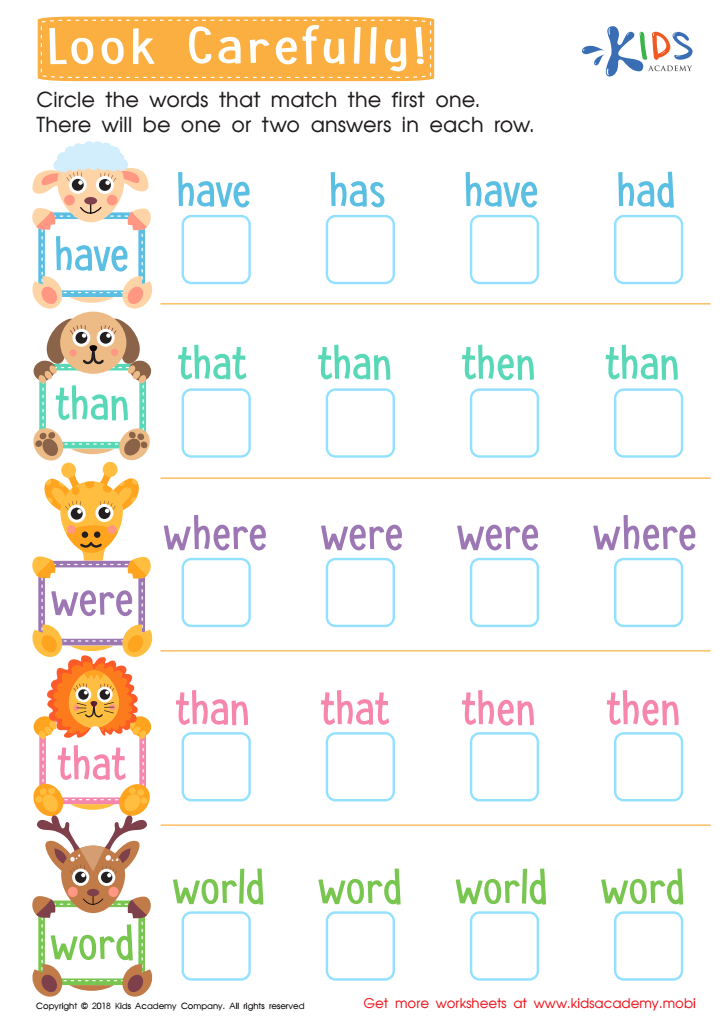
Look Carefully Worksheet
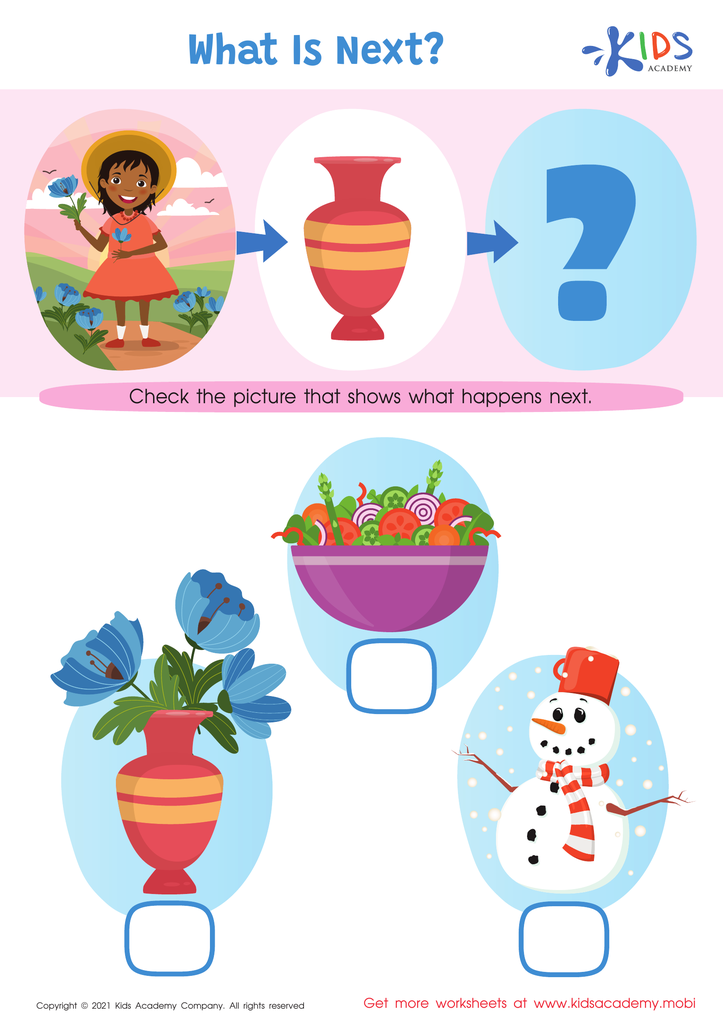
What is Next? Worksheet
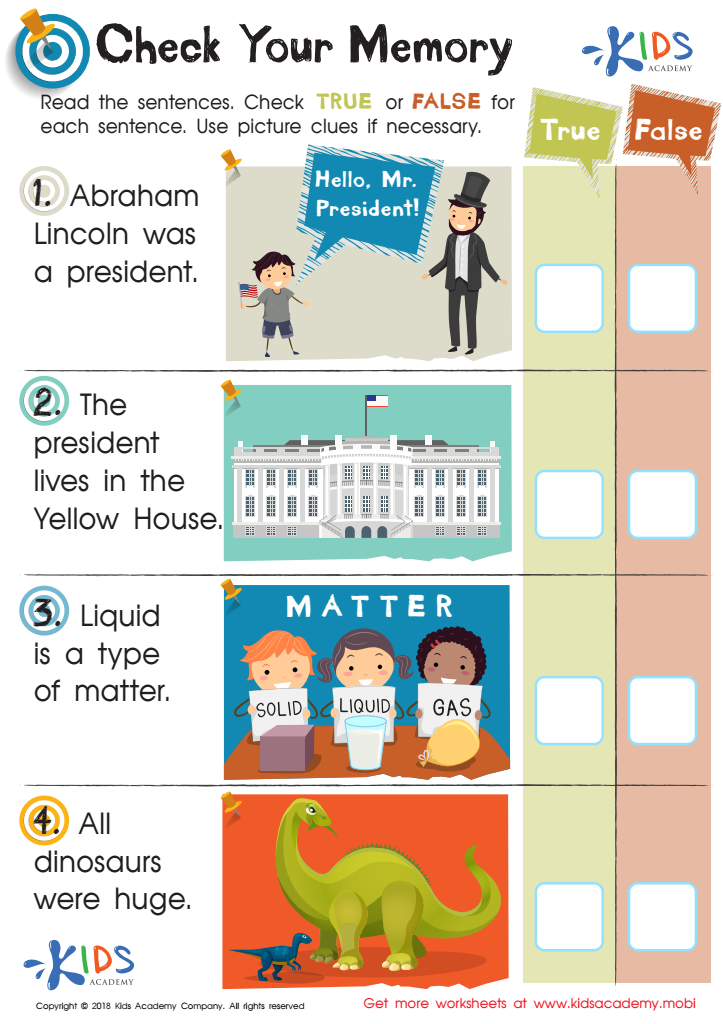
Check Memory Worksheet







Pattern recognition is a foundational element of early childhood education, particularly for children aged 5-7. At this formative stage, children’s brains are highly receptive to learning new concepts, making it the perfect time to focus on important skills like reading through pattern recognition.
Parents and teachers should prioritize pattern recognition reading for a number of reasons. First, recognizing patterns helps children understand the structure of language, such as letter combinations and common word families (e.g., "cat," "hat," "bat"). This understanding makes it easier for them to predict and recognize new and familiar words, which improves their reading fluency and confidence.
Second, pattern recognition helps kids develop critical thinking and problem-solving skills. When children learn to identify patterns, they gradually build the ability to understand more complex concepts, not just in language but also in mathematics, science, and daily life scenarios.
Finally, children find patterns everywhere in their world—from the predictable rhythm of stories to the sequences of their everyday routines. Encouraging this natural inclination boosts their enjoyment of learning and helps them see connections across different subjects.
In conclusion, incorporating pattern recognition reading in early education fosters essential skills like language fluency, cognitive development, and a love for learning. This holistic growth prepares children to excel both academically and in real-life scenarios.








