
Phonics recognition Reading Worksheets for Ages 5-7
5 filtered results
Difficulty Level
Grade
Age
-
From - To
Subject
Activity
Standards
Unlock the magic of reading for children ages 5-7 with our phonics recognition reading worksheets. Designed to enhance young learners' grasp of phonics, these activities help build the foundational skills necessary for fluent reading. Our worksheets cover vowel blends, consonant digraphs, sight words, word families, and more, offering engaging exercises that make learning fun. With vibrant visuals and age-appropriate challenges, kids stay motivated while developing their phonemic awareness. Ideal for both classroom and home use, our phonics worksheets support early literacy and inspire a lifelong love of reading. Explore our collection to give your child a head start in their reading journey.
Favorites
With answer key
Interactive
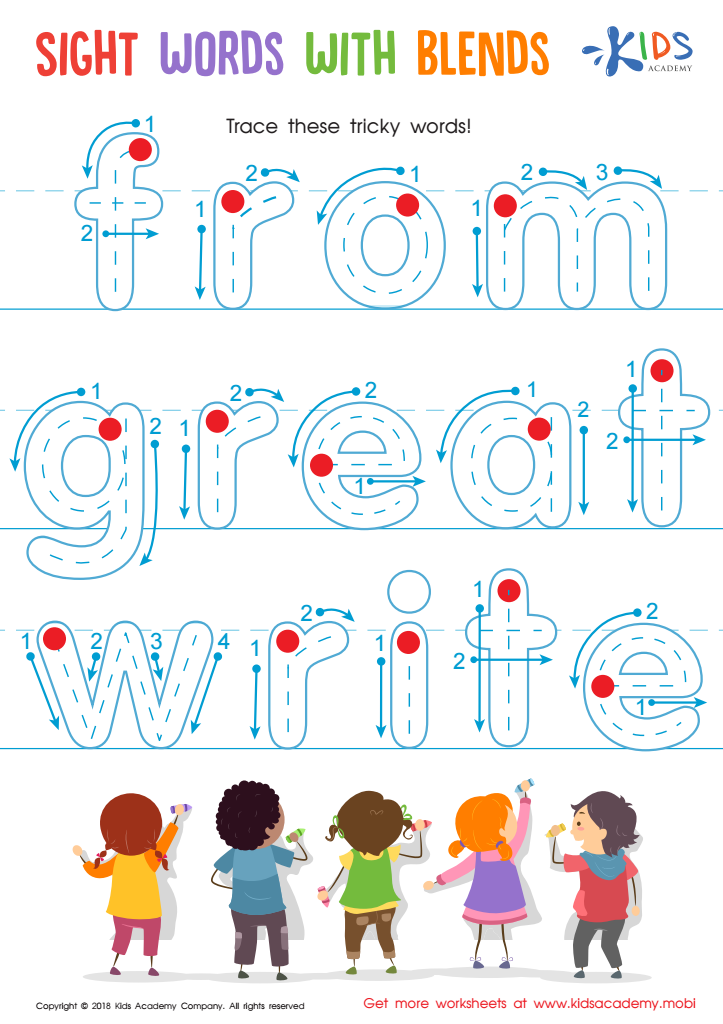
Sight Words with Blends Worksheet
This free PDF lets your children trace and write sight words with tricky blends. The guide numbers help them start from the top, building fine motor skills and enhancing sight word vocab. It's a great way to give your kids a solid foundation for reading!
 Assign to My Students
Sight Words with Blends Worksheet
Worksheet
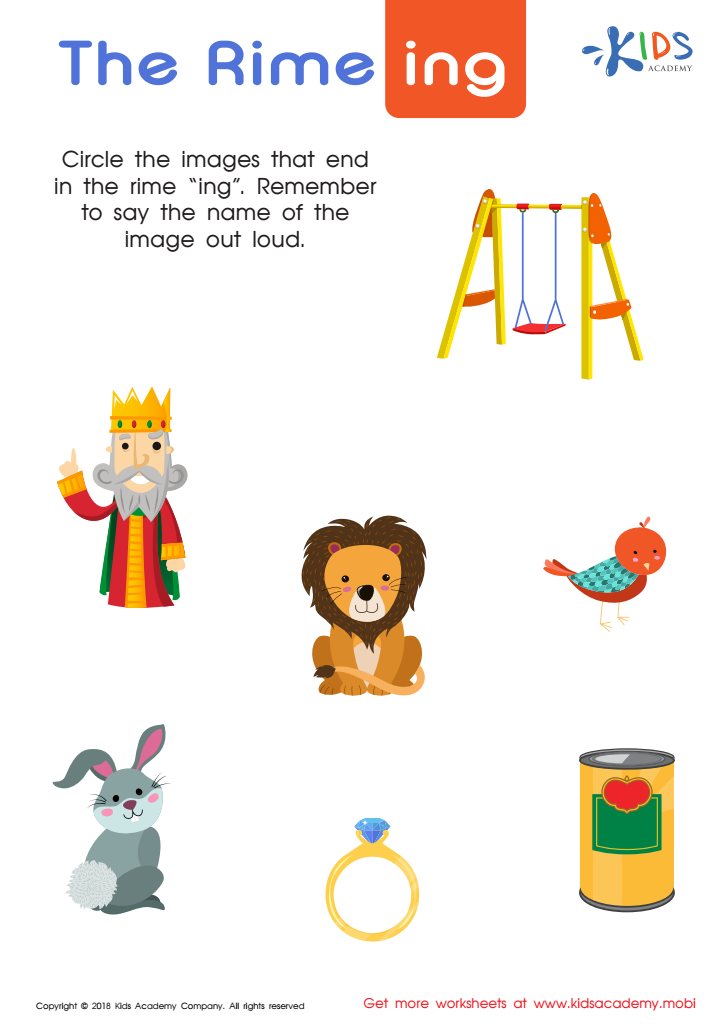
The Rime "ing" Worksheet
Teach children about word families and build their spelling and writing strategies with this colorful PDF worksheet. It features familiar pictures for children to name, encouraging them to circle those that end in "ing". This engaging activity will help develop reading skills in a fun way.
The Rime "ing" Worksheet
Worksheet
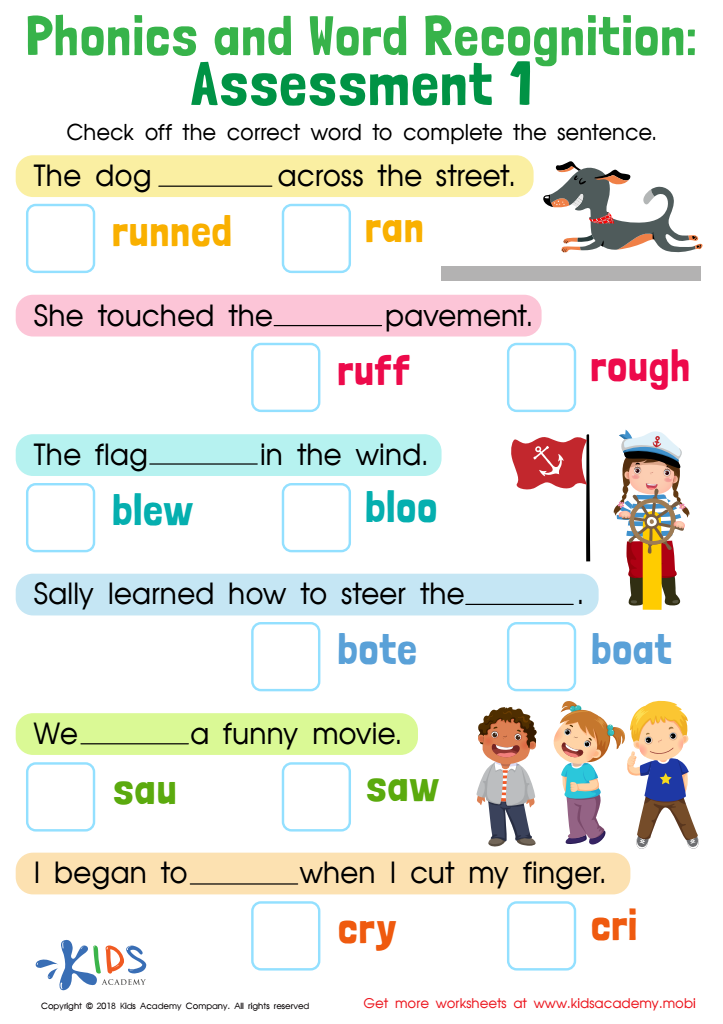
Phonics and Word Recognition: Assessment 1 Worksheet
This worksheet tests phonetics and word recognition. Students should be familiar with past tense verbs. Read incomplete sentences, then read multiple options and help students select the correct one.
Phonics and Word Recognition: Assessment 1 Worksheet
Worksheet
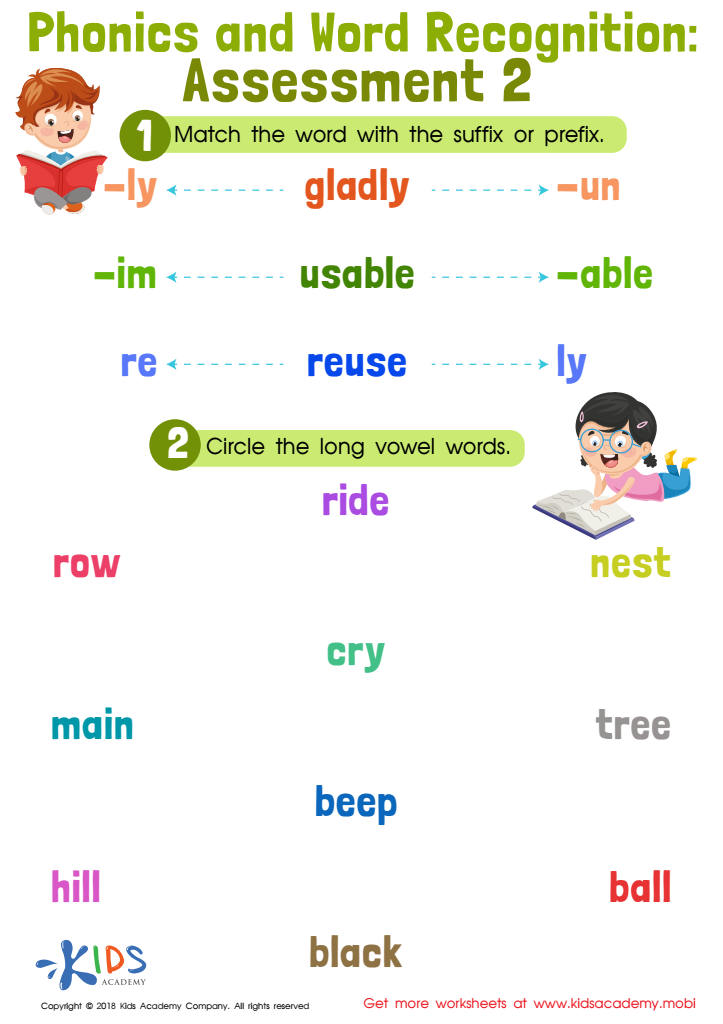
Phonics and Word Recognition: Assessment 2
Give kids common examples of suffixes and prefixes, such as "un-," "unhappy," "ness," "happyness." Ask them to match each word in the word recognition exercise to the correct suffix or prefix. Test phonetic understanding by having them circle the long vowel sounds.
Phonics and Word Recognition: Assessment 2
Worksheet
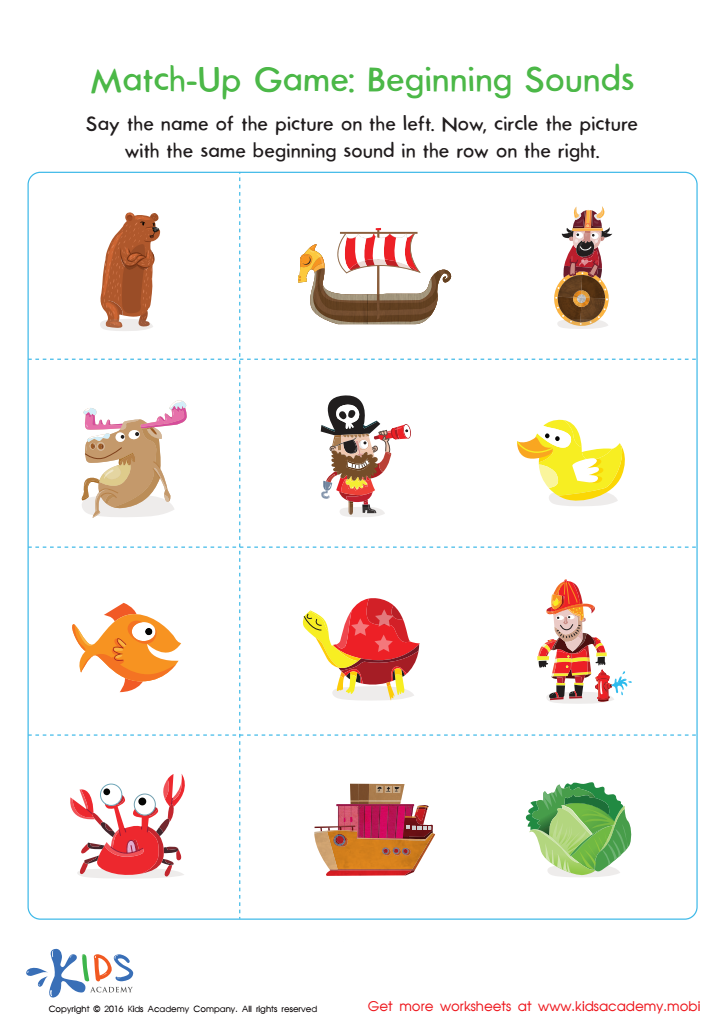
Match–Up Game: Beginning Sounds Worksheet
Start today with this beginning sounds match-up printable!
Teach your child to solve problems mentally with this beginning sounds match-up printable. They'll learn to categorize pictures based on phonics rules, developing mental stamina and focus. It's an important step for recognizing sounds and letters in print, building a foundation for reading and spelling. Start today and take your child's skills to the next level!
Match–Up Game: Beginning Sounds Worksheet
Worksheet
Join Kids Academy for Free
Who is primarily going to use this learning content?








Phonics recognition is crucial for young children's reading development, especially between the ages of 5-7. During these years, children are in a critical window for developing foundational literacy skills that will impact their future academic success.
Phonics teaches children the relationship between sounds and letters, aiding them in decoding new words independently. This skill not only boosts reading confidence but also enhances reading fluency and comprehension. When children understand that the letters ‘c-a-t’ spell “cat” through phonics, they are empowered to tackle more complex words and sentences with greater ease.
Moreover, early phonics recognition opens doors to a larger vocabulary. As children become proficient readers, they encounter new words in their context, expanding their linguistic understanding. This foundational skill also supports cross-curricular learning, as strong reading skills are pivotal in subjects like math, science, and social studies.
For parents and teachers, emphasizing phonics ensures that kids are not merely memorizing words, but truly understanding how language works. This understanding fosters a love of reading, laying down a lifelong path of learning and curiosity. Investing time in phonics at an early age equips children with the tools they need for academic achievement and intellectual growth. This early intervention can prevent future reading difficulties, making phonics instruction a cornerstone of effective early education.








