
Shape identification Reading Worksheets for Ages 5-7
5 filtered results
Difficulty Level
Grade
Age
-
From - To
Subject
Activity
Standards
Discover our engaging Shape Identification Reading Worksheets designed specifically for children aged 5-7! These worksheets offer a fun and interactive way for young learners to enhance their reading skills while exploring various shapes. Each activity encourages children to identify, describe, and match shapes through vibrant illustrations and simple text. Perfect for classroom use or at-home practice, these worksheets promote critical thinking, visual discrimination, and early literacy skills. With a variety of exercises tailored to keep children motivated, our Shape Identification Reading Worksheets make learning enjoyable and effective. Help your child build a strong foundation in reading and shape recognition today!
Favorites
With answer key
Interactive
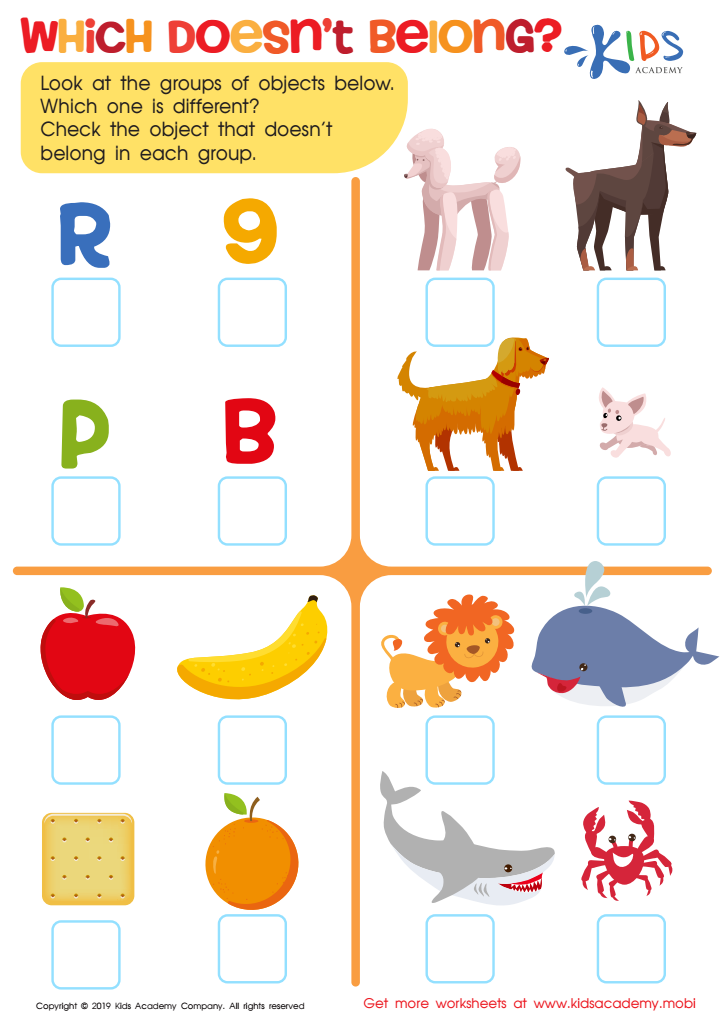
Which Doesn't Belong? Worksheet
This engaging worksheet helps preschoolers recognize similar and different attributes of common words, using brightly-colored pictures. They analyze the items in each category and check off what is different. For extra practice, have them explain their reasoning verbally! Sorting and classifying are important skills to learn.
 Assign to My Students
Which Doesn't Belong? Worksheet
Worksheet
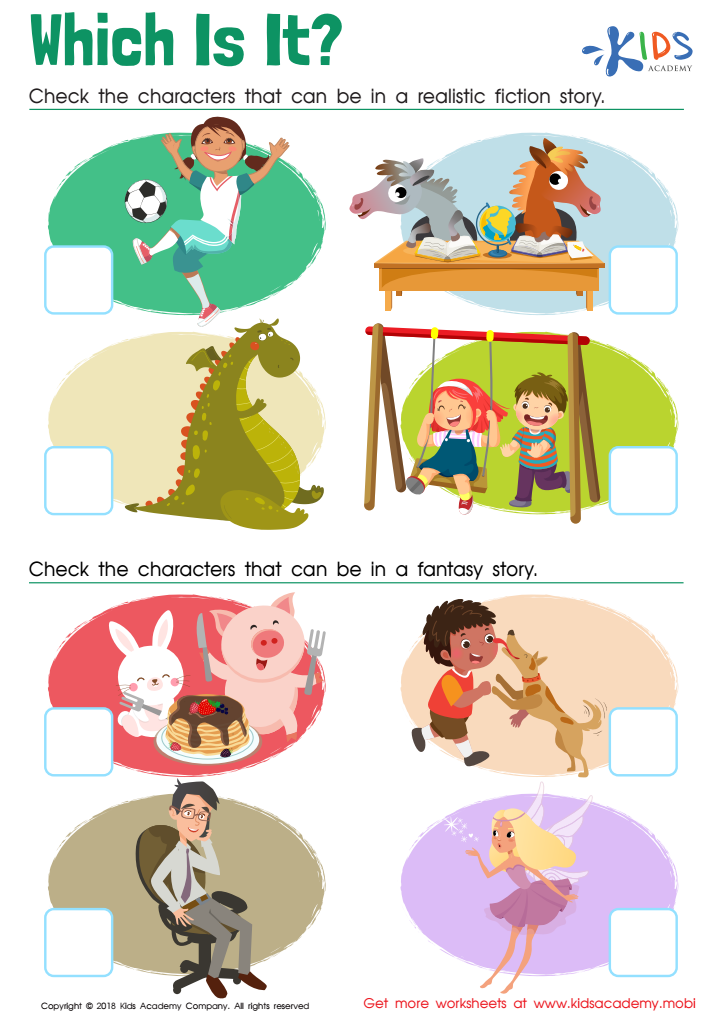
Which Is It? Worksheet
This colorful worksheet helps young readers identify elements of fact and fiction using fun picture clues. They can check off characters who exist in realistic fiction stories, which makes learning the difference between the two genres fun and engaging.
Which Is It? Worksheet
Worksheet
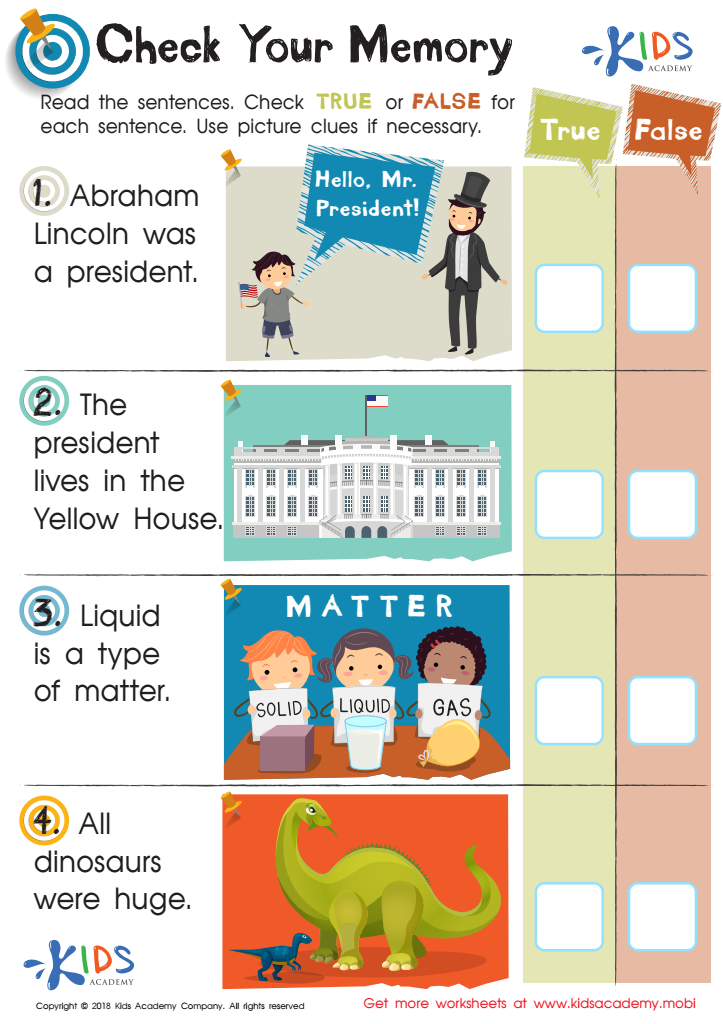
Check Memory Worksheet
Assisting your kids with their homework and using worksheets is a great way for them to learn. The vibrant visuals in this printout can help stimulate the mind and motivate your child. Have them read the sentences and then point to the associated images. Afterwards, ask them to state True or False for each sentence. If they are still uncertain, offer them the picture clues to assist further.
Check Memory Worksheet
Worksheet
Join Kids Academy for Free
Who is primarily going to use this learning content?




.jpg)


Shape identification is a foundational skill for children aged 5-7 that plays a critical role in their cognitive and academic development. Parents and teachers should care about this aspect of early education for several reasons.
Firstly, shape recognition enhances children's visual perception, enabling them to understand spatial relationships and engage with their environment thoughtfully. Recognizing shapes also lays the groundwork for important mathematical concepts. Understanding the properties of shapes can improve children's problem-solving skills and logical reasoning, which are vital for more complex math tasks in later grades.
Furthermore, shape identification contributes to language development. Describing the characteristics of different shapes fosters vocabulary expansion and enhances communication skills. When children label and discuss shapes, they practice using descriptive language, boosting their overall literacy skills.
Moreover, engaging in shape-related activities encourages fine motor skills through hands-on experiences, such as drawing or constructing shapes. These activities also promote social skills when children collaborate or compete in playful settings.
In essence, fostering shape identification in early childhood is integral not only for academic success in math and literacy but also for overall cognitive, social, and emotional development. By supporting this learning, parents and teachers create a strong foundation for lifelong learning.








