Understanding suffixes Reading Worksheets for Ages 5-7
5 filtered results
-
From - To
Explore our engaging "Understanding Suffixes Reading Worksheets" designed specifically for children ages 5-7. These interactive worksheets help young learners grasp the concept of suffixes and their role in expanding vocabulary. Through fun activities and practical examples, kids enhance their reading skills while discovering how suffixes can change word meanings. Perfect for home or classroom use, these worksheets foster a love for language and support early literacy development. With clear instructions and age-appropriate content, our materials make learning about suffixes enjoyable and effective. Start your child's journey to confident reading today with our captivating worksheets, and watch their vocabulary soar!
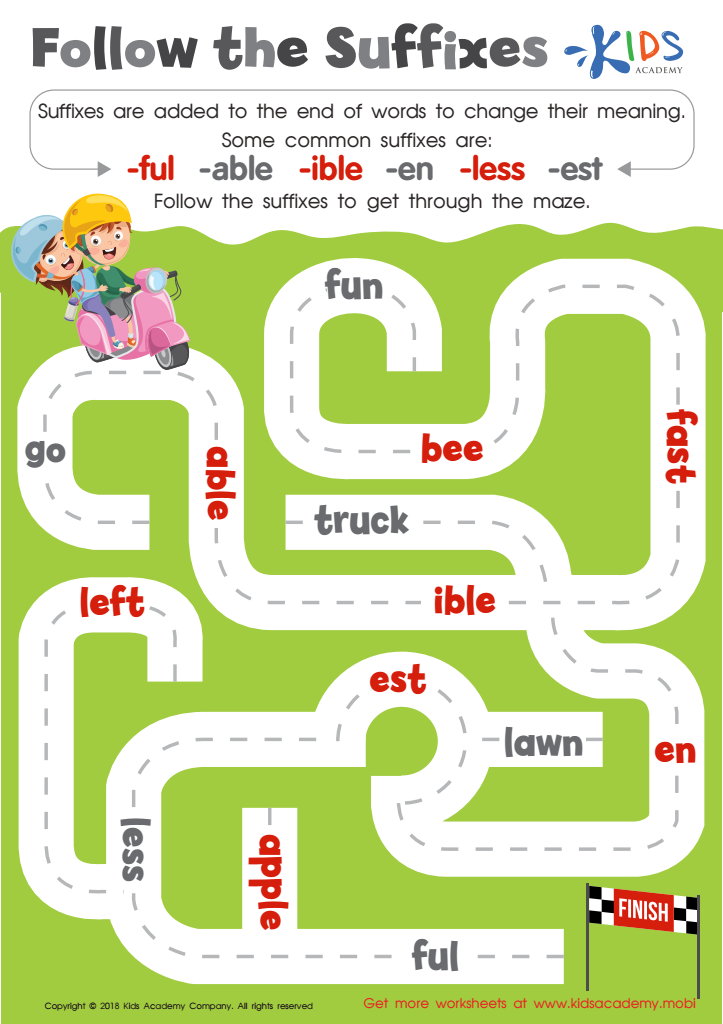
Reading: Follow the Suffixes Worksheet
 Assign to My Students
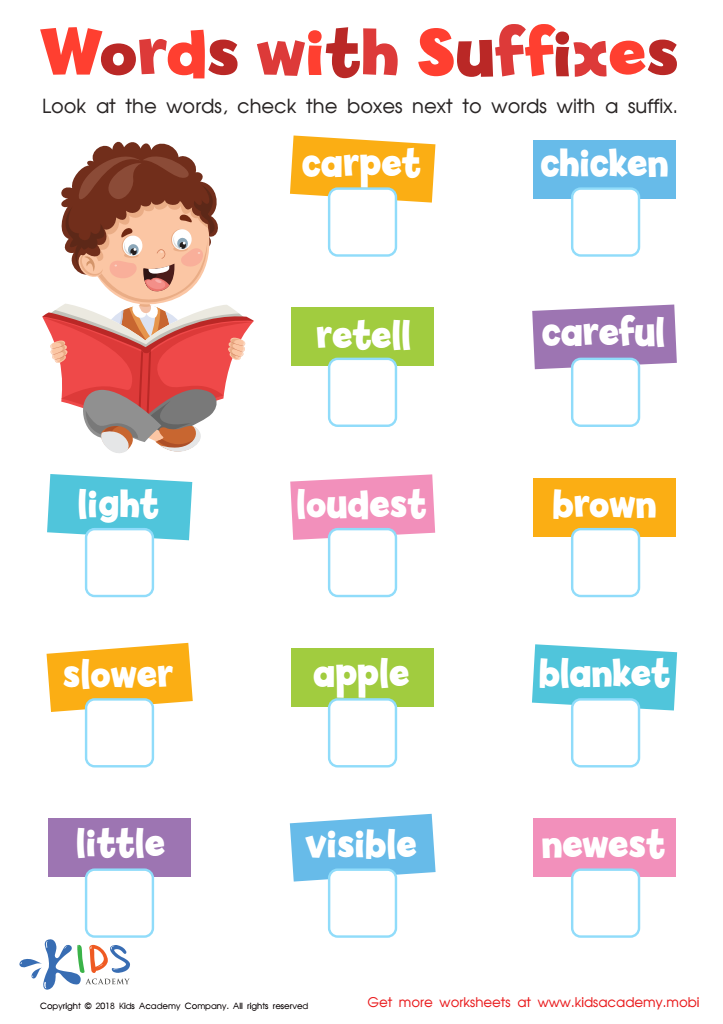
Reading: Words With Suffixes Worksheet
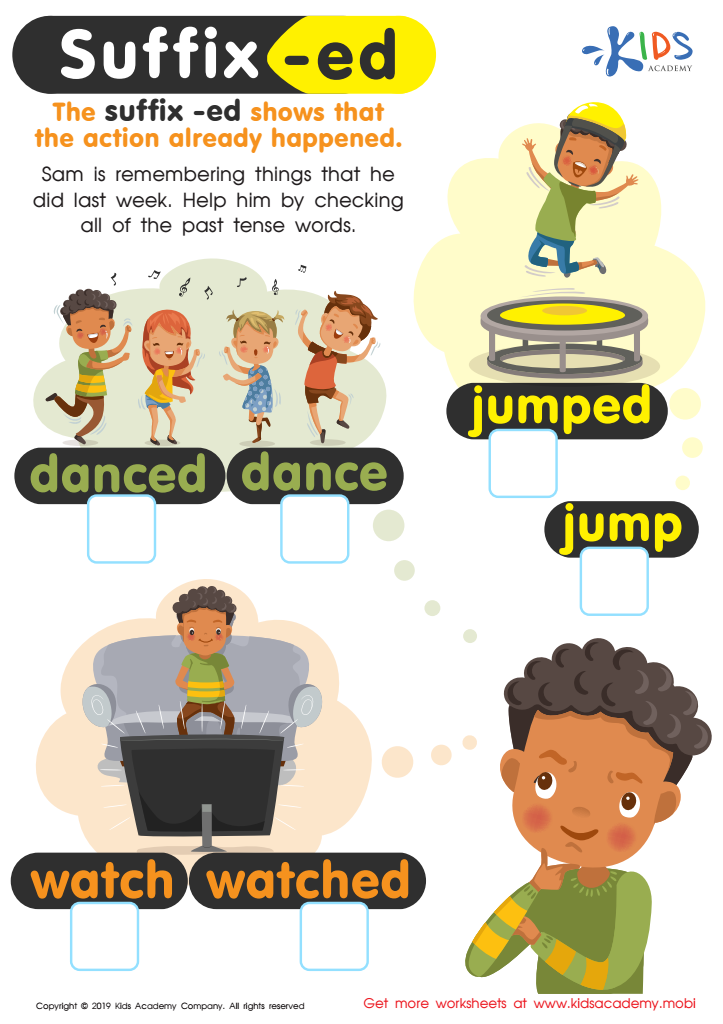
Suffix-ed Worksheet
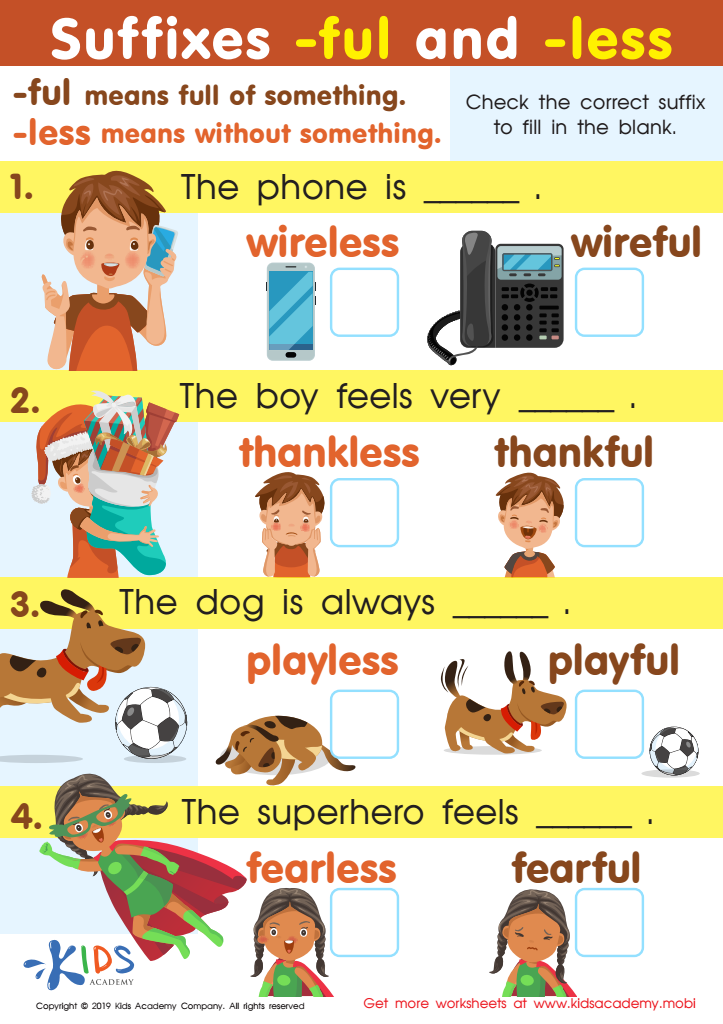
Suffixes –ful and –less Worksheet
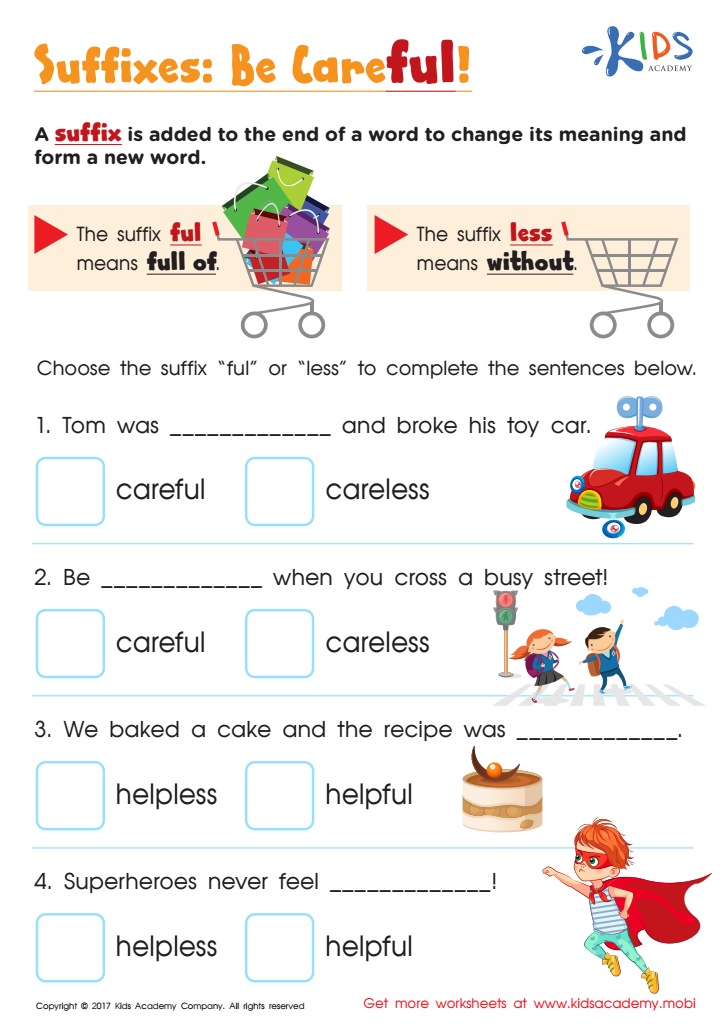
Suffixes Ful and Less Worksheet








Understanding suffixes is a crucial aspect of literacy development for children aged 5-7. Parents and teachers should care about this because suffixes, which are added to the end of root words to modify their meaning, play a significant role in expanding a child's vocabulary and comprehension skills. When children learn to recognize common suffixes, such as "-ing," "-ed," or "-s," they can quickly decode and understand a broader range of words, enhancing their reading fluency.
Additionally, learning about suffixes helps children grasp language structure, which is fundamental for effective communication and writing. As kids understand how suffixes contribute to the meaning of words, they can make inferences and predictions about unfamiliar terms, fostering a love for reading and boosting their confidence as learners.
Moreover, incorporating suffixes into early learning encourages critical thinking and problem-solving skills. When students encounter a new word, they can break it down into its root and suffix, making literacy more manageable and enjoyable. Ultimately, a strong foundation in understanding suffixes paves the way for future academic success, as reading proficiency is directly linked to achievement across all subjects. Investing in this literacy component enriches children's educational experiences and prepares them for lifelong learning.








