Vocabulary enhancement Reading Worksheets for Ages 5-7 - Page 5
101 filtered results
-
From - To
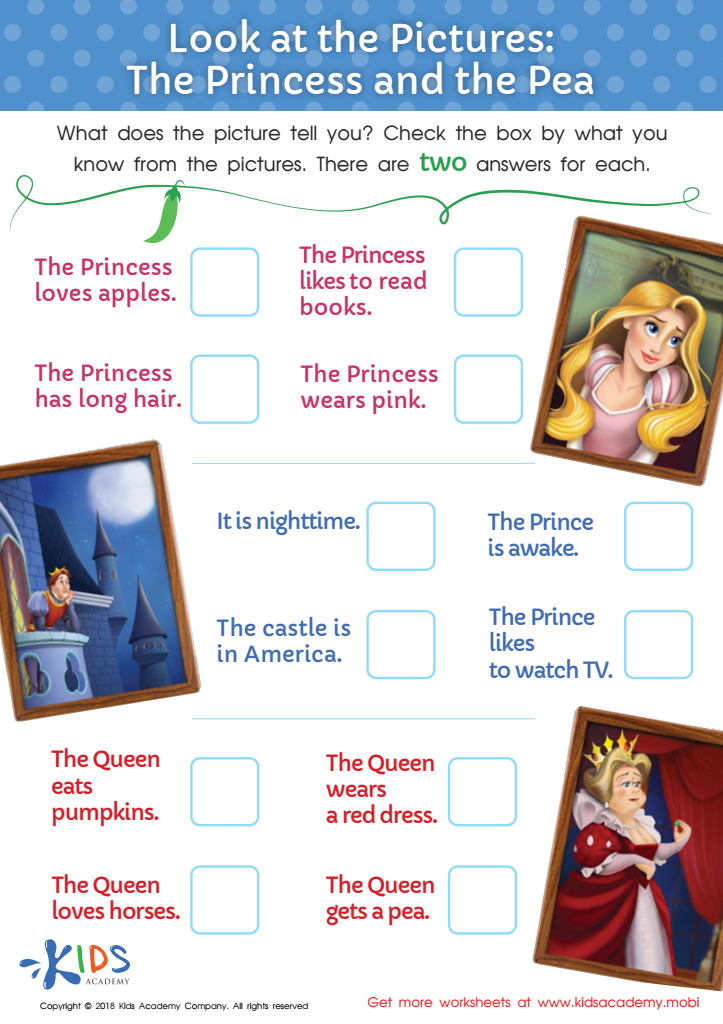
Look at the Pictures: The Princess and the Pea Worksheet
 Assign to My Students
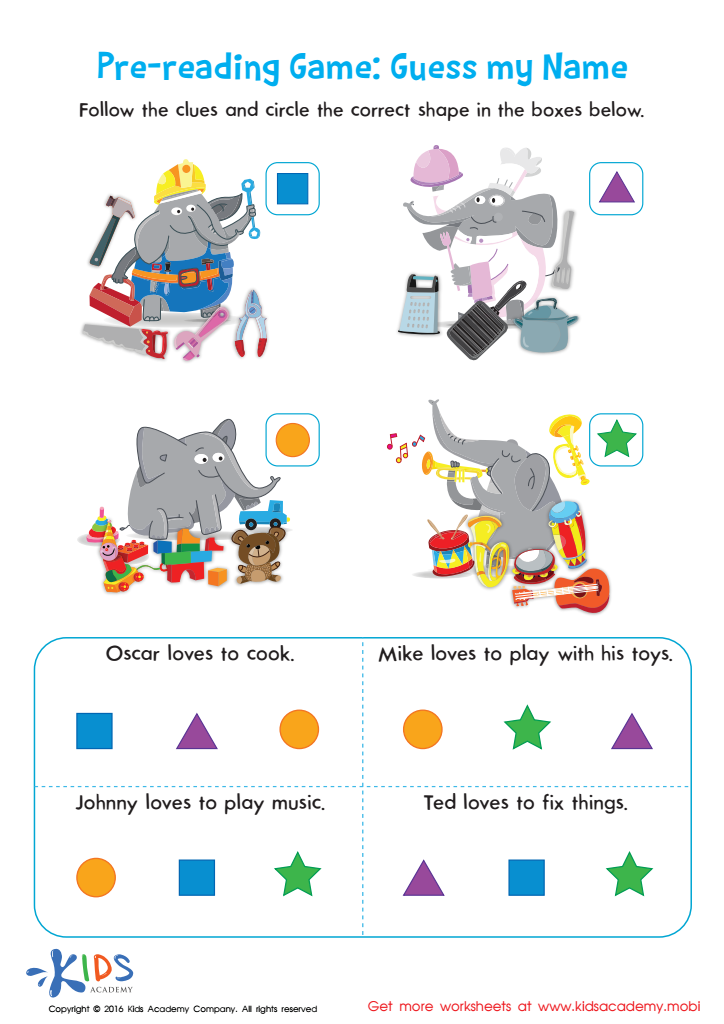
Pre Reading Worksheet Guess My Name
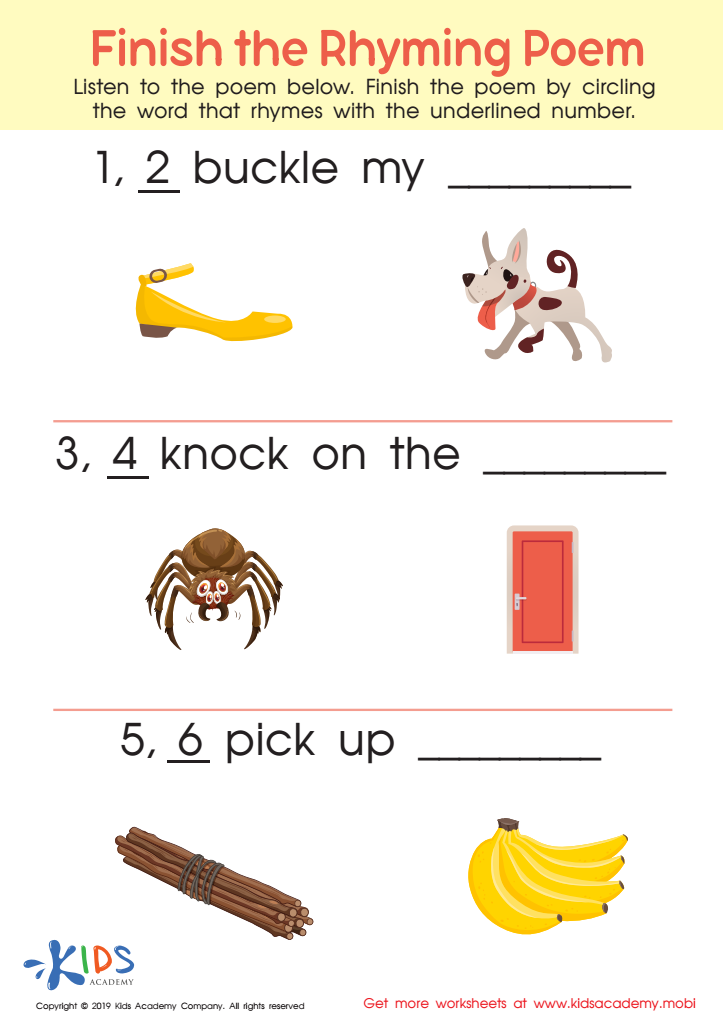
Finish Rhyming Poem Worksheet
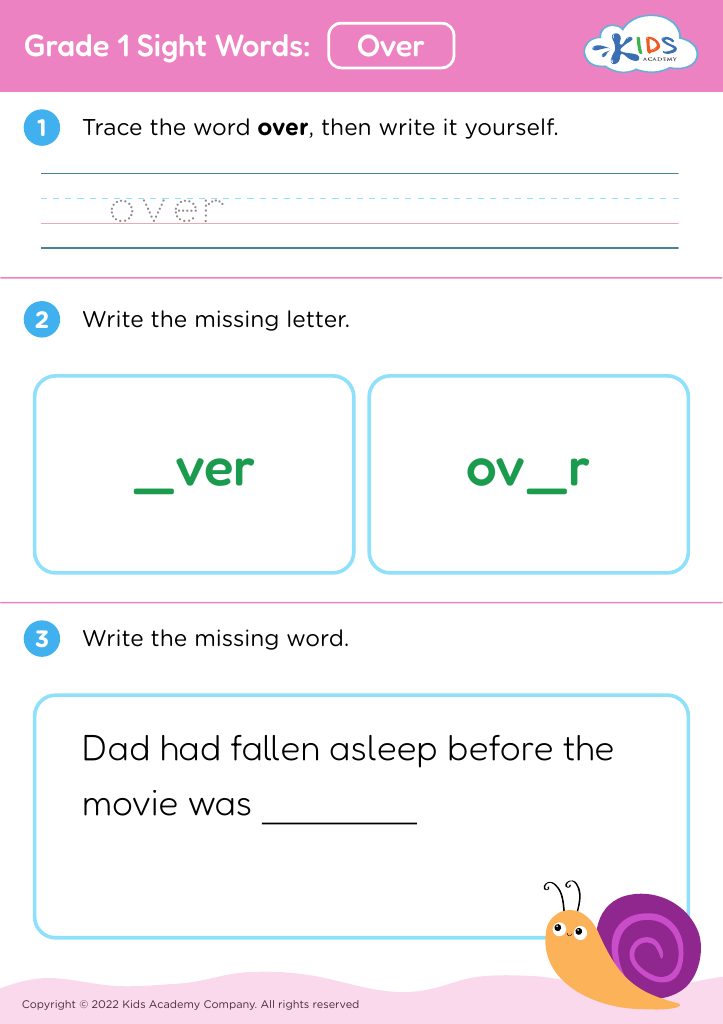
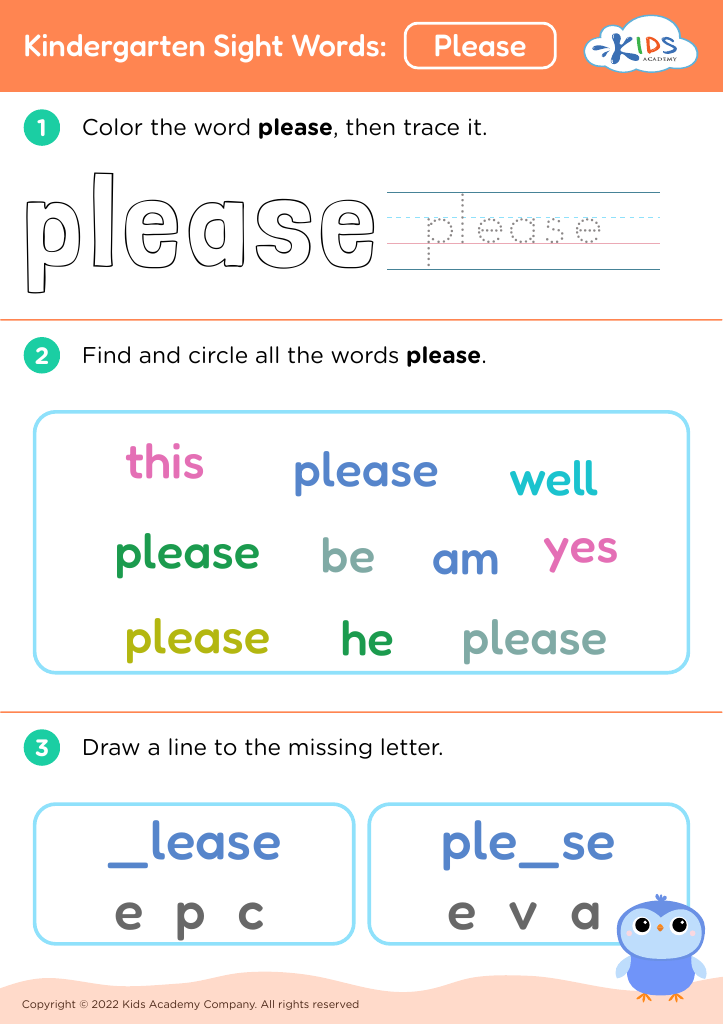








Vocabulary enhancement through reading is crucial for children aged 5-7, as it significantly impacts their overall development and future educational success. At this early stage, children are rapidly acquiring language skills, and a robust vocabulary lays the foundation for effective communication, comprehension, and critical thinking. When parents and teachers prioritize vocabulary development, they empower children to express themselves and articulate their ideas more clearly.
Engaging children with rich vocabulary through varied reading materials introduces them to diverse concepts and experiences, fostering curiosity and creativity. This exposure not only aids in language acquisition but also enhances reading comprehension—an essential skill for academic achievement. Research shows that a strong vocabulary is linked to greater literacy capabilities and higher performance in subjects such as math and science.
Moreover, the social-emotional aspect of language development shouldn't be overlooked. Words help children navigate friendships, resolve conflicts, and build self-confidence. By encouraging regular reading habits and vocabulary enhancement, parents and teachers provide children with the tools they need to cultivate a lifelong love of language, learning, and resilience in facing new challenges. Ultimately, supporting vocabulary growth is an investment in a child’s cognitive and emotional future.








